


Loving your dog and loving the planet aren't opposing forces. But if you've ever paused at the pet aisle and wondered how much waste your dog actually creates over a lifetime, you're not alone. Sustainable pet parenting is one of the fastest-growing conversations in pet wellness — and for good reason. The choices you make every day, from kibble to shampoo to poop bags, add up to a measurable environmental footprint.
The good news? Small, intentional swaps can dramatically shrink your dog's carbon pawprint without compromising their health or happiness. In this guide, we'll break down where the biggest impact really comes from, what the latest research shows, and the practical, vet-aligned changes you can make this week to give your dog (and the planet) a better routine.
Table of Contents
- What Is a Dog's Carbon Pawprint?
- The Real Environmental Impact of Owning a Dog
- Sustainable Pet Parenting Starts With Food
- Eco-Friendly Grooming: A Surprising Lever
- Smarter Waste Management
- Sustainable Products, Toys, and Accessories
- A Sustainable Weekly Routine You Can Actually Follow
- Frequently Asked Questions
- Sources & References
What Is a Dog's Carbon Pawprint?
A "carbon pawprint" is the pet-specific version of a carbon footprint — the total greenhouse gas emissions generated by everything involved in caring for your dog. That includes their food, treats, packaging, grooming products, toys, bedding, transportation, vet care, and waste.
It's a useful frame because it shifts the conversation from blame (dogs are not the problem) to ownership (our purchasing decisions are). Sustainable pet parenting isn't about loving dogs less — it's about loving them in a way that's compatible with the world they live in.
Researchers have started quantifying this footprint, and the numbers are eye-opening. A peer-reviewed study published in 2025 found that dietary composition, packaging choices, and waste management are the three biggest levers any pet parent can pull. That's the framework we'll work through below.
The Real Environmental Impact of Owning a Dog
Let's look at the data without the doom-scrolling. According to research synthesized by Earth.Org, an average-sized dog generates roughly 770 kg of CO2-equivalent (CO2e) emissions per year, while a larger dog can emit upwards of 2,500 kg of CO2e — about twice the annual emissions of an average family car. In the European Union, dog ownership accounts for roughly 7% of an average citizen's annual carbon footprint.
The biggest single contributor is food. A widely cited 2017 UCLA study estimated that meat consumed by dogs and cats in the U.S. is responsible for emissions equivalent to 13.6 million cars. Globally, dry pet food production alone is estimated to contribute between 1.1% and 2.9% of agricultural emissions.
Here's the encouraging part: the same research shows that the climate impact of different pet food products can vary by up to 65 times depending on protein source and packaging. That means your decisions genuinely matter.
Sustainable Pet Parenting Starts With Food
If food is the biggest lever, it's also where you can make the biggest improvement. You don't need to overhaul your dog's diet overnight — and you absolutely should not switch to a plant-based diet without veterinary guidance, as dogs have specific nutritional requirements. But you do have options.
Choose lower-impact proteins
Beef has the highest emissions footprint of any commonly used pet food protein. Switching to poultry, sustainably sourced fish, or rabbit can meaningfully reduce your dog's dietary footprint. Some brands also use animal by-products — organs, trim, and parts of the animal that would otherwise be discarded — which is a more efficient use of existing meat production.
Look at insect-based proteins
Cricket and black soldier fly larvae proteins are gaining traction in the U.S. pet food market. According to the Animal Humane Society, crickets produce no methane and use roughly 2,000 times less water than cattle to produce the same amount of protein. Many vets consider insect protein safe and nutritionally complete for healthy adult dogs — talk to yours before switching.
Don't overfeed
This is the most under-rated sustainability tip: feed your dog the right amount. Overfeeding is wasteful, contributes to pet obesity (which now affects more than half of U.S. dogs), and increases overall food production demand. Use a measuring cup. Read the label. Adjust for treats.
Buy in bulk, choose better packaging
Bigger bags use less plastic per pound of food. Look for brands that use recyclable, biodegradable, or paper-based packaging. Some premium brands now offer refillable systems.
Eco-Friendly Grooming: A Surprising Lever
Grooming is one of the most overlooked sustainability levers in pet care. The average pet shampoo bottle is single-use plastic, often non-recyclable due to product residue. Multiply that by every dog in America, and you get a mountain of waste — much of it linked to ingredients that end up in waterways.
Here's where the "skinification of pet care" trend meets the sustainability movement. Solid shampoo bars, concentrated formulas, and plant-based ingredients all reduce the environmental cost of bath time without compromising clean.
Switch to a shampoo bar
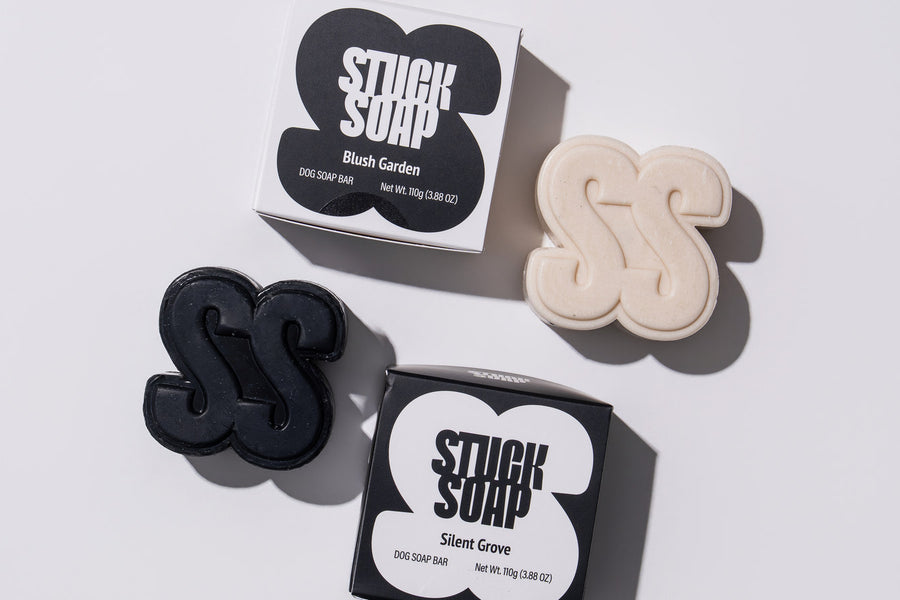
A solid shampoo bar replaces one to three plastic bottles, ships smaller and lighter (lower transport emissions), and typically uses fewer preservatives. Look for pH-balanced bars formulated specifically for dogs — human shampoo bars are too acidic for canine skin.
Choose plant-based, biodegradable formulas
Sulfates, parabens, and synthetic fragrances eventually wash down the drain and into local waterways. Vegan, plant-based formulas with biodegradable surfactants leave less of a chemical trail behind.
Don't over-bathe
Most healthy adult dogs only need a bath every 4–6 weeks. Bathing more frequently than necessary uses water and product without health benefit, and can actually damage the skin barrier. Brush more, bathe smarter.
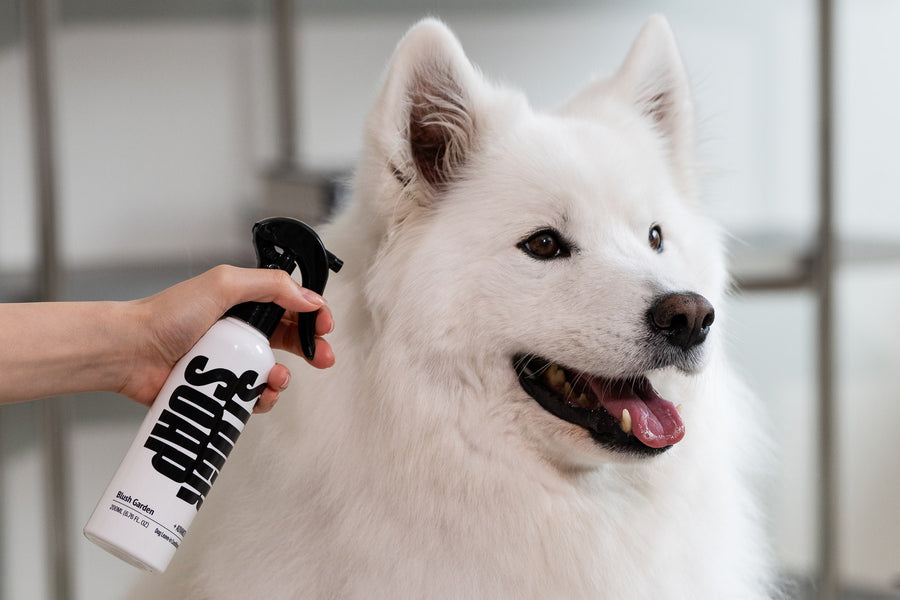
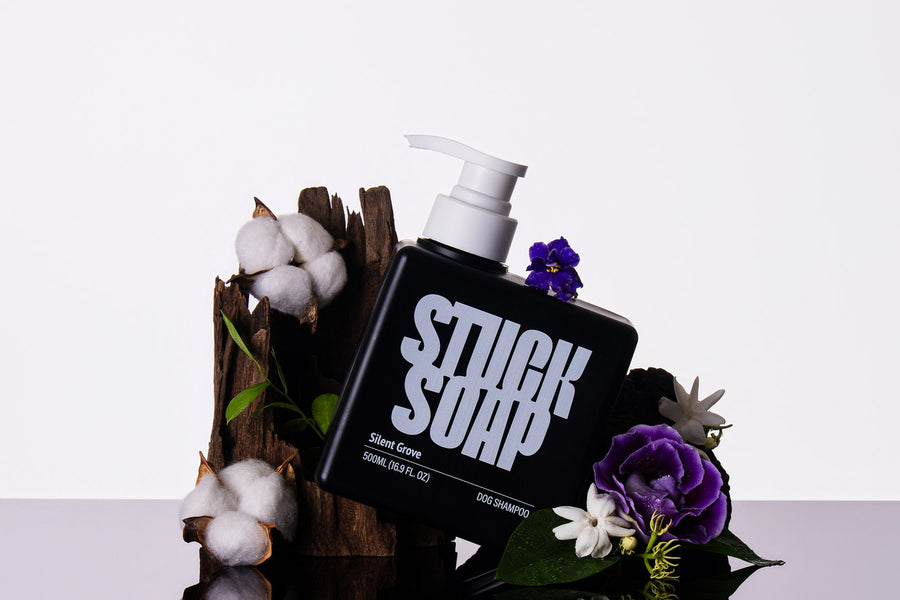
This is exactly the philosophy behind Stuck Soap's K-beauty inspired grooming line — concentrated formulas with rich lather (so a little goes a long way), pH-balanced for dogs, vegan, and available in a zero-waste solid bar format.
Smarter Waste Management
The average dog produces roughly 274 pounds of waste per year. Picking it up matters: uncollected dog waste contributes to nutrient runoff that pollutes streams and lakes. But how you pick it up matters too.
Switch to compostable bags
Standard plastic poop bags can take 500+ years to break down. Certified compostable bags (look for ASTM D6400 or BPI certification) break down significantly faster in commercial composting conditions. Note: in most municipalities, dog waste itself cannot be composted in residential bins.
Bulk-buy, store smart
Buying poop bags in bulk reduces packaging waste and shipping emissions. Store extras in a reusable container instead of multiple boxes.
Don't flush (in most cases)
Flushing dog waste is only safe in some municipal sewer systems, and never with bags. Check your local regulations — when in doubt, dispose of it in the trash.
Sustainable Products, Toys, and Accessories
Pet product manufacturing is a quietly large industry. The good news is that "sustainable pet" is now a legitimate product category with real options.
Beds, blankets, and collars
Look for organic cotton, hemp, recycled polyester, and natural rubber. Brands now make beds stuffed with recycled plastic bottles or repurposed textile waste. A high-quality bed that lasts five years is more sustainable than two cheap ones that wear out in 18 months.
Toys
Most pet toys are made of mixed-material plastics that can't be recycled. Choose toys made from natural rubber, organic cotton, hemp rope, or recycled materials. Rotate toys instead of buying new ones — dogs experience "novelty" from toys they haven't seen in a few weeks.
Buy second-hand and trade with friends
Used dog beds, crates, and gently worn coats are easy to find on local marketplaces. Many pet supply stores accept gently used donations to redistribute.
Repair before replacing
A torn collar, a leash with a frayed handle, a coat with a broken zipper — most of these are easily mendable. Try a quick repair before tossing.
A Sustainable Weekly Routine You Can Actually Follow
Sustainability fatigue is real. The trick is making one or two changes at a time and letting them become routine before adding more. Here's a realistic, low-friction weekly framework:
Monday — Audit: Open the cabinet under your sink (or wherever you keep dog supplies). Notice what's almost empty. When you re-buy, choose one more sustainable version: a compostable poop bag, a refillable water bowl, a shampoo bar.
Wednesday — Brush instead of bathe: A 5-minute brushing session removes loose fur and dander, distributes natural oils, and reduces how often you need a full bath. Use a wooden brush instead of plastic.
Friday — Walk smart: If your usual route involves driving to a park, see if you can build in a walking-distance route once a week. Smaller change, real difference over a year.
Saturday — Bath day (when needed): Use a concentrated, pH-balanced shampoo. Lather, rinse fully (no residue), and air-dry when weather allows.
Sunday — Rotate, don't replace: Pull two old toys out of the bin and swap them for the current favorites. Saves money, reduces consumption, and keeps your dog interested.
None of this requires perfection. Sustainable pet parenting is a direction, not a destination. Pick the swaps that fit your life, and let momentum do the rest.
Frequently Asked Questions
What is the most impactful change I can make for sustainable pet parenting?
Diet has the biggest single impact. Switching from beef-based dog food to lower-emission proteins like poultry, fish, or insect protein can reduce your dog's dietary carbon footprint substantially. Pair that with not overfeeding and choosing better packaging, and you've already addressed the largest lever.
Are vegan or plant-based dog foods safe?
Some plant-based dog foods are nutritionally complete and AAFCO-certified, and they may suit certain dogs. However, dogs have specific amino acid and nutrient requirements that are harder to meet without animal protein. Always consult your veterinarian before switching to a plant-based diet, especially for puppies, seniors, or dogs with health conditions.
How often should I bathe my dog for both skin health and sustainability?
Most healthy adult dogs only need a bath every 4–6 weeks. Bathing more often can damage the skin barrier and uses unnecessary water and product. Brushing weekly reduces the need for frequent baths and is one of the easiest sustainability wins.
Are compostable poop bags actually better?
Yes, when properly certified (look for ASTM D6400 or BPI). They break down meaningfully faster than conventional plastic bags in commercial composting conditions. Note that in landfills, even compostable bags break down slowly, but they still avoid the centuries-long plastic legacy.
Is a solid shampoo bar really better for the environment?
Yes. A solid bar typically replaces one to three plastic bottles, weighs less (lower shipping emissions), uses fewer preservatives, and produces zero rinsed-off plastic packaging. As long as it's pH-balanced for dogs, it cleans just as effectively as liquid shampoo.
Sources & References
- Environmental Pawprint of Dogs as a Contributor to Climate Change — PubMed Central
- The Environmental Impact of Pets: Working Towards Sustainable Pet Ownership — Earth.Org
- Sustainable Pet Care: Simple Ways to Reduce Your Pet's Carbon Pawprint — World Wildlife Fund
- Five Ways to Reduce Your Carbon Pawprint — Animal Humane Society
- The Environmental Paw Print of Dogs and Cats — TED Ideas
Give Your Dog the K-Beauty Spa Treatment
Sustainable pet parenting starts in the bath. Stuck Soap's K-beauty inspired grooming line is concentrated, vegan, pH-balanced for dogs, and available in a zero-waste solid bar format — so every wash leaves your dog cleaner and the planet a little lighter.
Shop Stuck Soap →Vegan · pH-Balanced · Jeju Island Botanicals · Zero Waste