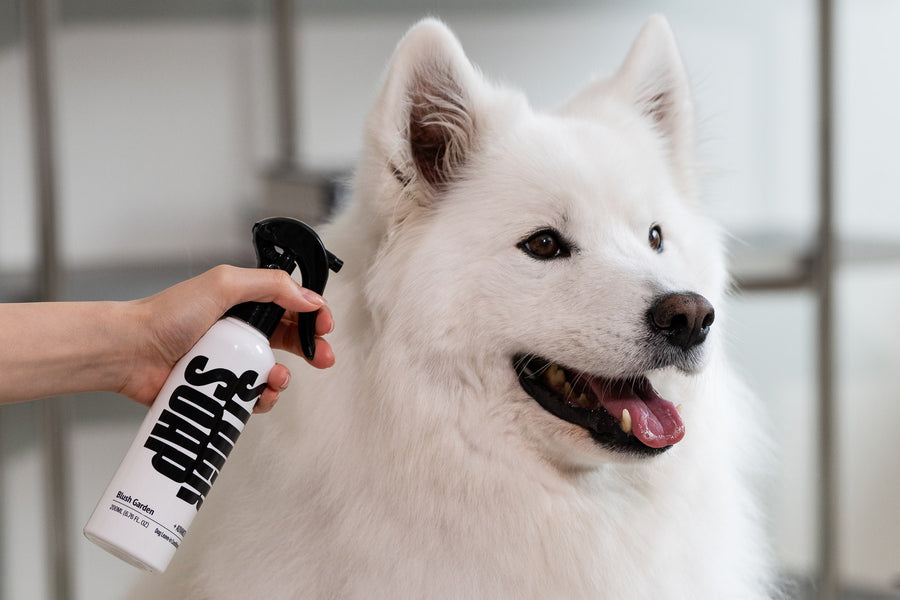



If you've ever fumbled with a slippery plastic bottle of dog shampoo while your pup tries to escape the tub, you already know that bath time could use an upgrade. Solid shampoo bars for dogs are quickly becoming the go-to choice for pet owners who want a cleaner, greener, and more effective grooming experience.
But are dog shampoo bars actually better than liquid shampoo? The short answer: for most dogs, yes — and the benefits go well beyond convenience. From reducing plastic waste to delivering concentrated, skin-friendly formulas, solid shampoo bars represent a smarter approach to dog grooming.
In this guide, we'll break down exactly why solid shampoo bars are gaining popularity, how they compare to traditional liquid shampoos, and what to look for when choosing one for your dog.
Table of Contents
- What Are Solid Dog Shampoo Bars?
- The Environmental Impact: Why Plastic-Free Matters
- Shampoo Bar vs. Liquid: How Do They Compare?
- Why pH Balance Matters for Your Dog's Skin
- How to Use a Solid Shampoo Bar on Your Dog
- What to Look for in a Quality Dog Shampoo Bar
- Frequently Asked Questions
- Sources & References
What Are Solid Dog Shampoo Bars?
A solid dog shampoo bar is exactly what it sounds like — a concentrated bar of shampoo formulated specifically for dogs, without the water and plastic packaging that comes with traditional liquid shampoos. Think of it as the same concept as a bar of soap, but engineered with the right pH level, gentle surfactants, and nourishing ingredients designed for canine skin and coat.
Unlike liquid shampoos, which are typically 60-80% water, solid shampoo bars pack all the cleansing and conditioning power into a compact, concentrated format. This means a single bar can last as long as two to three bottles of liquid shampoo, depending on the size of your dog and how frequently you bathe them.
The concept isn't new — solid shampoo bars have been a staple in the human beauty industry for years, particularly among eco-conscious consumers. But the pet grooming world is catching up fast, with more brands recognizing that dog owners want the same sustainable, high-quality options for their pets.
The Environmental Impact: Why Plastic-Free Matters
Let's talk numbers. The pet care industry generates an enormous amount of plastic waste every year. From shampoo bottles to treat packaging, the environmental footprint of pet ownership adds up quickly. A single household with one dog might go through four to six plastic shampoo bottles per year. Multiply that by the approximately 65 million dog-owning households in the United States, and the scale of the problem becomes clear.
Plastic waste pollution has increased by 20% since 2019, and most conventional pet shampoo bottles end up in landfills where they take hundreds of years to decompose. Even when recycled, plastic degrades with each cycle and eventually becomes waste.
Solid shampoo bars eliminate this problem at the source. Most come in minimal, biodegradable packaging — often just a simple cardboard box or compostable wrap. There's no plastic bottle to throw away, no pump mechanism to break, and no excess water being shipped across the country.
Beyond packaging, solid shampoo bars also reduce the carbon footprint of shipping. Because they're lighter and more compact than liquid alternatives, they require less fuel to transport. A small bar that fits in your palm can deliver the same number of washes as a bulky 16-ounce bottle.
For pet owners who are already making sustainable choices in other areas of their lives — reusable bags, compostable products, reduced single-use plastics — switching to a solid dog shampoo bar is one of the easiest and most impactful changes you can make in your pet care routine.
Shampoo Bar vs. Liquid: How Do They Compare?
The most common question pet owners ask is whether a shampoo bar actually works as well as liquid shampoo. Here's an honest comparison across the factors that matter most.
Lather and cleansing power. A well-formulated solid shampoo bar produces a rich, effective lather that cleans just as thoroughly as liquid shampoo. Because the formula is concentrated, you actually need less product per bath. Simply wet the bar and rub it directly onto your dog's coat, or lather it between your hands first.
Ease of use during bath time. This is where bars actually have an advantage. Anyone who has tried to hold a wet, wriggling dog with one hand while squeezing a bottle with the other knows the struggle. A shampoo bar gives you a free hand to steady your pup. There are no spills, no caps to fumble with, and no product wasted when the bottle tips over in the tub.
Travel and portability. Heading to the lake, going camping, or visiting a friend? A shampoo bar slips into a small tin or bag without any risk of leaking. No TSA-style worries about liquid limits if you're flying with your dog, either.
Longevity and value. One solid shampoo bar typically equals two to three bottles of liquid shampoo. While the upfront cost might be similar or slightly higher, the cost per wash is often lower. You're paying for concentrated cleaning power, not water.
Rinsing. Some pet owners worry that bars leave residue, but a properly formulated dog shampoo bar rinses cleanly. The key is choosing a bar designed specifically for dogs — not a repurposed human product. Dog-specific bars account for canine coat texture and skin needs.
Why pH Balance Matters for Your Dog's Skin
One of the most important factors in choosing any dog shampoo — bar or liquid — is pH balance. And this is where many generic or poorly made products fall short.
Dog skin has a pH range of approximately 6.2 to 7.4, which is more neutral compared to human skin at 5.5 to 5.6. This might sound like a small difference, but it has significant implications for skin health. Your dog's skin is also much thinner than yours — only 3 to 5 cell layers thick compared to 10 to 15 layers for human skin.
Using a shampoo that's too acidic or too alkaline can disrupt your dog's skin barrier, leading to dryness, irritation, itching, and even secondary infections. This is exactly why veterinary dermatologists recommend using shampoos specifically formulated for canine pH levels.
Not all shampoo bars are created equal in this regard. Some handmade or artisanal bars use cold-process soap methods that result in a higher pH (often 9-10), which is too alkaline for dog skin. Look for bars that are specifically pH-balanced for dogs and use gentle, syndet (synthetic detergent) or adjusted surfactant systems rather than traditional saponified soap.
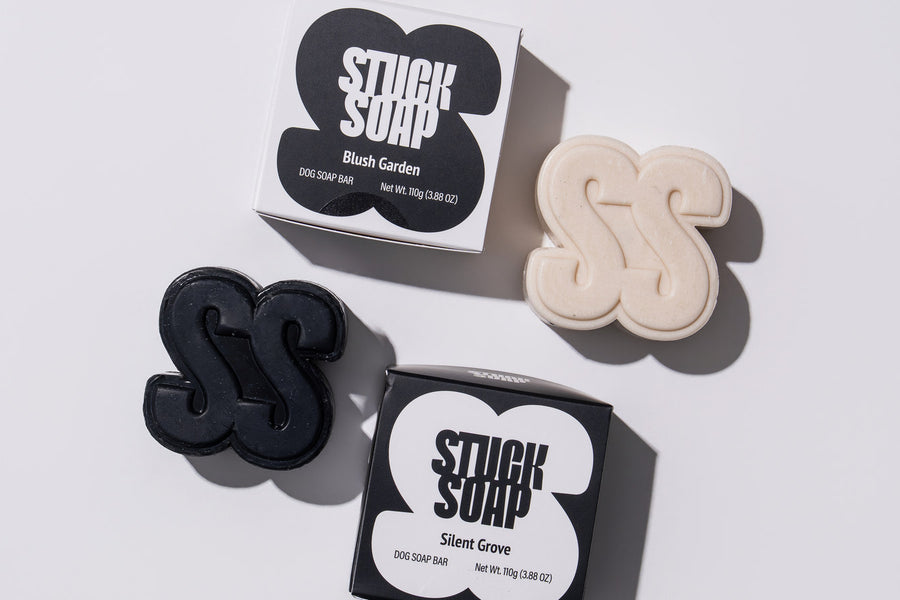
Stuck Soap's Shampoo Bar, for example, is specifically pH-balanced for canine skin and formulated with K-beauty inspired ingredients like Green Tea, Camellia Oil, and Centella Asiatica from Jeju Island. These botanical ingredients support the skin barrier while providing gentle, effective cleansing — the same philosophy that's driven innovation in Korean skincare for humans, now applied to pet grooming.
How to Use a Solid Shampoo Bar on Your Dog
If you've never used a shampoo bar on your dog before, the process is simple. Here's a step-by-step approach to get the best results.
Step 1: Brush before bathing. Remove any loose fur, tangles, or debris before getting your dog wet. This helps the shampoo distribute evenly and makes the entire process more efficient.
Step 2: Thoroughly wet your dog's coat. Use lukewarm water (not hot) and make sure the coat is saturated all the way to the skin. This is especially important for double-coated breeds where the undercoat can repel water.
Step 3: Apply the bar directly. You have two options. You can rub the bar directly along your dog's body in long strokes, working from neck to tail. Or you can lather the bar between your wet hands and then apply the foam to your dog's coat. The direct method works well for medium and large dogs, while the hand-lather method gives you more control for small breeds and sensitive areas like the face.
Step 4: Massage and work it in. Use your fingers to work the lather down to the skin, paying extra attention to areas that tend to get dirty or oily — behind the ears, under the collar area, the belly, and around the tail base.
Step 5: Rinse thoroughly. This is the most important step with any shampoo. Rinse until the water runs completely clear. Leftover shampoo residue can cause itching and irritation regardless of how gentle the formula is.
Step 6: Dry and store the bar. After bath time, let your shampoo bar dry on a well-drained soap dish or rack. Keeping the bar dry between uses extends its life significantly — a bar stored properly can last months.
What to Look for in a Quality Dog Shampoo Bar
Not all dog shampoo bars are equal. Here's what separates a great bar from a mediocre one.
pH-balanced formulation. As discussed, this is non-negotiable. The bar should be formulated specifically for canine skin pH (6.2-7.4). If the product doesn't mention pH balance on the label or website, that's a red flag.
Plant-based, recognizable ingredients. Look for bars that use natural, plant-derived cleansing agents and nourishing botanicals. Ingredients like Green Tea extract (antioxidant protection), Camellia Oil (deep moisturizing), and Centella Asiatica (skin barrier support) are excellent choices. Avoid bars with sulfates, parabens, artificial fragrances, or synthetic dyes.
Vegan and cruelty-free. Many premium dog shampoo bars are now vegan and never tested on animals. This matters not just ethically but practically — vegan formulas tend to be gentler and less likely to trigger sensitivities.
Concentrated formula. A high-quality bar will produce a rich lather quickly with minimal product needed. If you're rubbing the bar vigorously and barely getting any foam, the formula probably isn't concentrated enough to deliver real value.
Sustainable packaging. The whole point of switching to a bar is reducing waste, so make sure the packaging follows through. Look for recyclable cardboard, compostable wraps, or zero-packaging options.
Sebum control without stripping. Your dog's skin produces natural oils (sebum) that protect the coat and skin barrier. A good shampoo bar should clean effectively without stripping these oils completely. This balance is particularly important for breeds prone to dry skin or those with skin sensitivities.
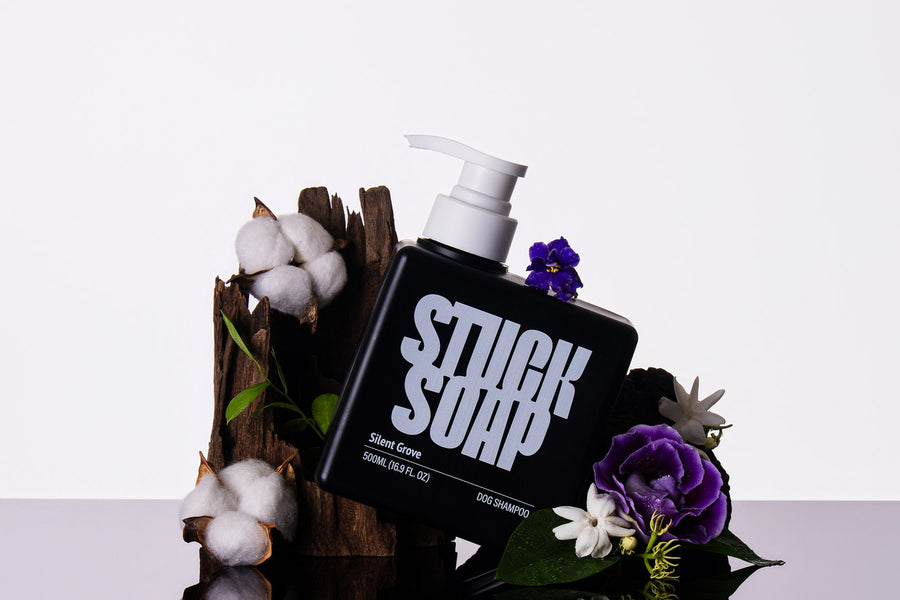
Stuck Soap's range — including both their Liquid Shampoo and Shampoo Bar — checks all these boxes. Their products are vegan, pH-balanced, and built around K-beauty skincare principles with Jeju Island botanicals. The Shampoo Bar is particularly impressive for its sebum control and zero-waste solid format, while the Liquid Shampoo offers a high-concentrate formula with fine-bubble lather for deep cleaning.
Frequently Asked Questions
Are solid shampoo bars safe for dogs with sensitive skin?
Yes, as long as you choose a bar that's pH-balanced specifically for dogs (pH 6.2-7.4) and made with gentle, plant-based ingredients. Avoid bars made with traditional cold-process soap methods, as these tend to be too alkaline for canine skin. Always patch-test a new product on a small area first if your dog has known skin sensitivities.
How long does a dog shampoo bar last?
A single solid shampoo bar typically lasts as long as two to three bottles of liquid shampoo. For a medium-sized dog bathed every two to three weeks, one bar can last three to six months depending on the bar's size and how much product you use per bath. Proper storage on a dry, well-drained dish extends the bar's lifespan significantly.
Can I use a human shampoo bar on my dog?
It's not recommended. Human shampoo bars are formulated for human skin pH (around 5.5), which is too acidic for dogs. Additionally, human products may contain fragrances, essential oils, or other ingredients that can be irritating or even toxic to dogs. Always use a shampoo bar specifically formulated for canine skin.
Do shampoo bars work on all coat types?
Yes. Solid shampoo bars work well on all coat types — short, long, curly, wiry, and double-coated breeds. For dogs with very thick or double coats, you may want to lather the bar between your hands first and then apply the foam, which helps ensure even distribution through dense fur.
Are dog shampoo bars better for the environment than liquid shampoo?
Significantly, yes. Solid shampoo bars eliminate plastic bottle waste, reduce water usage in manufacturing (liquid shampoos are 60-80% water), and have a lower carbon footprint during shipping due to their lighter, more compact size. Most dog shampoo bars also come in biodegradable or recyclable packaging.
Sources & References
Give Your Dog the K-Beauty Spa Treatment
Ready to ditch the plastic bottles and upgrade your dog's bath routine? Stuck Soap's pH-balanced Shampoo Bar is formulated with Jeju Island botanicals like Camellia Oil and Green Tea for gentle cleansing, sebum control, and a zero-waste grooming experience your dog (and the planet) will love.
Shop Stuck Soap →Vegan · pH-Balanced · Jeju Island Botanicals · Zero Waste