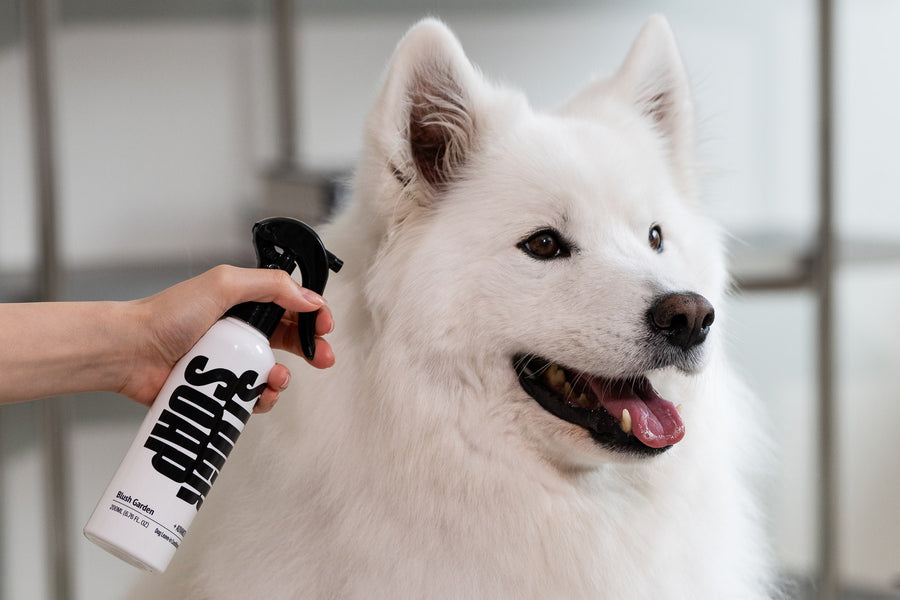



Spring is finally here — the trees are blooming, the grass is growing, and your dog is suddenly scratching like crazy. If your pup is licking their paws, rubbing their face on the carpet, or developing red, itchy patches on their belly, pollen is very likely the culprit. Learning how to wash pollen off your dog is one of the simplest, most effective things you can do to break the spring allergy cycle.
Unlike humans who mostly inhale pollen, dogs absorb a lot of it through their skin. Pollen settles into their coat after every walk, then transfers to bedding, furniture, and back onto irritated skin. According to the American Kennel Club and PetMD, environmental allergens like grass, tree, and weed pollen are among the most common triggers for canine atopic dermatitis — the medical name for the seasonal itch that sends so many dogs to the vet each spring.
The good news: a thoughtful bathing routine, paired with quick daily rinses, can dramatically reduce your dog's pollen load. Below is a complete spring bathing guide based on veterinary dermatology recommendations, plus the gentle ingredients to look for so you can soothe — not strip — your dog's skin barrier.
Table of Contents
- Why Pollen Bothers Dogs So Much in Spring
- Signs Your Dog Has a Pollen Allergy
- How Often to Bathe a Dog with Pollen Allergies
- Step-by-Step: How to Wash Pollen Off Your Dog
- Ingredients to Look For (and Avoid) in a Spring Shampoo
- Quick Daily Pollen Removal Between Baths
- Frequently Asked Questions
- Sources & References
Why Pollen Bothers Dogs So Much in Spring
Pollen grains are tiny, sticky particles designed by nature to cling to anything that brushes past them — including your dog's fur. After a single walk through a park, your dog's coat can carry millions of pollen grains from grasses, oak trees, ragweed, and flowering plants.
For sensitive dogs, that pollen doesn't just sit on the surface. The grains work their way down to the skin, where the immune system overreacts and releases histamines. The result is the classic spring allergy picture: red, inflamed skin around the paws, belly, ears, and muzzle.
Dogs are especially vulnerable because they spend so much time low to the ground. Their bellies and paws act like soft brushes, picking up everything from lawn pollen to invisible mold spores. That's why washing those high-contact areas matters even more than scrubbing their back.
Signs Your Dog Has a Pollen Allergy
Before you adjust your bathing routine, it helps to confirm pollen is actually the issue. According to PetMD and the AKC, the most common signs of seasonal pollen allergies in dogs include:
- Excessive licking or chewing of paws
- Rubbing the face on furniture or carpet
- Red, inflamed skin on the belly, armpits, or groin
- Recurring ear infections, especially after walks outdoors
- Watery eyes, sneezing, or a runny nose
- Hot spots or hair loss in scratched areas
- Symptoms that worsen seasonally — typically March through June
If your dog shows several of these signs and they only appear at certain times of year, pollen is a likely trigger. Severe or persistent symptoms always warrant a vet visit — your veterinarian can rule out food allergies, parasites, or skin infections that mimic pollen reactions.
How Often to Bathe a Dog with Pollen Allergies
This is the question most pet owners get wrong. The instinct is to bathe more often when a dog is itchy, but over-bathing can strip natural oils and worsen the very irritation you're trying to soothe.
The current veterinary consensus, supported by VCA Animal Hospitals and the Animal Humane Society, is that dogs with seasonal allergies benefit from weekly to bi-weekly baths during peak pollen months, using a gentle, pH-balanced shampoo. Some vets recommend bathing as often as twice a week during severe flare-ups, but only with a shampoo specifically formulated for sensitive or allergic skin.
A landmark study published in the Journal of Allergy and Clinical Immunology found that regular bathing significantly reduces allergen levels on a dog's coat, though the benefit fades within a few days — which is why consistency matters more than intensity.
For most dogs, a realistic spring schedule looks like this:
- Mild symptoms: Full bath every 2 weeks + daily paw and belly wipe-downs
- Moderate symptoms: Full bath every 7 to 10 days + daily wipe-downs
- Severe symptoms: Full bath every 5 to 7 days, only with a vet-approved shampoo
Step-by-Step: How to Wash Pollen Off Your Dog
Pollen is sticky, and a quick rinse won't dislodge it from a dense coat. Follow this order to maximize allergen removal while protecting your dog's skin barrier.
1. Brush before bathing. A thorough brush-out lifts loose fur and dislodges surface pollen before water can mat it deeper into the coat. For double-coated breeds, use an undercoat rake; for short-haired dogs, a rubber curry brush works well.
2. Use lukewarm water — not hot. Hot water dilates skin capillaries and intensifies itching. Aim for water that feels neutral on your wrist, around 95 to 100°F.
3. Wet thoroughly from the neck down. Pollen tends to concentrate on the lower body, so spend extra time saturating the belly, paws, armpits, and groin. Avoid spraying water directly into the face or ears.
4. Apply shampoo with massaging strokes — never scrub. Scrubbing breaks the skin barrier and worsens inflammation. Work the shampoo into a rich lather with your fingertips, paying special attention to between-the-toes pollen pockets.
5. Let the lather sit for 5 to 10 minutes. This contact time is what veterinary dermatologists call the "soak phase." It allows soothing ingredients to actually reach the skin instead of being rinsed off too quickly. Use this time to gently massage your dog's neck and ears.
6. Rinse twice — really. Shampoo residue is itself a skin irritant. Rinse until the water runs completely clear, then rinse again. The second rinse is what separates a good bath from a great one.
7. Towel-dry by patting and squeezing. Rubbing a wet, allergen-sensitive coat creates friction burns and inflammation. Press a microfiber towel against the coat and squeeze water out in sections.
8. Air dry or use a low-heat blower. High heat dries out skin and worsens itching. Most dogs do best with cool air or natural drying in a warm room.
Ingredients to Look For (and Avoid) in a Spring Shampoo
The wrong shampoo can make pollen allergies worse — and many "natural" pet shampoos still contain harsh detergents like sodium lauryl sulfate, artificial fragrance, or synthetic dyes that compromise the skin barrier.
For spring bathing, look for shampoos with these skin-supportive ingredients:
- Green tea extract: Naturally rich in polyphenols and EGCG, green tea has anti-inflammatory and antioxidant properties that may calm allergy-irritated skin.
- Centella asiatica (cica): A K-beauty staple known for supporting the skin barrier and reducing visible redness.
- Camellia oil: Traditionally pressed from camellia seeds, this lightweight oil helps lock in moisture without clogging follicles.
- Oatmeal or colloidal oatmeal: A vet-favorite for its skin-calming, anti-itch properties.
- Ceramides: Lipid molecules that reinforce the skin's natural barrier.
What to avoid during pollen season:
- Sulfates (SLS, SLES) — strip protective oils
- Artificial fragrances — can themselves trigger contact allergies
- Parabens and formaldehyde-releasing preservatives
- Coal tar (unless specifically prescribed by a vet)
- Essential oils not formulated for canine use, like tea tree at high concentrations
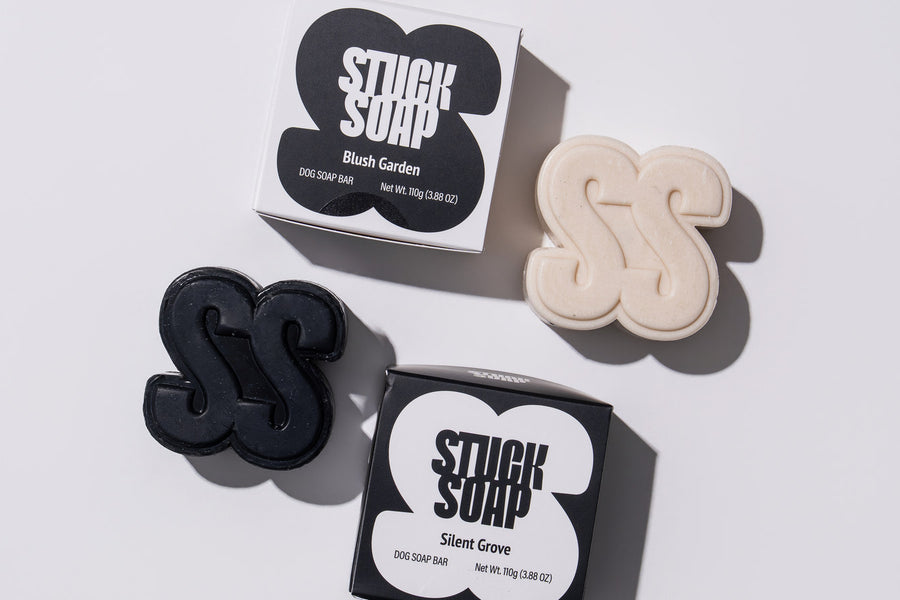
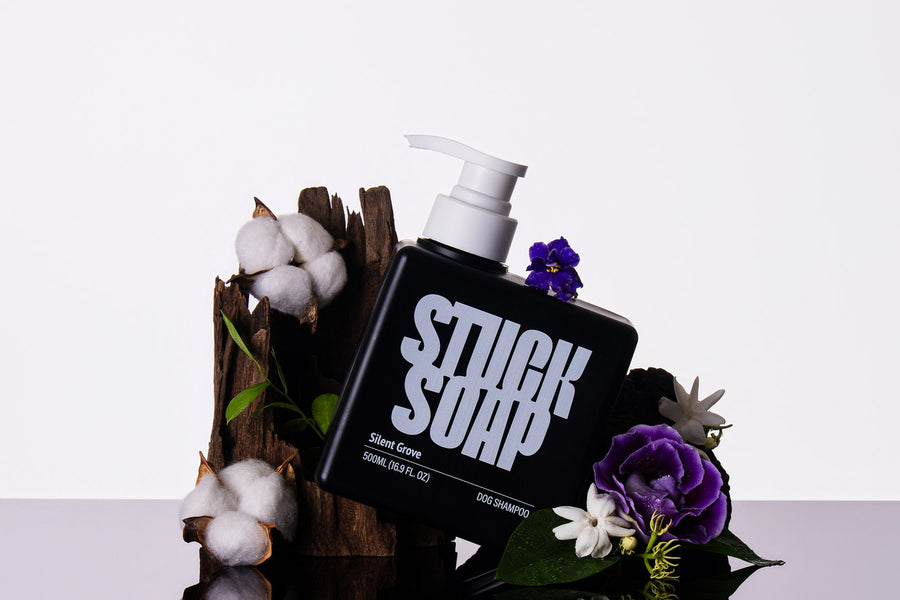
This is exactly why we built Stuck Soap around K-beauty botanicals from Jeju Island — green tea, camellia oil, and centella asiatica — at vegan, pH-balanced concentrations safe for sensitive seasonal skin. Both our liquid shampoo and shampoo bar formats are designed to support the skin barrier rather than disrupt it.
Quick Daily Pollen Removal Between Baths
Bathing alone isn't enough during peak pollen weeks. The Animal Humane Society and Toronto Humane Society both recommend a quick daily routine to remove allergens after every outdoor outing:
- Wipe down paws and belly. Use a damp microfiber cloth or fragrance-free pet wipe right at the door, before your dog walks through the house.
- Pay attention to between-the-toes. Pollen and grass particles love to lodge there and trigger licking.
- Wash your dog's bedding weekly. Bedding is essentially a pollen sponge during spring. Hot water and fragrance-free detergent help.
- Vacuum more often. HEPA-filter vacuums dramatically reduce indoor pollen reservoirs.
- Skip walks during peak pollen hours. Pollen counts are usually highest mid-morning and on dry, windy days. Early morning and after rain are safer windows.
This combination of weekly baths plus daily wipe-downs is what most veterinary dermatologists actually recommend in clinic — far more effective than either step alone.
The Bottom Line
Spring shouldn't mean a season of misery for your dog. Most pollen-related itching can be dramatically reduced with three things: a regular gentle bath, daily wipe-downs, and a shampoo that supports the skin barrier instead of stripping it. If symptoms persist despite a thoughtful routine, talk to your vet about whether immunotherapy or prescription support is right for your dog.
The goal isn't to bathe more — it's to bathe smarter. With the right shampoo and the right technique, a 15-minute spring bath can give your dog days of relief.
Frequently Asked Questions
How often should I bathe my dog during pollen season?
Most dogs with seasonal allergies do best with a full bath every 7 to 14 days during peak pollen months, paired with daily paw and belly wipe-downs. Severe cases may benefit from twice-weekly bathing, but only with a shampoo specifically formulated for sensitive skin.
Can I just rinse my dog with water to remove pollen?
A plain water rinse helps, but pollen grains are sticky and many won't release without a gentle shampoo. A quick water-only rinse after a walk is better than nothing — but a full shampoo bath every 1 to 2 weeks is what actually breaks the allergen cycle.
What is the best shampoo for dogs with spring allergies?
Look for a pH-balanced, sulfate-free shampoo with skin-soothing ingredients like green tea, centella asiatica, oatmeal, or ceramides. Avoid sulfates, artificial fragrance, and parabens. Always patch-test on a small area first if your dog has had reactions before.
Do pet wipes really help with pollen allergies?
Yes — daily wipe-downs of paws, belly, and underbelly can significantly reduce the pollen your dog tracks indoors and re-exposes themselves to. Use unscented, alcohol-free pet wipes or a damp microfiber cloth.
When should I see a vet about my dog's spring allergies?
If your dog has open sores, ear infections, hair loss, or symptoms that don't respond to a gentle bathing routine within 2 to 3 weeks, see your vet. Some dogs need antihistamines, immunotherapy, or prescription medications like Apoquel or Cytopoint to manage moderate-to-severe allergies.
Sources & References
- Allergies in Dogs: Signs, Symptoms, Treatments — American Kennel Club
- Pollen Allergies in Dogs: Symptoms and How To Treat Them — PetMD
- Signs Your Pet Has Seasonal Allergies and What You Can Do to Help — Animal Humane Society
- Seasonal Allergies in Dogs & Cats — VCA Animal Hospitals
- Washing the Dog Reduces Dog Allergen Levels — Journal of Allergy and Clinical Immunology (PubMed)
- 13 Signs Your Dog Has Pollen Allergies — VetDERM Clinic
Give Your Dog the K-Beauty Spa Treatment
Spring pollen is hard on sensitive skin — but the right bath can change everything. Stuck Soap's pH-balanced formulas use Jeju green tea, camellia oil, and centella asiatica to gently lift allergens and soothe the skin barrier, so your dog finishes the bath calmer, cleaner, and less itchy.
Shop Stuck Soap →Vegan · pH-Balanced · Jeju Island Botanicals · Zero Waste