


If you have ever scrolled through a Korean skincare aisle, you have probably seen the words "beta glucan" pop up on a serum bottle, an ampoule, or a calming mask. It is one of K-Beauty's quietest stars: less flashy than snail mucin, less trendy than fermented essences, but quietly outperforming hyaluronic acid in barrier-repair studies. So when researchers started turning their attention to beta glucan for dogs, the K-Beauty world took notice — because the same skin our K-Beauty formulators obsess over (sensitive, irritated, barrier-compromised) is exactly what so many of our dogs deal with every day.
This post unpacks what beta glucan actually is, why Korean cosmetic chemists treat it like a multi-tasker, and what the published veterinary research says about its real-world effects on dogs with itchy, inflamed, atopic skin. We will also be honest about what is still "exploring potential" versus what has clinical evidence behind it.
If your dog has ever scratched themselves raw, dealt with chronic flare-ups, or simply has reactive skin that flinches at the wrong shampoo, beta glucan is an ingredient worth getting to know.
Table of Contents
- What Is Beta Glucan? The K-Beauty Backstory
- Why K-Beauty Formulators Love Beta Glucan
- What the Research Says About Beta Glucan for Dogs
- How Beta Glucan Could Help Your Dog's Skin
- The K-Beauty Philosophy: Why It Translates to Dogs
- How to Use Beta Glucan Safely With Your Dog
- Frequently Asked Questions
- Sources & References
What Is Beta Glucan? The K-Beauty Backstory
Beta glucan is a naturally occurring polysaccharide — a long chain of sugar molecules — found in the cell walls of mushrooms, oats, barley, seaweed, and baker's yeast. In skincare, the most common cosmetic sources are oats (Avena sativa), yeast (Saccharomyces cerevisiae), and medicinal mushrooms like reishi or shiitake.
Korean beauty formulators have used beta glucan for years because of how the molecule behaves on skin. It forms a breathable, water-binding film on the surface, holds moisture more effectively than hyaluronic acid in some studies, and quietly tells the skin's immune cells to calm down. That last point is the key: beta glucan is not just a hydrator, it is an immunomodulator.
Different sources behave a little differently. Mushroom-derived beta glucan, a favorite in K-Beauty, is prized for its antioxidant and anti-inflammatory properties. Yeast-derived beta glucan binds to specific immune cell receptors (Dectin-1) on skin cells, triggering a repair cascade. Oat-derived beta glucan leans more into film-forming and moisture-trapping. All three end up doing the same general job: helping fragile, reactive skin feel calmer.
Why K-Beauty Formulators Love Beta Glucan
K-Beauty's whole framework is built around the skin barrier. Korean dermatology has long held that healthy skin is not about stripping, exfoliating, and "treating" — it is about building. The barrier comes first; everything else is downstream.
Beta glucan slots perfectly into that philosophy. Here is what makes it a darling of Korean cosmetic chemists:
- Soothes redness and irritation. Studies show beta glucan can measurably reduce visible redness and calm inflammation, making it a go-to for sensitive and post-procedure skin.
- Out-hydrates hyaluronic acid in some tests. Beta glucan can hold and trap water in the upper layers of skin even more efficiently than HA in certain comparison studies.
- Strengthens the barrier. By forming a flexible film and signaling repair pathways, beta glucan helps skin lose less water and recover faster from damage.
- Antioxidant defense. Mushroom-derived beta glucan provides additional protection against oxidative stress from pollution, UV exposure, and free radicals.
- Plays well with everything. Beta glucan is non-irritating, non-comedogenic, and stable across a wide pH range, which is why you see it in everything from gentle cleansers to overnight ampoules.
That combination — hydrating, soothing, barrier-supportive, immune-calming — is the exact "do everything quietly" profile K-Beauty formulators look for. And it is precisely what reactive dog skin needs.
What the Research Says About Beta Glucan for Dogs
Here is where beta glucan stands out from a lot of trendy K-Beauty ingredients: the veterinary research is real, and it is more promising than you might expect.
A 2024 review in Microorganisms looked at how beta glucan studies in humans and animal models translate to canine and feline veterinary care. The authors concluded that beta glucan shows meaningful promise across three areas of dog health: skin disease (especially atopic dermatitis), osteoarthritis, and inflammatory bowel disease. The proposed mechanism is the same one K-Beauty formulators care about: immunomodulation and reduced inflammation.
On the topical side specifically, a 2023 South Korean study published in the Journal of Veterinary Clinics tested a Synbio-Glucan functional skin spray on dogs with atopic dermatitis. The formulation combined beta glucan with oat lipids, oat peptides, oat flavonoids (avenanthramides), tocopherol (vitamin E), and a fermented probiotic component. After 30 days of topical application, both pruritus (itch) scores and skin lesion scores decreased, and no side effects were reported.
On the dietary side, an older but frequently cited double-blind, placebo-controlled trial fed dogs a complete dry food with or without 800 ppm beta-1,3/1,6-glucan for 8 weeks. Across five clinical signs of atopy — itching, redness, scaling, thickening, and skin stripping — the beta glucan group improved more than the placebo group. The researchers reported an additional 63% improvement attributable to the beta glucan supplementation.
Neither of these studies is enormous, and beta glucan is not a cure for atopic dermatitis. But the direction is consistent: in dogs with sensitive, inflamed, or allergy-prone skin, beta glucan appears to help measurably, both as a topical and as a supplement, with a very clean safety profile.
How Beta Glucan Could Help Your Dog's Skin
Translating the research into everyday dog-owner language, here is where beta glucan looks most useful for your dog's coat and skin:
1. Calming chronic itch. Pruritus is the single most common reason dog owners visit the vet for skin issues. Beta glucan's immunomodulatory effect helps tone down the overactive inflammatory response that drives a lot of that itching.
2. Supporting a fragile skin barrier. Dogs with atopic dermatitis, environmental allergies, or chronically dry skin tend to have a compromised barrier — moisture leaves too easily, irritants get in too easily. Beta glucan helps reinforce that barrier from the outside.
3. Reducing visible redness. The same anti-inflammatory action that quiets human flare-ups also seems to dial down visible irritation in dogs.
4. Speeding skin recovery. Beta glucan has been shown to support faster healing in minor abrasions and irritation in human studies, an effect researchers are now exploring in dogs after grooming nicks, hot-spot recovery, and post-bath sensitivity.
5. Working alongside other K-Beauty calming ingredients. Beta glucan plays beautifully with centella asiatica (cica), panthenol, ceramides, and green tea — the same ingredient stack that defines K-Beauty's sensitive-skin formulas. That synergy is exactly the model behind premium K-Beauty dog grooming.
The K-Beauty Philosophy: Why It Translates to Dogs
K-Beauty's central insight is that the skin barrier is the skin. Damage the barrier and everything cascades: moisture loss, irritation, oxidative stress, inflammation, slower healing. Protect the barrier and most "skin problems" quietly resolve themselves.
Dog skin operates by the same rules — only the barrier is even more fragile. A dog's stratum corneum is roughly three to five cell layers thick, compared to about 10 to 20 in humans. That is one reason dogs react so quickly to harsh shampoos, why their skin pH sits in a narrower range, and why ingredients that strip oils or disrupt the microbiome cause visible problems within days.
Beta glucan checks every box K-Beauty looks for: gentle, barrier-supportive, anti-inflammatory, deeply hydrating, and well-tolerated by even the most reactive skin. That makes it almost tailor-made for dogs.
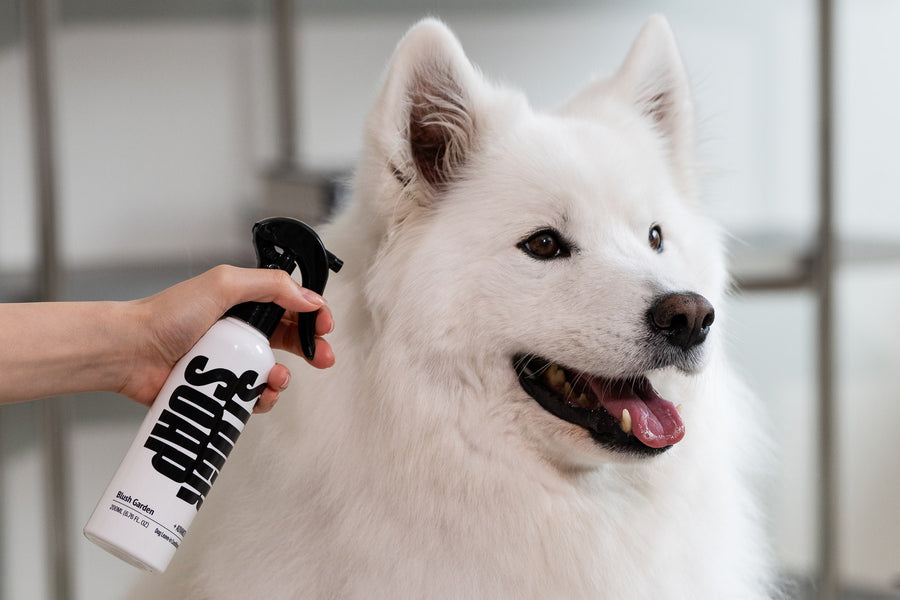
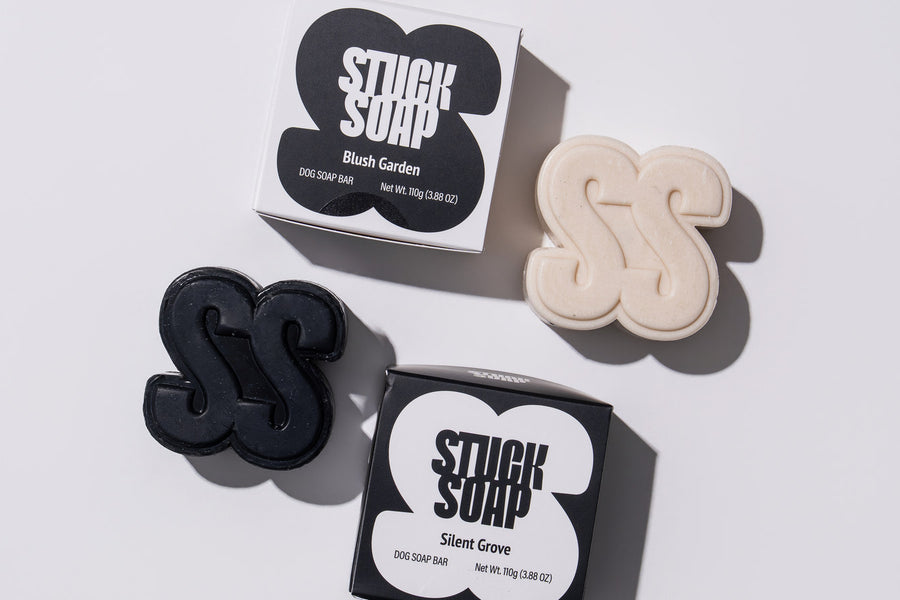
This is why the K-Beauty approach to dog grooming is gaining traction in the US. Brands like Stuck Soap are bringing the Korean philosophy — gentle ingredients, pH balance, barrier-first thinking, plant-derived actives like green tea, camellia oil, and centella asiatica from Jeju Island — into shampoos and bars formulated for dogs. Beta glucan fits naturally into that family of ingredients: it does not steal the show, it just makes everything else work better.
How to Use Beta Glucan Safely With Your Dog
Beta glucan is one of the safer cosmetic ingredients in either human or canine skincare. The Cosmetic Ingredient Review and the published veterinary studies have not flagged meaningful topical safety concerns. Still, a few practical tips matter:
Choose dog-formulated products. Even with safe ingredients, products made for humans often contain essential oils, fragrances, or preservatives that are not ideal for dogs. Use beta glucan in a shampoo, conditioner, or topical spray designed for canine skin.
Look for it in calming or sensitive-skin formulas. Beta glucan often appears alongside oat extract, centella asiatica, panthenol, or ceramides on the back of the bottle. That stack is a strong indicator the product is built for reactive skin.
Pair topical use with bath-time fundamentals. Lukewarm water, gentle massage, full rinse, and proper drying matter more than any single ingredient. Beta glucan helps the skin recover; it does not undo aggressive bathing technique.
Talk to your vet if your dog has diagnosed atopic dermatitis. Beta glucan can complement a treatment plan, but chronic skin disease deserves a real diagnosis. Veterinary dermatologists are also some of the people most interested in this ingredient right now — your vet may have thoughts on dietary beta glucan as well.
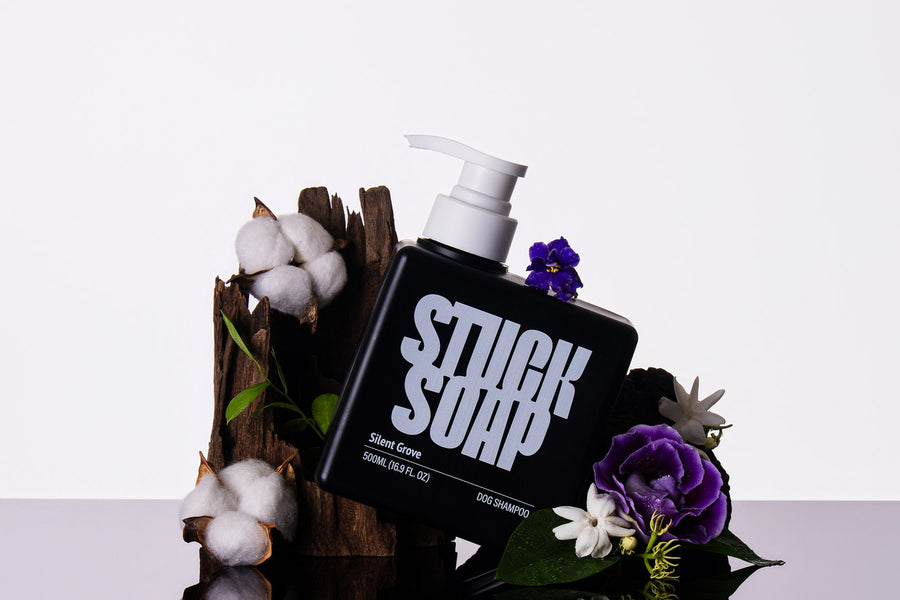
For everyday use, a gentle K-Beauty inspired shampoo with botanical actives like green tea, camellia oil, and centella asiatica delivers many of the same skin-supportive benefits — hydration, anti-inflammatory action, barrier support — that beta glucan provides. Stuck Soap's liquid shampoo and shampoo bars are formulated around that K-Beauty philosophy: gentle ingredients, pH balanced, plant-based, and built for dogs whose skin reacts to everything else.
Frequently Asked Questions
Is beta glucan safe for dogs?
Yes. Published topical and dietary studies in dogs have not reported safety issues. Beta glucan is considered one of the gentler skin-supportive ingredients available, and it is well-tolerated even by dogs with sensitive or allergy-prone skin.
What does beta glucan do for a dog's skin?
Beta glucan helps calm inflammation, supports the skin barrier, holds moisture in the upper layers of skin, and quiets the overactive immune response that drives chronic itch. Studies in dogs with atopic dermatitis showed reductions in pruritus, redness, scaling, and skin thickening with both topical and dietary beta glucan use.
Is beta glucan a K-Beauty ingredient?
Yes. Beta glucan is a staple in Korean skincare and is featured in serums, ampoules, calming masks, and barrier creams. K-Beauty formulators favor it because it supports the skin barrier, soothes redness, and hydrates deeply — all core principles of Korean skincare philosophy.
Does beta glucan help dogs with allergies?
Research suggests it may help. A double-blind canine trial showed roughly 63% additional improvement in atopy-related clinical signs (itching, redness, scaling, thickening, stripping) when dogs were fed beta-1,3/1,6-glucan for 8 weeks. Topical applications also reduced itch and lesion scores in dogs with atopic dermatitis. It is not a cure, but it is one of the better-studied gentle support ingredients.
Where does beta glucan come from in skincare?
Cosmetic beta glucan is typically extracted from oats, baker's yeast, or medicinal mushrooms like reishi and shiitake. Each source has slightly different properties, but all three support skin hydration, barrier strength, and inflammation control.
The Quiet Hero Your Dog's Skin Has Been Waiting For
Beta glucan does not get the headlines that snail mucin and fermented essences do, but it might be the most quietly important ingredient in the K-Beauty toolkit — and one of the most promising for dogs. The research backs it up: real reductions in itch, real improvements in barrier function, and a safety profile that lets it sit alongside the gentlest ingredients we put on canine skin.
If your dog deals with chronic itch, sensitivity, or flare-ups that no shampoo seems to fix, the answer is rarely a single ingredient. It is a philosophy: gentler formulations, healthier barrier, calmer skin. Beta glucan is one of the strongest tools we have for getting there.
Sources & References
- Translating Human and Animal Model Studies to Dogs' and Cats' Veterinary Care: Beta-Glucans Application for Skin Disease, Osteoarthritis, and Inflammatory Bowel Disease Management — Microorganisms (MDPI), 2024
- Application of a Synbio-Glucan Functional Spray for Canine Atopic Dermatitis — Journal of Veterinary Clinics, 2023
- Dietary Beta-1,3/1,6-Glucans Reduce Clinical Signs of Canine Atopy — American Journal of Animal and Veterinary Sciences
- Exploring the Properties and Application Potential of β-Glucan in Skin Care — Food Science & Nutrition, 2025
- What Is Beta-Glucan? The Hydrating Skin-Care Ingredient to Know — NewBeauty
- Beta-Glucan in Skin Care: What It Is and Is It Safe? — Paula's Choice Ingredient Dictionary
Give Your Dog the K-Beauty Spa Treatment
Stuck Soap is built on the same K-Beauty philosophy that makes ingredients like beta glucan so effective: gentle, barrier-first, plant-based, and pH balanced for sensitive skin. Our Jeju Island botanicals — green tea, camellia oil, and centella asiatica — deliver the soothing, skin-supportive benefits your dog deserves, in a vegan, eco-friendly format made for everyday bathing.
Shop Stuck Soap →Vegan · pH-Balanced · Jeju Island Botanicals · Zero Waste