


If you've spent any time scrolling K-beauty content this year, you've already met the ingredient. Sleek glass bottles, glowing skin, and a small gnarled root in the corner of the frame. Ginseng has been Korea's signature beauty plant for centuries, and in 2026 it's everywhere from luxury serums to TikTok routines. Which raises the obvious question for dog owners watching this trend: is ginseng for dogs a real thing, or strictly a human story?
The short answer is that it's complicated, fascinating, and worth understanding before you experiment. Ginseng (specifically Panax ginseng, or Korean ginseng) is one of the most studied botanicals in the world, with a growing body of dermatological research on its anti-inflammatory, antioxidant, and skin-barrier benefits. Some of that science genuinely translates to canine skin biology. Some doesn't. And the gap between topical use and oral supplementation matters enormously for dogs. This guide walks through what ginseng actually does at the cellular level, what we know about its application to dogs, and how the K-beauty philosophy behind it can upgrade your dog's grooming routine even without the root itself.
Table of Contents
- What Is Ginseng, and Why Is It a K-Beauty Hero?
- The Science of Ginsenosides for Skin
- Could Ginseng Benefit Your Dog's Skin and Coat?
- Topical vs Oral Ginseng for Dogs: A Critical Distinction
- The K-Beauty Mindset Behind Ginseng (and Why It Matters for Dogs)
- Bringing K-Beauty Thinking Into Your Dog's Routine
- Frequently Asked Questions
- Sources & References
What Is Ginseng, and Why Is It a K-Beauty Hero?
Ginseng refers to the root of plants in the Panax family. The most prized variety, Korean ginseng (Panax ginseng), has been cultivated on the Korean peninsula for over a thousand years. When that root is steamed and dried, it becomes red ginseng (홍삼, hongsam), the concentrated form Korean beauty brands love because its active compounds become more bioavailable through that processing.
The reason K-beauty obsesses over ginseng comes down to one word: adaptogen. Ginseng appears to help skin adapt to environmental stressors like UV, pollution, and dryness. Heritage brands like Sulwhasoo built empires around it, and 2026 trend reports place ginseng alongside Centella Asiatica, PDRN, and fermented extracts as the ingredients defining premium Korean skincare. What's new in 2026 is the form: plant-derived exosomes from ginseng are crossing from clinical settings into over-the-counter K-beauty products, which is exactly why pet owners are starting to ask whether dogs can share in the benefits.
The Science of Ginsenosides for Skin
Ginseng's beauty reputation isn't marketing, it's chemistry. The root contains a unique class of compounds called ginsenosides, with over 100 identified and names like Rb1, Rg1, Rg3, and Rh2 doing most of the heavy lifting in dermatology research.
According to a 2026 review in Frontiers in Pharmacology, ginsenosides influence multiple skin-relevant signaling pathways, including NF-κB/NLRP3 (the master switch of inflammation) and Nrf2/HO-1 (the antioxidant defense system). The practical impact: ginsenosides suppress pro-inflammatory cytokines like TNF-α, IL-1β, and IL-6, the same cytokines elevated in irritated, reactive skin. A separate systematic review documents wound-healing, anti-aging, and barrier-repair effects, with topical ginseng extract shown in human trials to increase skin elasticity by up to 25 percent over 12 weeks.
Three things matter for a dog-owner audience. First, the anti-inflammatory mechanism is universal mammalian biology — TNF-α and IL-6 do the same thing in dogs as they do in people. Second, the antioxidant effect targets oxidative stress from UV, pollution, and aging, all of which absolutely affect your dog. Third, the barrier-strengthening benefit (reducing transepidermal water loss) is exactly what a thinner, more permeable canine skin barrier needs.
Could Ginseng Benefit Your Dog's Skin and Coat?
Now the honest part. Most ginseng-and-skin research has been done in human cells, human trials, and rodent models. There is no large-scale veterinary dermatology trial showing that ginseng-infused dog shampoo cures itchy skin, so anyone selling you that promise is overstating the evidence.
That said, the canine research is interesting. A 2019 study in the Journal of Veterinary Medical Science administered Korean red ginseng extract to healthy Beagles over eight weeks and observed significant decreases in body weight, body condition score, and leptin levels with no safety issues at the tested dose. Pet nutraceutical companies now formulate ginseng for dogs as an oral adaptogen aimed at vitality, immunity, and stress response.
Topical application is less studied. The mechanisms suggest ginsenosides would behave similarly on canine skin (dampening inflammation, boosting antioxidant defense, reinforcing the barrier), but dog skin has a higher pH (7.0 to 7.5 versus 4.5 to 5.5 in humans), a thinner stratum corneum (3 to 5 cell layers versus 10 to 15), and faster absorption. Anything you put on a dog needs to be formulated specifically for canine skin, at the right concentration and pH. So is ginseng for dogs mechanistically plausible? Yes. Is it a proven hero ingredient in canine grooming yet? No. It's emerging, which is exactly the right way to think about most K-beauty crossover ingredients.
Topical vs Oral Ginseng for Dogs: A Critical Distinction
If you take one thing away from this guide, make it this: oral ginseng and topical ginseng are completely different conversations for dogs.
Oral ginseng for dogs means capsules, tinctures, or powders added to food. The studied benefits include immune support, stamina, stress response, and metabolic health. The risks include digestive upset, restlessness, increased heart rate, and potential allergic reactions. Ginseng can also interact with medications your dog may be taking, including diabetes and blood pressure drugs. The unambiguous answer: do not start oral ginseng without talking to your veterinarian first.
Topical ginseng for dogs is the K-beauty conversation, where ginseng extract is included in shampoos or coat treatments. The risk profile is lower because the dose is local and most of it rinses off, but it isn't zero. Some dogs are allergic to plant extracts. The pH has to be canine-appropriate, and the concentration has to be formulated for dogs, not borrowed from a human serum. A human-grade ginseng serum on your dog's coat is not the same as a vet-formulated dog shampoo with a properly diluted botanical extract.
The K-Beauty Mindset Behind Ginseng (and Why It Matters for Dogs)
Here's the bigger insight, and the one that translates cleanly from K-beauty into dog care. Ginseng is more than an ingredient. It represents a philosophy.
K-beauty's approach to skin is different from the conventional Western model. Instead of treating symptoms with harsh actives (strip the oil, kill the bacteria, exfoliate aggressively), Korean skincare prioritizes the skin barrier, layered hydration, gentle ingredients applied consistently, and a long view of skin health. Ginseng fits because it works with the skin's own systems: calming inflammation, supporting antioxidant defense, reinforcing the barrier.
Apply that mindset to dog grooming and a lot changes. Most conventional dog shampoos are built to clean fast and smell strong, often with stripping surfactants that disrupt the canine skin barrier. The K-beauty model says the opposite: respect the barrier, balance the pH, choose ingredients that support skin rather than fight it. That's why ingredients like green tea, Centella Asiatica, and camellia oil are showing up in premium canine products before ginseng does — they have the longest track record of pet-skin safety. Even without topical ginseng, you can use the ginseng mindset: choose products that reinforce, don't strip; that calm, don't irritate.
Bringing K-Beauty Thinking Into Your Dog's Routine
You don't need a 10-step Korean grooming routine to apply this philosophy. A few small upgrades do most of the work.
Start with pH. A dog shampoo formulated for canine skin pH (around 6.5 to 7.5) is the single most important upgrade for skin health. Anything labeled "human use" or "tear-free baby shampoo" is almost certainly wrong for dogs.
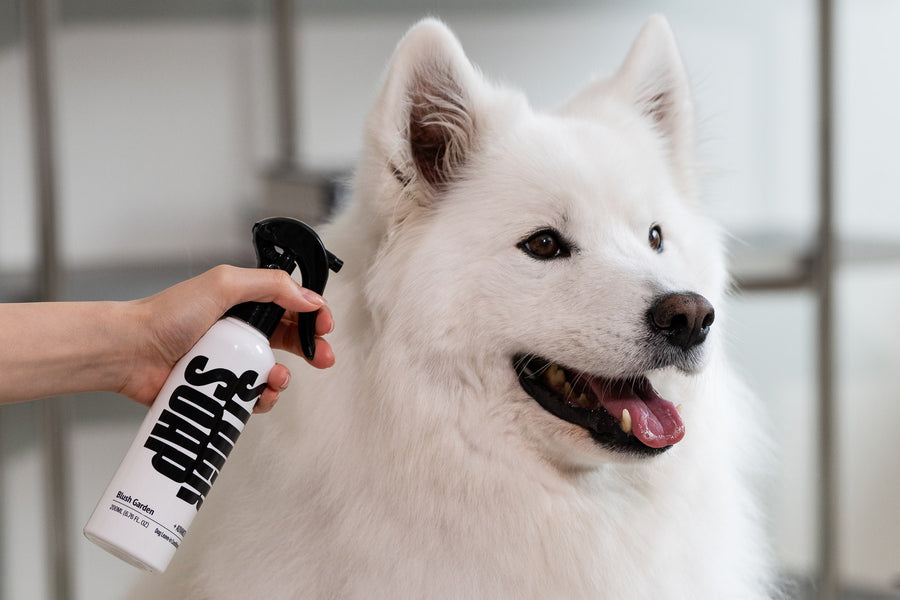
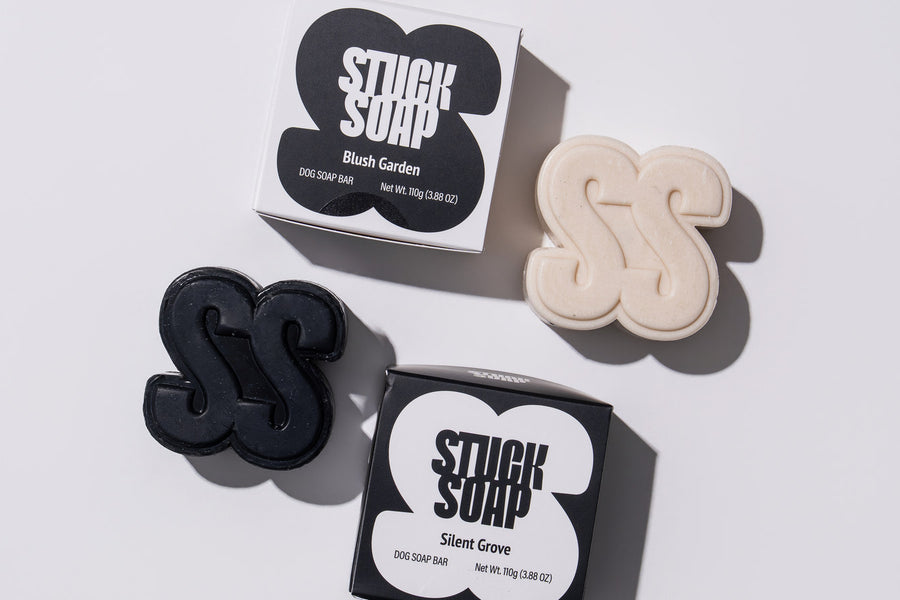
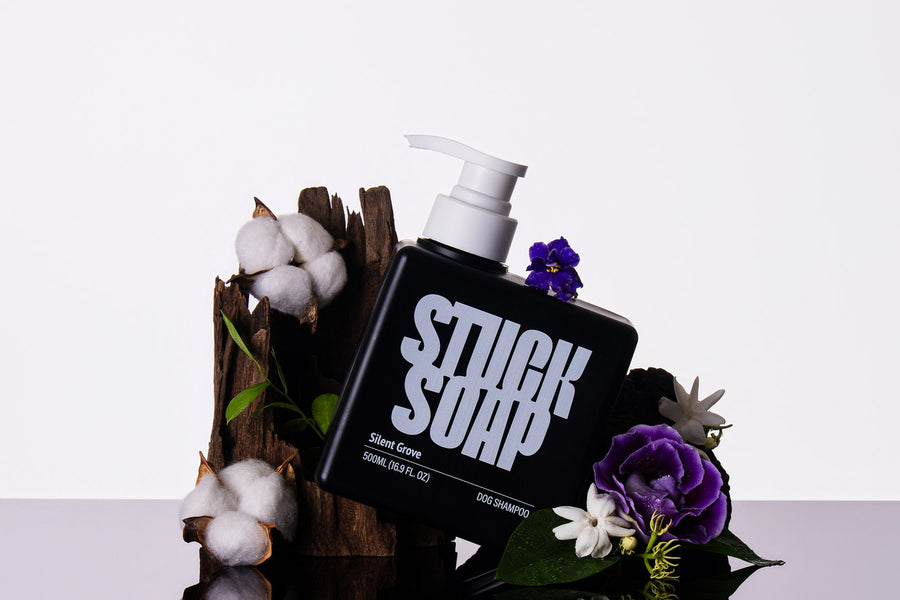
Choose proven K-beauty botanicals with canine safety data. Green tea (camellia sinensis) extract is one of the most antioxidant-rich, well-tolerated K-beauty ingredients for dogs, with anti-inflammatory and odor-control benefits. Camellia oil, Korea's "liquid gold," supports coat shine and barrier hydration without weighing down fur. Centella Asiatica is K-beauty's calming hero, especially valuable for sensitive or reactive skin. STUCK SOAP's vegan dog shampoos and bars are formulated around this exact trio of Jeju Island botanicals.
Bathe less, bathe better. K-beauty isn't about doing more, it's about doing the right things consistently. For most healthy dogs that means a bath every three to four weeks, a complete rinse (residue is a top cause of post-bath irritation), and a slow, full dry-down. Between baths, brush regularly to distribute natural oils.
Think long-term. The biggest gift K-beauty gave dog grooming is patience. Healthy skin shows up over months, not days. A dog on a barrier-stripping shampoo for two years won't transform overnight, but coat softness, smell, and skin calm will improve week by week. That's the ginseng philosophy at work, even without the ginseng itself.
Frequently Asked Questions
Is ginseng safe for dogs?
In small, vet-supervised doses, oral Korean red ginseng has shown a reasonable safety profile in canine studies, including an eight-week Beagle trial published in 2019. However, ginseng can cause restlessness, digestive upset, or allergic reactions in some dogs, and it can interact with medications. Never start oral ginseng without consulting your veterinarian. Topical ginseng in properly formulated pet products carries lower systemic risk but should still be patch-tested first.
What are the benefits of ginseng for dogs' skin?
Ginseng's active compounds, called ginsenosides, have demonstrated anti-inflammatory, antioxidant, and skin-barrier-supporting effects in human and laboratory studies. The mechanisms (suppressing inflammatory cytokines like TNF-α and supporting antioxidant defense) are biologically plausible for dogs, though large-scale canine dermatology trials specifically on topical ginseng are still limited. It's a promising K-beauty ingredient with emerging, not established, evidence in pet care.
Can I use a human ginseng serum on my dog?
No. Human skincare is formulated for human skin pH (4.5 to 5.5) and a thicker barrier (10 to 15 cell layers), while dogs have a higher pH (7.0 to 7.5) and a thinner barrier (3 to 5 cell layers) that absorbs topical ingredients faster. Use only products formulated specifically for dogs, and check that the brand uses canine-appropriate concentrations and pH.
Why is ginseng such a big deal in K-beauty?
Ginseng has been a heritage Korean beauty ingredient for centuries, and modern dermatology has confirmed its anti-aging, antioxidant, and barrier-strengthening effects. In 2026, ginseng-derived exosomes and fermented red ginseng are among the most-talked-about K-beauty innovations, alongside Centella Asiatica, ceramides, and PDRN. It represents the broader K-beauty philosophy: gentle, science-backed ingredients that support skin barrier health.
What K-beauty ingredients are actually proven for dogs right now?
Green tea extract, camellia oil, and Centella Asiatica (cica) have the strongest combination of K-beauty heritage and pet-skin safety data. They're commonly used in premium K-beauty inspired dog shampoos, including STUCK SOAP's Jeju Island botanical line. These three ingredients deliver the antioxidant, calming, and barrier-supporting benefits that the K-beauty philosophy is built around, with established tolerance in canine grooming.
Sources & References
- Immunomodulatory functions of ginsenosides in skin diseases: molecular mechanisms and therapeutic prospects — Frontiers in Pharmacology (2026)
- Effect of anti-skin disorders of ginsenosides: A Systematic Review — PMC / Journal of Ginseng Research
- Anti-obesity effects of Korean red ginseng extract in healthy Beagles — Journal of Veterinary Medical Science (PubMed)
- Medicinal plants as therapeutic options for topical treatment in canine dermatology: A systematic review — PMC
- From Ginseng to PDRN: 5 Korean Skincare Ingredients Powering 2026's K-Beauty Trend — Who What Wear
- K-Beauty Trending Ingredients & Formulas 2026 — K-Beauty Packaging Resource
Give Your Dog the K-Beauty Spa Treatment
Even without ginseng on the label, the K-beauty philosophy behind it is what makes STUCK SOAP different. Our vegan shampoos and bars are built on Jeju Island botanicals — green tea, camellia oil, and Centella Asiatica — with pH balanced specifically for canine skin. The barrier-first, gentle-first mindset that powers Korea's beauty industry, bottled for your dog.
Shop Stuck Soap →Vegan · pH-Balanced · Jeju Island Botanicals · Zero Waste