


If you've spent time in the K-Beauty corner of TikTok or Sephora, you've seen it: bottles of clear, slightly slimy essence promising glass skin and faster-healing breakouts. The hero ingredient inside? Snail mucin — and in 2026, it's still one of the most-Googled K-Beauty ingredients in the United States.
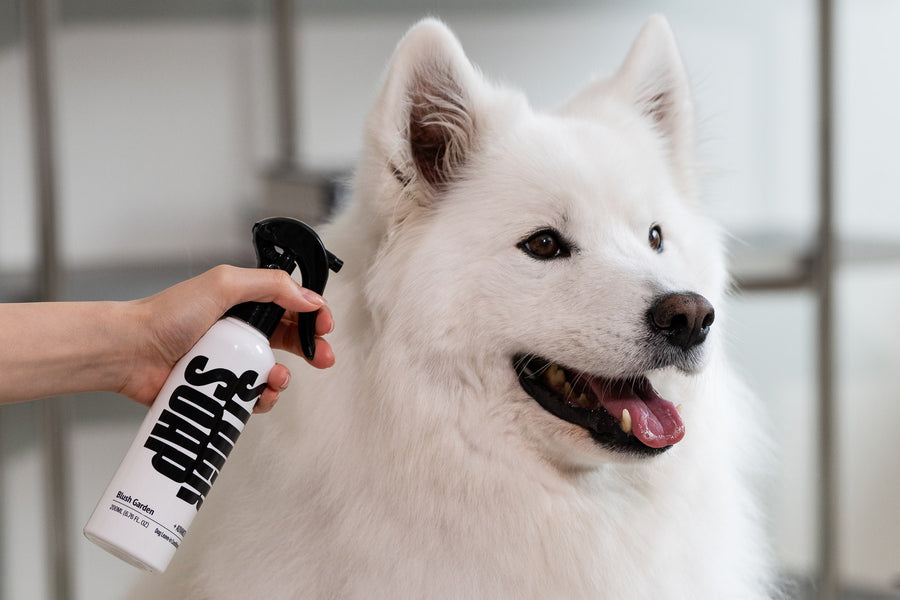
Now dog parents are asking the natural next question: if snail mucin is this gentle and this effective on sensitive human skin, could snail mucin for dogs be the next frontier in canine skincare? It's a fair question, especially as K-Beauty's ingredient-first philosophy is rapidly being adopted by premium pet care brands like STUCK SOAP.
This guide breaks down what snail mucin actually is, what the early canine research shows, and where it sits in the broader K-Beauty for dogs movement — without overpromising what hasn't been proven.
Table of Contents
- What Is Snail Mucin, Really?
- Why K-Beauty Made Snail Mucin a Superstar
- Snail Mucin for Dogs: What the Science Actually Shows
- Why Your Dog's Skin Reacts Differently Than Yours
- The K-Beauty for Dogs Movement (and Where STUCK SOAP Fits)
- How to Approach K-Beauty Ingredients for Your Dog Safely
- Frequently Asked Questions
- Sources & References
What Is Snail Mucin, Really?
Snail mucin — the technical name is snail secretion filtrate, or SSF — is the clear, viscous fluid that snails produce to protect, repair, and lubricate their own bodies as they move. In skincare, it's most commonly sourced from the common garden snail, Helix aspersa.
What makes it pharmacologically interesting is what's inside the mucin. Researchers have identified a complex blend of skin-active compounds, including:
- Glycoproteins and proteoglycans that help reinforce the skin's natural barrier.
- Hyaluronic acid, the gold-standard humectant that pulls and holds water in the skin.
- Glycosaminoglycans (GAGs), which act like microscopic sponges trapping moisture.
- Copper peptides and antimicrobial peptides, both linked to wound repair and microbiome balance.
- Allantoin and trace minerals — zinc, copper, iron — that support cell turnover.
A frequently cited 2020 split-face human trial found that an 80% snail mucin cream applied twice daily for four weeks significantly improved dermal density, elasticity, and moisture retention. That multi-functional hydration-plus-barrier benefit is what made K-Beauty formulators put it on the map.
Why K-Beauty Made Snail Mucin a Superstar
K-Beauty's core philosophy is gentle, layered, ingredient-first skincare focused on the skin barrier. Snail mucin checks every one of those boxes at once:
It hydrates without irritating. Unlike retinoids, strong acids, or fragrance-heavy oils, snail mucin's hydration comes from glycoproteins the skin already recognizes — suitable for sensitive or compromised skin.
It supports the skin barrier. Studies suggest snail mucin can stimulate keratinocytes (the cells forming the skin's outer barrier) and fibroblasts (the cells producing collagen and elastin).
It calms inflammation. Peptides and antioxidants in SSF show anti-inflammatory activity in lab models — the reason it's a go-to for redness- and eczema-prone skin.
That last point is the bridge into a serious scientific conversation about snail mucin in veterinary dermatology.
Snail Mucin for Dogs: What the Science Actually Shows
Here's where things get interesting. In 2022, researchers published a study in Animals (an MDPI peer-reviewed journal) titled Snail Mucus Filtrate Reduces Inflammation in Canine Progenitor Epidermal Keratinocytes (CPEK).
The team used CPEK cells — a canine epidermal keratinocyte cell line commonly used to model canine atopic dermatitis (cAD) in vitro. Atopic dermatitis is one of the most common chronic skin diseases in dogs, with prevalence estimates from roughly 3–15% of the general dog population (higher in allergy-prone breeds).
The findings, in plain English: snail secretion filtrate reduced multiple pro-inflammatory cytokines involved in cAD — specifically IL-6, IL-8, and IL-17A. These are the signals that drive the itch-scratch-inflame cycle in allergic dogs.
The authors concluded that the data "highlight the opportunities for further studies to be able to identify new, natural and safe treatments" for canine atopic dermatitis, suggesting snail mucin may represent a promising natural avenue.
A few important caveats:
- This was an in vitro (cells in a dish) study — not a clinical trial in living dogs.
- The dose, formulation, and concentration that would be safe and effective on a dog's intact skin in a real shampoo or topical product haven't been standardized yet.
- Veterinary experts note that for accidental ingestion of human snail mucin serums, ginseng and snail mucin are generally considered low-toxicity — though mild GI upset is possible from ingesting any unfamiliar substance, and a vet call is always the safer move.
So the honest summary: snail mucin for dogs is a scientifically credible direction, not a finished story. The early data is encouraging enough that some boutique European pet brands have already launched snail-mucin shampoos, but it's not yet a mainstream ingredient in US-formulated dog products.
Why Your Dog's Skin Reacts Differently Than Yours
Before pouring your COSRX essence on your Shih Tzu, it's worth knowing that canine skin is structurally different from human skin in three ways that matter for ingredient selection:
1. Dog skin is thinner. The canine epidermis is roughly three to five cell layers thick, vs. ten or more in humans. That makes it more permeable — gentle ingredients absorb efficiently, but harsh ones cause more damage.
2. Dog skin pH is more neutral. Human skin sits around pH 4.7–5.5. Canine skin is closer to pH 6.5–7.5. Products formulated for human skin (especially acidic exfoliants and K-Beauty toners) are often too acidic for dogs.
3. Dog skin has fewer ceramides and a thinner stratum corneum. Combined with the higher pH, this makes dogs inherently more vulnerable to barrier disruption — which is why epidermal barrier dysfunction is a central driver of canine atopic dermatitis.
The takeaway: K-Beauty ingredients known for repair, hydration, and calming — snail mucin, centella asiatica, green tea, camellia oil — are conceptually well-suited to dog skin because they're gentle. But the formulation has to be designed for canine pH, not lifted from a human serum.
The K-Beauty for Dogs Movement (and Where STUCK SOAP Fits)
What's happening in the market is bigger than any single ingredient. There's a category-wide shift sometimes called the skinification of pet care: dog grooming products are being reformulated with the same ingredient-first, barrier-respecting logic that drives premium K-Beauty.
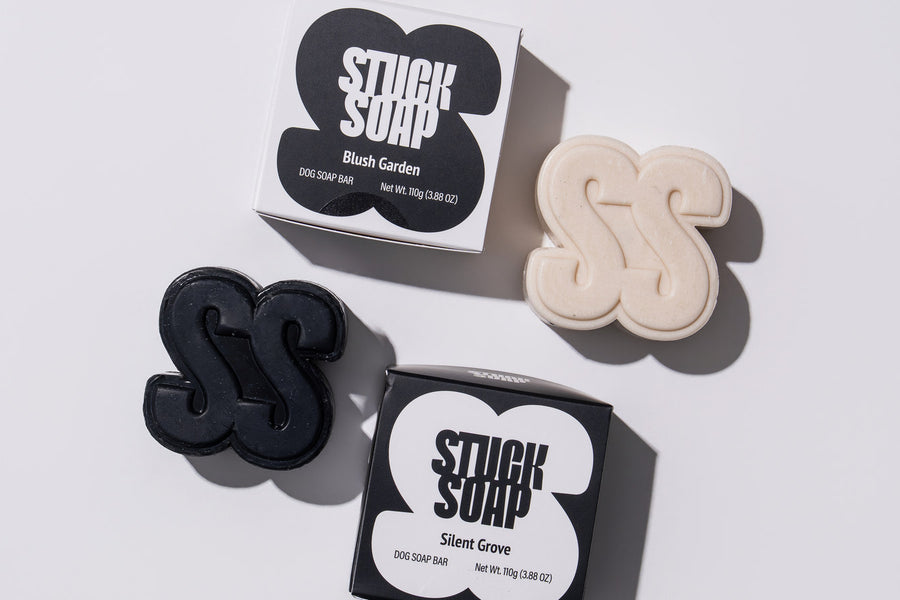
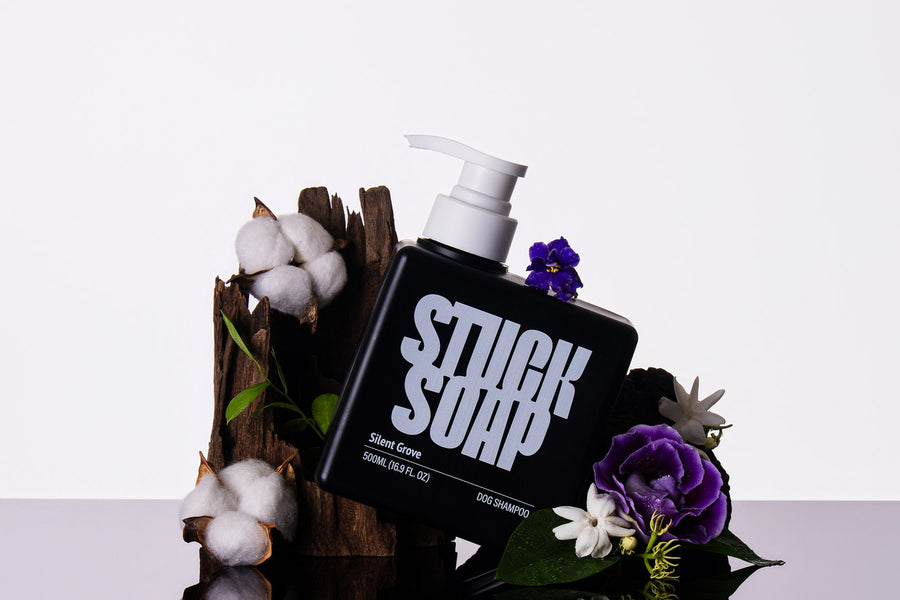
STUCK SOAP was built around exactly this philosophy. Three K-Beauty ingredients with the strongest existing evidence for canine skin and coat — and the smallest gap between human and dog formulation — are already core to our products:
- Centella Asiatica (Cica) — K-Beauty's #1 calming ingredient, rich in madecassoside and asiaticoside. Repeatedly shown to support irritated, redness-prone skin.
- Green Tea Extract — Sourced from Jeju Island, Korea, the same region prized for premium K-Beauty botanicals. Polyphenol-rich and antioxidant.
- Camellia Oil — Korea's "liquid gold," used for centuries to nourish hair and skin. Excellent for coat shine and moisture.
All three are paired with a pH balance designed for dogs (not humans), a vegan, plant-based formula, and zero-waste packaging — the practical translation of K-Beauty's "gentle, layered, ingredient-first" thesis into a dog wash.
Snail mucin isn't currently in the STUCK SOAP formula, and we won't add it just because it's trending. We're watching the canine clinical research carefully — and if a body of evidence confirms it's safe and meaningfully effective in a dog-appropriate formulation, it's exactly the kind of ingredient our brand is built to incorporate.
How to Approach K-Beauty Ingredients for Your Dog Safely
If you're K-Beauty curious for your dog, here are the practical guardrails:
Don't use your own human serums on your dog. Human snail mucin essences, HA serums, and Cica creams are formulated for human pH and may contain fragrances, alcohols, or preservatives that aren't dog-safe.
Look for K-Beauty-inspired pet brands. Good signals: the brand explicitly cites pH balance for dogs, lists active K-Beauty ingredients, and avoids common irritants like sulfates, artificial dyes, and synthetic fragrance.
Start gentle. If your dog has a known skin condition, talk to your vet before changing products. Atopic dermatitis benefits from a stable, predictable routine.
Watch the skin barrier, not just the smell. Care how your dog's skin feels two days after a bath — not just how the coat smells the night of. Soft, non-flaky, non-itchy skin is the real KPI.
Be patient. Real ingredient benefits — barrier repair, less flakiness, better coat shine — typically show up over four to eight weeks of consistent use, not overnight.
Frequently Asked Questions
Is snail mucin safe for dogs?
Topical snail mucin, in formulations designed for canine skin, appears to be low-risk based on early in vitro research and existing pet products in some European markets. However, it has not been studied as extensively in dogs as in humans, and there is no widely accepted clinical guideline yet. Don't apply human snail mucin serums to your dog without veterinary guidance — they're formulated for human skin pH.
Does snail mucin help with dog allergies or itchy skin?
A 2022 in vitro study found that snail mucus filtrate reduced inflammatory cytokines (IL-6, IL-8, IL-17A) in canine epidermal keratinocyte cells used to model atopic dermatitis. That's promising preliminary evidence, but it has not yet been confirmed in clinical trials on living dogs. If your dog has chronic itchy skin, see your vet.
What happens if my dog licks human snail mucin essence?
A small lick of a human snail mucin product is generally considered low-toxicity, but it can cause mild GI upset (drool, vomiting, soft stool) because of unfamiliar ingredients like fragrance, alcohol, or preservatives. Monitor your dog and call your veterinarian or the ASPCA Animal Poison Control Center if symptoms persist or escalate.
What K-Beauty ingredients are actually proven for dogs?
The K-Beauty ingredients with the strongest current support for canine skin and coat are centella asiatica (calming), green tea extract (antioxidant, anti-inflammatory), and camellia oil (moisturizing, coat-glossing). These are core ingredients in STUCK SOAP. Snail mucin is a promising but earlier-stage candidate.
Why can't I just use my own K-Beauty products on my dog?
Three reasons: dog skin pH is more neutral (around 6.5–7.5) than human skin, canine skin is thinner and absorbs ingredients faster, and many human products contain fragrances or actives (acids, retinoids, essential oils) that can irritate or harm dogs. Always use products formulated specifically for canine skin.
The Bottom Line
Snail mucin earned its K-Beauty crown by hydrating, repairing the skin barrier, and calming inflammation — without irritating sensitive skin. The early canine research is genuinely encouraging, especially for dogs predisposed to atopic dermatitis. But it's still early days. The safest way to bring a K-Beauty mindset into your dog's routine today is to focus on ingredients with a longer track record in canine formulations: centella asiatica, green tea, and camellia oil — all at a dog-appropriate pH, with no fragrance, alcohol, or sulfates in the way.
That's the bar STUCK SOAP is designed to hit. K-Beauty for dogs isn't about chasing every trend — it's about respecting the skin barrier and giving your dog the same thoughtful, ingredient-first care you'd give yourself.
Sources & References
- Snail Mucus Filtrate Reduces Inflammation in Canine Progenitor Epidermal Keratinocytes (CPEK) — Animals (MDPI), 2022, via PubMed Central
- Canine Atopic Dermatitis: Prevalence, Impact, and Management Strategies — Veterinary Medicine: Research and Reports, via PubMed Central
- From Nature to Nurture: The Science and Applications of Snail Slime in Health and Beauty — PubMed Central
- The Truth About Snail Mucin for Skin Care — Mayo Clinic Press
- Get the Facts on Snail Mucin and Eczema — National Eczema Association
- Update on the Role of Genetic Factors, Environmental Factors and Allergens in Canine Atopic Dermatitis — Veterinary Dermatology, Wiley
Give Your Dog the K-Beauty Spa Treatment
K-Beauty for dogs isn't about chasing trends — it's about pairing gentle, proven ingredients with a formulation that actually respects your dog's skin barrier. STUCK SOAP brings together Jeju green tea, camellia oil, and centella asiatica in a vegan, pH-balanced wash designed specifically for dogs.
Shop Stuck Soap →Vegan · pH-Balanced · Jeju Island Botanicals · Zero Waste