

To clean a muddy dog without a bath, work in four steps: towel off loose mud and water, spot clean only the dirty zones (paws, legs, belly) with a small amount of shampoo and lukewarm water, dry those areas completely, then refresh the coat once it is fully dry. Most rainy fall walks only dirty the bottom third of a dog, so the cleanup should stay there too.
November rain carpets the sidewalks with wet leaves and turns park paths into a mix of clay, grit, and leaf mush that clings to fur. Your dog comes home happy. Your hallway does not. The reflex is to head straight for the tub, but a full bath after every soggy outing is more than the situation calls for, and it can be harder on the skin than the mud was. Here is a routine for dogs of every age that handles the mess where it actually lives.
Why a Full Bath After Every Muddy Walk Is Usually Too Much
The skin barrier does quiet, important work
A dog's skin produces natural oils that help keep it supple and the coat protected. A full shampoo rinses away some of those oils along with the dirt. Every few weeks, the skin has time to rebalance. Several times a week through a wet season, it keeps starting over. In an American Kennel Club article on bath frequency, groomer Monica Handy puts it simply: "Overbathing could strip too much oil from the skin."
What general guidance says about bath frequency
There is no single schedule that fits every dog. The AKC's guidance on bathing stresses that coat type, activity level, and skin condition all shape how often a dog needs a full wash, and one groomer quoted there suggests a range of roughly weekly to every four to six weeks for medium and large coats. That is general guidance from outside experts, not a rule, and your veterinarian is the right person to set a schedule for a dog with known skin concerns. The point for fall is this: a muddy walk is a localized mess, and a localized mess calls for a localized cleanup.
Spot cleaning, defined
Spot cleaning means washing only the parts of the dog that actually got dirty, usually the paws, lower legs, belly, and sometimes the chest or the backs of the thighs, while leaving the rest of the coat alone. It is the middle ground between a quick wipe and a full bath, and it fits neatly into a broader plan for dog care between baths.
How to Clean a Muddy Dog Without a Bath: The Four-Step Routine
The routine in order:
- Towel: Blot and squeeze out water and loose mud at the door.
- Spot clean: Lather and rinse only the dirty zones.
- Dry completely: Towel again, then check between the toes and under the belly.
- Refresh: Once the coat is fully dry, a light mist and a brush.
Step 1: Towel off at the door
Keep a dedicated towel by the entry so the first contact happens before your dog hits the rug. Wrap each paw and squeeze rather than scrub, then press the towel along the legs and belly to pull out standing water. Scrubbing wet mud mostly pushes it deeper into the coat.
Step 2: Spot clean only the dirty zones
Fill a basin with lukewarm water and wet only the areas that need it. Work a small amount of shampoo into those zones with your fingertips, then rinse until the water runs clear. Leftover shampoo residue between the toes or on the belly is a common reason dogs keep licking after a cleanup, so take your time with the rinse.
Step 3: Dry completely, then refresh
Drying gets its own section below because it matters more than most people expect. Once the cleaned areas are fully dry, brush the coat to lift flattened fur and leaf bits. That is also the moment for a light leave-in product. Applying anything to a damp coat just traps moisture, so wait.
Spot Cleaning a Muddy Dog Without a Bath, Zone by Zone
Paws
Paws collect the most and hide it best. Mud, grit, and small leaf fragments pack into the spaces between the toes and around the pads. The AKC's paw care guide recommends gently spreading the toes as you clean so you can spot debris and irritation, then drying thoroughly. Dip one paw at a time in the basin, lather between the toes, rinse, and move on. If paws tend to carry a stubborn smell even when clean, our piece on why dog paws smell like corn chips explains what is usually going on.
Legs
Feathered legs on spaniels, setters, and golden retrievers act like mops. Work the lather downward with the hair growth and rinse the same way. For short coats, a wet washcloth with a little lather often does the job.
Belly and chest
Low-riders like dachshunds, corgis, and basset hounds come home with bellies full of leaf debris. Support your dog with one arm and lather with the other hand. Belly skin is thinner than the back, so keep the water lukewarm and your touch gentle.
| Zone | What collects there in fall | Spot-cleaning approach | Dry check |
|---|---|---|---|
| Paws | Packed mud, grit, leaf fragments between toes | Dip one paw at a time, lather between toes, rinse well | Spread toes and dry each gap |
| Lower legs | Splash mud, burrs, clinging leaves | Lather downward with hair growth, rinse the same way | Press towel along the leg, feel near the skin |
| Belly and chest | Wet leaf debris, puddle water | Gentle lather, lukewarm water, thorough rinse | Part the fur and check the skin is dry |
| Rest of the coat | Rain, light dampness | Towel only, no shampoo needed | Brush once dry |
Compared with a full bath, this takes less time and water and leaves the clean parts of the coat alone. A full bath still has its place when your dog is muddy from ears to tail. For those days, our guide on how to bathe a dog without making a mess will help.
Drying Completely Matters More Than You Think
Why damp fur is the real fall problem
Fur that stays damp for hours between the toes and under the belly tends to produce that familiar wet-dog smell, and in fall many dogs get damp twice a day without fully drying in between. If your dog seems to smell stronger this time of year, our article on why dogs smell more in fall covers the usual reasons.
A drying checklist
- Use a second, dry towel.
- Spread the toes and press the towel into each gap.
- Part the belly fur and feel the skin, not just the surface of the coat.
- For thick or double coats, a blow dryer on the cool or low setting, held at a distance, speeds things up. Keep it moving and never point it at the face.
- Let your dog finish air-drying in a warm room, not back outside.
When Mud Is Not Just Mud: Fall Hazards to Check For
Things the walk can leave behind
Lawn treatments, early de-icers, wild mushrooms, and antifreeze from leaking cars all show up on fall paths. The Merck Veterinary Manual notes that antifreeze has a sweet taste and that poisoning cases in colder climates cluster in fall, winter, and early spring. Rinsing paws after a walk helps keep residue from being licked off later, but rinsing is not a substitute for care. If you think your dog licked, ate, or walked through something toxic, call your veterinarian or an animal poison control line right away.
Signs that belong with your veterinarian
Spot cleaning is a good moment to look closely. Book a vet visit instead of reaching for shampoo if you notice:
- Cuts, cracked or bleeding pads, or a torn nail
- Limping or favoring a paw
- Redness, swelling, or bumps between the toes
- Persistent licking or chewing at the feet
- An odor that lingers even after the area is clean and dry
Grooming products are cosmetic. They are not a treatment for any of these.
Practical Takeaways for November Walks
Build a cleanup station by the door
The routine only works if it is easier than skipping it. Keep a basket by the door with two towels, a small basin, a shampoo bar in a draining dish, and a brush.
The roles in the kit
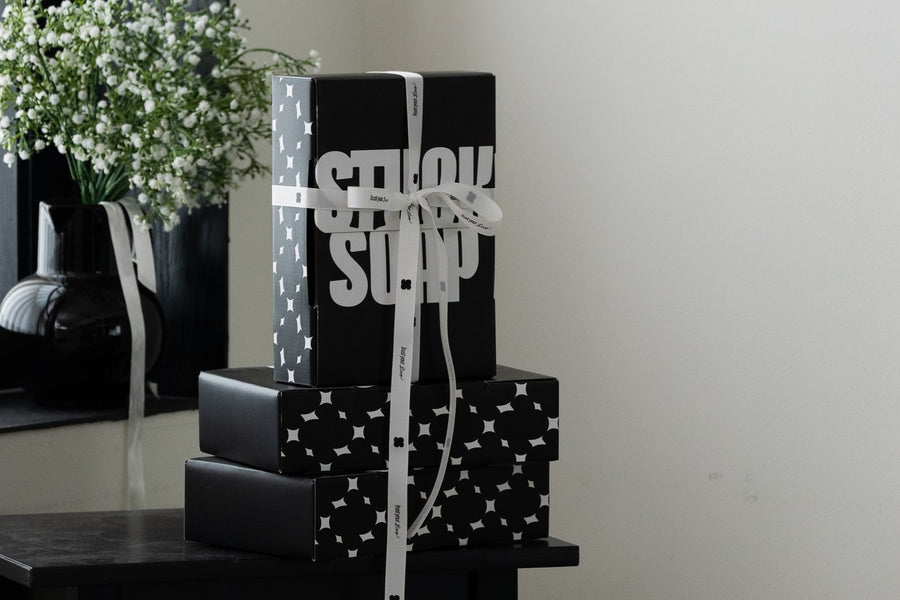
This routine needs two products with different jobs. For spot cleaning, a shampoo bar is easy at the door: wet it, rub it between your palms, and work the lather into paws, legs, and belly. The STUCK SOAP Shampoo Bar is pH-balanced for dog skin and made with Green Tea, Camellia Oil, and Centella Asiatica, ingredients chosen with the skin barrier in mind. It produces a fine-bubble lather that rinses out cleanly, and it is a zero-waste bar with no bottle to throw away. If you are new to bars, here is how to use a dog shampoo bar.
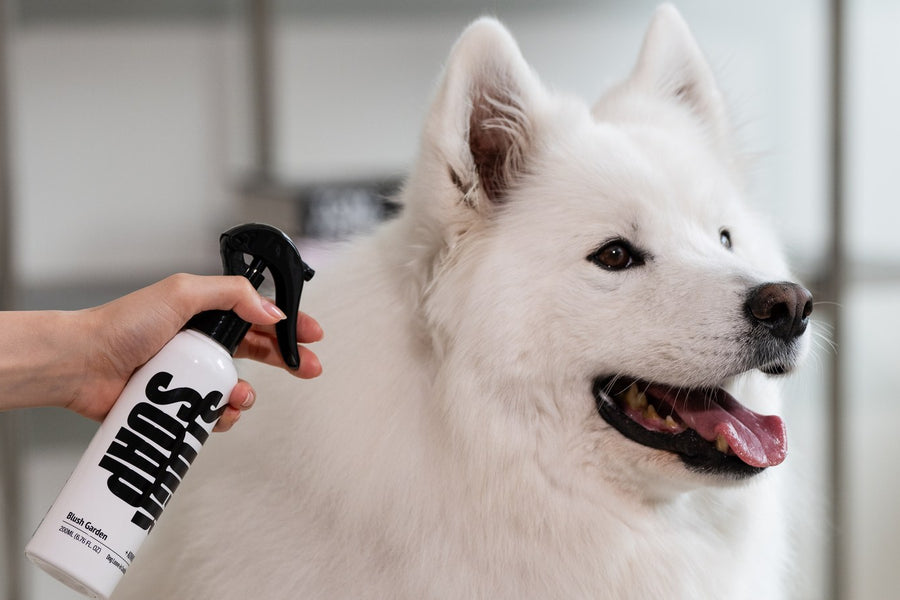
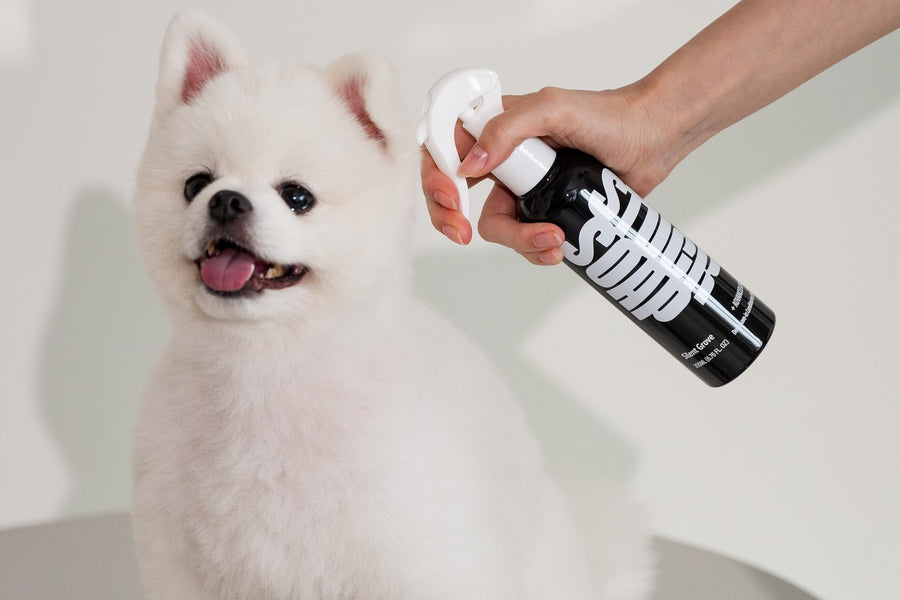
For the refresh step, the STUCK SOAP Leave-In Conditioning Spray is a no-rinse, lightweight mist meant for a coat that is already fully dry. Spray lightly from a short distance, then brush through. Its formula includes three patented Korean actives: Mung Bean Sprout Extract (KR patent 10-1841429), chosen as a botanical conditioning ingredient; Tannin Complex HR (KR patent 10-0955389), a plant-derived complex; and ODOR-BYE (KR patent 10-2746186), selected for a light, everyday refresh formula. More on that category in our guide to leave-in conditioner for dogs. Both come in Silent Grove (earthy) and Blush Garden (floral), and you can see the full lineup at stucksoap.com.
Quick rules to keep
- Clean the mess, not the whole dog.
- Rinse more than you think you need to.
- Dry to the skin, especially between the toes.
- Refresh only once the coat is completely dry.
If you share your home with an older dog who finds even short cleanups tiring, our guide to cleaning a senior dog without a bath adapts these ideas for them. For the bigger seasonal picture, see our fall dog grooming routine.
Muddy Dog Cleanup FAQ
How do you clean a muddy dog without a bath?
Towel off loose mud and water first, then spot clean only the dirty areas, usually paws, legs, and belly, using lukewarm water and a small amount of dog shampoo. Rinse thoroughly, dry those areas completely, including between the toes, and brush the coat once it is fully dry. The clean parts of the coat stay untouched.
Is it bad to bathe my dog after every muddy walk?
A full bath after every walk is usually more than a dog needs. General grooming guidance, including advice published by the American Kennel Club, notes that overbathing can strip natural oils from the skin. Spot cleaning the dirty zones handles most fall walks, and your veterinarian can advise on a bath schedule for your dog.
Should I let mud dry before cleaning my dog?
For thick, wet mud, letting it dry briefly on a mat can make the heavy clumps easier to lift or brush away. For everyday splashes, towel off right at the door and spot clean. Either way, the paws should be rinsed fairly soon after the walk so residue from paths and driveways is not licked off later.
How do I dry my dog's paws properly?
Use a dry towel, not the one from the door. Spread the toes gently and press the towel into each gap, then check the pads and the fur around them. For dogs with furry feet, a blow dryer on a cool or low setting held at a distance helps. Let your dog finish drying indoors.
When should I call the vet after a muddy walk?
Call your veterinarian if you see cuts, cracked or bleeding pads, limping, redness or bumps between the toes, persistent licking, or an odor that stays after cleaning. Call right away if you suspect your dog touched or swallowed antifreeze, lawn chemicals, de-icers, or wild mushrooms. Grooming products cannot treat any of these.
Can I use a leave-in spray on a damp dog?
It is better to wait until the coat is completely dry. Spraying a damp coat adds moisture to fur that is already wet, which works against the drying step. Once your dog is fully dry, a light mist from a short distance followed by a quick brush is enough for a refresh after spot cleaning.
Sources
- American Kennel Club. "How Often Should You Bathe Your Dog?" akc.org
- American Kennel Club. "How to Clean and Care for Your Dog's Paws." akc.org
- Merck Veterinary Manual. "Ethylene Glycol (Antifreeze) Poisoning." merckvetmanual.com
Make the door-side cleanup easy this rainy season. Pick up the Shampoo Bar for spot cleaning and the Leave-In Conditioning Spray for the dry-coat refresh, in Silent Grove or Blush Garden, at stucksoap.com.