

A dog grooming routine by coat type comes down to three settings: how often you brush, how often you bathe, and what you change when the season or the smell changes. Find your dog's coat type, pick the situation you're in today, and fill in the worksheet below. Treat the cadences as starting points and adjust them over a few weeks.
This is the last stop in our coat-type series. If you haven't worked out which coat you're dealing with yet, start with What Is My Dog's Coat Type? and then come back.
Your Dog. Their Coat. Their Routine.
A coat-type routine is a short plan you repeat, matched to how your dog's hair grows, sheds and holds dirt. It isn't a breed chart. Two Labradors can need different bath schedules if one swims every weekend and the other naps on the couch. The coat type just tells you where to begin. The routine has three layers:
- Everyday maintenance: the brushing rhythm and bath interval you keep for most of the year.
- Shedding season: the spring and fall stretch when many dogs drop coat. They need more brushing then, not more baths.
- When odor is a concern: the checklist you run before you reach for shampoo, and the point where the smell stops being a grooming question.
The VCA Animal Hospitals coat care guide puts the baseline simply: "All dogs benefit from regular brushing to remove loose hairs and dead skin cells."
How to Build a Dog Grooming Routine by Coat Type in Five Steps
- Identify the coat. Short and smooth, medium and long silky, double, wire, or curly. If your dog fits two types, plan around the heavier one.
- Pick the situation. Everyday, shedding season, or odor.
- Set a brush and bath cadence. Start from the worksheet row and put it on the calendar.
- Choose products. A gentle shampoo for bath day, a solid bar for spot-cleaning paws and beards, and a light leave-in mist for brushing days if the coat needs some slip.
- Review after four weeks. Look for mats, shed hair on the floor, how the coat feels, and whether a smell comes back quickly. Change one setting at a time.
The One-Page Dog Grooming Routine by Coat Type Worksheet
The cadences below are typical starting points based on AKC, VCA and professional groomer guidance. Your dog's activity level, skin, age and your veterinarian's advice come first.
| Coat type | Everyday (brush / bath starting point) | Shedding season | When odor is a concern | Product combo | Shop this routine |
|---|---|---|---|---|---|
| Short / smooth | Brush 1 to 2 times a week; bath about every 6 to 8 weeks, with damp-cloth wipe-downs in between | Rubber curry or grooming mitt 2 to 3 times a week | Check skin folds, ears and paws; spot-clean with the bar; full bath if needed | Small-size shampoo, solid bar, light mist | Mini Care Trio |
| Medium and long / silky single coat | Brush daily or most days; bath about every 4 to 6 weeks | Daily line brushing down to the skin; comb behind the ears and legs | Check ears, feathering and the rear end; bathe and dry fully | Shampoo plus leave-in mist before brushing | Signature Duo |
| Double coat | Brush a few times a week; bath about every 6 to 8 weeks | Undercoat brushing most days; time a bath to the shedding peak; never shave | Dry the undercoat completely; wash bedding; check ears and paws | Full-size shampoo plus refill | Home Refill Duo |
| Wire | Comb through weekly; bath every 6 to 8 weeks or longer | Ask your groomer about a stripping schedule | Clean the beard after meals and the feet after walks with the bar | Shampoo, solid bar, very light mist | The Most Loved Trio |
| Curly | Brush 2 to 3 times a week down to the skin; bath often on the groomer's 4 to 6 week cycle | Same brushing, plus extra comb checks for tangles | Check ears and the coat near the skin; dry fully after baths | Shampoo plus leave-in mist before brushing | Signature Duo |
All the bundles are in the STUCK SOAP sets collection.
Short Coats and Long Silky Coats
Short and smooth
Short coats look low-maintenance, and mostly they are. A rubber curry once or twice a week lifts dead hair and spreads the skin's natural oils. The American Kennel Club's bathing guide says you can give short-haired dogs "a good rubdown with a damp washcloth" between baths. For muddy paws, spot-clean with a solid bar. Our short-haired dog grooming routine has the full detail.
Shop this routine: Mini Care Trio
Medium and long silky single coats
Silky coats tangle where they rub: behind the ears, under the collar, in the armpits and along the feathering. The AKC's home grooming guide says "long-coated breeds often do best with daily brushing." Brush in sections down to the skin, and always brush before a bath, because water tightens tangles. On dry days, a light leave-in mist helps the brush glide through. See the long-haired routine for sectioning tips.
Shop this routine: Signature Duo
Double Coats Through the Shedding Seasons
Everyday
Huskies, shepherds, retrievers, corgis and similar breeds have a soft undercoat under a coarser topcoat. A few brushing sessions a week with a slicker brush and an undercoat rake keep loose hair coming out. Baths come less often than people expect, but each one is a bigger job: the shampoo has to reach the skin, and the undercoat has to dry all the way through. Our double-coat grooming routine walks through the full wash.
Shedding season
According to VCA, these breeds "often undergo two heavy seasonal shedding cycles per year (late spring and late fall)." That's when to brush almost every day, and a bath followed by a thorough blow-out tends to loosen a lot of shedding coat. Don't shave a double coat to cut down on shedding, because the undercoat and topcoat work together. Our fall shedding guide has a week-by-week plan.
Shop this routine: Home Refill Duo (big dog, or more than one? Look at The Complete Ritual)
Wire and Curly Coats: Two Textures, Two Rules
Wire coats
Terriers, schnauzers and wirehaired pointers have coats that are meant to feel harsh. That means a weekly comb-through, infrequent baths and very little conditioning product. If you use a leave-in mist, keep it to one light pass. Hand-stripping and clipping are jobs for a groomer, so book them on whatever schedule your groomer recommends. Between visits, a solid bar is handy for the beard and feet.
Shop this routine: The Most Loved Trio
Curly coats
Poodles, doodles, bichons and water dogs hold shed hair inside the curl. That's why mats form close to the skin even when the surface looks fine. Brush two to three times a week with a slicker, then check with a comb. Get mats out before the coat gets wet. Tight mats go to a professional groomer, and scissors should never go near them; VCA specifically warns against cutting mats out. Our curly and wire coat guide covers both textures in depth.
Shop this routine: Signature Duo
When Odor Is the Concern: Check Before You Wash
Before you reach for shampoo, run this checklist:
- Ears: a yeasty or sour smell from the ears isn't a coat problem.
- Mouth: the coat often gets blamed for dental odor.
- Skin folds and the rear end: moisture and debris build up there fast.
- Paws: damp feet have a smell of their own.
- Bedding and collar: wash them too, or your clean dog lies right back down in yesterday's smell.
Then bathe with a gentle cleansing shampoo, rinse until the water runs clear, and dry fully to the skin, especially on double and curly coats. Between baths, a light leave-in mist can freshen up how the coat smells. That's cleansing and freshening, nothing more.
Grooming doesn't diagnose or treat anything. The Merck Veterinary Manual lists abnormal odor as a sign of skin inflammation in dogs, along with itching, scaling, redness, excess oil and hair loss. If the smell comes back within days of a bath, or you see itching, redness, flaking, greasy skin or hair loss, ask your veterinarian. Our guide to what causes dog odor goes deeper.
Putting the Routine Together
- For almost every coat, brushing does more of the work than bathing.
- Brush before every bath on long, double and curly coats.
- Shedding season means more brushing, not more baths.
- Dry all the way to the skin. A damp undercoat is a common source of smell.
- Check your worksheet every four weeks and change one setting at a time.
We built our kit around this kind of routine. STUCK SOAP Liquid Dog Shampoo is vegan and pH-balanced for dog skin. It's made with Green Tea, Camellia Oil and Centella Asiatica, and formulated with sebum control and skin-barrier support in mind. It's concentrated, so one pump goes a long way in a fine-bubble lather. The 110g Solid Soap Bar handles spot-cleaning with zero packaging waste. Both come in Silent Grove (earthy) and Blush Garden (floral). STUCK SOAP is non-medicated cosmetic grooming.
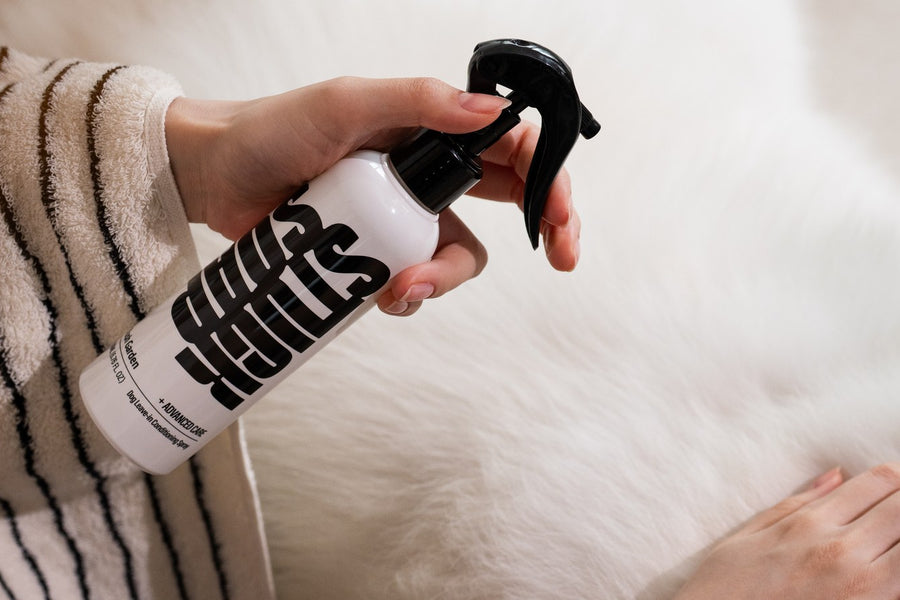
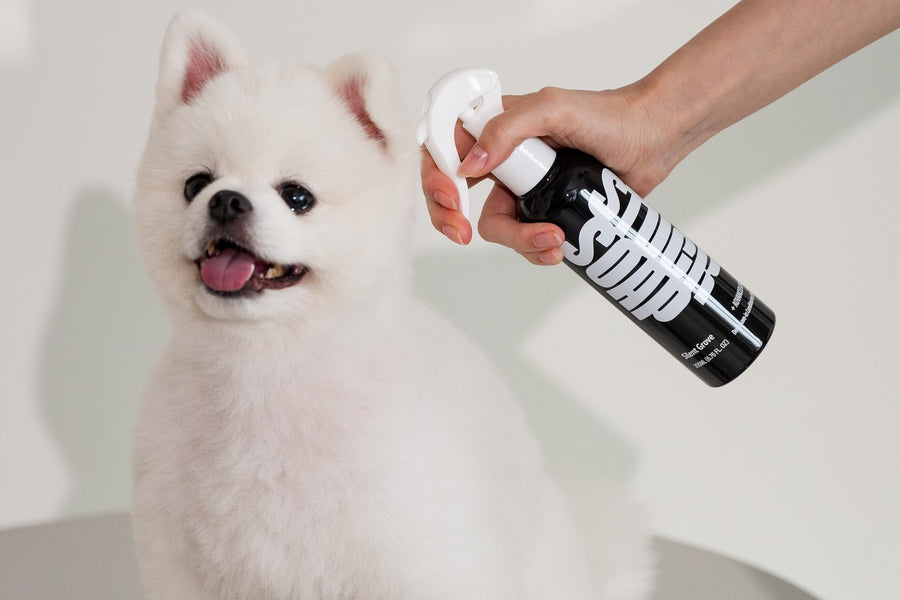
The Leave-In Conditioning Spray is a lightweight, no-rinse mist for brushing days and between baths. Its three patented actives were selected for a light, leave-in formula:
- Mung Bean Sprout Extract (KR patent 10-1841429), a plant extract chosen as part of the light, no-rinse base.
- Tannin Complex HR (10-0955389), a plant-derived complex chosen for a clean, light finish on the coat.
- ODOR-BYE (10-2746186), chosen for the spray's between-bath freshening role.
Our leave-in conditioner guide shows how much to use on each coat type, and how often should you bathe your dog covers bath intervals in more depth.
FAQ
How often should I bathe my dog based on coat type?
Start from your dog's coat type, then adjust. Common starting points: short coats every six to eight weeks, medium and long silky coats every four to six weeks, double and wire coats every six to eight weeks or longer, curly coats often on the groomer's four-to-six-week cycle. Activity, skin, and your vet's advice change the number.
How often should I brush my dog?
Short coats often do fine with one or two sessions a week. Long silky and curly coats usually need brushing most days or at least several times a week, down to the skin. Double coats need a few sessions weekly and close to daily work during spring and fall shedding. Wire coats need a weekly comb-through.
Should I shave my double-coated dog to reduce shedding?
No. A double coat has a dense undercoat and a guard-hair topcoat that work together, and shaving can disrupt how the coat grows back. Brush the undercoat out instead, especially during spring and fall shedding, and ask a professional groomer for help if the undercoat has packed down or matted.
What should I do if my dog smells soon after a bath?
Check the usual sources first: ears, mouth, skin folds, paws, the rear end, and bedding. Wash bedding, bathe with a gentle shampoo, and dry the coat fully to the skin. If the smell comes back within days, or you see itching, redness, flaking, greasy skin, or hair loss, book a vet visit.
What is a leave-in conditioning spray for dogs and how do I use it?
A leave-in conditioning spray is a lightweight, no-rinse mist you apply to a dry or towel-dried coat before brushing or between baths. Mist from about a hand's length away, work it in with your fingers, then brush. Go light on wire coats, which are meant to stay harsh, and lighter still on short coats.
Can I bathe a matted curly-coated dog at home?
Not alone. Brushing tangles out before water is the rule, because water tightens mats. Loose tangles can be worked out with a slicker brush and comb, a little at a time. Tight mats close to the skin belong to a professional groomer or your vet, and you should never cut mats out with scissors.
What if my dog has a mixed coat?
Use the heavier routine. If your dog has a silky outer coat over a thick undercoat, follow the double-coat cadence for brushing and drying and borrow the long-coat tangle checks. Review your worksheet after four weeks: a coat that tangles, smells, or sheds more than expected tells you which line to adjust.
Sources
- American Kennel Club, How Often Should You Bathe Your Dog?
- American Kennel Club, How to Groom Your Dog at Home
- VCA Animal Hospitals, Grooming and Coat Care for Your Dog
- Merck Veterinary Manual (Pet Owner Version), Dermatitis and Dermatologic Problems in Dogs
Fill in your worksheet, then build the kit
Every coat type above has a set that fits it. Browse the bundles and the full range at stucksoap.com.