


Scroll through any K-Beauty routine right now and you will eventually hit bakuchiol, the plant-based ingredient that beauty editors keep calling "nature's retinol." It promises smoother, firmer, brighter skin without the redness and peeling that retinol is famous for. If it works that gently on sensitive human skin, it is natural to wonder whether bakuchiol for dogs could be the next big thing in premium pet grooming.
It is a fair question, and one we get from curious dog parents who treat their pups to the same clean, ingredient-first standards they hold for themselves. The honest answer is more nuanced than a simple yes or no. Bakuchiol is a genuinely impressive human skincare active, but it was designed to solve a problem most dogs simply do not have.
In this guide, we will explain what bakuchiol actually is, why K-Beauty fell in love with it, what the science says (and does not say) about using it on dogs, and the safety questions every thoughtful pet parent should ask. Then we will get to the part that really matters: what your dog's skin needs to look and feel its best.
Table of Contents
What Is Bakuchiol? K-Beauty's Answer to Retinol
Bakuchiol (pronounced buh-KOO-chee-ol) is a natural compound extracted from the seeds and leaves of Psoralea corylifolia, a plant better known as babchi. It has been used in Ayurvedic and traditional Chinese medicine for centuries, long before it became a skincare buzzword.
Here is the fascinating part: bakuchiol behaves a lot like retinol (vitamin A), yet it is structurally unrelated to it. Chemically, it is a meroterpene, a completely different class of molecule. Despite that difference, studies show it activates many of the same skin pathways retinol does, which is why it earned the nickname "plant-based retinol."
K-Beauty, with its signature emphasis on gentle-but-effective formulas and a healthy skin barrier, embraced bakuchiol quickly. Korean brands were among the first to build entire serums and creams around it, positioning it as the sensitive-skin alternative to traditional retinoids. Today it appears in essences, night creams, and "clean" anti-aging lines worldwide.
Why Bakuchiol Took Over K-Beauty Skincare
The appeal of bakuchiol comes down to one thing: it delivers retinol-style results with far less drama. For humans chasing smoother, firmer skin, that is a meaningful upgrade.
Research suggests bakuchiol works on several fronts. It appears to stimulate the production of type I and type III collagen by upregulating collagen gene expression, which is the mechanism behind its line-smoothing reputation. It also shows antioxidant activity, helping to neutralize the free radicals that contribute to skin aging, and it can inhibit melanin synthesis, giving it a mild brightening effect.
The headline evidence is a landmark 12-week study that compared 0.5% bakuchiol with 0.5% retinol. Both groups saw statistically significant improvements in wrinkles and pigmentation, with no meaningful difference between the two. The crucial detail: the retinol users experienced significantly more stinging and scaling, while the bakuchiol group reported far less irritation. Follow-up reporting noted that the vast majority of bakuchiol users experienced little to no redness or dryness.
So in human terms, bakuchiol is a smart ingredient: comparable anti-aging performance, gentler experience, plant-derived, and friendly to sensitive skin. That is exactly the kind of profile K-Beauty loves. But "great for human faces" and "great for dogs" are two very different claims, and that is where we need to slow down.
Bakuchiol for Dogs: What the Science Actually Says
Let us be direct, because your dog deserves clarity rather than hype. There is currently no published veterinary research establishing that bakuchiol is safe, effective, or beneficial for dogs. Virtually everything we know about bakuchiol comes from human cosmetic and dermatology studies.
That matters because bakuchiol was created to solve a fundamentally human problem: visible skin aging. Fine lines, wrinkles, sun-induced collagen loss, and age spots are concerns driven by decades of UV exposure on bare facial skin. Your dog's skin is protected by a full coat of fur, and dogs are not bothered by crow's feet. The entire purpose of a "natural retinol" largely evaporates when you apply it to a canine.
There is also a biological gap. Dogs do not metabolize topical ingredients the way we do, and their skin chemistry is markedly different from ours. An ingredient can be beautifully tolerated on a human cheek and still be a poor fit for a dog's body. Without canine-specific safety testing, applying a concentrated anti-aging active to your dog is essentially an experiment, and your pet is not the right test subject.
The most accurate way to think about it: bakuchiol is a wonderful example of the K-Beauty philosophy at work (gentle actives, barrier respect, plant-derived ingredients), but this particular molecule is a human-skincare specialist. The good news is that K-Beauty's thinking translates to dogs beautifully even when this one ingredient does not.
The Safety Question: Babchi, Psoralens, and Thin Dog Skin
Beyond the "does my dog even need this" question, there are real safety reasons to be cautious, and they start with the source plant.
Babchi (Psoralea corylifolia) seeds naturally contain furocoumarins such as psoralen and isopsoralen. These compounds are phototoxic, meaning they can react with sunlight to cause skin damage, including blistering, burning, and long-lasting hyperpigmentation. Dermatology literature documents severe phototoxic reactions to babchi seed preparations, and one of the practical challenges with bakuchiol products is that poorly purified extracts can be contaminated with these psoralens. In other words, "babchi oil" or raw seed extract is not the same as refined, high-purity bakuchiol, and the difference is not just marketing.
Now layer in canine skin biology. A dog's skin barrier is thinner than ours, often just 3 to 5 cell layers compared with roughly 10 to 15 in humans. That means topically applied compounds can penetrate faster and reach the bloodstream in higher relative concentrations. Dogs also have a different skin pH, generally in the 6.2 to 7.4 range versus the more acidic human range, so products calibrated for human skin chemistry are not automatically appropriate.
Add the fact that dogs lick, and licking turns a topical skincare question into an ingestion question. Veterinary resources like PetMD routinely caution that human beauty products are a common source of accidental pet exposure. When you combine an unstudied active, a potentially phototoxic source plant, thinner and more permeable skin, and a dog who will happily groom it off and swallow it, the risk-to-benefit math does not favor experimenting.
None of this means bakuchiol is some terrible villain. For human skin, used as directed, it has an excellent safety profile. It simply means it is the wrong tool for the canine job, and caution here is the responsible default.
What Your Dog's Skin Actually Needs
Here is the encouraging part. The instinct that brought you to bakuchiol (wanting gentle, clean, science-backed care for your dog) is exactly right. You just want to channel it toward ingredients proven to suit canine skin. This is where the real K-Beauty lesson lives.
K-Beauty's most valuable idea was never any single hero molecule. It was a mindset: respect the skin barrier, favor gentle actives over harsh ones, balance pH, and let nourishing botanicals do the work. Applied to dogs, that philosophy points to a short list of genuinely dog-appropriate ingredients.
Centella asiatica (cica) is K-Beauty's signature calming ingredient, valued for soothing reactive, sensitive skin. Green tea extract brings antioxidant protection that helps defend the skin and coat from environmental stress. Camellia oil, Korea's treasured "liquid gold," is a lightweight, deeply conditioning oil that supports a soft, glossy coat. These are not anti-aging gimmicks; they are barrier-supporting, comfort-focused botanicals that align with what a dog's skin genuinely wants.
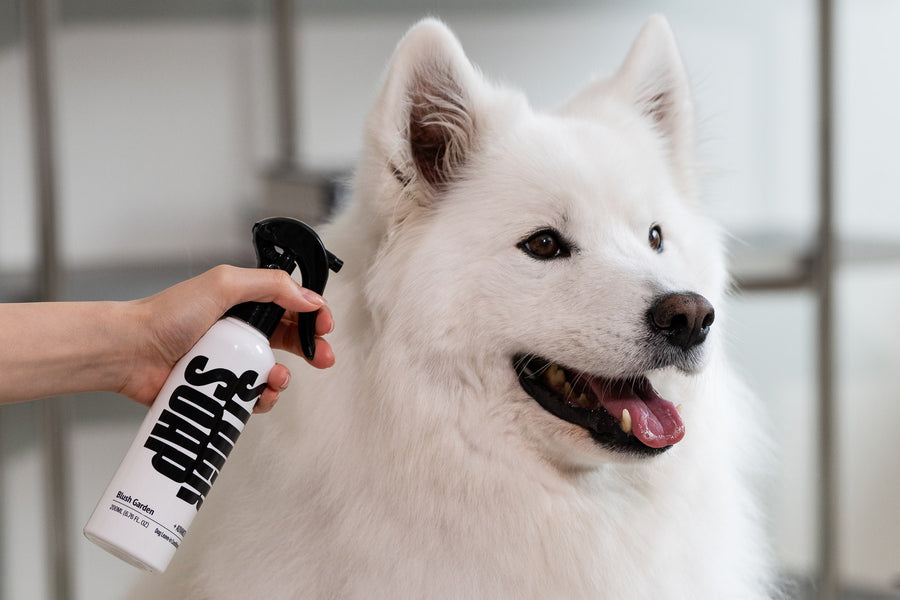
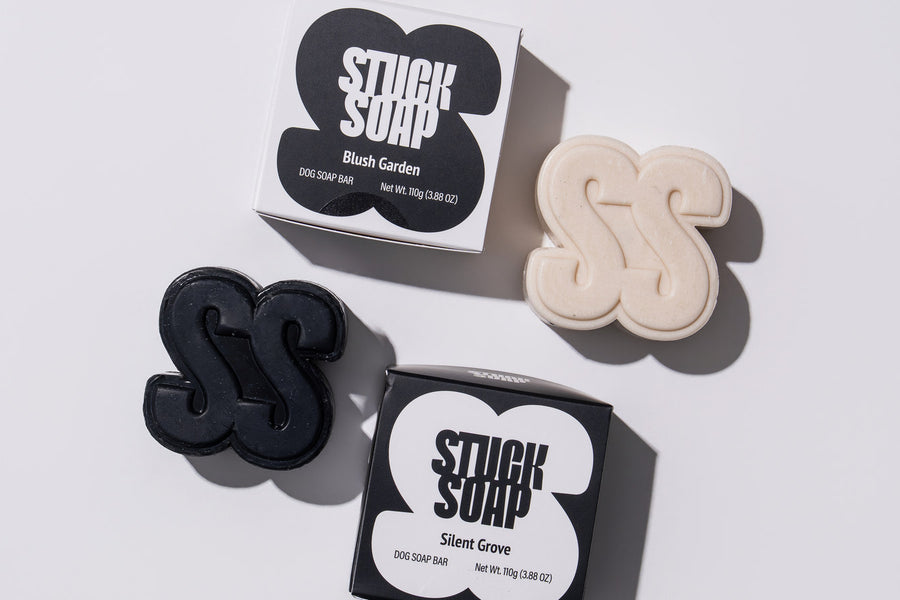
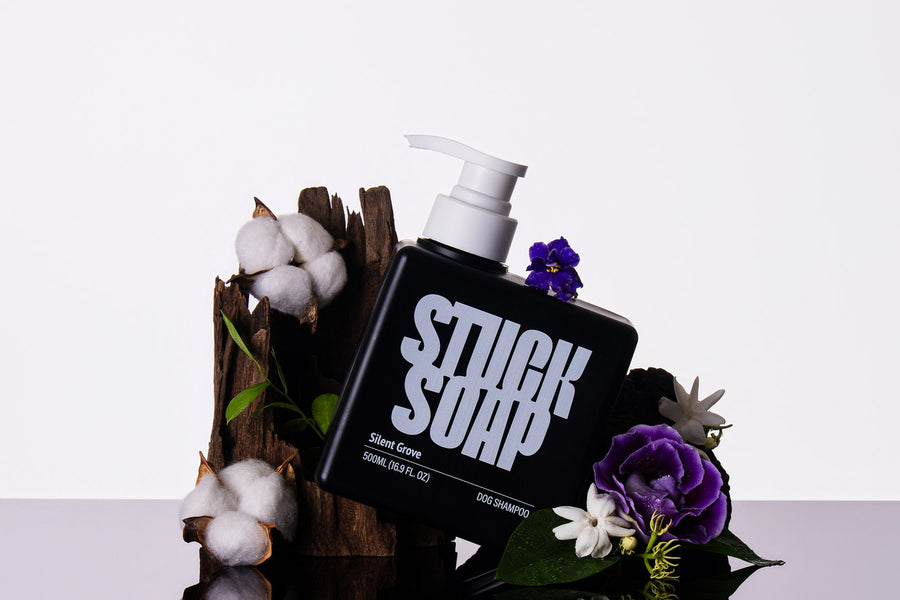
This is the thinking behind STUCK SOAP. Our shampoos are built on a K-Beauty skincare philosophy made specifically for dogs: vegan, pH-balanced for canine skin, plant-based, and powered by Green Tea, Camellia Oil, and Centella Asiatica sourced from Jeju Island, Korea. Instead of borrowing a human anti-aging active, we borrow K-Beauty's standards (gentleness, barrier respect, clean formulation) and apply them where they actually belong.
Practical takeaways you can use today:
- Skip human anti-aging actives on your dog. Retinol, bakuchiol, and exfoliating acids are formulated for human aging concerns dogs do not have.
- Choose products formulated for canine skin pH (around 6.2 to 7.4), not human pH.
- Prioritize barrier-supporting, soothing botanicals such as centella asiatica, green tea, oatmeal, and gentle plant oils.
- Read the label and avoid sulfates, artificial fragrance, and harsh surfactants that strip natural oils.
- When you spot a trending human ingredient, ask the better question: "Is this proven for dogs?" rather than "Is this popular?"
- If your dog has persistent itching, flaking, or irritation, talk to your veterinarian before trying any new topical.
Frequently Asked Questions
Is bakuchiol safe for dogs?
There is no published veterinary research confirming bakuchiol is safe for dogs. It is a human anti-aging active, and its source plant (babchi) contains phototoxic compounds called psoralens. Because dog skin is thinner and more permeable than human skin, and dogs tend to lick topical products, bakuchiol is not recommended for canine use. Talk to your vet before applying any human skincare ingredient to your dog.
What is bakuchiol used for?
In human skincare, bakuchiol is used as a gentle, plant-based alternative to retinol. It is popular in K-Beauty for smoothing fine lines, supporting collagen, providing antioxidant protection, and brightening skin tone, all with less irritation than traditional retinol.
Do dogs need anti-aging skincare?
No. Anti-aging ingredients target visible signs of skin aging like wrinkles and sun damage, which are human concerns. A dog's skin is protected by fur, and dogs do not develop the cosmetic aging that retinol or bakuchiol address. Dogs benefit far more from gentle cleansing, pH balance, and barrier support.
What K-Beauty ingredients are actually good for dogs?
Centella asiatica (cica), green tea extract, and camellia oil are K-Beauty botanicals well suited to dogs because they soothe skin, provide antioxidants, and condition the coat without harsh actives. STUCK SOAP uses all three, formulated specifically for canine skin.
Can I use my retinol or bakuchiol serum on my dog's dry patches?
It is best not to. Human serums are formulated for human skin pH and concerns, and may irritate or be unsafe if your dog licks the area. For dry patches, use a dog-specific, pH-balanced product with soothing botanicals, and consult your veterinarian if the dryness persists.
The Bottom Line
Bakuchiol earns its K-Beauty stardom honestly. For human skin, it is a clever, gentle, plant-based way to get retinol-style benefits with minimal irritation. But the qualities that make it great for our faces (anti-aging collagen support) address a problem your dog simply does not have, and its source plant carries phototoxic compounds that make it a poor candidate for thinner, more sensitive canine skin.
The smarter move is to keep the K-Beauty mindset and drop the human-specific molecule. Gentle, barrier-first, pH-balanced care built on proven botanicals like centella, green tea, and camellia oil gives your dog everything that drew you to clean skincare in the first place, with none of the guesswork. That is exactly the spa-quality, ingredient-led experience your dog deserves.
Sources & References
- Bakuchiol: A Retinol Alternative for Sensitive Skin — Cleveland Clinic
- Bakuchiol, a Natural Constituent and Its Pharmacological Benefits — National Library of Medicine (PMC)
- Finding the Right Bakuchiol: Choose Wisely — Journal of Cosmetic Dermatology (Wiley)
- Severe Phototoxic Reaction to Psoralea corylifolia Seeds — Contact Dermatitis (Wiley)
- Beauty Products That Could Harm Your Pet — PetMD
- Best Dog Shampoos, Vet-Verified — PetMD
Give Your Dog the K-Beauty Spa Treatment
Skip the human anti-aging trends and give your dog what canine skin truly needs. STUCK SOAP brings the best of K-Beauty to dog grooming with gentle, pH-balanced formulas powered by Green Tea, Camellia Oil, and Centella Asiatica from Jeju Island, Korea.
Shop Stuck Soap →Vegan · pH-Balanced · Jeju Island Botanicals · Zero Waste