


Your dog's paws smell like corn chips because ordinary bacteria and yeast that live on paw skin release volatile compounds when that skin stays damp, and those compounds happen to smell toasted and salty. In an otherwise healthy dog, the odor is a normal finding, not evidence of infection.
So if you have been holding a sleeping retriever's foot to your nose and wondering why do my dog's paws smell like corn chips, you are smelling a normal microbial neighborhood doing normal things. The useful question is the one most articles skip: how do you tell ordinary Frito feet from the early version of a real problem? Almost everything that matters comes down to one unglamorous habit, and it is not bathing.
Why Do My Dog's Paws Smell Like Corn Chips? The Short Version
Frito feet is the common name for the corn chip or popcorn odor that rises off a dog's paw pads and the skin between the toes. It comes from resident microbes, mostly bacteria in the Proteus and Pseudomonas groups plus everyday skin yeast, metabolizing sweat, oils, and debris in a warm space with little airflow.
The American Kennel Club's chief veterinary officer, Dr. Jerry Klein, points to those same bacteria and calls the Fritos smell "completely normal." Every dog carries bacteria and fungi on the skin at all times. The paws simply offer that population the best working conditions on the animal.
Why paws and not ears or elbows
Dogs sweat through their paw pads, so the one part of the body that makes its own moisture is also the part walking through wet grass, puddles, and the damp patch by the water bowl. Add anatomy: the webbing between the toes is a set of narrow, shaded folds with fur over them and almost no airflow. A microbe looking for warmth and skin oils would design that space on purpose.
Some dogs smell stronger, and that is not a defect
Dense feathering, heavy coats, and thick webbing hold water longer, so those feet read stronger. Breed, coat, and climate shift the volume without changing the smell itself, the broader case we made for dog skin types over coat types.
Normal Frito Feet vs. Signs Worth a Vet Visit
This is the part that protects your dog. Corn chip odor alone is background noise. Corn chip odor plus a second signal is information. The reliable tell is direction of travel: what the smell was, what it is now, and what the skin looks like underneath.
| What you notice | Usually routine | Worth a vet visit |
|---|---|---|
| Character of the smell | Corn chips, popcorn, warm tortilla | Musty, sour, cheesy, sweet, or frankly greasy |
| Intensity over time | Steady for months or years, louder after a wet walk | Noticeably stronger over a week or two with no change in routine |
| Skin between the pads | Pale, dry, unremarkable | Red, puffy, moist, crusted, or oozing |
| Licking and chewing | Occasional grooming after a walk | Obsessive licking, chewing at one foot, waking up to lick |
| Nail beds | Clean, normal color | Rusty brown staining, swollen nail folds, discharge |
| Hair between the pads | Intact | Thinning, broken off, bald patches from chewing |
| Movement | Normal gait | Limping, favoring a paw, flinching when you touch it |
| Response to two weeks of drying | Smell softens | No change at all, or it gets worse |
When Paws Smell Like Corn Chips and Something Else Is Going On
Malassezia is a yeast that lives on healthy dog skin in small numbers. Trouble starts when it overgrows, usually because something else opened the door: allergies, chronic moisture, a stripped skin barrier, or an underlying condition. Veterinary dermatology literature describes the overgrowth pattern as redness, scaling, and greasy discharge with itching, and nail fold inflammation is a recognized feature.
For an owner, the difference is the smell's personality. Frito feet smells like a snack. Yeast overgrowth reads musty or sour, closer to old sponge, and it arrives with company: red skin, a dog who will not leave the foot alone, brown-stained nail beds, hair loss between the pads. One symptom is a shrug. Three symptoms is a phone call.
Worth saying plainly: nothing here diagnoses your dog. Yeast overgrowth, bacterial infection, allergic paw inflammation, and a grass seed between two toes can look alike from the outside, and telling them apart takes a veterinarian with cytology, not an owner with a nose.
The Highest-Leverage Fix Is Drying, Not Washing
The whole strategy in one line: the microbes are not the problem, the moisture that feeds them is. The most effective thing you can do about paw odor costs nothing and takes forty seconds.
A five-step routine for after walks
- Knock off the debris first. Brush or shake out grit, grass, and salt before any water touches the foot. Dry debris comes off far more easily than wet debris.
- Rinse or wipe, depending on the mess. Plain lukewarm water for muddy paws. For a normal walk, an unscented, alcohol-free wipe is plenty. You are removing dirt, not sterilizing skin.
- Dry between every toe. This is the step that does the work. Spread the toes gently and press a clean towel into each web space, one at a time, including the space behind the pads and around the dewclaw.
- Check the skin while you are in there. Ten seconds. Redness, cuts, swelling, foxtails, cracked pads, anything caught in the fur.
- Let the foot finish drying in open air. No boots, no blanket burrito, no damp bed immediately after. Give it a few minutes.
What to dry with
A microfiber towel beats a bath towel, mostly because it dries out between uses instead of sitting damp in a heap. Wash paw towels often. A cool dryer on low, held at a distance, finishes the web spaces. Trimming the hair between the pads helps too. Ask your groomer if scissors near a paw make you nervous.
Why More Full-Body Baths Is the Wrong Answer
This is our clearest position on the subject, and it runs against most owners' reflex. If the smell is in the paws, do not respond by bathing the whole dog more often. A paw problem is a local problem. Washing the entire coat every few days to chase an odor coming from eight square inches of skin strips oils from the ninety-nine percent of the dog that was never involved.
The trade is bad in both directions. The paws do not improve, because the moisture between the toes is still there after the bath, and worse if the feet were not dried properly. Meanwhile the coat loses the sebum layer that keeps skin comfortable, which is how a paw odor question becomes a flaky-skin, itchy-dog question a month later. We covered the same tension in how long a dog actually stays clean after a bath.
Frequent bathing also introduces residue. Under-rinsed product attracts dirt and can irritate skin. The useful discipline is rinsing longer than feels necessary, which we made the case for in telling whether your dog is fully rinsed.
Local problem, local solution. Rinse the paws, dry the paws, leave the rest of the dog alone.
What Quietly Keeps Paws Damper Than They Should Be
The usual suspects
- Boots worn too long. Great on salted sidewalks, less great as a portable sauna. Take them off indoors.
- Post-swim shortcuts. Lake days end with a towel on the back and nothing between the toes.
- Damp bedding. A bed that never fully dries keeps feet against moisture all night.
- Overgrown foot fur. Long hair between the pads holds water the way a sponge does.
- Humidity itself. Saturated air slows evaporation everywhere, feet included.
Summer stacks these at once, which is why paw odor peaks between June and September. Our summer dog skin guide covers what heat and humidity do to the skin barrier before any smell shows up.
When to Stop Managing at Home and Call the Vet
Home paw hygiene is maintenance, not treatment and not diagnosis. Book an appointment when any of the following is true:
- The smell changes character, from corn chip to musty, sour, sweet, or greasy
- You see redness, swelling, moist skin, crusting, or discharge between the toes or around the nails
- Your dog licks or chews one foot obsessively, or wakes up to do it
- There is limping, flinching, or clear pain when the paw is handled
- Hair is disappearing between the pads or the nail beds are stained rusty brown
- One to two weeks of consistent rinsing and thorough drying has changed nothing
That last one is the threshold owners miss most often. Good paw hygiene should move the needle within a couple of weeks. If it does not, something is driving the odor that hygiene cannot reach: allergies, yeast or bacterial overgrowth, parasites, foreign bodies. Cornell's Riney Canine Health Center notes that foot licking and chewing are classic signs of atopic dermatitis, one reason paw complaints so often turn out to be allergy complaints in disguise.
Practical Takeaways
- Corn chip odor in a healthy, comfortable dog is normal. You do not need to eliminate it.
- Track the trend, not the day. A change in character or intensity is the signal.
- Drying between the toes beats every product on the shelf.
- Do not escalate to more full-body baths. A local issue gets a local fix.
- Redness, obsessive licking, limping, discharge, or two weeks of no improvement means the vet.
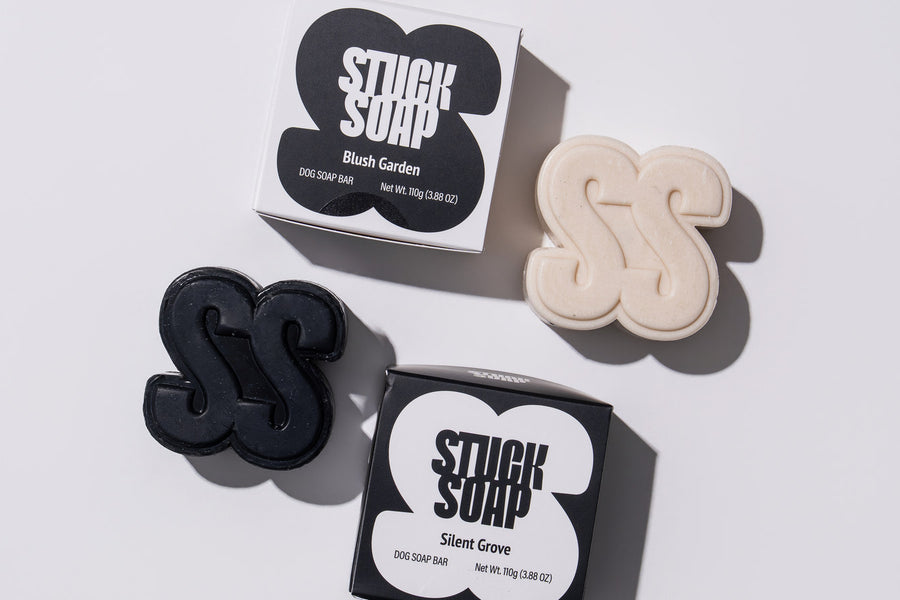
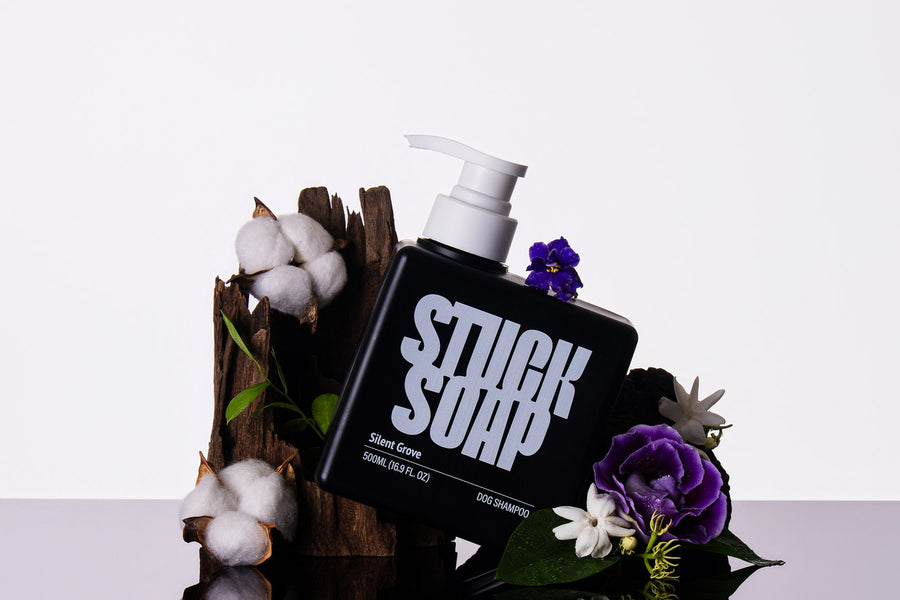
When a proper bath is due, the goal is to clean without stripping, which is why our minimalist grooming routine is built around doing less, more carefully. Our pH-balanced liquid shampoo and zero-waste bar, made with green tea, camellia oil, and centella asiatica, are formulated for gentle, occasional washing. They are non-medicated cosmetic grooming products, not a treatment for skin or paw conditions, and anything resembling inflammation or infection belongs with your veterinarian. The range lives at stucksoap.com.
Frequently Asked Questions
Why do my dog's paws smell like corn chips?
Normal bacteria such as Proteus and Pseudomonas, along with everyday skin yeast, live on paw skin and release volatile compounds that smell like corn chips. Moisture between the toes feeds them. In a healthy dog with no redness, licking, or swelling, the odor is considered a normal finding rather than an infection.
Is Frito feet a sign of infection?
Usually not. Corn chip odor on its own reflects the normal microbial population of paw skin. It becomes a concern when it arrives with other signals: redness, swelling, obsessive licking, brown-stained nail beds, hair loss between the pads, or limping. One symptom alone is routine. Several together deserve a veterinary exam.
How do I get rid of the corn chip smell on my dog's paws?
Rinse or wipe the paws after walks, then dry thoroughly between every toe, behind the pads, and around the dewclaw. Keep the hair between the pads trimmed, wash paw towels often, and avoid leaving boots on indoors. Drying reduces the moisture that feeds the odor better than any product does.
Should I bathe my dog more often if their paws smell?
No. Paw odor is a localized issue, and bathing the whole dog more frequently strips oils from skin and coat that were never part of the problem. It also fails to address moisture trapped between the toes. Clean and dry the paws specifically, and keep full baths on their normal schedule.
Can I use baby wipes on my dog's paws?
Unscented, alcohol-free wipes are a reasonable choice for routine after-walk cleanup, since the goal is removing dirt rather than sterilizing skin. Avoid heavily fragranced or alcohol-based wipes. Whatever you use, follow with thorough drying between the toes, because a damp paw undoes most of the benefit of wiping it.
When should I take my dog to the vet for paw smell?
See a veterinarian if the smell changes character, becomes noticeably stronger over a week or two, or appears alongside redness, swelling, discharge, obsessive licking, limping, or hair loss between the pads. Also book a visit if one to two weeks of consistent paw rinsing and drying produces no improvement at all.
Does the corn chip smell get worse in summer?
Often, yes. Humidity slows evaporation, swimming and sprinklers keep paws wet longer, and boots worn on hot pavement trap heat and moisture. None of that changes what the smell is, but it does raise the volume. A consistent after-walk drying habit usually keeps summer paw odor in a comfortable range.
Sources
- American Kennel Club, Why Do My Dog's Feet Smell Like Fritos or Corn Chips?
- American Kennel Club, Pododermatitis in Dogs: Causes, Symptoms and Treatment
- Cornell University College of Veterinary Medicine, Riney Canine Health Center, Atopic Dermatitis (Atopy)
- Merck Veterinary Manual, Canine Atopic Dermatitis
- Bond R. et al., Malassezia Yeasts in Veterinary Dermatology: An Updated Overview, Frontiers in Cellular and Infection Microbiology, 2020
Clean Paws, Calm Skin
Great grooming is restraint: wash less, dry better, look closely. STUCK SOAP makes pH-balanced, vegan, K-Beauty shampoo in Silent Grove and Blush Garden, in a 500ml bottle and a zero-waste bar. Browse the range at stucksoap.com.