


How to Bathe a Dog Without Making a Mess: A 10-Minute Prep Checklist
To bathe a dog without making a mess, spend ten minutes preparing before the water runs: fit a real drain strainer, brush the dry coat, stage your towels, and clear a physical path from the tub to the drying spot. The mess is not created during the bath. It is created by everything you did not set up before it.
That distinction matters more than any technique. Most people who ask how to bathe a dog without making a mess already know how to wash a dog. What they are actually asking is how to stop losing the twenty minutes that come afterward: the hair welded to the tub wall, the sopping bath mat, the trail of paw prints down the hallway, the drain that gurgles for a week. Reduce that burden and something quietly good happens. Bath day stops getting postponed.
Bath Day Is Not the Problem. The Cleanup Is.
The dread math nobody admits to
Ask an owner why the dog has not been bathed in nine weeks and you will rarely hear "washing him is hard." You hear that the bathroom takes forever to recover, that the last time it happened on a Sunday night and the towels sat in a wet heap until Tuesday, that the drain has still not fully forgiven them. The bath is fifteen minutes. The aftermath feels like an hour. So the interval stretches, then stretches again, and the coat gets greasier and heavier, which makes the eventual bath messier, which makes the next interval stretch further.
The loop breaks at the cleanup end, not the washing end. Once the after-bath work is small and predictable, frequency corrects itself without anyone needing more discipline. This is also why several of the most common dog bathing mistakes are logistical rather than technical.
Why "how to bathe a dog without making a mess" is really a prep question
Cleanup debt is the unplanned work that lands after the dog is dry: hair you have to pick off surfaces, water you have to chase across the floor, laundry you did not budget for, and drain maintenance you will pay for later. Every minute of prep you skip converts into roughly three minutes of cleanup debt, because prep prevents mess at the source while cleanup has to hunt it down after it has spread.
The 10-Minute Prep for How to Bathe a Dog Without Making a Mess
The checklist, in order
- Minute 1. Drop a fine mesh strainer or silicone hair catcher flat over the tub drain. Press it down so water still moves around the edges.
- Minute 2. Close the toilet lid, move the bath mat out of the room entirely, and pull anything off the floor that you do not want soaked.
- Minute 3. Clear the tub ledge down to only what you will use. Every extra bottle is one more thing to knock over with a wet elbow.
- Minutes 4 to 6. Brush the dog thoroughly while the coat is completely dry, working chest, flanks, thighs, and tail.
- Minute 7. Stack your towels in reach of the tub, in the order you will use them, not in a pile.
- Minute 8. Lay one old towel or a runner on the floor outside the tub as a landing pad.
- Minute 9. Walk the route from tub to drying spot yourself. Open the doors you will need open. Close the doors you need closed.
- Minute 10. Fill the tub with two or three inches of lukewarm water, get the dog in, and start.
Actually set a timer
Ten minutes sounds like a lot until you run it once. Most people finish the list in seven and spend the remaining three deciding whether the towel stack is tall enough. It is not a ritual, it is a sequence, and it becomes automatic by the third bath.
Minutes 1 to 3: The Drain Decides Everything
Standard drain covers are not built for dog coat
The perforated metal cover that came with your tub is designed for human hair, which is long and sparse. Dog coat is short, dense, and arrives in thousands of pieces at once. It slips through the holes and then mats into a felted plug inside the trap. That plug is the difference between a bath you shrug off and a bath that ends with a wrench.
A flat silicone hair catcher or a fine mesh strainer sits on top of the existing cover and holds essentially all of it. When the bath ends you lift the disc, peel the hair off in one mat, and drop it in the trash. One motion, five seconds.
Rinse toward the strainer, not around it
When you do the final rinse, aim the last pass of water down the length of the dog and toward the drain end of the tub rather than out toward the sides. Hair and loosened debris travel with the water. Send them to the one place you have already prepared to catch them. A clean final rinse also matters for the coat itself, since shampoo residue left in the undercoat attracts dirt and makes the next bath arrive sooner.
Minutes 4 to 6: Brush Dry, Not Wet
Pre-bath brushing is cleanup insurance
Loose hair in a dry coat is easy to remove and easy to throw away. Loose hair in a wet coat separates, floats, and then bonds to porcelain, tile, and your forearms as it dries. Five minutes of brushing before the dog goes near water removes the majority of shed coat while it is still catchable, and it happens over a floor you can vacuum instead of a tub you have to scrub.
There is a grooming benefit too. Brushing lifts the coat and breaks up surface oil, so shampoo reaches skin instead of sitting on top of a matted layer. During heavy shedding periods the effect compounds, which is why a shedding season routine leans so hard on brushing frequency.
Brush where the hair actually is
Most people brush the back, which is the part they can see. The volume lives elsewhere: the chest, behind the front legs, the flanks above the ribs, the back of the thighs, and the base of the tail. Spend your five minutes there. Do it outside or over a hard floor, never over carpet.
Minutes 7 to 9: Towel Staging and the Path Out
Give every towel one job
Reaching for a towel mid bath with one wet hand while the other holds a dog is how bathrooms get destroyed. Decide in advance how many towels you need and what each one does.
| Towel | Job | Small dog | Medium to large dog |
|---|---|---|---|
| Floor towel | Landing pad outside the tub | 1 | 1 (or a runner) |
| First squeeze | Absorb the heavy water in the tub | 1 | 2 |
| Second pass | Legs, belly, chest, armpits | 1 | 1 |
| Face and ears | Small, soft, kept dry until last | 1 | 1 |
| Total | 4 | 5 |
Squeeze rather than rub. Rubbing pushes water into the air and tangles the coat. Press the towel against the coat, hold for two seconds, move on. The full drying sequence is worth reading if your dog has a double coat, where trapped moisture near the skin is the real issue.
Build the corridor before the dog is wet
The single largest mess event in a home bath is a soaked dog moving freely through the house. Decide now where drying happens, and make the route between the tub and that spot a closed corridor. Bathroom door shut. Bedroom door shut. Nothing absorbent on the floor between the two points except the towel you meant to put there. If your drying spot is another room, walk it once while your hands are dry so you know which door handle you will be fumbling for later.
Minute 10: Plan for the Shake, Because It Is Coming
There are two shakes, and both are predictable
Dogs shake hardest at two moments: the second the water stops, and the second their feet touch a surface outside the tub. You cannot train this away in one bath and you should not try. A shake is how a dog sheds a large share of the water in its coat in under a second, which is genuinely useful to you as long as it happens somewhere you chose.
Aim it, contain it, then move
Keep the shower curtain drawn or the glass door mostly closed after the final rinse. Step back and let the first shake happen inside the enclosure. Then drape the first squeeze towel over the shoulders and back before you lift or lead the dog out. A towel over the shoulders suppresses the second shake, because the motion starts at the head and travels backward. If your dog is anxious in the tub the shakes come more often and with less warning, so the containment matters even more. A calm dog is a drier bathroom, which is the practical argument in the guide to bathing a dog that hates water.
Prep vs No Prep: Where the Time Actually Goes
A working estimate for one medium dog
These are household estimates from a typical single dog bath, not laboratory figures. Your numbers will differ, but the shape of the comparison holds.
| Task | No prep | With 10-minute prep |
|---|---|---|
| Prep before water | 0 min | 10 min |
| The bath itself | 15 min | 13 min |
| Clearing hair from the drain | 10 min (plus later plumbing) | 1 min |
| Wiping tub walls and floor | 8 min | 2 min |
| Hunting for towels mid bath | 4 min | 0 min |
| Re-rinsing missed shampoo | 5 min | 0 min |
| Chasing a wet dog through the house | 6 min | 1 min |
| Total | 48 min | 27 min |
Reading it honestly
The prep column is not free. You are trading ten calm minutes at the front for roughly thirty chaotic ones at the back, and the front ten happen before anyone is wet or stressed. That trade is what makes the routine repeatable, and repeatability is what actually determines how long your dog stays clean between baths.
Fewer Bottles on the Ledge
One pump, shorter rinse, less to knock over
Tub ledge clutter is an underrated mess source. Every bottle you reach past with a wet hand is a bottle that ends up in the water. Cutting the ledge down to one product and one strainer removes an entire category of accidents.
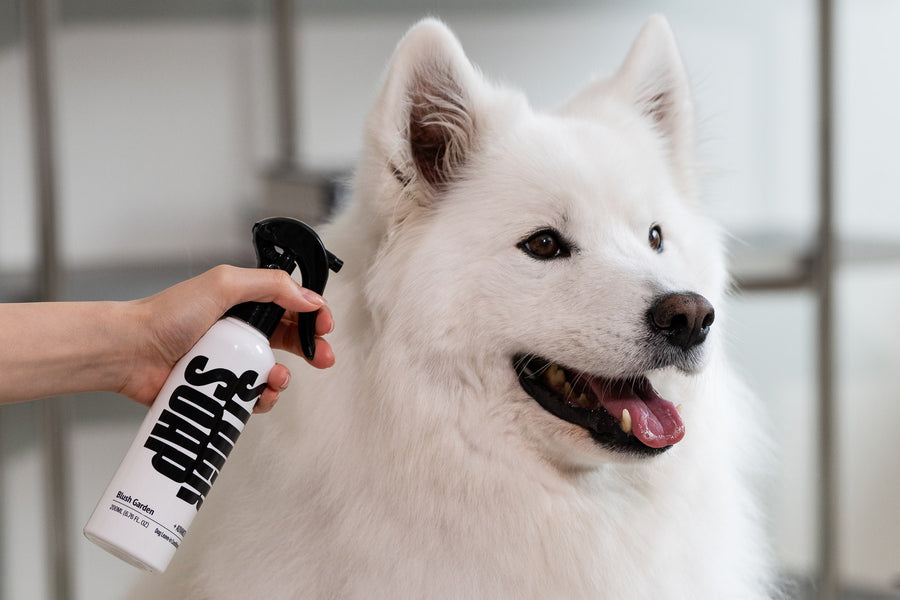
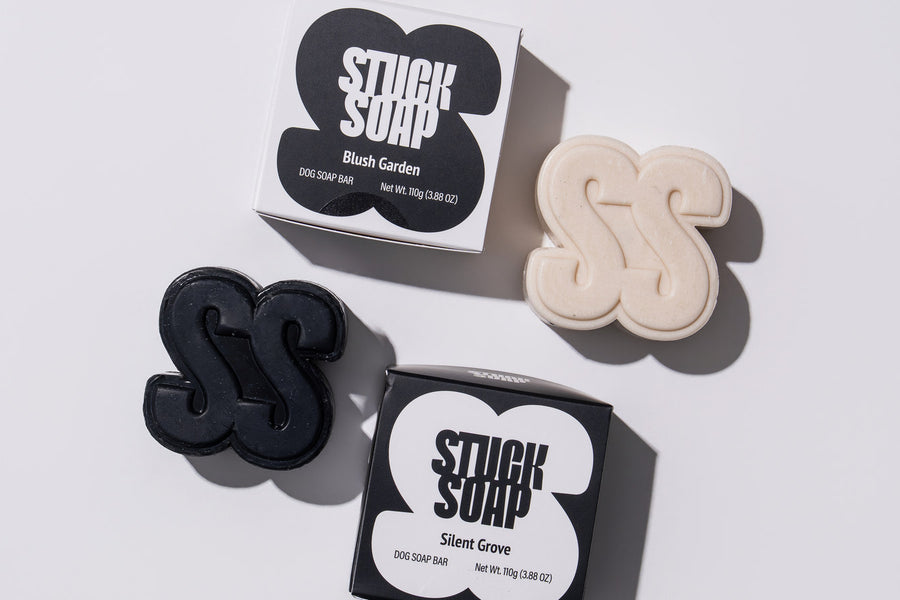
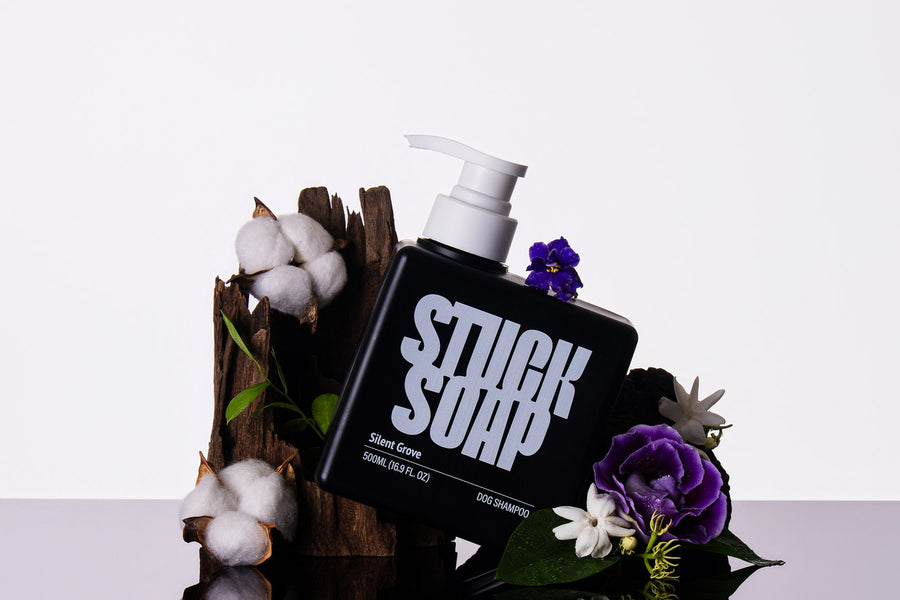
This is where formula concentration stops being marketing language and becomes a cleanup variable. STUCK SOAP is a K-Beauty grooming line built around a high-concentrate, pH-balanced formula with Green Tea, Camellia Oil, and Centella Asiatica. One pump lathers, so there is no second and third dose while you are already committed. The fine-bubble lather rinses out cleanly, which shortens the rinse phase, and a shorter rinse means less splash and less standing water. The Shampoo Bar goes further on the clutter problem since it is a plastic-free, zero-waste format that sits in a dish instead of adding another bottle to the ledge. Scent is a choice between Silent Grove, which is earthy, and Blush Garden, which is floral. If you are still deciding what belongs in your rotation, the shampoo ingredient guide covers what to look for on a label.
Practical Takeaways
The five things that carry most of the result
- A drain strainer is the highest return item in the whole routine. Buy one today.
- Brush dry, never only wet. Five minutes, focused on chest, flanks, thighs, and tail base.
- Stack towels by job, in order, within arm's reach before the dog enters the tub.
- Close the corridor between the tub and the drying spot before anything gets wet.
- Let the first shake happen inside the tub with the curtain drawn, then towel the shoulders before moving.
None of this is about washing better. It is about making the twenty minutes after the bath small enough that the next bath does not get pushed to next month. Any skin symptom, persistent irritation, unusual odor, or parasite concern belongs with your veterinarian rather than a grooming routine.
Frequently Asked Questions
How do I bathe a dog without making a mess?
Do the mess control before the water starts. Spend ten minutes fitting a drain strainer, brushing out loose coat, staging your towels, clearing the tub ledge, and laying a path from tub to drying spot. The bath itself stays the same. The cleanup shrinks to a few minutes.
Should I brush my dog before or after a bath?
Both, but before matters more for mess. Brushing a dry coat pulls out loose hair that would otherwise separate in water, wrap around your drain, and stick to every tile. Five minutes of pre bath brushing removes the majority of shed hair before it can go anywhere.
How many towels do I actually need for one dog bath?
Four for a small dog and about five for a medium to large one. Assign each a job: a floor towel outside the tub, a first squeeze towel for the heavy water, a second towel for the legs and belly, and a small one for the face.
How do I stop my dog from shaking water all over the bathroom?
You cannot stop the shake, so aim it. Dogs shake hardest right after the water stops and again the moment they leave the tub. Keep the shower curtain or door closed, let the first shake happen inside the enclosure, then drape a towel over the shoulders before lifting them out.
Does a drain strainer really matter?
It is the single highest value item in the routine. Dog coat mats into a dense plug that standard drain covers pass straight through. A fine mesh strainer or a silicone hair catcher costs a few dollars, sits flat in the tub, and turns cleanup into one lift and one toss.
How often should I bathe my dog if cleanup is the problem?
Most healthy dogs do well on a schedule of roughly every four to six weeks, adjusted for coat, activity, and skin condition. Ask your veterinarian if your dog has any skin concern. Once prep and cleanup take ten minutes total, the schedule usually stops slipping on its own.
Can I use the same prep for a puppy or a dog that hates the bath?
Yes, and it helps more, not less. A calm dog makes less mess. Set everything out before you bring them in so there is no rummaging mid bath, keep the session short, and finish with the same towel path every time so the routine becomes predictable.
If you are washing a young dog for the first time, the sequence changes slightly in pacing and water temperature. The puppy first bath guide walks through it, and the skin type guide explains why two dogs with the same coat can need different routines.
Sources
- American Kennel Club, How Often Should You Bathe Your Dog?
- Merck Veterinary Manual, Routine Health Care of Dogs
- American Veterinary Medical Association, Pet Owner Resources
Make Bath Day Smaller
Ten minutes of prep, one strainer, four towels, and one bottle on the ledge. Explore the STUCK SOAP Liquid Shampoo and zero-waste Shampoo Bar in Silent Grove and Blush Garden at stucksoap.com.