


Can I Use Human Shampoo on My Dog? What Human Shampoo, Baby Shampoo, and Dawn Each Do to Dog Skin
Can I use human shampoo on my dog? For a single emergency wash on a healthy adult dog, it is unlikely to cause harm, but it is a poor choice for any regular routine. The reason has nothing to do with marketing and everything to do with the skin sitting underneath the coat: dog skin is built differently from ours, thinner in its outer layer and less acidic at the surface, so products calibrated for human skin land harder than the label suggests.
That same logic runs through the other two products people reach for at the sink. Baby shampoo, the gentle-sounding compromise. Dawn, the one your neighbor swears by for a muddy retriever. Each one does something specific to dog skin, and each one deserves an honest answer rather than a scolding.
The Skin Under the Coat Is the Whole Argument
Everything below rests on one structural difference, so it is worth defining the terms properly.
What the stratum corneum is
The stratum corneum is the outermost layer of the epidermis: flattened, dead keratinocytes stacked in sheets and cemented together by lipids. Think of brickwork, where the cells are bricks and the lipid matrix is mortar. Its job is to hold water in and keep irritants, allergens, and microbes out.
Veterinary dermatology references, including the Merck Veterinary Manual, describe canine epidermis in haired regions as considerably thinner than human epidermis, with fewer viable cell layers. Human skin in most body areas carries a substantially deeper stack. Dogs get by with a fraction of that, compensating with a dense coat that does part of the protective work. Strip the coat's surface oils and you expose a barrier that had less margin to begin with.
What the acid mantle is
The acid mantle is the thin, slightly acidic film of sebum, sweat components, and microbial byproducts sitting on top of the stratum corneum. It keeps barrier enzymes working at the right speed and discourages opportunistic bacteria and yeast from settling in.
Here is where the species split gets practical. Human skin surface pH is generally reported in the mildly acidic range, roughly 4.5 to 5.5. Reported ranges for canine skin surface pH run higher and wider, commonly cited between about 5.5 and 7.5 depending on breed, body site, coat, and measurement method, as summarized in comparative reviews of cutaneous pH in the veterinary literature. The ranges overlap at the edges, which is exactly why this gets confusing. On average, though, a dog's skin sits closer to neutral than yours does, and shampoos are formulated to match the skin they are sold for. We covered the mechanics in depth in why pH-balanced dog shampoo matters.
Thinner barrier, different pH set point. Two variables, three products, one comparison.
Can I Use Human Shampoo on My Dog Without Doing Damage?
Human shampoo is engineered for a scalp that produces sebum aggressively, sits on a thicker cornified layer, and gets washed several times a week. To cut that oil reliably, most formulas use anionic surfactants at concentrations tuned for human tolerance, plus fragrance systems, and often silicones or cationic conditioners designed to deposit on human hair shafts.
Applied to a dog, three things shift. The surfactant load is stronger than the barrier needs. The pH sits below the canine set point, nudging the surface more acidic than it is calibrated for. And conditioning agents built for a human hair cuticle behave differently on a double coat, sometimes lingering near the skin rather than rinsing clean. That last point matters more than people expect, which is why knowing when your dog is actually rinsed is its own skill.
None of that produces a dramatic event after one wash. It produces drift.
Baby Shampoo: The Gentlest Wrong Answer
Baby shampoo earns real credit. It is built around milder surfactant systems, lower fragrance loads, and tear-free performance, which typically means the formula is buffered toward the eye's own pH rather than the skin's. Compared to a clarifying adult shampoo, it is a far softer wash.
It is still solving a human problem. Tear-free is an ocular comfort target, not a canine barrier target, and "mild for infant skin" is calibrated against a human infant's stratum corneum. For an occasional wash on a dog with no skin sensitivity, the risk is genuinely low. As a standing routine, it still nudges the surface away from where canine skin wants to sit, and it usually lacks the sebum management a greasy coat needs. Puppies in particular deserve a formula chosen for them, which we walked through in the puppy shampoo safety guide.
Dawn: A Real Job, Just Not This One
This is where honesty beats dogma. Dawn is a legitimate degreaser with a legitimate rescue history. International Bird Rescue and similar wildlife organizations have used it for decades to remove crude oil and petroleum products from contaminated birds and mammals, because it lifts heavy hydrocarbons efficiently and rinses out. That is a real credential, and it should not be waved away.
What the credential does not transfer to is Tuesday night bath time. Dish soap is designed to break the bond between grease and a ceramic plate. A plate has no lipid barrier to protect and no microbiome to keep balanced. When you apply that stripping power to a dog's coat weekly, you are removing not just dirt but the sebum layer the acid mantle is made from, and the barrier has to rebuild from scratch every time.
Where the line sits
The line is decontamination versus routine. If your dog rolls in motor oil, tar, or a petroleum spill, a targeted dish soap wash is a reasonable emergency decision, ideally with a vet call for anything that may have been licked or absorbed. One-time decontamination is a rescue procedure. It is not a bathing plan, and repeating it monthly turns a tool into a problem.
The Three-Way Comparison
| Factor | Human shampoo | Baby shampoo | Dish soap (Dawn) |
|---|---|---|---|
| Target pH | Tuned to human skin, generally reported around 4.5 to 5.5 | Buffered toward eye comfort, near neutral for human use | Formulated for cleaning performance, not skin |
| Surfactant strength | Moderate to high | Low to moderate | High |
| Degreasing power | Strong on scalp sebum | Mild | Very strong, by design |
| Likely barrier impact on a dog | Gradual lipid depletion with repeat use | Mild drift, slower to show | Rapid, noticeable stripping |
| Residue behavior on a double coat | Conditioning agents can linger near skin | Rinses fairly clean | Rinses clean but leaves skin bare |
| Appropriate use | One-off only, no better option available | Occasional, low-risk substitute | Oil or grease contamination only |
"But My Dog Has Been Fine for Years"
You are not wrong, and this is the most reasonable objection in the whole conversation. If you have washed your dog with whatever was in the shower for six years and he looks great, that observation is real data. The question is not whether you saw damage. It is what damage would have looked like if it were happening.
Barrier disruption does not announce itself. Transepidermal water loss, the rate at which moisture escapes through skin, rises in small increments after each stripping wash and recovers over the following days. When washes come faster than full recovery, the baseline creeps. Sebum production may compensate by overshooting, which reads as a coat that gets greasy faster, a pattern we unpacked in why a dog's coat turns oily. Meanwhile a slightly drier surface itches slightly more, and slightly more scratching is invisible against normal dog behavior.
Then something tips it. Dry indoor heat in January. A heavy shed cycle. A pollen season. Age. The trigger gets blamed because the trigger is visible, and the years of quiet erosion that lowered the threshold never enter the story.
| Stage | What is happening at the barrier | What the owner sees |
|---|---|---|
| Early | Surface lipids depleted and rebuilt between washes | Nothing. Coat looks normal |
| Middle | Recovery lags slightly behind wash frequency | A little scratching, faint odor returning sooner, duller coat |
| Threshold | Reduced reserve meets a seasonal or environmental stressor | Visible flaking, persistent scratching, a vet visit |
This is also why sorting products by coat type misses the point. The barrier under a wiry terrier coat and a plush spitz coat can behave more similarly to each other than either does to the stereotype, which is the case we made in why grooming should stop sorting dogs by coat type.
To be clear about scope: flaking, redness, hair loss, hot spots, or persistent itching are veterinary questions, not shampoo questions. Get skin looked at first, then rebuild the routine.
Practical Takeaways
If you are standing in the bathroom right now with the wrong bottle in your hand, here is the sequence.
- Decide whether this is contamination or dirt. Petroleum, motor oil, or tar is a decontamination event. Mud and pond water is not.
- For contamination, use dish soap on the affected area, work quickly, and call your veterinarian if your dog may have ingested or absorbed anything.
- For ordinary dirt with no dog shampoo available, choose the mildest human option present, dilute it in a cup of warm water before applying, and use less than you think you need.
- Rinse roughly twice as long as feels necessary. Residue near the skin causes more trouble than the wash itself.
- Dry thoroughly, especially in skin folds, armpits, and under a dense undercoat.
- Watch the next 48 hours for scratching, licking, or redness, and call a vet if any of it persists.
- Go back to a dog-formulated shampoo for the next wash, and stretch the interval if the coat allows it.
Bath frequency itself is worth reviewing. The American Kennel Club notes that appropriate intervals vary widely by coat, activity, and skin condition, and over-washing is a common error. Several other frequent mistakes are collected in our list of nine common dog bathing mistakes.
What a Dog-Formulated Wash Is Actually Doing
A shampoo built for dogs is not a marketing repackage of a human one. It is buffered toward canine skin pH rather than ours, uses a surfactant system sized for a thinner barrier, and manages sebum without stripping the lipid layer down to bare skin.
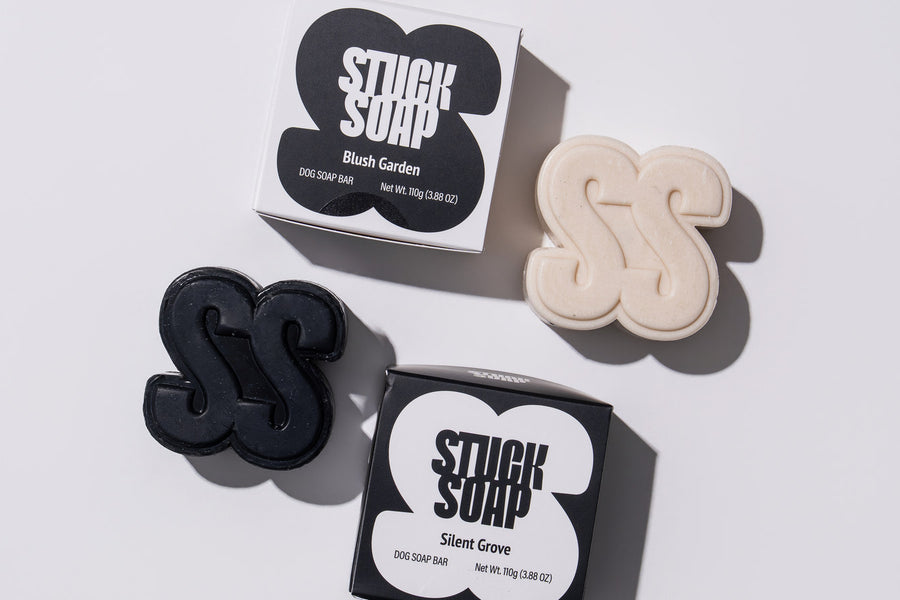
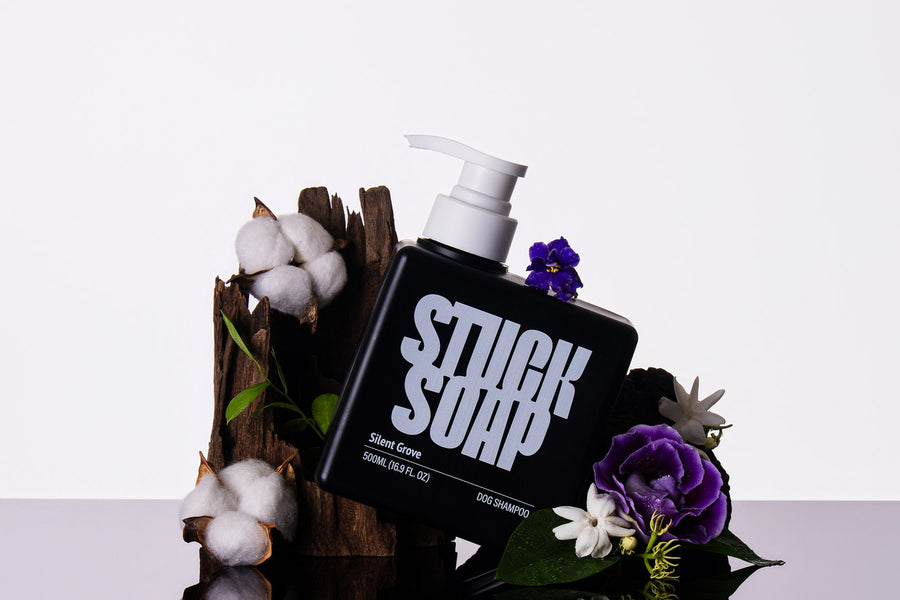
That is the design brief STUCK SOAP works from. Our Liquid Shampoo and Shampoo Bar are pH-balanced for dog skin, vegan, and formulated with Green Tea, Camellia Oil, and Centella Asiatica for barrier support and sebum control, in Silent Grove or Blush Garden. The high-concentrate formula means one pump usually covers a full wash, and the fine-bubble lather rinses out cleanly, which matters more than most people realize.
Worth stating plainly: STUCK SOAP is a non-medicated cosmetic grooming product. It cleans and supports healthy skin during bathing. It does not treat, cure, or prevent any condition, and it is not a substitute for veterinary care. If your dog's skin is inflamed, infected, or persistently itchy, that belongs with a veterinarian first.
Frequently Asked Questions
Can I use human shampoo on my dog just once?
One emergency wash with human shampoo is unlikely to harm a healthy adult dog. The concern is repetition. Human shampoo is formulated for a thicker, more acidic skin surface, so regular use gradually strips oils dogs rely on. Rinse thoroughly and return to a dog formula next bath.
Is baby shampoo safe for dogs?
Baby shampoo is gentler than adult human shampoo, mainly because it is designed to avoid stinging eyes. It is still built around human skin pH, which reported ranges place more acidic than canine skin. Occasional use is low risk. As a routine wash, it still works against the barrier.
Is Dawn dish soap safe to bathe a dog?
Dawn is a degreaser, and wildlife rescuers use it to remove oil contamination because it strips grease efficiently. That same strength makes it a poor routine shampoo. Use it for a genuine oil or grease emergency, then rinse well and go back to a dog shampoo afterward.
Why does my dog seem fine after years of human shampoo?
Barrier changes are cumulative and quiet. Water loss through the skin rises slightly, oils rebuild a little slower, and the coat dulls gradually. Owners read these as normal dog traits until a dry winter or a heavy shed season pushes things past a threshold. The timeline hides the cause.
What is the stratum corneum, and why does it matter for dog shampoo?
The stratum corneum is the outermost layer of skin, made of flattened dead cells held together by lipids. Veterinary references describe canine epidermis as thinner, with fewer cell layers than human epidermis in most haired areas. A thinner barrier gives harsh surfactants less material to work through.
My dog is scratching after a bath. What should I do?
Stop using the product, rinse the coat thoroughly with plain water, and watch for changes over the next day. Scratching, redness, or broken skin belongs with a veterinarian rather than a shampoo swap. Once a vet clears the skin, rebuild the routine with a dog formulated wash.
Sources
- Merck Veterinary Manual, Structure of the Skin in Dogs
- Matousek JL, Campbell KL. A comparative review of cutaneous pH. Veterinary Dermatology, 2002 (PubMed)
- American Kennel Club, How Often Should You Bathe Your Dog?
- International Bird Rescue, oiled wildlife response
Bathe Better, Not More Often
If the bottle in your shower was never designed for the animal you are washing, changing it is one of the simpler upgrades available. Explore the STUCK SOAP Liquid Shampoo and Shampoo Bar at stucksoap.com.