


If you have spent any time in the wellness aisle or scrolling pet TikTok, you have probably seen coconut oil for dogs hailed as a do-everything miracle: shinier coats, softer skin, fewer itchy spots. It is one of the most-searched natural pet remedies out there, and it taps into the same plant-powered, ingredient-first thinking that drives the K-Beauty movement.
But popularity is not the same as proof. The truth about coconut oil for dogs is more nuanced than the hype suggests. There are genuine, science-backed reasons it can help some dogs, and there are real cautions that veterinarians want you to hear before you reach for the jar.
In this guide, we will separate the evidence from the marketing. You will learn what coconut oil actually does for skin and coat, why it is a K-Beauty darling, the risks to watch for, and exactly how to use it safely if you decide to try it.
Table of Contents
- What Is Coconut Oil, and Why Does K-Beauty Love It?
- Potential Benefits of Coconut Oil for Your Dog
- What the Science Actually Says
- The Risks Vets Want You to Know
- How to Use Coconut Oil on Your Dog Safely
- The K-Beauty Bridge: Gentle, Plant-Based Cleansing
- Frequently Asked Questions
- Sources & References
What Is Coconut Oil, and Why Does K-Beauty Love It?
Coconut oil is the fat pressed from the meat of mature coconuts. What makes it unusual is its fatty-acid profile: it is rich in medium-chain fatty acids, and roughly half of it is lauric acid, a compound prized for its antimicrobial activity.
That composition is exactly why clean-beauty and K-Beauty formulators reach for coconut again and again. Korean skincare is built on a simple philosophy: feed the skin barrier with gentle, plant-derived ingredients rather than stripping it with harsh ones. Coconut fits that brief perfectly. Its fatty acids can slip into the skin's own lipid layer, and its derivatives form the backbone of the mild, sulfate-free cleansers that define modern K-Beauty washing.
The bridge to dogs is intuitive: a dog's skin barrier works on the same biological principles as ours. The lipids, the moisture balance, and the microbiome all matter. So the question worth asking is not "does coconut oil work on skin?" but "does it work for your dog's skin, and how should you use it?"
Potential Benefits of Coconut Oil for Your Dog
When used topically and in moderation, coconut oil may offer a few real perks for canine skin and coat. Here is where the support is strongest.
Moisture for dry, flaky skin. Coconut oil is an occlusive-emollient hybrid. It can soften rough patches and help the skin hold onto water, which is why it is often suggested for dry elbows, cracked paw pads, and dull, brittle coats during dry winter months.
A glossier, softer coat. A tiny amount worked through the fur can smooth the cuticle and add shine. Groomers have used plant oils as finishing treatments for decades, and coconut is one of the lighter options when used sparingly.
Antimicrobial potential. Lauric acid, which makes up close to half of coconut oil, has documented antibacterial and antifungal properties in lab settings. This is the basis for the popular idea that coconut oil can calm minor irritation on healthy, non-infected skin. Important caveat: this is also exactly where it can backfire, which we will cover in the risks section.
What the Science Actually Says
Here is the honest headline: there is strong human and lab research on coconut oil's effect on skin and hair, but very little canine-specific clinical data. Most of the benefit claims for dogs are extrapolated from human studies. That is worth knowing before you treat coconut oil as a cure.
On the skin side, a frequently cited randomized, double-blind trial compared virgin coconut oil to mineral oil in children with mild-to-moderate atopic dermatitis over eight weeks. The coconut oil group showed reduced transepidermal water loss (the rate at which skin loses moisture) and improved hydration. In plain terms: coconut oil helped damaged skin hold water better and strengthened the barrier.
On the coat side, the most famous evidence is the Rele and Mohile hair research, which found that coconut oil reduced protein loss from hair far more effectively than mineral or sunflower oil. Because coconut oil's molecules are small and linear, they penetrate the hair shaft rather than just sitting on top. The effect was strongest when the oil was applied before washing, reducing the swelling and protein leaching that happens during a bath.
What this means for your dog: the moisturizing and coat-conditioning benefits are biologically plausible and supported by adjacent research. But "plausible and supported in humans" is not the same as "proven safe and effective for every dog." Veterinary dermatologists are right to ask for more canine trials before making firm claims.
The Risks Vets Want You to Know
This is the part the viral videos skip. Many veterinarians actually advise caution with coconut oil, and in some cases they say the risks outweigh the benefits. Here is why.
It can make yeast and hot spots worse. This is the big one. Coconut oil is occlusive, meaning it traps heat and moisture against the skin. If your dog already has a yeast infection, a hot spot, or an active bacterial flare, that warm, sealed environment can feed the very microbes you are trying to fight. The antimicrobial reputation does not reliably hold up on inflamed, infected skin.
Allergic reactions happen. Some dogs react to topical coconut oil with increased itching or redness. If your dog has known skin allergies, introduce nothing new without your vet's input.
Ingestion adds calories and risk. Dogs lick. A greased-up coat usually ends up in the stomach, and coconut oil is pure fat. Too much can cause loose stools, weight gain over time, and in susceptible dogs it has been linked to pancreatitis, a serious inflammation of the pancreas. Dogs with a history of pancreatitis or who need a low-fat diet should generally avoid it.
A greasy, dirt-magnet coat. Use too much and you get an oily film that attracts dust and can actually clog the look and feel of the coat rather than improve it.
The takeaway is not "never use coconut oil." It is "use it thoughtfully, on the right dog, for the right reason, and check with your vet first, especially if your dog has any existing skin condition."
How to Use Coconut Oil on Your Dog Safely
If your vet gives the green light and your dog has healthy-but-dry skin or a dull coat, here is a sensible, low-risk approach.
Start small. Use a teaspoon or less, scaled to your dog's size. You can always add more next time; you cannot un-grease a coat.
Warm it in your hands. Coconut oil is solid at room temperature. Rub a small amount between your palms until it melts to a thin film.
Massage, do not slather. Work it lightly into the coat and any dry spots, then let it absorb for a few minutes.
Rinse or brush it through. For coat conditioning, brushing distributes the oil and removes excess. For a skin treatment, many owners rinse after about five minutes so the coat does not stay greasy.
Keep it occasional. Once or twice a week is plenty. More is not better here.
Prevent licking. Distract your dog with a walk or a chew while the oil absorbs, or use a light cover on the treated area so it does not all end up ingested.
Patch test first. Apply to a small area and wait 24 hours to rule out a reaction before doing a full application.
The K-Beauty Bridge: Gentle, Plant-Based Cleansing
Here is where coconut comes full circle. The most reliable way coconut benefits your dog's skin is not a DIY oil massage at all, it is the gentle, coconut-derived cleansing agents that power well-formulated, sulfate-free shampoos.
Modern K-Beauty and clean-beauty cleansers lean on mild surfactants like coco-glucoside and sodium cocoyl isethionate, both made from coconut. They lift away dirt and excess oil while leaving the skin's natural lipids and pH balance intact. The result is skin that feels clean and calm rather than stripped and squeaky, which is the entire point of the K-Beauty "cleanse without stripping" philosophy.
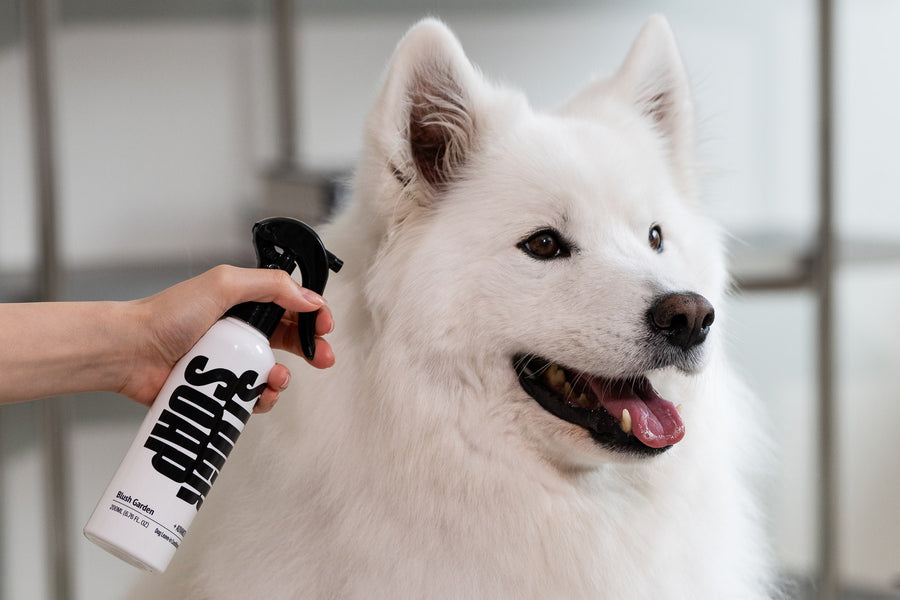
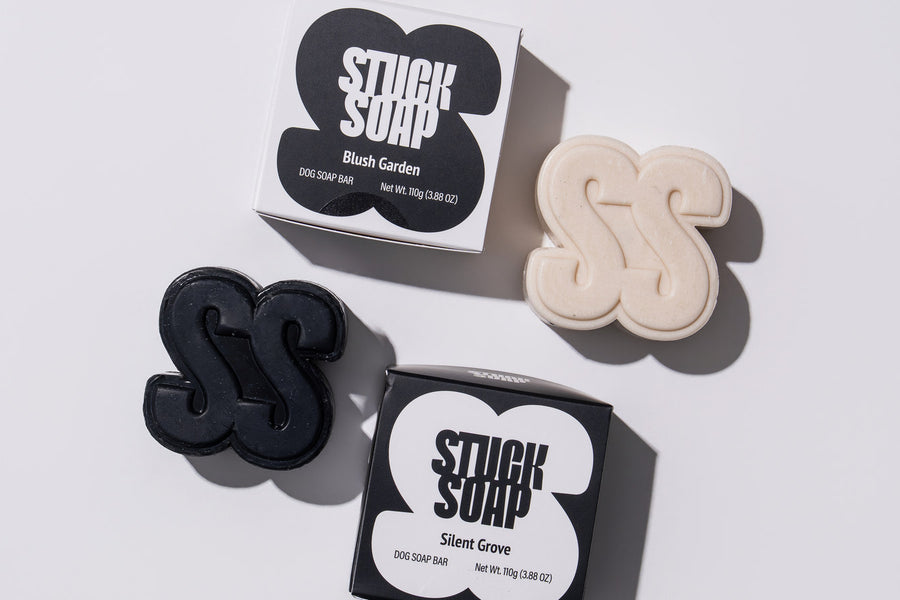
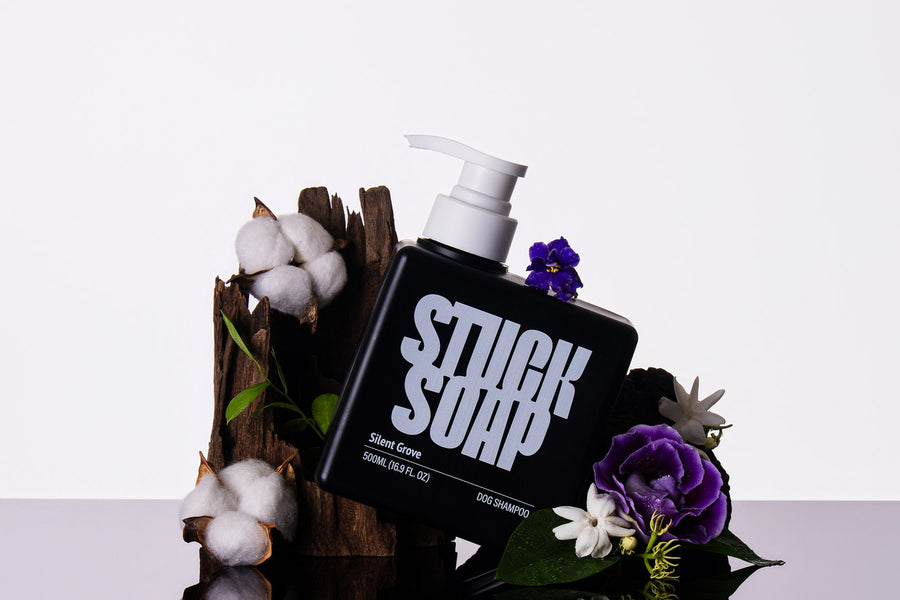
This is exactly the thinking behind STUCK SOAP. Our vegan, pH-balanced, plant-based formulas are built on a K-Beauty foundation: a rich, fine-bubble lather that cleans deeply without harsh sulfates, paired with botanicals like Jeju Island green tea, camellia oil, and centella asiatica that nourish and soothe the skin barrier. So rather than experimenting with a jar of raw coconut oil, you get the gentle, coconut-style cleansing your dog's skin actually benefits from, formulated for canine skin and balanced with calming, coat-loving ingredients.
Think of it this way: a purpose-built K-Beauty dog shampoo delivers the same gentle-cleansing principle in a safer, more consistent package than raw oil.
Frequently Asked Questions
Is coconut oil safe for dogs?
In small amounts and on healthy, non-infected skin, topical coconut oil is generally considered low-risk for most dogs. However, many vets advise caution because it can worsen yeast infections and hot spots, trigger allergies in some dogs, and cause weight gain or pancreatitis if ingested in excess. Always check with your veterinarian first.
Can coconut oil make my dog's coat shinier?
It can. A very small amount worked through the fur smooths the cuticle and adds shine, and research shows coconut oil penetrates the hair shaft better than other oils. The key is using a tiny quantity, too much leaves a greasy, dirt-attracting film.
How often should I apply coconut oil to my dog?
Once or twice a week is plenty for a dog with healthy-but-dry skin or a dull coat. Use a teaspoon or less, scaled to size, and let it absorb before brushing it through or rinsing it off.
When should I avoid coconut oil for my dog?
Skip it if your dog has an active yeast infection, hot spots, oily skin, known skin allergies, a history of pancreatitis, or needs a low-fat diet. In these cases the oil can make things worse, and a gentle, vet-appropriate shampoo is a safer choice.
Is a coconut-based shampoo better than raw coconut oil?
For most dogs, yes. Coconut-derived cleansing agents like coco-glucoside give you the gentle, barrier-friendly benefits of coconut in a balanced, rinse-clean formula designed for canine skin, without the greasiness or ingestion risks of applying raw oil.
The Bottom Line
Coconut oil for dogs is neither a miracle nor a menace. For a dog with healthy, dry skin and a dull coat, an occasional light application may add moisture and shine, and the science on coconut's barrier and coat benefits is genuinely encouraging. But the cautions are real: it can aggravate infections, trigger allergies, and cause digestive trouble if your dog licks it off, so a quick conversation with your vet is always the smart first step.
The bigger lesson is the K-Beauty one. Your dog's skin thrives on gentle, plant-based care that cleanses without stripping, supports the barrier, and respects natural pH. Whether that comes from a thoughtful oil treatment or, more reliably, a well-formulated coconut-derived shampoo, the principle is the same: be gentle, be consistent, and let good ingredients do the work.
Sources & References
- Coconut Oil for Dogs: Potential Benefits and Drawbacks — American Kennel Club (AKC)
- Coconut Oil for Dogs — PetMD
- The Risks and Benefits of Coconut Oil for Pets — The Drake Center for Veterinary Care
- Is Coconut Oil Safe for Dogs? 5 Benefits — GoodRx Pet Health
- Effect of Mineral Oil, Sunflower Oil, and Coconut Oil on Prevention of Hair Damage (Rele & Mohile) — Journal of Cosmetic Science
Give Your Dog the K-Beauty Spa Treatment
Skip the guesswork of raw oils. STUCK SOAP delivers the gentle, coconut-style cleansing your dog's skin loves, sulfate-free, pH-balanced, and powered by Jeju Island botanicals like green tea, camellia oil, and centella asiatica. Clean deeply, soothe naturally, and bring out a healthy shine.
Shop Stuck Soap →Vegan · pH-Balanced · Jeju Island Botanicals · Zero Waste