


If you have spent any time in the K-beauty aisle, you have seen collagen everywhere: collagen drinks, collagen jellies, collagen sheet masks, and collagen-infused creams. It is the original "beauty from within" ingredient, and it is now making its way onto the pet care shelf. If you have started seeing collagen for dogs in chews, powders, and coat supplements, you are probably wondering whether it actually does anything, or whether it is just clever marketing borrowed from the human beauty world.
Here is the honest answer: collagen is one of the few "beauty" ingredients with real, peer-reviewed evidence behind it for dogs. But the strongest science is not where most people expect it to be. Knowing what collagen can and cannot do for your dog's skin, coat, and joints will help you spend smart and skip the hype.
In this guide, we will break down what collagen really is, why K-beauty made it a superstar, what the canine research actually shows, and how gentle grooming fits into the bigger "in and out" picture of healthy skin.
Table of Contents
- What Is Collagen, and Why Is It a K-Beauty Icon?
- Collagen for Dogs: What the Science Actually Says
- Skin and Coat: Can Collagen Help From the Inside Out?
- Topical vs. Ingestible: Why You Cannot Wash Collagen Into Your Dog
- How to Use Collagen for Dogs Safely
- Frequently Asked Questions
- Sources & References
What Is Collagen, and Why Is It a K-Beauty Icon?
Collagen is the most abundant protein in the mammalian body, accounting for roughly 30% of total protein. It is the main structural protein in skin, cartilage, tendons, ligaments, and bone. In the skin specifically, collagen makes up the bulk of the dermis by dry weight, forming the scaffolding that keeps skin firm, springy, and resilient.
At a molecular level, collagen is built from a repeating triplet of amino acids, mostly glycine, proline, and hydroxyproline, wound together into a strong triple helix. Think of it as the structural rebar inside skin and joints.
So why is collagen such a K-beauty icon? Korean beauty essentially pioneered the "inner beauty" category, the idea that you support your skin from the inside, not just the surface. Collagen peptide drinks, jellies, and powders are a massive K-beauty segment, often paired with topical collagen creams and masks. The underlying philosophy is to support the skin's actual structure, not just coat the top layer.
Here is the key bridge to your dog: your dog is a mammal with the same collagen biology you have. The same triple-helix protein does the same structural job in their skin and joints. That is exactly why this human-beauty ingredient crossed over into pet care.
Collagen for Dogs: What the Science Actually Says
This is where collagen genuinely separates itself from many trendy ingredients: there is real, controlled research in dogs. The catch is that the most robust evidence is for joints, not coats.
The star form here is undenatured type II collagen, usually labeled UC-II. Multiple peer-reviewed, placebo-controlled studies in dogs with osteoarthritis have shown meaningful improvements in mobility and comfort. In one study, UC-II was compared head to head with a prescription anti-inflammatory (robenacoxib) and produced a similar improvement in mobility scores, roughly 32% for UC-II versus 31% for the drug. A separate randomized, double-blind, placebo-controlled crossover study found that UC-II (often paired with Boswellia) improved mild to moderate mobility issues in dogs.
How does such a tiny dose work? UC-II is given in very small amounts, around 10 mg of active collagen per day, and acts through a process called oral tolerance. Essentially, it helps calm the immune response that attacks the type II collagen in joint cartilage, which reduces inflammation over time. Notably, when supplementation stopped in studies, dogs tended to relapse, which tells you collagen is ongoing support rather than a one-time fix.
On safety, the picture is reassuring. Across human, dog, and horse research, UC-II has generally been well tolerated without commonly reported adverse effects. Still, collagen is a supplement, not a cure, and your veterinarian should always be part of the plan for arthritis or any chronic condition.
Skin and Coat: Can Collagen Help From the Inside Out?
Now for the part dog parents care about most: the glow. This is where K-beauty's "beauty from within" promise meets your dog's coat, and the logic is genuinely sound.
Collagen peptides supply glycine, proline, and hydroxyproline, the very amino-acid building blocks the body uses to construct the dermal matrix and keratin, the protein that makes up your dog's hair and coat. In human research, hydrolyzed collagen peptides have been shown to improve skin hydration and elasticity. By extension, a dog getting consistent, quality collagen may show better coat condition, softness, and shine over a span of weeks.
But let us be honest about the evidence gap. Canine skin and coat research on collagen is far thinner than the joint research. A lot of what is marketed as "shinier coat in 21 days" is extrapolated from human studies and customer anecdotes rather than large canine trials. Treat coat benefits as promising and plausible, but not guaranteed.
It also helps to zoom out. A glossy coat is a reflection of whole-body health. Adequate high-quality protein, omega-3 fatty acids, zinc, and a healthy gut all matter at least as much as any single supplement. Collagen can be one helpful piece, but it works best inside a solid nutrition and grooming routine.
Topical vs. Ingestible: Why You Cannot Wash Collagen Into Your Dog
Time to bust a common myth: a "collagen shampoo" or "collagen cream" cannot rebuild your dog's collagen. The collagen molecule is simply too large to penetrate the skin barrier. On the surface, it acts as a humectant and emollient, meaning it sits on top and helps soften and temporarily hydrate the coat. That is pleasant, but it is cosmetic, not structural.
This is well-established cosmetic science in human skincare, and the same physics applies to your dog. Real structural collagen support comes from within, through diet and oral supplements, not from being lathered on.
So where does grooming actually fit? Topical care's real job is not to add collagen, it is to protect the skin barrier that houses your dog's own collagen. Harsh, high-pH, sulfate-heavy shampoos strip away the protective lipid layer and stress the skin, which is exactly the opposite of what a healthy dermis needs.
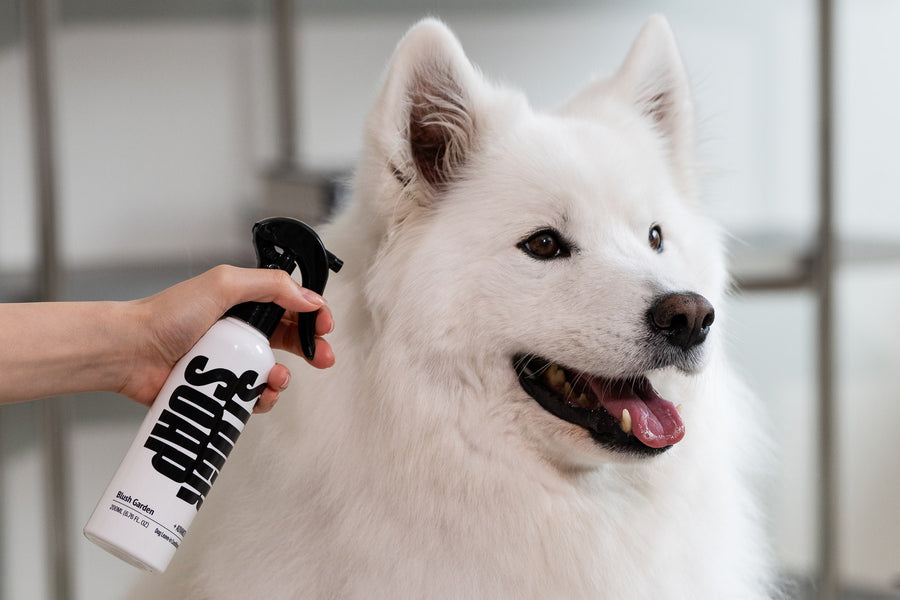
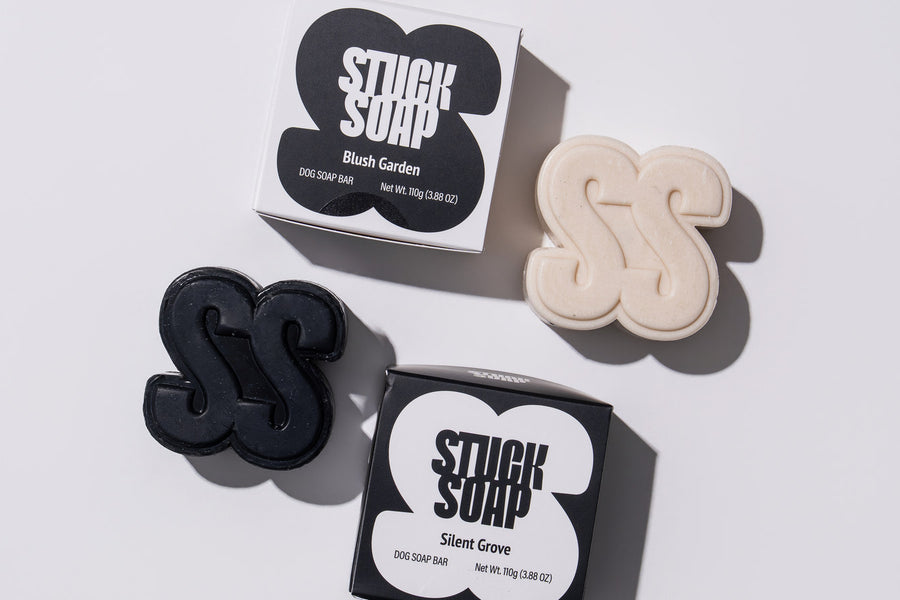
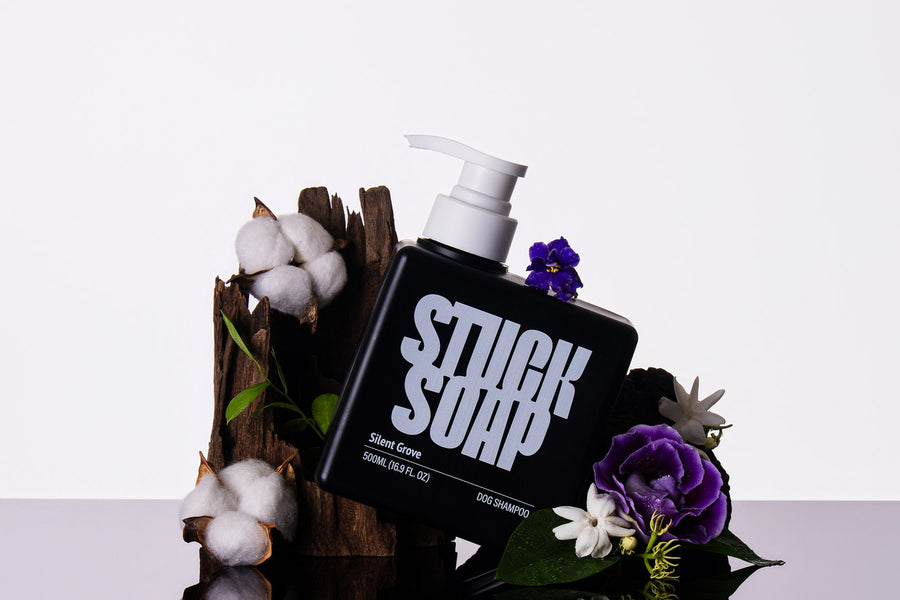
This is the K-beauty philosophy that Stuck Soap is built on: gentle, pH-balanced, plant-based cleansing that respects the barrier instead of damaging it. One honest note, since transparency matters here: Stuck Soap is 100% vegan, so it does not use animal-derived collagen. Instead, it leans on barrier-supporting botanicals like Jeju Island green tea, camellia oil, and centella asiatica. Pair "collagen from within" with "gentle care on the outside," and you are following the same in-and-out logic that made K-beauty famous.
How to Use Collagen for Dogs Safely
If you want to try collagen for your dog, a little structure goes a long way. Here are practical, vet-minded tips you can act on today.
Talk to your vet first. This is especially important if your dog has arthritis, allergies, kidney concerns, or takes any medication. Your vet can confirm whether collagen fits your dog's overall plan.
Match the form to the goal. For joint support, look for undenatured type II collagen (UC-II) at researched doses of around 10 mg of active UC-II per day. For general skin and coat support, hydrolyzed collagen peptides are the common choice. They are different ingredients for different jobs.
Choose quality. Favor products that are single-source, third-party tested, and low on fillers. The source (bovine, marine, or chicken) and the processing method both affect quality and absorption.
Give it real time. Canine studies typically run 8 to 12 weeks or longer, and benefits faded when supplementation stopped. Think of collagen as steady, ongoing support, not an overnight transformation.
Introduce slowly and watch. Start with a smaller amount, monitor for any digestive upset, and stop if you notice a reaction.
Do not treat it as a cure. Collagen complements, but never replaces, vet-directed treatment for atopic dermatitis, skin infections, or arthritis.
Pair it with gentle grooming. Support the barrier from the outside with a mild, pH-balanced wash, and avoid over-bathing, which can strip the skin your collagen is working to support.
The Bottom Line
Collagen earned its K-beauty crown for a reason, and it carries that credibility into pet care better than most trend ingredients. For your dog, the strongest evidence is in joint mobility, the coat-and-glow benefits are promising but still emerging, and topical "collagen" products are surface-level at best. The smartest approach borrows the whole K-beauty mindset: nourish from within with quality nutrition and the right supplement, and protect from the outside with gentle, barrier-friendly grooming.
Frequently Asked Questions
Is collagen safe for dogs?
Generally, yes. Controlled studies in dogs found undenatured type II collagen (UC-II) to be well tolerated with few reported adverse effects. Introduce it gradually and check with your veterinarian first, especially if your dog has a health condition or takes medication.
Does collagen actually make a dog's coat shinier?
It may help over time by supplying amino-acid building blocks for keratin and skin, but canine coat evidence is still limited. A shiny coat depends heavily on overall nutrition (quality protein, omega-3s) and a healthy, intact skin barrier, so collagen is best seen as one supporting piece.
What is the best type of collagen for dogs?
For joints, undenatured type II collagen (UC-II) has the strongest research behind it. For skin and coat goals, hydrolyzed collagen peptides are the most common form. Match the type of collagen to what you are actually trying to support.
How long until I see results from collagen?
Most canine studies run 8 to 12 weeks or longer, and benefits reversed when supplementation stopped. Plan on consistent, ongoing use rather than expecting a quick fix.
Can I just use a collagen shampoo instead of a supplement?
No. Topical collagen cannot penetrate or rebuild skin collagen; it only sits on the surface as a temporary moisturizer. Structural support comes from within. A gentle, pH-balanced shampoo helps in a different way, by protecting the skin barrier your dog's own collagen lives in.
Sources & References
- Effects of Undenatured Type II Collagen (UC-II) Compared to Robenacoxib on Mobility in Dogs with Osteoarthritis — PMC / National Library of Medicine
- Undenatured Type II Collagen and Boswellia Serrata for Mobility Disorders in Dogs: Randomized, Double-Blind, Placebo-Controlled Crossover Study — PLOS One / PMC
- Undenatured Type II Collagen (UC-II) in Joint Health and Disease: A Review in Companion Animals — Animals (MDPI)
- Collagen Hydrolysates for Skin Protection: Oral Administration and Topical Formulation — PMC / National Library of Medicine
- Best Joint Supplements for Dogs, Recommended by Vets — PetMD
Give Your Dog the K-Beauty Spa Treatment
Collagen works from within, but a healthy coat also needs gentle care on the outside. Stuck Soap's vegan, pH-balanced formulas clean without stripping, using Jeju Island botanicals like green tea, camellia oil, and centella asiatica to protect the skin barrier your dog's own collagen depends on.
Shop Stuck Soap →Vegan · pH-Balanced · Jeju Island Botanicals · Zero Waste