


If your dog scratches through the night, sheds flakes onto the couch, or loses that soft, healthy feel to their coat the moment the weather turns, the culprit may not be dirt at all. It is often a weakened skin barrier. That is exactly the problem K-Beauty's fastest-rising ingredient was designed to address, and it is why searches for ectoin for dogs are climbing as pet parents wonder whether this barrier-shield molecule could help their itchy companions the way it helps sensitive human skin.
Ectoin has quietly become one of the most talked-about ingredients in Korean skincare in 2026, sitting right alongside cica and beta-glucan on the "barrier-first" shelf. It is prized for one thing above all: calming reactive, easily irritated skin without stinging, tingling, or overloading it.
So does the hype translate from human faces to furry paws? In this guide we'll explain what ectoin actually is, how its famous "hydration shell" works, and, most importantly, what the science does and does not yet tell us about using it for your dog. As with any trending ingredient, we'll be clear about where there is solid evidence and where we are still in the realm of promising possibility.
Table of Contents
- What Is Ectoin? The Extremophile Origin Story
- How Ectoin Works: The Hydration Shell
- Why Your Dog's Skin Barrier Matters
- What Ectoin for Dogs Could Mean for Sensitive Skin
- The K-Beauty Barrier-First Approach to Grooming
- How to Support Your Dog's Skin Barrier Today
- Frequently Asked Questions
- Sources & References
What Is Ectoin? The Extremophile Origin Story
Ectoin is a small amino acid derivative, technically an "extremolyte," first discovered in 1985 in the salt lakes and baking sands of the Egyptian desert. It is not made by a plant or an animal but by microscopic organisms called extremophiles, which survive in some of the harshest places on Earth.
Think about what those microbes endure: scorching heat, freezing nights, blistering UV, and near-total dehydration. To stay alive, they manufacture ectoin, a molecule that shields their proteins, DNA, and cell membranes from that constant stress. In other words, ectoin evolved as nature's survival shield.
That resilience is precisely why formulators fell in love with it. If a single molecule can keep a living cell stable in a salt flat, the reasoning goes, it can help stabilize and protect skin cells that are under everyday stress from cold air, dry heat, pollution, and friction. Today ectoin appears in serums, moisturizers, and even gentle cleansers from leading Korean brands, and it is frequently grouped with cica and beta-glucan as a "soothing hero" for reactive skin.
How Ectoin Works: The Hydration Shell
Most hydrating ingredients you already know, like hyaluronic acid, work by grabbing water and holding it. Ectoin does something more sophisticated. It organizes the water around it into a dense, structured layer scientists call the "Ectoin Hydro Complex," a kind of hydration shell that wraps around proteins and cell membranes.
This shell does three useful things at once. It locks moisture against the skin, it acts as a physical buffer against environmental aggressors like pollution and temperature swings, and it helps proteins keep their shape instead of "unfolding" under stress. The net effect is a barrier that stays calmer and more stable.
The clinical evidence in humans is genuinely encouraging. Controlled studies of ectoin creams have shown improved skin hydration and, critically, reduced transepidermal water loss, or TEWL, the rate at which moisture escapes through a compromised barrier. A clinical study of a 7% ectoin dermatitis cream measured exactly these barrier improvements in people with eczema, and a systematic review of multiple trials concluded that topical ectoin meaningfully raises hydration, lowers TEWL, and reduces irritation in barrier-impaired skin, often performing comparably to standard emollients.
Hold onto that phrase, "transepidermal water loss." It is the bridge that connects a K-Beauty face serum to your dog's itchy skin.
Why Your Dog's Skin Barrier Matters
Your dog's skin, like yours, has an outer layer called the stratum corneum that works like a brick wall. The "bricks" are skin cells, and the "mortar" is a blend of lipids, especially ceramides, that seals moisture in and keeps allergens, bacteria, and irritants out.
When that mortar breaks down, the wall leaks. Moisture escapes (rising TEWL), the skin dries out, and environmental allergens slip through more easily, triggering the itch-scratch cycle so many dog owners know all too well. PetMD estimates that up to 10% of dogs experience allergic dermatitis linked to environmental triggers, ingredients, or harsh grooming products.
Here is the striking part: veterinary dermatology research has found that dogs with atopic dermatitis show a defective skin barrier that mirrors human eczema almost step for step. Studies have documented significantly increased transepidermal water loss and reduced, abnormal ceramide content in both the irritated and the normal-looking skin of atopic dogs. The same barrier weakness that ectoin is designed to counter in people is a well-documented feature of chronic canine skin trouble.
That parallel is the whole premise of "K-Beauty for dogs." The philosophy that gentle, barrier-supporting ingredients beat harsh, stripping ones is not just a marketing idea. It maps onto real canine skin biology.
What Ectoin for Dogs Could Mean for Sensitive Skin
Let's be direct, because it matters: the robust clinical trials on ectoin have been conducted in humans, not dogs. There is not yet a body of published canine studies proving that ectoin shampoos or sprays repair a dog's barrier. Anyone claiming otherwise is getting ahead of the evidence.
What we can say responsibly is that the biological rationale is unusually clean. Ectoin is a simple, water-loving molecule with an excellent safety profile and no known toxicity. It is not an essential oil, an acid, or a fragrance, the categories most likely to irritate or harm dogs. Its entire mechanism, binding water and buffering stress, targets the exact barrier defects (high TEWL, fragile membranes, environmental reactivity) that veterinary research has identified in sensitive and allergy-prone dogs.
In practical terms, that makes ectoin a plausible, gentle "helper" ingredient worth watching as it filters into pet care, particularly for dogs with dry, flaky, or reactive skin who cannot tolerate stronger actives. It would work as a moisturizer and shield, not a medicine. It is not a treatment for infection, mange, or a diagnosed allergy, and it will never replace your veterinarian's care plan.
If your dog has persistent itching, redness, hot spots, or hair loss, the smartest first move is a vet visit to rule out fleas, food allergies, and infection. Barrier-supporting ingredients, ectoin included, are best thought of as everyday maintenance that helps a healthy-enough barrier stay resilient between those medical checkpoints.
The K-Beauty Barrier-First Approach to Grooming
Whether or not ectoin itself lands in your dog's bath, the thinking behind it is what really deserves your attention. K-Beauty's guiding rule is simple: never strip the barrier you are trying to protect. In human skincare that means gentle cleansing and layered hydration. For dogs it means the same restraint.
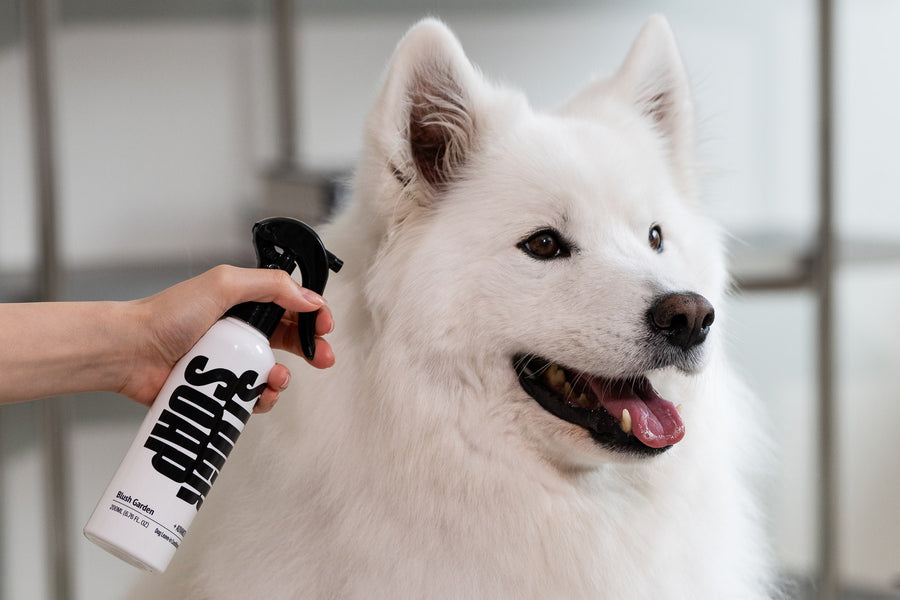
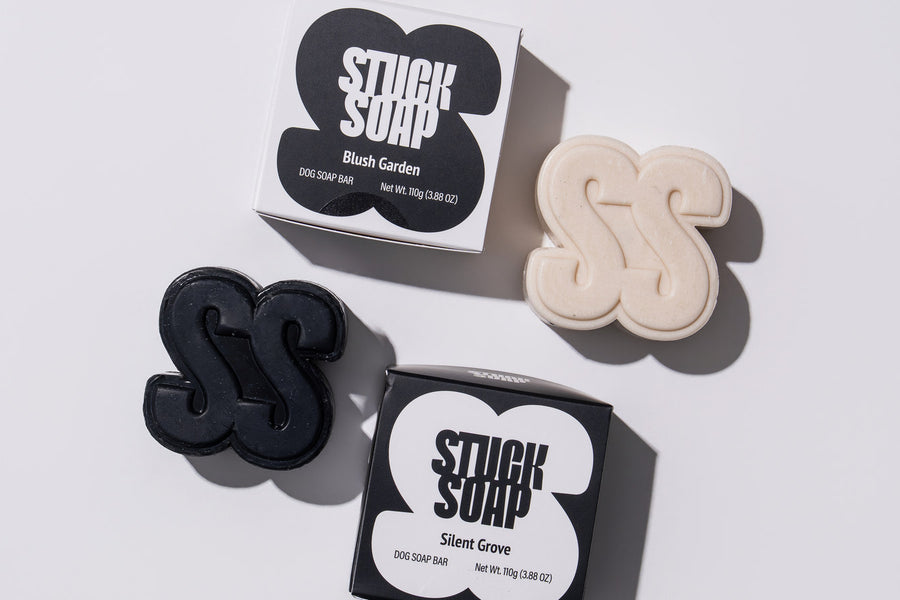
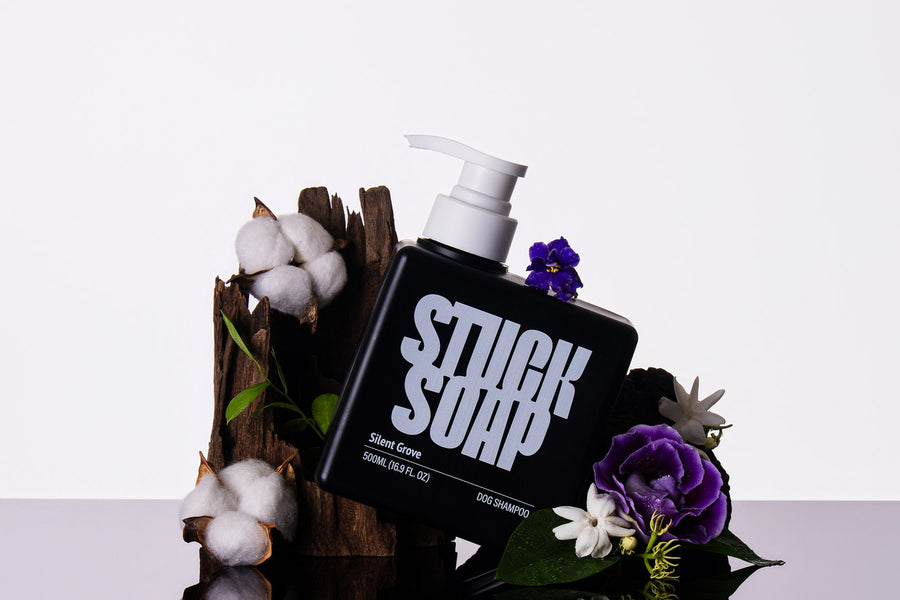
This is where STUCK SOAP lives. Our formulas are built on the K-Beauty barrier-first philosophy rather than on any single trending molecule. We use Centella Asiatica (the famous "cica" that calms reactive skin), antioxidant-rich Green Tea, and nourishing Camellia Oil, all sourced from Jeju Island in Korea, to clean without stripping and to leave the skin barrier supported instead of raw.
Just as importantly, STUCK SOAP is pH-balanced for dog skin, vegan, and free of the sulfates and harsh detergents that drive up water loss and irritation. That is the same logic that makes ectoin exciting: work with the barrier, not against it. If you want to go deeper on the science, our guides on ceramides for dogs, beta-glucan, and colloidal oatmeal all explore the same barrier-first theme.
How to Support Your Dog's Skin Barrier Today
You do not need to wait for an ectoin dog shampoo to start protecting your dog's skin. A few evidence-aligned habits do most of the heavy lifting:
Do not over-bathe. Bathing too often washes away the protective lipids your dog's barrier depends on. Most dogs with sensitive skin do best with a bath every three to four weeks, or as your vet advises.
Choose gentle, pH-balanced formulas. Skip human shampoos and anything loaded with sulfates, artificial fragrance, or harsh detergents. Look for barrier-supporting ingredients such as ceramides, colloidal oatmeal, cica, aloe, or oat.
Rinse thoroughly and dry gently. Leftover residue irritates, and vigorous towel-rubbing damages the coat and skin. Pat, don't scrub.
Support the barrier from the inside. A diet with adequate omega-3 fatty acids helps ceramide production and coat quality. Ask your vet before adding supplements.
Watch for warning signs. Ongoing itch, redness, odor, or hair loss are cues to see a professional rather than reach for another product.
Frequently Asked Questions
Is ectoin safe for dogs?
Ectoin is a simple, water-binding amino acid derivative with an excellent safety record and no known toxicity in topical human use. It is not an essential oil, acid, or fragrance, so it lacks the usual red flags for dogs. That said, canine-specific studies are limited, so introduce any new product gradually and check with your veterinarian, especially if your dog has known allergies.
Does ectoin actually repair a dog's skin barrier?
In humans, controlled studies show ectoin improves hydration and reduces transepidermal water loss, both markers of a stronger barrier. Because dogs with atopic skin share the same barrier defects, the rationale carries over, but there is not yet published clinical proof in dogs. Think of ectoin as a plausible supportive ingredient, not a proven canine treatment.
What is the difference between ectoin and hyaluronic acid for dogs?
Hyaluronic acid mainly attracts and holds water. Ectoin goes a step further by organizing water into a structured "hydration shell" that also buffers skin cells against environmental and temperature stress. In practice they are complementary: hydration plus protection.
Does STUCK SOAP contain ectoin?
No. STUCK SOAP is formulated around Jeju Island botanicals: Centella Asiatica (cica), Green Tea, and Camellia Oil, chosen for the same barrier-first, non-stripping philosophy that makes ectoin appealing. Ectoin is an ingredient we are exploring in this article, not a component of our current products.
Can ectoin help a dog with allergies or eczema?
It may help support a dry, reactive barrier as part of gentle everyday care, but it is not a cure or a substitute for veterinary treatment. Diagnosed allergies, infections, and atopic dermatitis need a professional care plan. Barrier-supporting ingredients work best alongside that plan, not instead of it.
The Bottom Line
Ectoin earned its 2026 spotlight honestly. It is a well-studied, remarkably gentle molecule that strengthens hydration and calms sensitive human skin by shielding the barrier rather than stripping it. Because canine atopic skin shares the very same barrier weaknesses, the idea of ectoin for dogs is scientifically reasonable, even if the dedicated dog studies are still to come.
The bigger takeaway is the mindset. Your dog's healthiest coat starts with a protected barrier: gentle cleansing, sensible bathing, and ingredients that support skin instead of stripping it. Whether the hero on the label is ectoin, cica, or camellia oil, that barrier-first principle is what actually delivers a calmer, softer, itch-free dog.
Sources & References
- Effect of Ectoin Dermatitis Cream 7% on Skin Hydration and Skin Barrier Function — ClinicalTrials.gov (U.S. National Library of Medicine)
- Increased Transepidermal Water Loss and Decreased Ceramide Content in Dogs With Atopic Dermatitis — PubMed (Veterinary Dermatology)
- Transepidermal Water Loss in Healthy and Atopic Dogs: A Comparative Study — PubMed
- Best Dog Shampoos, Vet-Verified — PetMD
- Top Skincare Trends for 2026 and the Ingredients Driving the Shift — Korean Skincare Coach
Give Your Dog the K-Beauty Spa Treatment
Ectoin is the newest name in barrier-first skincare, but the principle behind it is timeless: clean gently and protect the skin you're washing. STUCK SOAP is built on that exact philosophy, using Jeju Island Centella, Green Tea, and Camellia Oil to cleanse without stripping your dog's delicate barrier. Vegan, pH-balanced, and made for sensitive skin.
Shop Stuck Soap →Vegan · pH-Balanced · Jeju Island Botanicals · Zero Waste