


If your dog can't stop scratching, gnawing at a paw, or rubbing against the couch, you already know how exhausting dry, itchy skin can be for both of you. Before reaching for another harsh treatment, it's worth looking at a gentle botanical that the skincare world has quietly relied on for decades. Evening primrose oil for dogs is emerging as one of the most talked-about natural options for soothing irritated skin and supporting a soft, glossy coat.
In the K-beauty universe, evening primrose oil sits alongside ingredients like green tea, centella asiatica, and camellia oil: plant-based, barrier-friendly, and prized for calming sensitive skin rather than stripping it. The same gamma-linolenic acid (GLA) that makes this oil a fixture in Korean facial serums is exactly what gives it potential for your dog's skin and coat.
This guide breaks down what evening primrose oil actually is, the science behind why GLA matters, the benefits dog owners and veterinarians report, and how to use it safely. As always, we'll be clear about what's proven, what's promising, and where you should loop in your vet.
Table of Contents
What Is Evening Primrose Oil?
Evening primrose oil (EPO) is pressed from the tiny seeds of the evening primrose plant (Oenothera biennis), a wildflower whose pale yellow blooms open at dusk. The oil itself is unremarkable to look at, but its fatty acid profile is what makes it special.
EPO is roughly 70–72% linoleic acid and 8–13% gamma-linolenic acid (GLA), an omega-6 fatty acid that is surprisingly rare in nature. Very few plant oils contain meaningful amounts of GLA, which is why evening primrose, borage, and black currant seed oils get singled out again and again in both human and pet skincare.
In K-beauty formulations, evening primrose oil shows up in facial oils, soothing serums, and barrier creams designed for sensitive or reactive skin. Korean skincare philosophy leans heavily on replenishing the skin barrier instead of attacking the surface, and an omega-6-rich oil fits that approach perfectly. That same logic is now being applied to dogs, whose skin barrier is even thinner and more delicate than ours.
The Science: Why GLA Matters for Skin
Here's where evening primrose oil earns its reputation. Skin needs a steady supply of essential fatty acids to keep its barrier intact and its inflammation in check. The body normally converts linoleic acid into GLA using an enzyme called delta-6-desaturase. The catch: in skin that is chronically inflamed or allergic, that enzyme often underperforms.
Research on humans with atopic dermatitis (the medical term for chronic, allergy-driven eczema) found that this exact enzyme deficiency leaves skin short on GLA. Supplying GLA directly, as evening primrose oil does, helps bypass the bottleneck. Once in the body, GLA converts to DGLA, which fuels production of anti-inflammatory prostaglandin E1 rather than the pro-inflammatory prostaglandin E2 that drives itching and redness.
A clinical study published in the journal Lipids in Health and Disease found that plasma GLA and DGLA levels rose after evening primrose oil treatment, and that improvement in eczema severity tracked closely with how much each patient's GLA levels increased. A separate randomized, placebo-controlled trial in the Indian Journal of Dermatology, Venereology and Leprology reported meaningful improvement in atopic dermatitis with EPO.
On the surface of the skin, topical evening primrose oil has been shown in placebo-controlled research to reduce transepidermal water loss (TEWL), the slow leak of moisture through a compromised barrier, while improving moisture, elasticity, and firmness. A stronger barrier means skin that holds water better, fends off irritants more effectively, and feels less itchy. Those mechanisms are universal to mammalian skin.
Evening Primrose Oil Benefits for Dogs' Skin and Coat
Dogs and humans share a lot of skin biology, and canine atopic dermatitis is one of the most common reasons dogs visit the vet. Veterinarians have studied essential fatty acid supplementation for decades, and evening primrose oil frequently appears in that conversation.
Here's what the evidence and clinical experience suggest evening primrose oil may offer your dog:
- Calmer, less itchy skin. The GLA-to-PGE1 pathway helps dial down the inflammation behind chronic scratching. Veterinary sources note that GLA dosed at roughly 1–3 mg/kg per day has shown benefit in managing canine skin allergies.
- Relief for dry, flaky patches. Omega-6 fatty acids help reinforce the lipid barrier, so rough, dandruff-prone spots may soften and rehydrate over time.
- A glossier coat. Omega-6 stimulates the skin's natural oil production, which is what gives a coat its healthy shine. A 2011 study in Veterinary Dermatology found that combined omega-3 and omega-6 supplementation significantly improved coat quality, reduced shedding, and decreased itching in dogs over eight weeks.
- Support during seasonal flare-ups. Dogs with environmental or seasonal allergies often have weakened skin barriers, exactly the situation where supplemental GLA tends to help most.
It's important to set expectations honestly. Evening primrose oil is not a medication and not a cure for allergies. Veterinarians generally describe it as a supportive supplement that works best alongside a complete skin-care plan, and results build slowly. Most owners and studies report visible coat improvement around four to six weeks, with skin and itch changes often taking eight to twelve weeks of consistent use.
How to Use Evening Primrose Oil Safely
Evening primrose oil can be used two ways for dogs: taken orally as a supplement, or applied topically to a specific irritated area. Oral use is the more researched route for whole-body skin and coat support.
General oral dosing guidance. Pet wellness sources commonly suggest starting low and building up. Typical ranges cited are around 5 drops of liquid for small dogs, 1/4 to 1/2 teaspoon for medium dogs (roughly 22–55 lbs), 1 teaspoon for large dogs (55–99 lbs), and up to 1 1/2 teaspoons for dogs over 99 lbs. These are general figures, not a prescription, so confirm the right amount with your veterinarian before starting.
Topical use. A few drops worked gently into a dry elbow callus or a flaky patch can help soften and soothe the area. Always do a small patch test first, and avoid spots your dog can immediately lick clean.
Keep these safety points in mind:
- Start slow. Begin at the low end of the dosage range and increase gradually while you watch how your dog responds.
- Watch for tummy upset. Too much oil at once can cause vomiting, loose stool, or mild stomach discomfort. Evening primrose oil is not considered toxic to dogs, but a large accidental dose may trigger a bout of gastroenteritis.
- Choose clean products. Use a pet-specific formula or a high-quality human-grade oil with no artificial flavors, additives, or fillers.
- Talk to your vet first if your dog is pregnant, has a seizure history, has a bleeding disorder, or is on any medication, since EPO can interact with certain drugs.
- Be patient. Give it a full four to eight weeks before judging whether it's helping. Fatty acids need time to build up in the system.
If your dog's itching is severe, sudden, or paired with hair loss, open sores, or a foul odor, see your veterinarian before experimenting with supplements. Those signs can point to infection, parasites, or allergies that need targeted treatment.
Where It Fits in the K-Beauty for Dogs Movement
The reason evening primrose oil feels so at home in pet care is that it embodies the core K-beauty principle: be gentle, support the barrier, and let healthy skin do the rest. Instead of harsh detergents that strip away natural oils, Korean-inspired grooming favors plant-derived ingredients that calm and replenish.
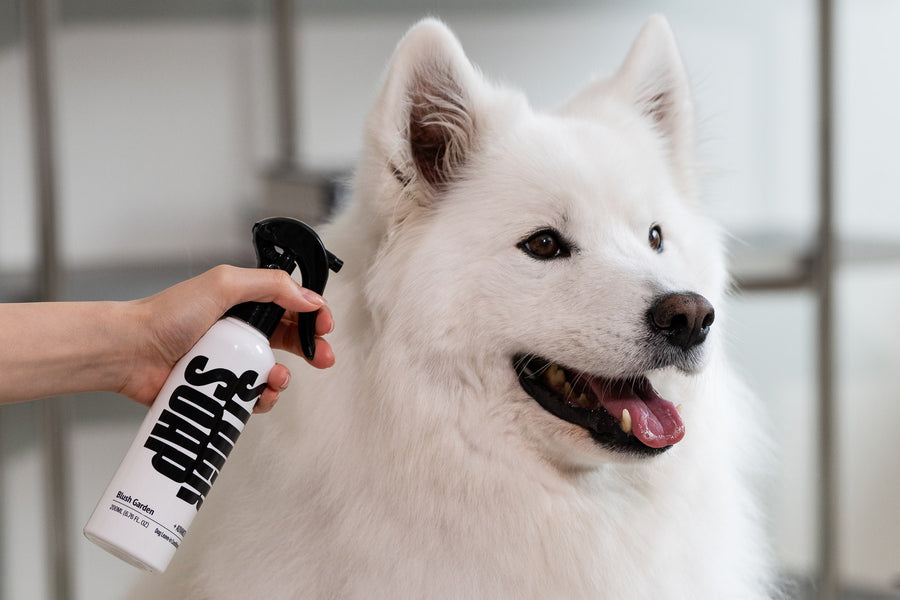
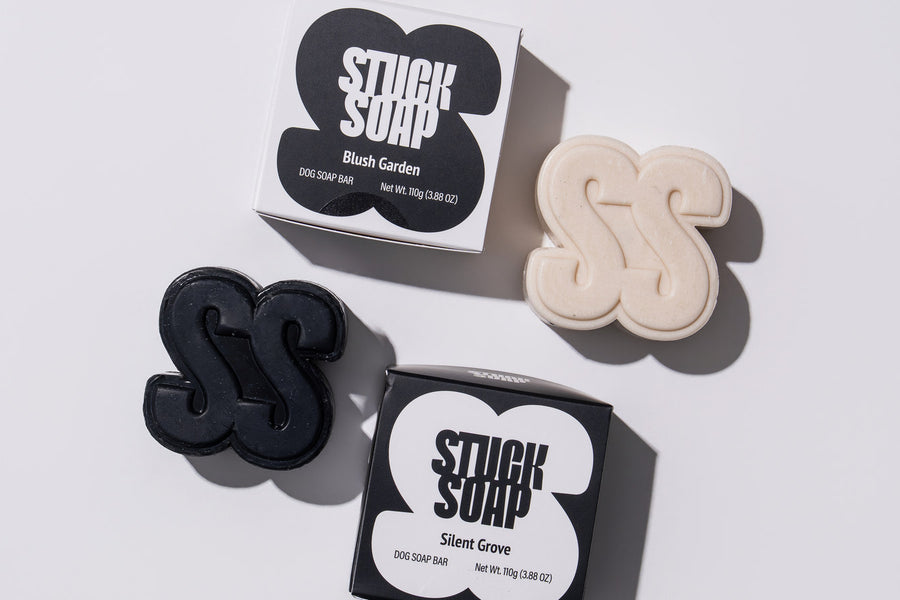
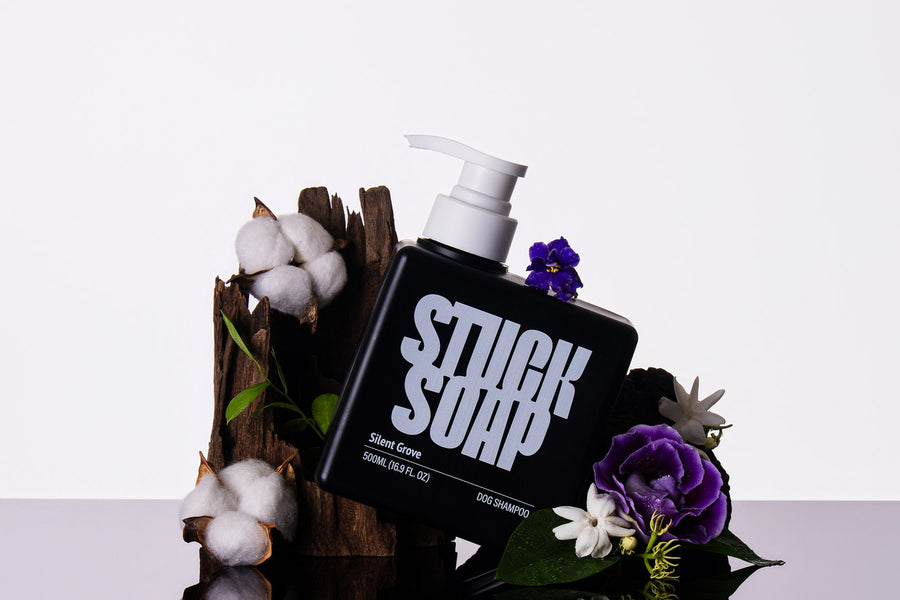
That's the same philosophy behind STUCK SOAP. Our vegan, pH-balanced formulas are built around skin-loving Jeju Island botanicals, including green tea, camellia oil, and centella asiatica (the famous "cica" ingredient), chosen specifically because they soothe and protect rather than irritate. While evening primrose oil is a supplement you'd add separately, it pairs naturally with a gentle K-beauty bathing routine: cleanse without stripping, then nourish the skin barrier from the inside and out.
For a dog with sensitive, itch-prone skin, the combination of a non-stripping shampoo and a GLA-rich supplement reflects exactly how Korean skincare treats reactive human skin: layer gentle, barrier-friendly ingredients and give the skin time to recover.
Quick takeaways
- Evening primrose oil is rich in GLA, a rare omega-6 that targets the inflammation behind itchy skin.
- Human and canine research links GLA to calmer skin, less itching, and a healthier coat.
- Start with a low dose, choose a clean product, and give it 4–8 weeks.
- Pair it with a gentle, pH-balanced K-beauty shampoo for a barrier-first routine.
- Always check with your vet, especially for dogs on medication or with health conditions.
Frequently Asked Questions
Is evening primrose oil safe for dogs?
Evening primrose oil is generally considered safe and is not toxic to dogs when given in appropriate amounts. The main risk is mild stomach upset, such as vomiting or loose stool, if the dose is too high. Always start low, choose an additive-free product, and check with your veterinarian first, especially if your dog is pregnant, has seizures, or takes medication.
How long does evening primrose oil take to work for a dog's skin?
Most owners notice coat improvements within four to six weeks of consistent daily use. Skin and itch relief can take longer, often eight to twelve weeks, because essential fatty acids need time to build up in your dog's system. Patience and consistency are key.
Can I give my dog human evening primrose oil capsules?
Yes, many owners use high-quality human-grade evening primrose oil for dogs, as long as it contains no artificial flavors, xylitol, or other additives. Dose it according to your dog's weight and your vet's guidance rather than the human serving size on the bottle.
Does evening primrose oil help with a dog's itchy skin and allergies?
It may help as part of a broader plan. The GLA in evening primrose oil supports an anti-inflammatory pathway in the skin, and veterinary sources report benefit for allergy-related itching. It is a supportive supplement, not a cure, and works best alongside proper veterinary care for diagnosed allergies.
What's the difference between evening primrose oil and fish oil for dogs?
Evening primrose oil supplies omega-6 GLA, while fish oil supplies omega-3 EPA and DHA. Both support skin and coat, and many veterinarians recommend balancing the two, since dogs need an appropriate omega-6 to omega-3 ratio. They complement rather than replace each other.
The Bottom Line
Evening primrose oil for dogs is a gentle, science-backed option for owners who want to support itchy, dry skin and a dull coat without harsh chemicals. Its rare GLA content targets the very inflammation that drives canine skin discomfort, and decades of fatty acid research in both humans and dogs make it one of the better-studied natural skin supplements available.
Like everything in the K-beauty approach to dog care, the magic is in patience and gentleness. Start low, stay consistent, pair it with a barrier-friendly bathing routine, and keep your veterinarian in the loop.
Sources & References
- Gamma-Linolenic Acid Levels Correlate with Clinical Efficacy of Evening Primrose Oil in Patients with Atopic Dermatitis — Lipids in Health and Disease (PMC)
- Evening Primrose Oil Is Effective in Atopic Dermatitis: A Randomized Placebo-Controlled Trial — Indian Journal of Dermatology, Venereology and Leprology
- Black Currant, Evening Primrose & Borage Oils for Dogs (Vet Answer) — Dogster
- Evening Primrose Oil for Dogs — Wag!
- Fatty Acid Benefits in Your Dog's Health — Hill's Pet
- Omega-3 Fatty Acids for Our Pets — Veterinary Partner (VIN)
Give Your Dog the K-Beauty Spa Treatment
A GLA-rich supplement works best alongside a bath that nourishes instead of strips. STUCK SOAP's vegan, pH-balanced shampoos are formulated with gentle Jeju Island botanicals like green tea, camellia oil, and centella asiatica to soothe and protect your dog's skin barrier, the K-beauty way.
Shop Stuck Soap →Vegan · pH-Balanced · Jeju Island Botanicals · Zero Waste