


If you have ever scrolled through a K-beauty skincare routine, you have almost certainly seen jojoba oil. It shows up in facial oils, cleansing balms, and barrier creams because it does something unusual: it behaves almost exactly like the oil your own skin makes. That single property has made it one of the most quietly trusted ingredients in Korean and Japanese beauty.
So here is the natural question for dog owners. If jojoba oil is gentle enough to balance sensitive human skin, can jojoba oil for dogs do the same for a dry, flaky coat or an itchy patch of skin? The short answer is that jojoba has real, science-backed benefits for canine skin and coat, but only when you understand how it works and how to use it safely.
In this guide we will break down the science of jojoba oil through a K-beauty lens, explore what it can do for your dog, cover the safety rules every owner should know, and show you how the same skin-barrier philosophy shapes premium dog grooming today.
Table of Contents
What Is Jojoba Oil, Really?
Here is a fact that surprises most people: jojoba oil is not technically an oil at all. It is a liquid wax ester pressed from the seeds of the jojoba shrub (Simmondsia chinensis), a desert plant native to the American Southwest and Mexico.
That distinction matters more than it sounds. Jojoba is roughly 98% pure wax esters, with small amounts of free fatty acids, antioxidants, and vitamins like E. Wax esters are exactly the same family of molecules that make up a large share of the sebum that human and animal skin produces naturally.
Because its structure so closely matches skin's own oil, jojoba absorbs quickly, forms a light breathable film, and does not leave a heavy greasy residue. It is also remarkably stable, meaning it resists going rancid far longer than typical plant oils. Those qualities are why formulators reach for it again and again.
Why K-Beauty Loves Jojoba Oil
Korean and Japanese skincare are built around a core idea: support the skin barrier with gentle, intelligent ingredients rather than stripping and over-treating it. Jojoba fits that philosophy perfectly.
On the comedogenic scale that ranks ingredients from 0 to 5 for pore-clogging potential, jojoba sits at a low 2. Even better, because it mimics sebum, it can actually help signal skin to balance its own oil production rather than overproduce. In K-beauty terms, it is a "smart" moisturizer: hydrating for dry skin, yet light enough that even oily, breakout-prone skin tolerates it.
This is the bridge to your dog. The reason jojoba is so well tolerated on the most sensitive human faces is the same reason it tends to be gentle on canine skin. The wax-ester chemistry does not change from species to species. A barrier-friendly oil for people is, in principle, a barrier-friendly oil for dogs.
Benefits of Jojoba Oil for Dogs' Skin and Coat
Holistic and integrative veterinarians often include jojoba in natural skin and coat routines, and the reported benefits line up well with its chemistry. Here is what jojoba oil may help with for your dog.
Moisturizing dry, flaky skin. Rich in fatty acids, jojoba helps soften and restore suppleness to dry or flaky skin, which is one of the most common winter and post-bath complaints owners have.
Soothing minor irritation. Jojoba has natural anti-inflammatory properties that may help calm redness and itchiness tied to dryness or mild environmental irritation. (Persistent itching, hot spots, or infection always warrant a vet visit, not a home oil.)
Supporting the skin barrier. Linoleic acid and antioxidants in jojoba support skin cell function and help the barrier hold moisture, which is the foundation of healthy skin and a shiny coat.
Adding coat shine without grease. Because it absorbs cleanly, a tiny amount of jojoba can boost gloss on a dull coat without the heavy, oily feel that some coat oils leave behind.
One honest caveat: most of the strongest evidence for jojoba comes from human dermatology and from groomer and holistic-vet experience rather than large canine clinical trials. Treat it as a promising, well-tolerated grooming aid, not a medical treatment.
Is Jojoba Oil Safe for Dogs?
Used correctly and topically, jojoba oil is widely considered safe and non-toxic for dogs. It is non-irritating for most dogs and, unlike many essential oils, it is a carrier oil rather than a concentrated volatile oil, so it does not carry the same toxicity risks.
There is one important rule: do not let your dog ingest jojoba oil. Dogs lack the enzymes needed to properly digest wax esters, so swallowing more than a trace can cause mild gastrointestinal upset. That means you should apply small amounts, work them in well, and prevent licking until the oil has absorbed.
A few more safety basics: always patch test on a small area first and wait 24 hours to rule out a reaction, use pure jojoba rather than blends that contain added essential oils unless a vet has cleared them, and skip home oils entirely on open wounds, oozing hot spots, or any condition that looks infected. When in doubt, your veterinarian is the right first call.
How to Use Jojoba Oil on Your Dog
If you want to try jojoba at home, less is genuinely more. Here is a simple, groomer-informed approach.
Spray-and-brush method: Add a small amount of jojoba to a spray bottle of water, shake, mist lightly over the coat, then brush through to distribute. This is the easiest way to add shine and light moisture to the whole coat.
Targeted spot method: For a specific dry patch, put a few drops on your fingertips or a dropper, spread it over the area, and gently massage or brush it in.
Frequency: Use jojoba only two to three times a week at most. Overdoing it can leave the coat greasy and may encourage your dog to lick. A little really does go a long way.
Even simpler: Rather than applying raw oil, many owners get more consistent, balanced results from a properly formulated shampoo that already pairs barrier-supporting botanicals with the right pH for dogs. That removes the guesswork around dosing and licking entirely.
The K-Beauty Barrier Philosophy for Dogs
Jojoba is one ingredient, but it points to a bigger shift in pet care: the "skinification" of grooming, where dog products are formulated with the same barrier-first thinking that powers K-beauty skincare.
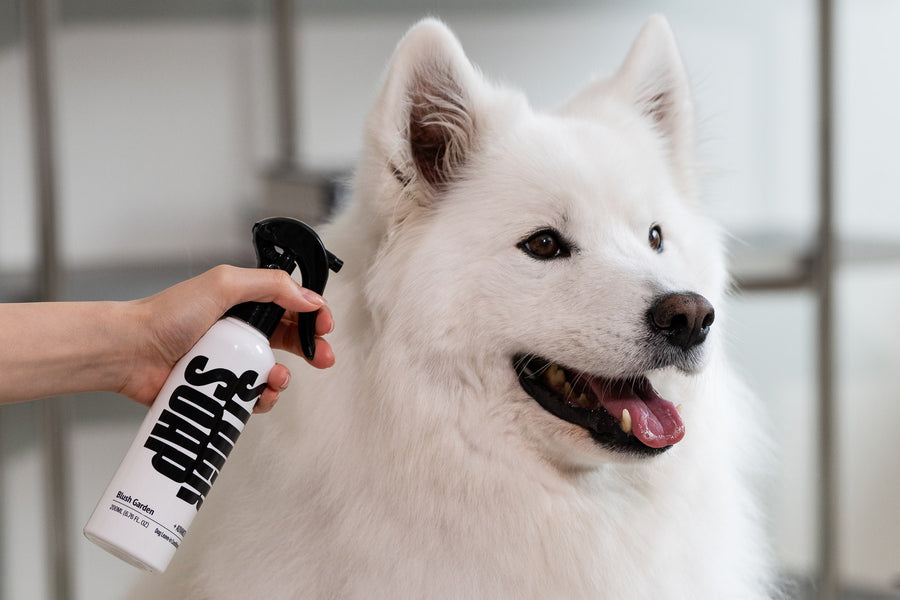
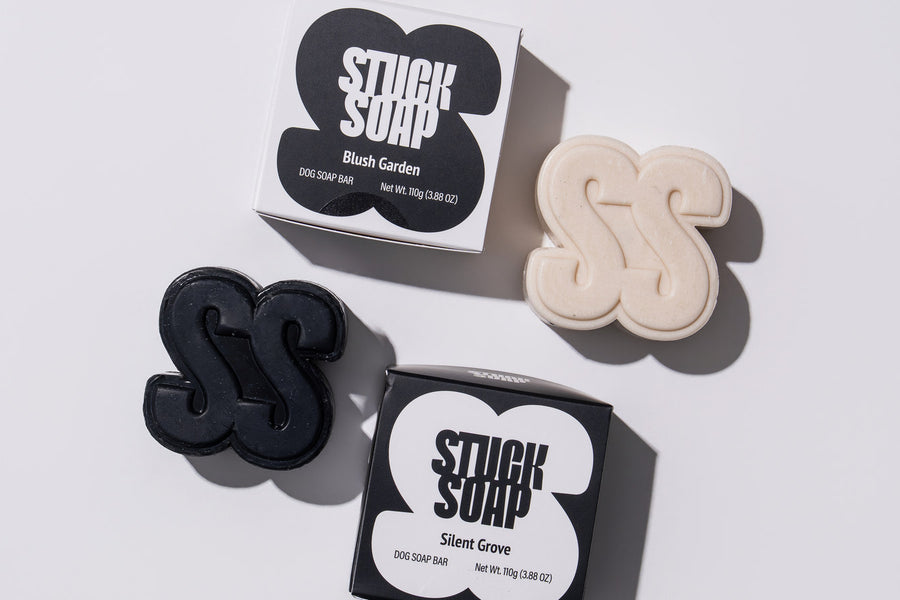
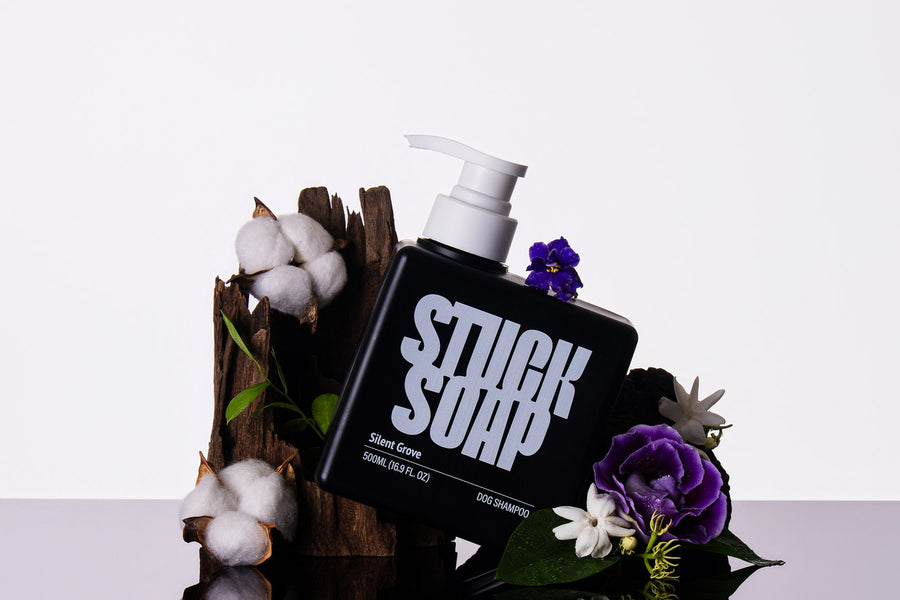
This is exactly the philosophy behind Stuck Soap. Our K-beauty inspired dog shampoos are pH-balanced for canine skin and built around gentle, plant-based botanicals sourced from Jeju Island, Korea, including green tea, camellia oil, and centella asiatica. Like jojoba, camellia oil is a lightweight, fast-absorbing oil prized in Korean beauty for nourishing skin and coat without heaviness.
The takeaway is simple. Whether you reach for a few drops of jojoba between baths or a barrier-supporting shampoo at bath time, the goal is the same: respect your dog's skin barrier instead of stripping it. That is the heart of the K-beauty approach, and it is what gives dogs a calm, comfortable, genuinely shiny coat.
Frequently Asked Questions
Is jojoba oil safe for dogs?
Yes, jojoba oil is considered safe and non-toxic for dogs when used topically in small amounts. The main rule is to prevent your dog from ingesting it, since dogs cannot properly digest its wax esters. Always patch test first and avoid open wounds.
Can jojoba oil help my dog's dry, itchy skin?
Jojoba oil may help moisturize dry, flaky skin and soothe mild irritation thanks to its fatty acids and anti-inflammatory properties. It is best for minor dryness. Persistent itching, hot spots, or signs of infection should be evaluated by a veterinarian.
How often can I use jojoba oil on my dog?
Use jojoba oil no more than two to three times a week. A small amount applied lightly is enough; using too much can leave the coat greasy and encourage licking.
Why is jojoba oil popular in K-beauty?
Jojoba is a liquid wax ester that closely mimics human sebum, so it absorbs cleanly, supports the skin barrier, and rarely clogs pores. K-beauty's barrier-first philosophy makes it a go-to ingredient, and that same gentleness is why it translates well to dog skin and coat care.
Is jojoba oil better than coconut oil for dogs?
They work differently. Jojoba is lighter, non-greasy, and closer to skin's natural sebum, which makes it a good choice for shine and light moisture. Coconut oil is heavier. Many owners prefer jojoba for everyday coat care, but the best option depends on your dog's skin and coat type.
Key Takeaways
Jojoba oil earned its place in K-beauty because it mimics skin's own sebum, absorbs cleanly, and supports the barrier rather than stripping it. Those same qualities make it a gentle, well-tolerated option for moisturizing your dog's dry skin and adding coat shine, as long as you use small amounts, prevent ingestion, and patch test first.
For lasting results, think beyond a single oil. A pH-balanced, barrier-friendly grooming routine built on gentle K-beauty botanicals will do more for your dog's skin and coat than any one ingredient on its own.
Sources & References
- Is Jojoba Oil Safe for My Dog's Skin and Coat? — 4-Legger
- Jojoba Oil for Dogs, Cats & Pets: Is It Safe for Their Skin? — The Jojoba Company
- Can I Use Jojoba Oil on My Dog's Skin Safely? — Dial A Vet
- Jojoba Oil Skin Benefits: The Science-Backed Wonder Oil — Root Science
- Carrier Oils Safe for Pets: How to Use Oils on Dogs and Cats — VINEVIDA
Give Your Dog the K-Beauty Spa Treatment
Jojoba shows how powerful sebum-matching, barrier-friendly ingredients can be. Stuck Soap builds that same K-beauty philosophy into every wash, with pH-balanced, plant-based formulas featuring camellia oil, green tea, and centella asiatica from Jeju Island for clean, calm, genuinely shiny coats.
Shop Stuck Soap →Vegan · pH-Balanced · Jeju Island Botanicals · Zero Waste