


If you've ever looked under your sink and counted the plastic bottles stacked there—shampoo, conditioner, detangling spray, ear wash, paw cleaner—you're not alone. Most pet parents are quietly running a small plastic factory in the name of keeping their dog clean, and the pet grooming industry is booming right alongside it. The global pet grooming products market was valued at roughly $17.9 billion in 2025 and is projected to nearly triple to $42.9 billion by 2035, with most of that growth still tied to plastic-packaged liquids.
Plastic-free dog grooming is the shift away from that default. It's a simple, practical approach to bathing and caring for your dog using solid bars, refillable containers, biodegradable tools, and plant-based formulas. And it's growing fast: the global eco-friendly pet products market is projected to roughly double from $43.65 billion in 2024 to $85.9 billion by 2035, led by owners who want their grooming routines to match the rest of their sustainable lifestyle.
The good news? You don't have to overhaul your whole bathroom in a weekend. This guide breaks down what plastic-free dog grooming really means, which swaps make the biggest difference, and how to build a low-waste routine that's gentle on your dog's skin, your wallet, and the planet.
Table of Contents
What Plastic-Free Dog Grooming Actually Means
Plastic-free dog grooming doesn't mean zero plastic—that's almost impossible in modern pet care. What it actually means is a routine designed to minimize single-use plastic and replace it with reusable, refillable, or compostable alternatives wherever possible.
In practice, that looks like solid shampoo bars instead of bottled liquid, bamboo or beechwood brushes instead of injection-molded plastic ones, metal or glass containers you refill over and over, and formulas made from plant-based ingredients that biodegrade safely after rinsing down the drain.
The philosophy overlaps heavily with zero-waste and clean beauty for dogs, two trends the pet industry is pulling directly from human skincare. If you've already made these swaps for yourself, extending them to your dog is a small, logical next step.
Why Plastic-Free Pet Care Matters
The environmental case is the obvious one. Pet shampoo bottles are typically made from HDPE or PET plastic, and while both are technically recyclable, contamination from residual product, pumps, and mixed materials means a significant share ends up in landfills or waterways. The World Wildlife Fund notes that pet care contributes meaningfully to household waste streams and that small swaps—particularly in packaging—have an outsized effect over a pet's lifetime.
There's also a health angle worth knowing about. Liquid shampoos need preservatives and surfactants to stay shelf-stable in water-based formulas. Solid bars skip most of that chemistry entirely because there's no water to preserve, which often means shorter, cleaner ingredient lists. For dogs with sensitive skin, that's not a small thing.
And then there's the simplicity factor. A bar lasts longer than a bottle, takes up less space, doesn't spill in a travel bag, and can't be knocked off the tub edge by an excited tail. Sustainability and convenience don't always line up, but in grooming, they mostly do.
The 6 Core Swaps for a Greener Grooming Routine
You don't need to do all of these at once. Start with whichever bottle is closest to empty and replace it with a plastic-free version. Here are the swaps that deliver the most impact:
1. Liquid shampoo → Solid shampoo bar
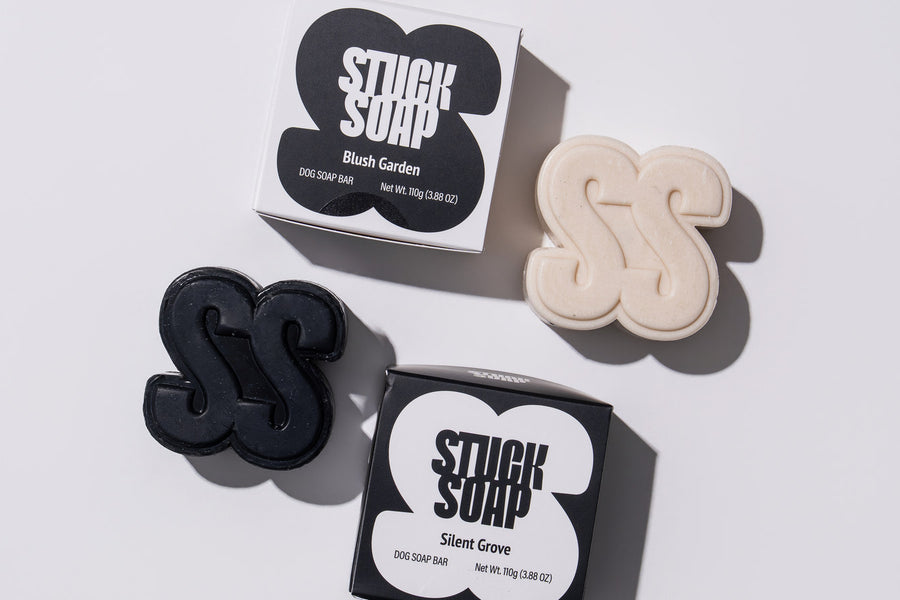
This is the single highest-impact swap. One shampoo bar typically replaces two to three standard 500ml plastic bottles, and most bars ship in compostable paper or cardboard. Look for bars that are pH-balanced for dogs (around 6.5–7.5)—human bars are too acidic and can damage your dog's skin barrier over time.
2. Plastic brush → Bamboo or beechwood brush
Bamboo is one of the fastest-growing plants on earth and requires no pesticides or irrigation to thrive, making it a standout sustainable material. A quality bamboo pin brush handles daily grooming, detangling, and post-bath drying just as well as its plastic counterpart—and composts at the end of its life.
3. Bottled conditioner → Concentrated rinse or leave-in bar
Conditioner bars and concentrated rinses (often packaged in glass or aluminum) cut plastic waste dramatically. For double-coated breeds like Huskies and Golden Retrievers, a quick vinegar-and-water rinse followed by a conditioning bar works surprisingly well.
4. Synthetic towels → Organic cotton or bamboo towels
Standard microfiber towels shed microplastics with every wash, sending them straight into wastewater systems. Organic cotton or bamboo towels absorb just as well, last longer, and biodegrade at end of life.
5. Plastic scented sprays → Essential-oil-safe diffusers or botanical mists in glass
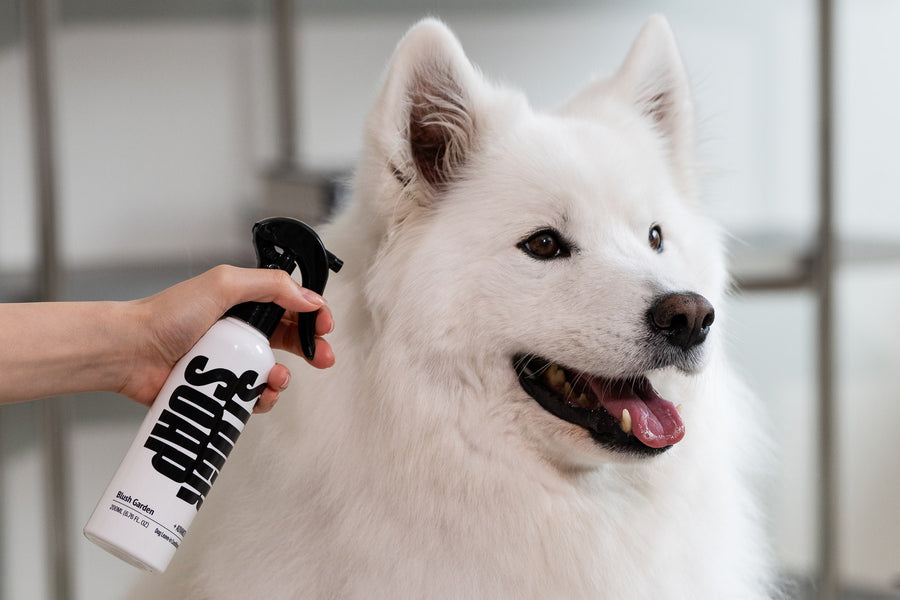
Most spray bottles are designed to be thrown away after one use. Swap them for refillable glass bottles with metal sprayers, and choose dog-safe botanical mists rather than synthetic fragrances. Always verify scents are canine-safe before using.
6. Disposable wipes → Washable muslin or bamboo cloths
Paw wipes are convenient, but most contain plastic fibers that don't break down. A stack of washable muslin or bamboo cloths kept by the door does the same job and gets better with every wash.
How to Build a Plastic-Free Bath Day
A low-waste bath day isn't complicated. Here's what a realistic routine looks like:
Before the bath: Brush your dog thoroughly with a bamboo pin brush. This removes loose fur and tangles, which means you'll use less shampoo and rinse in half the time.
Wet the coat: Use lukewarm water (around 98–100°F / 37–38°C)—close to your dog's natural body temperature. This is gentler on the skin barrier and more comfortable for your dog.
Lather with a solid bar: Rub the bar directly along the back and sides, or work it between your hands to build a fine-bubble lather. A good K-beauty inspired bar will foam up quickly even in soft water. Massage gently from neck to tail, avoiding the eyes and inside the ears.
Rinse thoroughly: Residual shampoo is one of the top causes of post-bath itching. Rinse until the water runs completely clear, especially under the belly and between the legs.
Dry with a sustainable towel: Use an organic cotton or bamboo towel to absorb excess water. Pat rather than rub to avoid tangling the coat. If you blow-dry, keep the heat on low and finish with a cool setting.
Finish with a natural mist (optional): A light, dog-safe botanical mist can leave the coat smelling fresh without synthetic fragrance. Brush through one last time with the bamboo brush and you're done.
How to Read Labels and Avoid Greenwashing
"Eco-friendly" isn't a regulated term in the US pet industry, so a lot of products lean on the aesthetic of sustainability without the substance. Here's how to tell the difference:
Check the packaging, not just the claim. A bottle labeled "eco" that's still a virgin plastic pump bottle is greenwashing. Look for paper, cardboard, aluminum, glass, or post-consumer recycled (PCR) plastic at minimum.
Scan the ingredient list. Truly plant-based formulas will list recognizable botanical ingredients—green tea, Camellia oil, Centella Asiatica, oat extract, aloe. Avoid sulfates (SLS, SLES), parabens, synthetic dyes, and vague "fragrance" listings.
Look for third-party verification. Certifications like Leaping Bunny (cruelty-free), vegan society seals, and B Corp status aren't perfect, but they're harder to fake than a green leaf icon.
Ask about sourcing. Brands serious about sustainability are usually proud of where their ingredients come from. Transparency about farming practices, harvest methods, and supply chains is a good sign.
Is Plastic-Free Grooming More Expensive?
Upfront? Sometimes slightly. Over time? Usually less expensive.
A solid shampoo bar costs more per unit than a budget liquid shampoo, but it lasts significantly longer—often two to three times as many washes. Bamboo brushes cost a few dollars more than plastic ones but easily last as long, if not longer. Reusable cloths replace ongoing spending on disposable wipes entirely.
If you add up a year of plastic-free grooming versus a year of conventional grooming for a medium-sized dog, the plastic-free routine typically comes out comparable or cheaper, with the added benefit of taking up a fraction of the shelf space.
Frequently Asked Questions
Is plastic-free dog shampoo as effective as liquid shampoo?
Yes, when formulated properly. A well-made solid shampoo bar produces rich lather, cleans effectively, and rinses out cleanly. The key is choosing a bar specifically formulated for dogs—pH-balanced around 6.5–7.5—rather than a human bar repurposed for pets.
How long does a dog shampoo bar last?
A standard pet shampoo bar typically lasts 20–40 washes depending on dog size, coat length, and how generously you lather. For an average medium-sized dog bathed monthly, one bar usually covers six to twelve months of regular grooming.
Can I use my own plastic-free shampoo bar on my dog?
No. Human shampoo bars are formulated for the acidic pH of human skin (around 5.5) and will disrupt your dog's more neutral skin barrier with repeated use. Always use a bar made specifically for canine skin chemistry.
Are bamboo grooming tools durable?
Yes. Quality bamboo brushes are sturdy, resist moisture well, and often outlast plastic equivalents. Rinse and air-dry them after each use to extend their life.
Where do I start if I want to go plastic-free gradually?
Start with your shampoo, since it's the highest-volume and most frequently replaced product in most grooming routines. Once that bottle is empty, switch to a solid bar. Replace brushes, towels, and wipes as they wear out—no need to throw away things that still work.
A Cleaner Routine, One Swap at a Time
Plastic-free dog grooming isn't about perfection—it's about progress. Every bottle you don't buy, every bar that replaces a pump dispenser, every bamboo brush that takes the place of a plastic one is a small choice that adds up over your dog's lifetime and across the millions of pet parents making similar swaps.
The best part? Your dog doesn't care about the packaging. They care about warm water, gentle hands, and smelling nice enough to get praised when they come out of the bath. A greener routine delivers all of that—with a lot less waste left behind.
Sources & References
- Sustainable Pet Care: Simple Ways to Reduce Your Pet's Carbon Pawprint — World Wildlife Fund
- Pet Grooming Products Market Size, Trends, and Growth Forecast — Business Research Insights
- Pet Grooming Industry Statistics: 2026 Update — Dogster
- Sustainable Dog Grooming Tips — Doglyness
- Sustainable Pet Care: Eco-Friendly Grooming & Boarding — Kennel Connection
Give Your Dog the K-Beauty Spa Treatment
Ready to make your first plastic-free swap? Stuck Soap's pH-balanced shampoo bar delivers a rich, fine-bubble lather with plant-based ingredients sourced from Jeju Island—green tea, Camellia oil, and Centella Asiatica. One bar, zero plastic, healthier skin and coat for your dog.
Shop Stuck Soap →Vegan · pH-Balanced · Jeju Island Botanicals · Zero Waste