


Scroll through any K-beauty haul this year and you'll keep bumping into one word: birch. Birch sap, birch juice, birch water. It's the hydration hero behind some of Korea's most beloved moisturizers, praised for delivering plump, dewy, glass-skin hydration that some fans swear beats hyaluronic acid. So it's only natural that dog parents chasing softer coats and healthier skin are now asking the obvious question: is birch sap for dogs the next great K-beauty crossover?
Here's the honest answer up front, because it matters: birch sap is a genuinely impressive ingredient for human skin, but it comes with a serious catch for dogs. The natural sugar concentrated in birch (birch sugar) is chemically identical to xylitol, one of the most dangerous substances a dog can swallow. And since dogs lick and groom everything you put on their coat, this is one trending ingredient where "great for people" does not translate to "great for your pup."
In this guide, we'll unpack what birch sap actually is, why K-beauty fell in love with it, the specific reasons it deserves caution around dogs, and the dog-safe K-beauty hydrators you can reach for instead. Because the smartest way to borrow from Korean skincare isn't to copy every viral ingredient. It's to copy the philosophy: gentle, barrier-first, and chosen for the skin in front of you.
Table of Contents
- What Is Birch Sap? K-Beauty's Trending Hydration Hero
- Why Birch Sap Went Viral in Korean Skincare
- Birch Sap for Dogs: The Safety Catch to Know
- The Xylitol Connection: Why "Birch Sugar" Is Dangerous
- Dog-Safe K-Beauty Ingredients for Hydration
- Practical Tips: Hydrating Your Dog's Skin Safely
- Frequently Asked Questions
- Sources & References
What Is Birch Sap? K-Beauty's Trending Hydration Hero
Birch sap (often marketed as birch juice or birch water) is the clear, mineral-rich fluid that flows up from birch tree roots for a few short weeks in early spring. It has been harvested and sipped as a seasonal tonic across Northern Europe and Korea for centuries, long before it landed in serums and creams.
What makes it interesting to formulators is its composition. Birch sap contains a cocktail of amino acids, trace minerals like calcium, potassium, magnesium and manganese, antioxidants including vitamin C and phenolic compounds, and natural sugars such as fructose and xylitol. Many Korean brands use birch sap to replace water as the base of a formula, so a product can be built on something more nourishing than plain H2O.
That "replace the water" trick is a very K-beauty move. It reflects the ingredient-first mindset that treats every component of a formula as an opportunity to do something for the skin, rather than just a filler. And on human skin, birch sap does deliver.
Why Birch Sap Went Viral in Korean Skincare
Birch sap earned its cult status the way most K-beauty heroes do: it solves a real problem gently. Here's what makes it shine on human skin.
Deep, lightweight hydration. The natural sugars and amino acids in birch sap act as humectants, pulling water into the upper layers of skin and helping hold it there. In one 28-day clinical study on birch-sap-based skincare, users saw reduced transepidermal water loss (the moisture that quietly evaporates from skin) and improved hydration in the stratum corneum. Impressively, it does this without oils or heavy emollients, so it feels featherlight.
Antioxidant support. The vitamin C and phenolic compounds help neutralize free radicals from UV and pollution, the everyday stressors that dull and age skin.
Soothing, well-tolerated feel. Birch sap has anti-inflammatory properties that can calm redness, and it's gentle enough that sensitive, dry, oily and acne-prone skin types generally get along with it. That broad tolerance is exactly why it spread so fast.
Put simply, birch sap became the poster child for "hydration without heaviness." Which is precisely the promise that makes dog owners curious. If it's this gentle and this hydrating for people, why not for a flaky, itchy dog?
Birch Sap for Dogs: The Safety Catch to Know
This is where we have to slow down. There is very little research on topical birch sap in dogs specifically, and two real concerns make it an ingredient to approach with caution rather than enthusiasm.
1. Fresh birch sap can irritate skin. Raw sap from birch trees is described as irritating to skin, lips and gums. Canine skin is thinner than human skin (often just 3 to 5 cell layers versus our 10 to 15), which means an ingredient that's merely "tingly" on your face can be more reactive on your dog.
2. The birch sugar problem. This is the big one. The natural sweetness in birch sap comes largely from xylitol, and "birch sugar" is simply another name for xylitol on ingredient labels. Xylitol is extremely toxic to dogs when ingested, even in small amounts. And here's the catch that makes topical use risky: dogs groom themselves. Whatever goes on the coat has a real chance of ending up in the mouth.
Xylitol turns up in more products than people expect, including some cosmetics, toothpastes, deodorants, sunscreens, chewable vitamins, and yes, hair and skin care. That's why reading the label matters. If a grooming product lists xylitol or birch sugar, it does not belong anywhere near your dog, no matter how good it is for humans.
The takeaway isn't that birch is evil. It's that birch sap sits in the category of K-beauty ingredients that are wonderful for us and genuinely inappropriate for dogs. Knowing the difference is exactly what responsible, skinification-era pet care looks like.
The Xylitol Connection: Why "Birch Sugar" Is Dangerous
To understand the caution, it helps to know what xylitol actually does inside a dog. In humans, xylitol has almost no effect on insulin. In dogs, it's the opposite: the canine body mistakes it for real sugar and the pancreas dumps a flood of insulin into the bloodstream. That sends blood sugar crashing.
According to veterinary toxicology references, doses above roughly 100 mg per kg of body weight (about 45 mg per pound) can trigger hypoglycemia, and doses above about 500 mg/kg (227 mg/lb) can cause severe liver injury or failure. Symptoms of low blood sugar can appear within 30 minutes to a couple of hours and include weakness, wobbliness, vomiting, tremors, and collapse. Liver damage may show up 12 to 48 hours later.
To put that in perspective, a small dog doesn't need to eat much of a xylitol-containing product to get into trouble. That's the whole reason vets treat this ingredient so seriously, and why it deserves a hard "no" in anything your dog might lick.
If you ever suspect your dog has ingested xylitol or birch sugar, treat it as an emergency. Call your veterinarian or the Pet Poison Helpline at (800) 213-6680 right away. Fast action genuinely changes outcomes.
Dog-Safe K-Beauty Ingredients for Hydration
Good news: you can absolutely give your dog that soft, hydrated, healthy-barrier result that birch sap promises humans. You just reach for the ingredients that were vetted for canine skin in the first place. The best part is that some of K-beauty's most celebrated hydrators happen to be dog-friendly.
Green tea extract. A cornerstone of Korean skincare for its antioxidant and skin-calming properties, green tea helps soothe reactive skin while defending against environmental stress. STUCK SOAP sources its green tea directly from Jeju Island, the same volcanic terroir Korean beauty prizes for its purity.
Camellia oil. Known in Korea as a treasured beauty oil, camellia (tsubaki) is rich in oleic acid and vitamins A, B and E. It's deeply moisturizing yet lightweight, so it nourishes the coat and supports skin elasticity without a greasy film. It's one of the reasons STUCK SOAP formulas leave coats glossy rather than heavy.
Centella asiatica (cica). K-beauty's number-one calming ingredient, centella (also called cica or gotu kola) is prized for soothing irritated, sensitive skin and supporting the skin barrier. STUCK SOAP uses it directly for exactly this reason.
Aloe vera and glycerin. For everyday hydration, gentle humectants like aloe and glycerin draw moisture into the skin and help lock it in after a bath, without any of the risk that birch sugar carries.
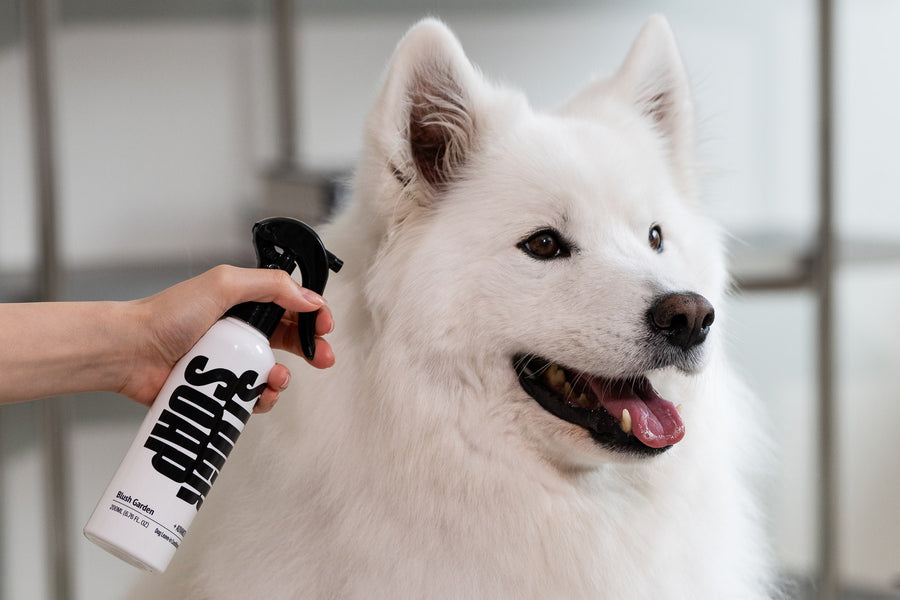
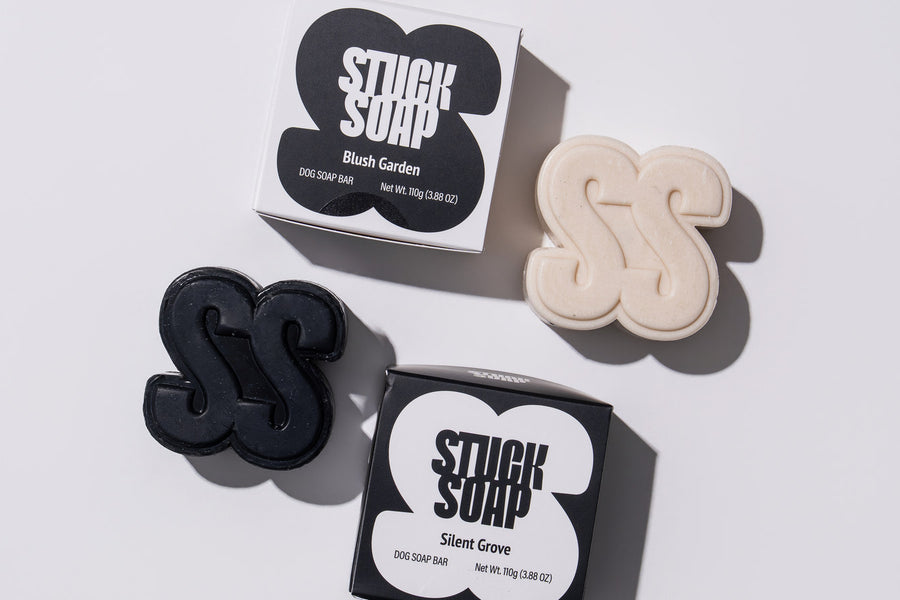
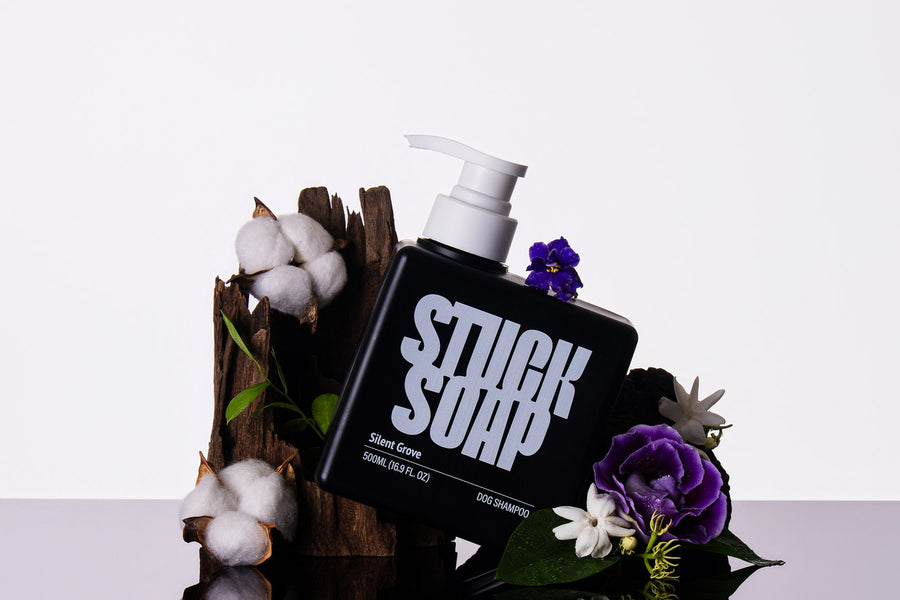
Notice the pattern: these are the same "gentle, barrier-first, ingredient-led" values that make K-beauty great, applied to ingredients that are actually right for dogs. That's the philosophy STUCK SOAP is built on. Jeju botanicals, a vegan and pH-balanced formula, and no xylitol in sight.
Practical Tips: Hydrating Your Dog's Skin Safely
Whether your dog struggles with dry, flaky skin in winter or just deserves a plush, healthy coat year-round, these habits deliver birch-sap-level results the safe way:
Read every label like a detective. Scan grooming products for "xylitol" and "birch sugar," and skip anything that lists them. While you're at it, avoid harsh sulfates, artificial fragrance and parabens, which strip the barrier and worsen dryness.
Bathe with a pH-balanced, gentle formula. Human and even many drugstore dog shampoos can disrupt your dog's skin barrier. A pH-appropriate, plant-based wash cleans without stripping the natural oils that keep skin hydrated.
Don't over-bathe. For most dogs, every three to four weeks is plenty. Too-frequent washing is a leading cause of the very dryness owners are trying to fix.
Lock in moisture after the bath. Towel gently, then let the coat air-dry or use a cool dryer. Choosing a shampoo built around humectants and nourishing oils (like camellia) means hydration is happening during the wash, not just after.
Support skin from the inside. Omega-3 fatty acids in the diet, fresh water, and regular brushing to distribute natural oils all quietly do more for coat shine than any single miracle ingredient.
Frequently Asked Questions
Is birch sap safe for dogs?
Birch sap is best avoided for dogs. Its natural sweetness comes largely from xylitol (labeled as "birch sugar"), which is highly toxic to dogs if ingested, and dogs routinely lick their coats. Fresh birch sap can also irritate skin. For hydration, choose dog-vetted ingredients instead.
Is birch sugar the same as xylitol?
Yes. "Birch sugar" is simply another name for xylitol on ingredient labels. Because xylitol is dangerous to dogs even in small amounts, any product listing birch sugar should be kept well away from your pet.
What happens if my dog eats something with xylitol or birch sugar?
Xylitol can cause a rapid drop in blood sugar within 30 minutes to a couple of hours, with weakness, tremors, vomiting and collapse, and higher doses risk liver damage. Treat it as an emergency and contact your vet or the Pet Poison Helpline at (800) 213-6680 immediately.
Which K-beauty ingredients are safe for a dog's dry skin?
Green tea extract, camellia oil, centella asiatica (cica), aloe vera and glycerin are gentle, hydrating and dog-appropriate. STUCK SOAP uses Jeju-sourced green tea, camellia oil and centella to support soft, healthy skin and coat.
Can I use my own K-beauty moisturizer on my dog?
It's not recommended. Human products are formulated for human skin pH and may contain ingredients (including xylitol, essential oils or high fragrance loads) that aren't safe for dogs. Use products designed and tested for canine skin.
The Bottom Line
Birch sap is a beautiful example of everything K-beauty does well: a humble, natural ingredient turned into a hydration powerhouse through smart formulation. For your own skin, it's worth the hype. For your dog, it's a reminder that the goal was never to copy every trending ingredient, but to borrow the mindset behind them.
That mindset is gentle, barrier-first, and always matched to the skin you're caring for. Skip the birch sugar, reach for dog-safe hydrators like green tea, camellia oil and centella, and your pup gets the dewy, healthy-coat payoff without the risk. That's K-beauty for dogs done right.
Sources & References
- Xylitol Poisoning in Dogs — VCA Animal Hospitals
- Xylitol Toxicosis in Dogs — Merck Veterinary Manual
- Paws Off Xylitol; It's Dangerous for Dogs — U.S. Food & Drug Administration
- What Does Birch Juice Do for Your Skin — Round Lab
- Ingredient Spotlight: Birch Juice in K-Beauty Products — KoreaProductPost
Give Your Dog the K-Beauty Spa Treatment
Skip the risky trends and give your dog the hydration K-beauty is really about. STUCK SOAP blends Jeju Island green tea, camellia oil and centella asiatica into a vegan, pH-balanced wash that leaves skin soothed and coats glossy, with no xylitol, ever.
Shop Stuck Soap →Vegan · pH-Balanced · Jeju Island Botanicals · Zero Waste