


If you have scrolled through skincare content lately, you have probably seen one word everywhere: peptides. They headline serums, essences, and the ingredient lists of nearly every trending K-beauty routine. So it is only natural that curious dog owners are starting to ask a new question: do peptides for dogs make sense too, and could this skin-firming hero do for your pup's coat and skin what it does for human faces?
It is a smart question, and the answer is more interesting than a simple yes or no. Peptides are not a marketing gimmick. They are one of the most researched categories in modern dermatology, and one specific peptide has decades of veterinary studies behind it, including research conducted directly on dogs.
In this guide, we will break down what peptides actually are, why K-beauty treats them like liquid gold, what the science says about peptides for canine skin, and how to think about your dog's skin the gentle, barrier-first way that K-beauty is built on.
Table of Contents
What Are Peptides, and Why Is K-Beauty Obsessed?
Peptides are short chains of amino acids, and amino acids are the building blocks of proteins. That matters because the proteins they build, collagen, elastin, and keratin, are exactly what give skin its firmness and a coat its strength and shine.
Here is the part that makes peptides special. Beyond being raw material, many peptides act like messengers. They signal to skin cells that it is time to repair, renew, and produce more of those structural proteins. In other words, a peptide does not just patch the wall, it tells the construction crew to get to work.
This is precisely why K-beauty has embraced peptides so enthusiastically. Korean skincare philosophy is famously gentle and ingredient-first, focused on supporting the skin barrier rather than stripping or overpowering it. Peptides fit that mindset perfectly: they work with the skin's own biology instead of forcing a harsh reaction. By 2026, peptides have become one of the most popular ingredient categories in the entire skincare industry, prized for delivering firmer, healthier, more resilient skin without irritation.
The natural next thought for any dog lover is obvious. If an ingredient is gentle and effective enough for sensitive human skin, could the same logic extend to our dogs? To answer that, we need to meet the two peptides that matter most.
Signal Peptides vs. Copper Peptides
Not all peptides do the same job. Two families dominate the conversation, and knowing the difference helps you cut through marketing hype.
Signal peptides are the best known. Their role is to nudge the skin's fibroblasts, the specialized cells that manufacture collagen, into action. By encouraging collagen and elastin production, they act like a gentle wake-up call for skin that has slowed down.
Copper peptides are the ingredient generating the most buzz right now, and the one with the deepest research file. The star is a molecule called GHK-Cu, a naturally occurring tripeptide made of three amino acids, glycine, histidine, and lysine, bonded to a copper ion. Copper peptides act as carrier peptides: they deliver copper into the skin, stimulate collagen and elastin, work as antioxidants, calm inflammation, and inhibit the enzymes (called MMPs) that break collagen down. That dual action, building new collagen while protecting existing collagen, is why they are so highly regarded.
The research pedigree is genuinely impressive. GHK-Cu was first identified in human plasma back in 1973 by Dr. Loren Pickart, who noticed that plasma from younger donors could make older tissue behave more youthfully. Since then, genome-wide studies have found that GHK-Cu influences the expression of more than 4,000 human genes, roughly a third of the genome, shifting cells from a "damaged and aged" profile toward a "healthy and younger" one.
There is also a striking age angle. Our natural levels of GHK-Cu fall sharply over time, from around 200 nanograms per milliliter of plasma at age 20 to roughly 80 by age 60, a drop of more than 60 percent. That decline lines up almost perfectly with the slowdown in collagen production and wound healing many people notice in midlife, which raises an obvious follow-up for our four-legged companions.
Peptides for Dogs: What the Science Shows
Here is where peptides for dogs move from speculation toward real evidence, at least for one specific molecule. Unlike many trending K-beauty ingredients that have only been studied in humans, GHK-Cu has a meaningful body of veterinary research behind it.
First, an important point: GHK-Cu is not foreign to your dog. This copper peptide occurs naturally in mammals, including dogs, and can be found in their blood, saliva, and urine. It is part of the body's own repair toolkit, not an alien chemical.
In veterinary practice, GHK-Cu is most commonly used topically for wound management. Research has documented that in dogs, copper peptides can support accelerated healing of skin wounds, hair follicles, and even foot pad wounds, tissues that are notoriously slow and difficult to heal. On a cellular level, studies suggest GHK-Cu promotes the expression of genes tied to wound repair, anti-inflammatory activity, and antioxidant defense, while dialing down genes linked to tissue breakdown and scarring.
The safety profile is reassuring as well. In the research literature, the estimated lethal dose of GHK-Cu is roughly 300 times higher than the effective therapeutic dose, which is a very wide margin for a bioactive ingredient.
That said, honesty matters here. Most canine peptide research focuses on clinical wound healing under veterinary supervision, not on everyday cosmetic products like shampoos. Peptides are an area of genuine promise for pet skincare, but they are not yet a mainstream grooming ingredient, and they are not a substitute for veterinary care. If your dog has a wound, a persistent skin condition, or a slow-healing sore, that is a conversation for your veterinarian, not a DIY project with a human serum.
Why Your Dog's Skin Needs a Gentler Approach
Even setting peptides aside, there is a bigger lesson from all this research: your dog's skin is not the same as yours, and it deserves products designed for it.
The clearest difference is pH. Human skin sits on the acidic side, generally around 4.7 to 5.75. Canine skin is more neutral to slightly alkaline, typically ranging from about 5.5 to 7.5 depending on breed, age, and body region. That gap is exactly why a human-formulated product, no matter how trendy its peptide content, can throw off the delicate balance of your dog's skin.
Structure matters too. Studies show that the stratum corneum, the outermost protective layer of skin, is often thinner and more fragile in dogs, especially those prone to allergies or atopic dermatitis. Those same dogs tend to have significantly reduced ceramide levels, the lipids that hold the barrier together. When that barrier is compromised, veterinarians see rising skin pH and increased transepidermal water loss, both markers of irritation and moisture escaping the skin.
The takeaway is refreshingly practical. Instead of chasing a single miracle active, the smartest thing you can do for your dog is support the skin barrier itself, the very foundation that peptides and every other repair ingredient depend on to function. A strong, well-hydrated, pH-appropriate barrier is what keeps skin calm, coats glossy, and odor at bay.
How to Support Your Dog's Skin the K-Beauty Way
You do not need an eight-step serum routine to give your dog K-beauty-level care. You need a few gentle, barrier-first habits. Here is where to start.
Choose a dog-formulated, pH-appropriate cleanser. This is the single most important step. A shampoo built for canine skin respects that 5.5 to 7.5 pH range, so it cleans without stripping the barrier.
Do not over-bathe. Washing too frequently disrupts the skin's natural oils and barrier lipids. For most dogs, a regular but not excessive schedule keeps skin balanced. When in doubt, ask your vet about the right cadence for your dog's coat and skin type.
Lean on barrier-supporting botanicals. This is where K-beauty ingredient wisdom truly translates to dogs. Antioxidant-rich green tea helps defend skin from environmental stress, camellia oil (Korea's beloved "liquid gold") delivers lightweight moisture and coat shine, and centella asiatica, the famous "cica" ingredient, is prized for calming and soothing sensitive skin. These are gentle, well-tolerated, and genuinely useful for canine coats.
Think about collagen from the inside, too. Since peptides are ultimately about collagen support, remember that diet and vet-guided supplements can play a role in skin and coat health from within. Always loop in your veterinarian before adding anything new.
Patch test and watch for reactions. Any time you introduce a new grooming product, apply a small amount first and monitor your dog's skin for redness or itching over the next day.
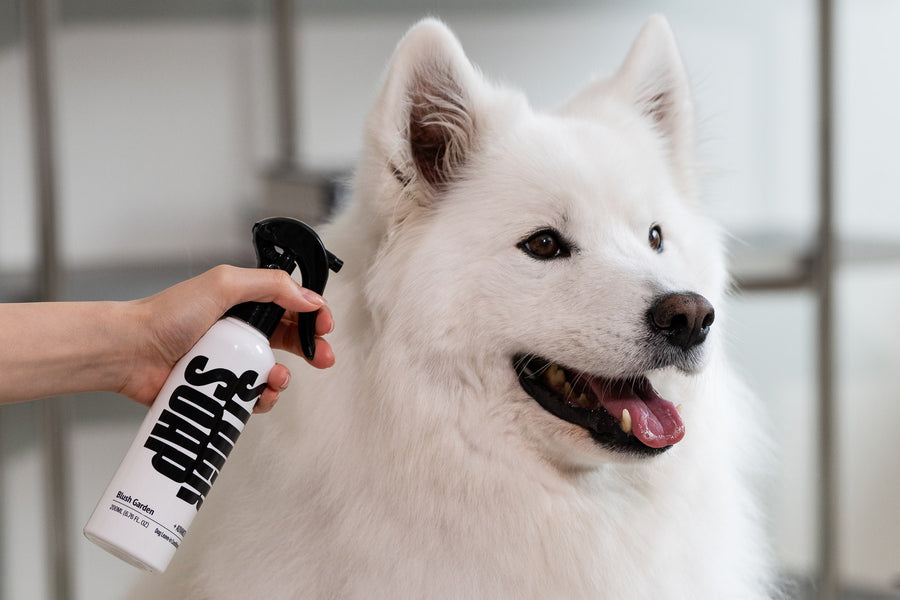
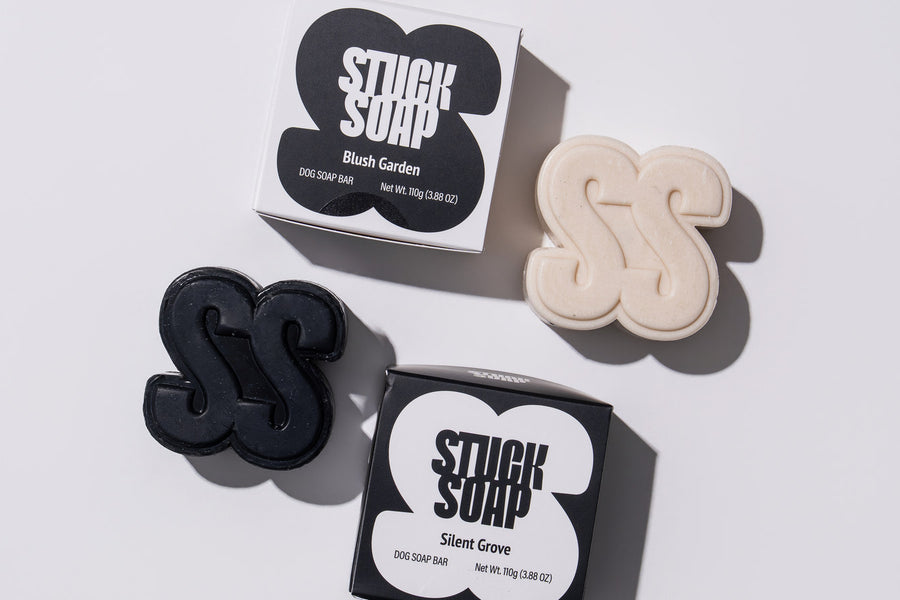
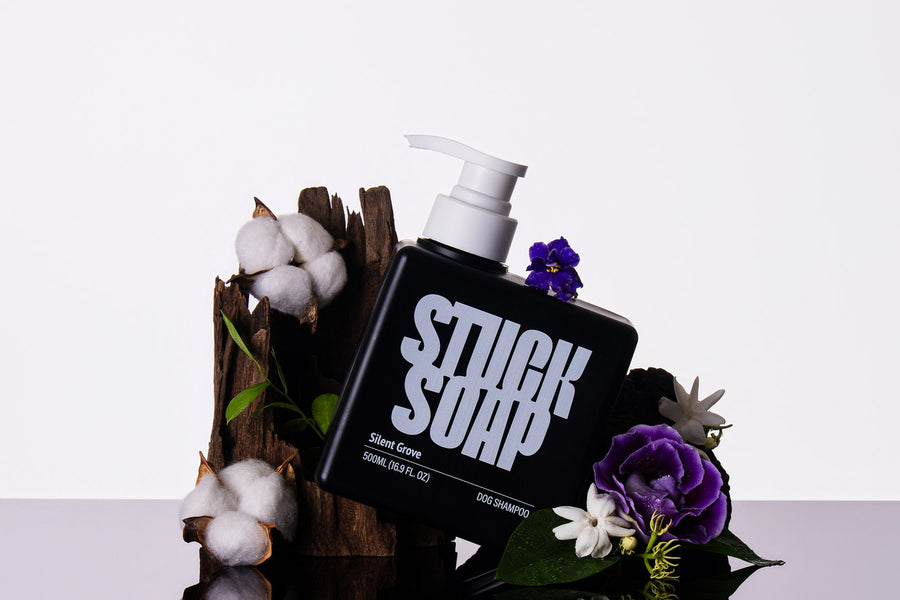
This is exactly the philosophy behind Stuck Soap. While our formulas are not built around peptides, they embody the same K-beauty principle that makes peptides so appealing: work with the skin's biology, not against it. Stuck Soap's pH-conscious, vegan, plant-based washes are crafted with Jeju Island botanicals, green tea, camellia oil, and centella asiatica, to gently cleanse while supporting the skin barrier your dog's healthy coat depends on. It is the "skinification" of pet care, made simple.
Frequently Asked Questions
Are peptides safe for dogs?
The most-studied peptide, the copper peptide GHK-Cu, occurs naturally in dogs and has a favorable safety profile in veterinary research, where its estimated lethal dose is around 300 times the therapeutic dose. However, safety depends on the specific peptide, concentration, and how it is used. Always consult your veterinarian before applying any peptide product to your dog.
Can I put my own peptide serum or moisturizer on my dog?
It is not recommended. Human skincare is formulated for skin that is more acidic (around pH 4.7 to 5.75) than a dog's more neutral skin (around 5.5 to 7.5), and human products may contain fragrances or actives that irritate canine skin. Choose products made specifically for dogs, and check with your vet for any medicated needs.
Do peptides help with dog wound healing?
Research on the copper peptide GHK-Cu has documented accelerated healing of skin and foot pad wounds in dogs when used topically under veterinary guidance. This is a clinical application, not a cosmetic one, so any wound care should be directed by your veterinarian rather than treated at home with human products.
Does Stuck Soap contain peptides?
No. Stuck Soap's formulas are built around gentle, barrier-supporting Jeju Island botanicals, green tea, camellia oil, and centella asiatica, rather than peptides. These ingredients follow the same K-beauty philosophy that makes peptides so popular: support the skin's natural barrier instead of stripping or overpowering it.
What is the most important thing for my dog's skin health?
Supporting the skin barrier. A strong, hydrated, pH-appropriate barrier is the foundation that every repair ingredient, including peptides, relies on. Using a dog-formulated, pH-balanced cleanser, avoiding over-bathing, and choosing soothing botanicals like green tea and centella will do more for most dogs than chasing any single trending active.
The Bottom Line
Peptides earned their K-beauty crown for good reason. They are gentle, deeply researched, and effective at supporting collagen and skin repair, and in the case of copper peptides like GHK-Cu, there is even real veterinary evidence pointing to benefits for canine wound healing.
But the smartest lesson for dog owners is not to rush out and buy a human peptide serum. It is to embrace the philosophy underneath the trend: care that is gentle, barrier-first, and matched to your dog's unique skin. Get that foundation right, and you give your dog's skin everything it needs to stay calm, healthy, and beautifully coated.
Sources & References
- Copper Peptides: These Powerful Molecules Are Worth the Skincare Hype — The Conversation
- The Potential of GHK as an Anti-Aging Peptide — National Library of Medicine (PMC)
- Ultimate Guide to GHK-Cu for Dogs: Benefits, Uses, Safety & Applications — iHeartDogs
- The Skin Barrier in Companion Animals — Nextmune Veterinary
- Peptides in Skincare: Benefits and How to Add Them to Your Routine — Gabriella Sebestyen, MD
Give Your Dog the K-Beauty Spa Treatment
Peptides work best when the skin barrier underneath is strong and balanced. Stuck Soap's pH-conscious, vegan shampoos are crafted with Jeju Island botanicals, green tea, camellia oil, and centella asiatica, to gently cleanse and support that foundation, so your dog's skin stays calm and their coat stays glossy.
Shop Stuck Soap →Vegan · pH-Balanced · Jeju Island Botanicals · Zero Waste