


Walk down any K-beauty aisle right now and you will spot the same glowing, golden ingredient turning up in cleansers, masks, and brightening serums: turmeric. It is one of the most talked-about botanicals in Korean skincare, prized for calming redness and evening out tone. So it is only natural that curious dog owners are asking the next question: does turmeric for dogs make sense too, especially for a pup with itchy, irritated, or dull-looking skin?
The short answer is that turmeric is a genuinely interesting ingredient for canine skin and coat, backed by a growing body of veterinary research on its active compound, curcumin. But like most trending ingredients, it comes with important nuance around how it is used, how much is safe, and what it realistically can and cannot do.
In this guide, we will unpack why K-beauty loves turmeric, what the science says about curcumin and skin inflammation, and how the same gentle, ingredient-first philosophy that makes Korean skincare so effective for humans can shape a smarter approach to your dog's grooming routine.
Table of Contents
- What Is Turmeric, and Why Is K-Beauty Obsessed With It?
- The Science: How Curcumin Calms Skin
- Turmeric for Dogs: What It May Do for Skin and Coat
- Topical vs. Dietary: Two Ways Dogs Meet Turmeric
- How to Use Turmeric Safely for Your Dog
- The K-Beauty Approach to Your Dog's Skin
- Frequently Asked Questions
- Sources & References
What Is Turmeric, and Why Is K-Beauty Obsessed With It?
Turmeric is the golden-yellow spice ground from the root of Curcuma longa, a plant in the ginger family that has been used across Asian medicine and cooking for thousands of years. In Korea, its skin-soothing reputation stretches back generations, which is part of why modern K-beauty formulators have embraced it so enthusiastically.
Today, turmeric shows up throughout Korean skincare in cleansing pads, wash-off masks, brightening creams, and body washes. It is frequently paired with other radiance-boosting ingredients like kojic acid to even out tone and calm the look of stressed skin. K-beauty ingredient guides consistently describe turmeric as antioxidant-rich, anti-inflammatory, and brightening.
That trio of properties is exactly why turmeric fits the K-beauty ethos so well. Korean skincare is built around protecting the skin barrier, reducing irritation, and using plant-derived actives rather than harsh chemistry. Turmeric checks every box, which is why it has become a quiet superstar alongside more famous names like centella asiatica and green tea.
The Science: How Curcumin Calms Skin
The magic behind turmeric is a compound called curcumin, the bright yellow pigment that gives the spice its color. Curcumin is a well-studied polyphenol with two headline properties: it is a potent antioxidant, and it is a strong anti-inflammatory agent.
Inflammation sits at the root of a huge number of skin problems, from redness and itching to flaking and slow healing. Curcumin works by interfering with several inflammatory signaling pathways in the body, which is what gives it such broad soothing potential. In fact, a peer-reviewed study published in Veterinary Immunology and Immunopathology found that curcumin significantly reduced inflammation markers in dogs with osteoarthritis, in some cases acting on more pathways than a common prescription anti-inflammatory drug.
Its antioxidant side matters too. Antioxidants neutralize free radicals, the unstable molecules generated by sun exposure, pollution, and everyday cellular stress that can accelerate skin and coat damage. This is the same reason antioxidant ingredients are a cornerstone of K-beauty for humans, and it translates neatly to canine skin.
There is one well-known catch: curcumin is notoriously hard for the body to absorb on its own. This is why you will almost always see it paired with black pepper (which contains piperine) and a healthy fat like coconut or MCT oil. Piperine can boost curcumin absorption dramatically, and fat helps carry the active compounds into cells.
Turmeric for Dogs: What It May Do for Skin and Coat
So how does all of this apply to your dog? Because canine skin is prone to many of the same inflammatory triggers as ours, turmeric's anti-inflammatory and antioxidant profile has real appeal for skin and coat support.
Veterinary and pet-wellness sources point to a few areas where turmeric for dogs may help. By calming inflammation, turmeric may ease the excessive itching and scratching that often accompanies skin irritations and mild seasonal allergies. Its antihistamine-like activity has been noted as a potential aid for mild allergy symptoms such as itching and redness. And its antioxidant action may support the skin's natural resilience and healing from minor irritation.
It is important to keep expectations realistic. Turmeric is not a cure, and it is not appropriate for severe skin reactions, infections, or anything that needs veterinary diagnosis. Most experts frame it as one supportive piece of a broader skin-care plan, not a standalone treatment. If your dog has persistent itching, hot spots, hair loss, or open sores, that is a conversation for your vet first.
Where turmeric genuinely shines is in the mindset it represents: choosing gentle, plant-based, anti-inflammatory ingredients to support skin from a place of calm rather than aggression. That is a philosophy worth adopting even if turmeric itself never enters your dog's routine.
Topical vs. Dietary: Two Ways Dogs Meet Turmeric
Turmeric reaches your dog's skin through two very different routes, and it helps to understand both.
Dietary turmeric is the most common approach. Many owners use a homemade "golden paste," a blend of turmeric, coconut oil, and a pinch of black pepper, added in small amounts to food. The logic is systemic: reduce inflammation from the inside, and the skin may benefit along with the joints. This is the form most veterinary dosage guidance addresses.
Topical turmeric is where the K-beauty crossover gets interesting. In human skincare, turmeric is delivered through washes, masks, and leave-on products formulated to sit gently on the skin. In the pet world, turmeric is not yet a mainstream shampoo ingredient, and turmeric can stain light coats yellow, so it is used far more cautiously in topical formats.
The practical takeaway is that if you are exploring turmeric for your dog's skin specifically, dietary golden paste (with your vet's blessing) is the better-studied path. For everyday topical skin support, it is smarter to lean on gentle, coat-safe K-beauty botanicals that are already proven and formulated for washing, like green tea, centella asiatica, and camellia oil.
How to Use Turmeric Safely for Your Dog
If you and your veterinarian decide turmeric is worth trying, a careful, gradual approach matters. Here are the practical guardrails experts recommend.
Start low and go slow. General starter guidance for golden paste is roughly a quarter teaspoon per day for small dogs (under 15 lbs), half a teaspoon for medium dogs (15 to 50 lbs), and three-quarters to a full teaspoon for large dogs (50 to 100 lbs). Introduce it gradually so your dog's palate and stomach can adjust.
Pair it for absorption. Curcumin needs black pepper and a healthy fat to be usable by the body. That is exactly why golden paste combines all three. Turmeric sprinkled on food alone will mostly pass straight through.
Be patient. Anti-inflammatory benefits from daily curcumin typically take around four to six weeks to become noticeable. This is a slow, cumulative ingredient, not an overnight fix.
Watch for side effects. In the wrong amounts, turmeric can cause stomach upset such as nausea or diarrhea. Rarely, dogs can be allergic to it, and very high intake has been linked to issues with blood clotting. Turmeric can also interfere with certain medications and may not suit dogs with specific health conditions, so a vet check is essential, especially if your dog takes other medicine or is scheduled for surgery.
Mind the mess. Turmeric stains almost everything, including light fur, fabric, and grout. A little planning saves a lot of scrubbing.
The K-Beauty Approach to Your Dog's Skin
Turmeric is really a doorway to a bigger idea: the "skinification" of pet care, where the gentle, barrier-first thinking behind Korean beauty is applied to how we groom our dogs. Instead of stripping the coat with harsh detergents, the K-beauty approach cleanses gently, supports the skin barrier, and leans on antioxidant-rich botanicals.
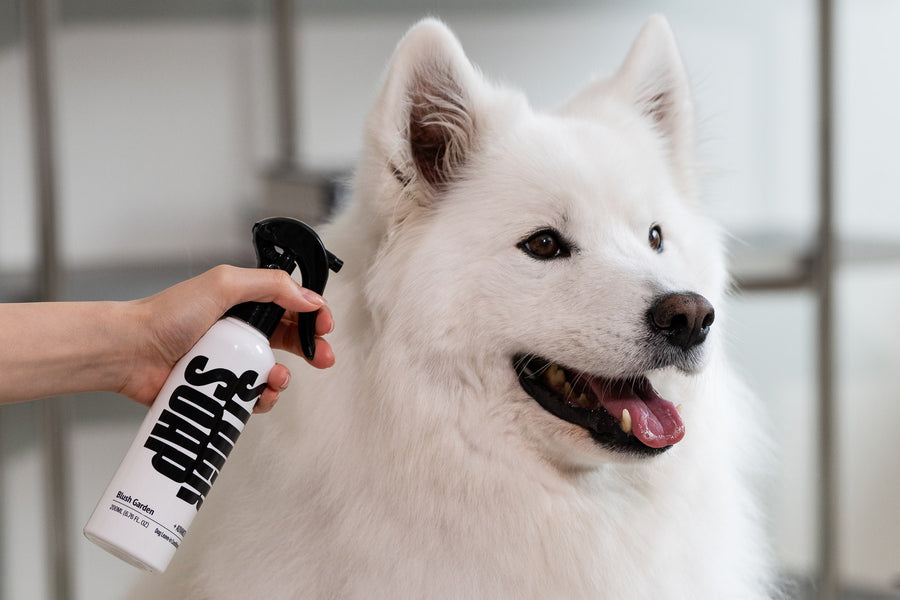
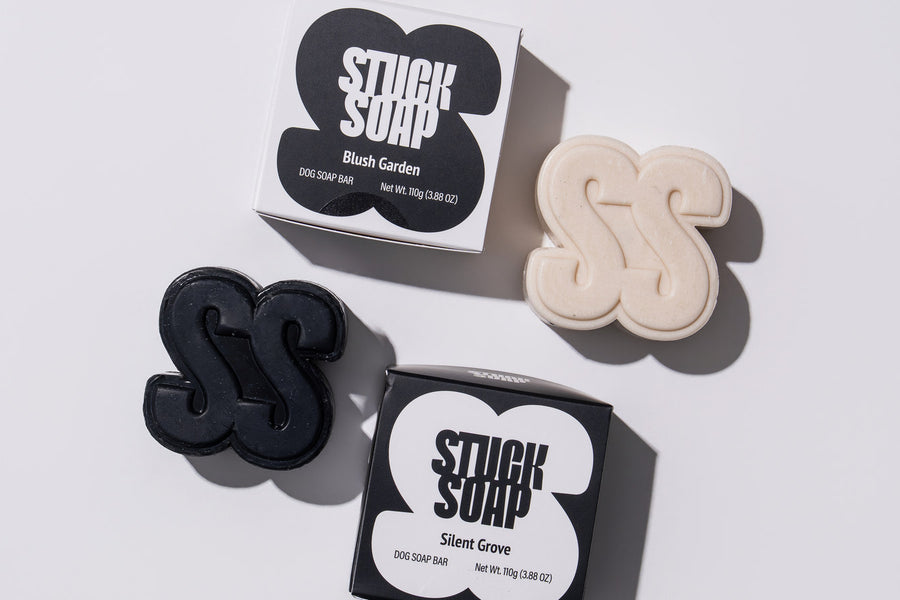
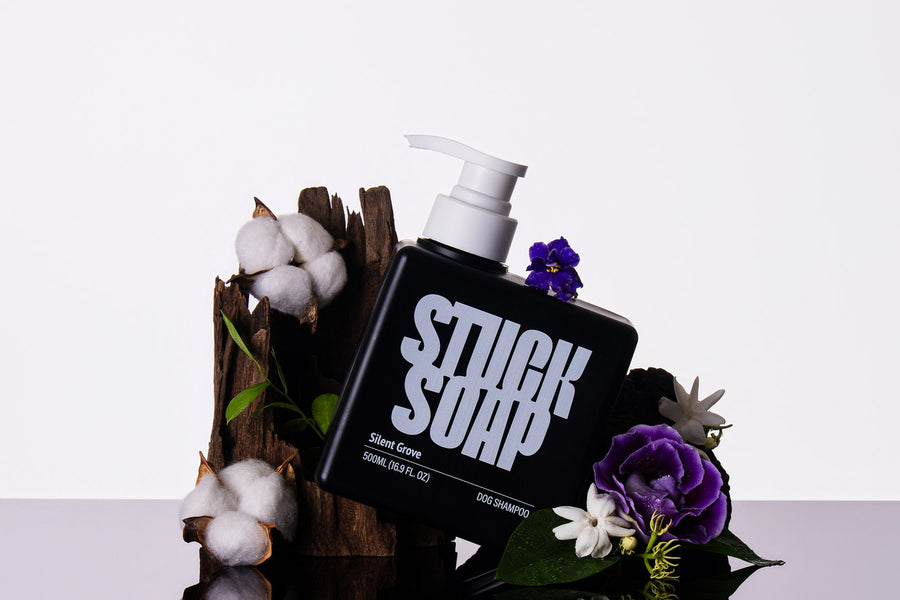
This is exactly the philosophy behind STUCK SOAP. Our vegan, pH-balanced formulas are built around K-beauty botanicals sourced from Jeju Island, Korea: green tea for antioxidant protection, centella asiatica to soothe and support the skin barrier, and camellia oil for a nourished, glossy coat. These are ingredients with the same calming, skin-loving character that makes turmeric so appealing, formulated specifically to be safe and effective for washing your dog.
So while turmeric may earn a place in your dog's diet under veterinary guidance, the everyday work of keeping skin calm and comfortable happens at bath time. Choosing a gentle, botanically driven shampoo means every wash supports the skin barrier rather than working against it, which is the real secret behind the K-beauty glow, for people and pups alike.
Frequently Asked Questions
Is turmeric safe for dogs?
In small, appropriate amounts, turmeric is generally considered safe for most healthy dogs, and it is even found in some pet foods. However, too much can cause digestive upset, and it may interact with certain medications or health conditions. Always check with your veterinarian before adding turmeric to your dog's routine.
Can turmeric help my dog's itchy skin?
Turmeric's anti-inflammatory and antioxidant properties may help ease mild, allergy-related itching and redness by calming inflammation. It is best viewed as one supportive part of a skin-care plan, not a cure. Persistent itching, hair loss, or sores should always be evaluated by a vet.
How much turmeric can I give my dog?
A common starting point for golden paste is about 1/4 teaspoon daily for small dogs, 1/2 teaspoon for medium dogs, and 3/4 to 1 teaspoon for large dogs. Start low, increase gradually, and confirm the right amount with your veterinarian.
Why is turmeric mixed with black pepper and coconut oil?
Curcumin, turmeric's active compound, is very poorly absorbed on its own. Black pepper contains piperine, which dramatically boosts absorption, and a healthy fat like coconut oil helps carry curcumin into the body's cells. Together they form the classic "golden paste."
Can I put turmeric directly on my dog's skin?
Turmeric is not a standard topical dog-care ingredient, and it can stain light coats yellow. For everyday topical skin support, gentler, coat-safe K-beauty botanicals such as green tea, centella asiatica, and camellia oil are a smarter choice. Ask your vet before applying any home remedy to irritated skin.
The Bottom Line
Turmeric earns its K-beauty superstar status honestly. Its active compound, curcumin, offers real anti-inflammatory and antioxidant power, and a growing body of veterinary research supports its potential to help calm inflammation in dogs. For skin that is mildly itchy or irritated, turmeric may be a helpful, gentle addition to a broader plan, provided it is dosed carefully and cleared by your veterinarian.
Just remember that trending does not mean magic. The most reliable way to support your dog's skin every single week is a gentle, barrier-friendly grooming routine built on proven, coat-safe botanicals. That is the true heart of the K-beauty approach, and it is available at every bath.
Sources & References
- Turmeric for Dogs: Benefits and Uses — Great Pet Care
- What Is Turmeric for Dogs? — Chewy
- Purified Curcumin for Pets: Natural Anti-Inflammatory Benefits — Worth Street Veterinary Center
- Turmeric for Dogs: Vet-Approved Dose, Golden Paste & Safety — VitaDog Nutrition
- K-Beauty Ingredients Dictionary — DODOSKIN
Give Your Dog the K-Beauty Spa Treatment
Turmeric's calm, anti-inflammatory spirit lives in every STUCK SOAP formula, through Jeju green tea, centella asiatica, and camellia oil chosen to soothe skin and support the barrier. Gentle, pH-balanced, and coat-safe, it is the K-beauty way to keep your dog comfortable at every bath.
Shop Stuck Soap →Vegan · pH-Balanced · Jeju Island Botanicals · Zero Waste