


If you follow K-Beauty skincare, you already know that AHA and BHA are everywhere. These exfoliating acids promise smoother, brighter, clearer skin, and they deliver for millions of people. So it is natural to wonder: if these acids work so well on your face, would AHA and BHA for dogs do the same for your pup's skin and coat?
Here is the short answer, and it is an important one. While most K-Beauty ingredients translate beautifully from human skincare to dog care, exfoliating acids are the rare exception. Your dog's skin is built very differently from yours, and what gently resurfaces human skin can irritate or even damage canine skin.
This post walks through the science of why dogs do not need AHA and BHA, what makes canine skin so different, and which gentle K-Beauty-inspired ingredients actually support your dog's skin barrier instead.
Table of Contents
What Are AHA and BHA, Exactly?
AHA stands for alpha hydroxy acid. The most common one is glycolic acid, which occurs naturally in sugar cane, along with lactic acid. AHAs are water-soluble and work on the surface of the skin, loosening the bonds that hold dead skin cells together so they slough off more easily.
BHA stands for beta hydroxy acid, and the star of this category is salicylic acid. Unlike AHAs, BHA is oil-soluble, which means it can travel deeper into pores to dissolve excess sebum and debris. This is why BHA is so popular for oily and acne-prone human skin.
In K-Beauty routines, these acids are prized for "chemical exfoliation," a gentler-sounding alternative to physical scrubs. They smooth texture, fade dark spots, and keep human pores clear. The keyword for our purposes is human, because the entire case for these acids rests on the structure of human skin.
Why Your Dog's Skin Is So Different From Yours
To understand why AHA and BHA for dogs is a different conversation, you have to look at how canine skin is actually built. The differences are bigger than most people realize.
Dog skin is far thinner. The human epidermis is roughly 10 to 15 cell layers thick. A dog's epidermis is only about 3 to 5 cell layers thick. That is a dramatic difference in protective cushioning, and it means anything applied to canine skin reaches the living layers underneath much faster.
The stratum corneum is thinner too. The stratum corneum is the outermost protective shield that keeps moisture in and irritants out. In dogs it is roughly half as thick as it is in humans. This is the very layer that exfoliating acids are designed to break down.
The pH is different. Human skin sits at an acidic pH of about 5.5. Dog skin is more neutral, generally in the 6.2 to 7.4 range. AHAs and BHAs work in an acidic environment, and applying acidic products to a dog disrupts the "acid mantle" that protects against bacteria, yeast, and parasites.
Put these three facts together and a clear picture emerges. Your dog already has thinner skin, a thinner protective shield, and a pH that is poorly matched to acidic formulas. Exfoliating acids are aggressive on this canvas, not gentle.
Why Dogs Don't Need Exfoliating Acids
Beyond the safety concerns, there is a simpler reason to skip these acids: dogs do not have the same exfoliation needs that drive humans to use them in the first place.
People reach for AHA and BHA to manage visible pores, blackheads, sun damage, fine lines, and uneven facial tone. Dogs do not have these concerns. They are covered in a protective coat, they are not chasing a poreless complexion, and their natural skin turnover does the job of shedding dead cells without chemical help.
When a dog does have flaking, dandruff, or greasy buildup, the answer is rarely aggressive exfoliation. More often it points to an underlying issue: a disrupted skin barrier, allergies, a dietary gap, or a skin infection. In genuine medical cases of seborrhea, veterinarians may prescribe a medicated shampoo that contains salicylic acid at a carefully controlled concentration, formulated specifically for canine skin and used under professional guidance. That is a clinical treatment, not a daily K-Beauty habit, and it is very different from applying a human exfoliating toner to your dog.
The takeaway is that healthy dog skin maintains itself. The goal of good grooming is to support that natural balance, not to strip and resurface it.
The Risks of Using AHA or BHA on Dogs
Using human exfoliating acids on your dog is not a neutral experiment. Because of the skin differences above, the downside can be real.
Glycolic acid and other AHAs can cause irritation in dogs, especially at the concentrations found in human products. Canine skin can be more reactive to chemical peels than human skin, leading to redness, a burning sensation, and itching. And once that thin epidermis is irritated or even chemically burned, the risk of secondary bacterial infection rises sharply, because the protective barrier that normally keeps microbes out has been compromised.
There is also the lick factor. Dogs groom themselves and will often lick whatever is applied to their coat, which means a topical acid is not just sitting on the skin, it may be ingested. Human formulations are not designed with that in mind.
Veterinary sources are consistent on this point: do not apply human exfoliating acid products to your dog at home, and if your dog has a skin problem that seems to call for one, talk to your veterinarian first. The research on AHA and BHA in dogs is limited, and the established, safer path is to use products formulated for canine skin.
Gentle K-Beauty Alternatives That Actually Help
Here is the good news. The heart of K-Beauty was never harsh exfoliation. The philosophy is gentle, ingredient-first, barrier-respecting care, and that translates perfectly to dogs when you choose the right ingredients.
Instead of stripping the skin, the K-Beauty-for-dogs approach focuses on calming, nourishing, and protecting. Some of the best-studied, dog-friendly ingredients include:
Centella Asiatica (Cica). A signature K-Beauty soothing ingredient that helps calm irritated, sensitive skin rather than exfoliating it. It is ideal for dogs prone to redness and itch.
Green Tea Extract. A gentle antioxidant powerhouse that helps protect the skin from environmental stress and supports a healthy coat, without disrupting the barrier.
Camellia Oil. Korea's treasured "liquid gold," a lightweight, deeply moisturizing oil that adds gloss and softness to the coat while nourishing the skin underneath.
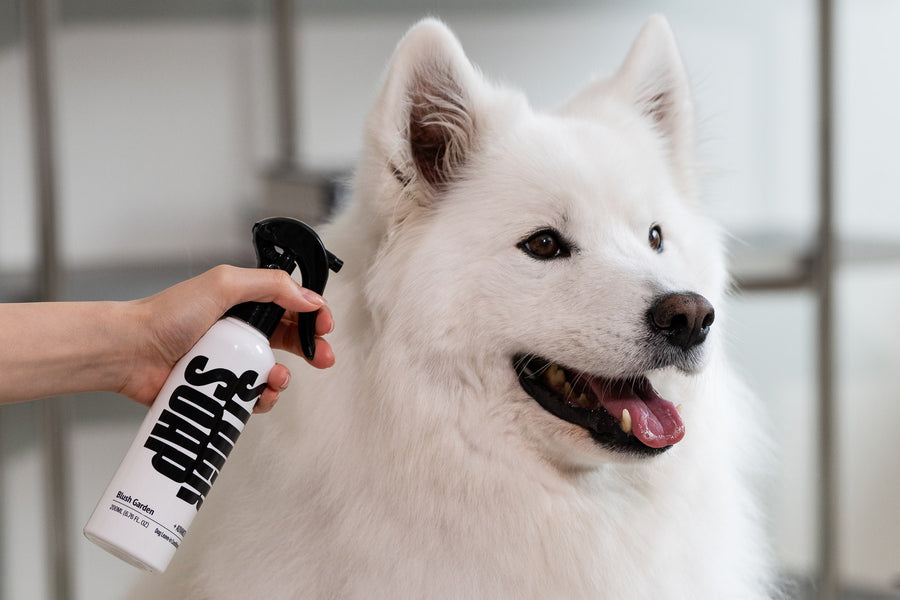
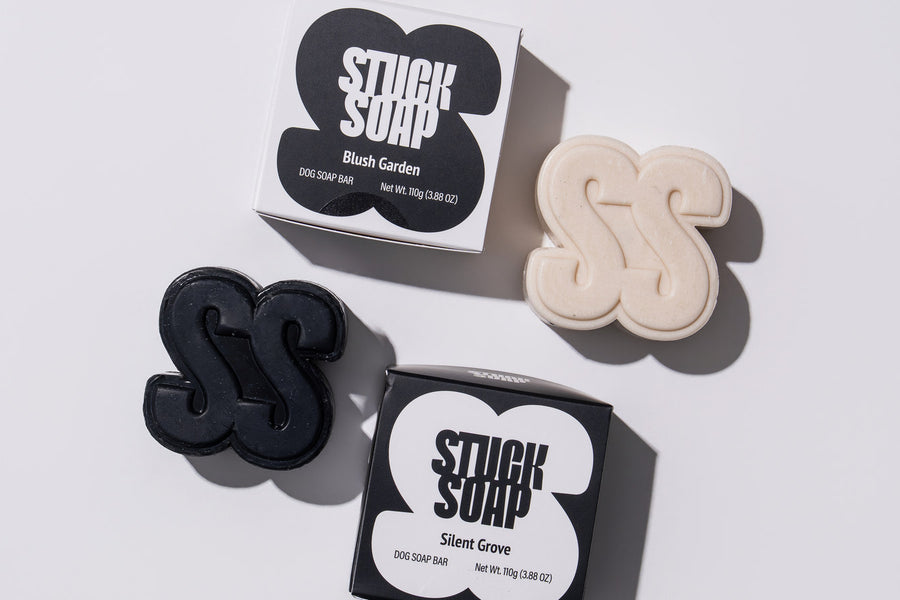
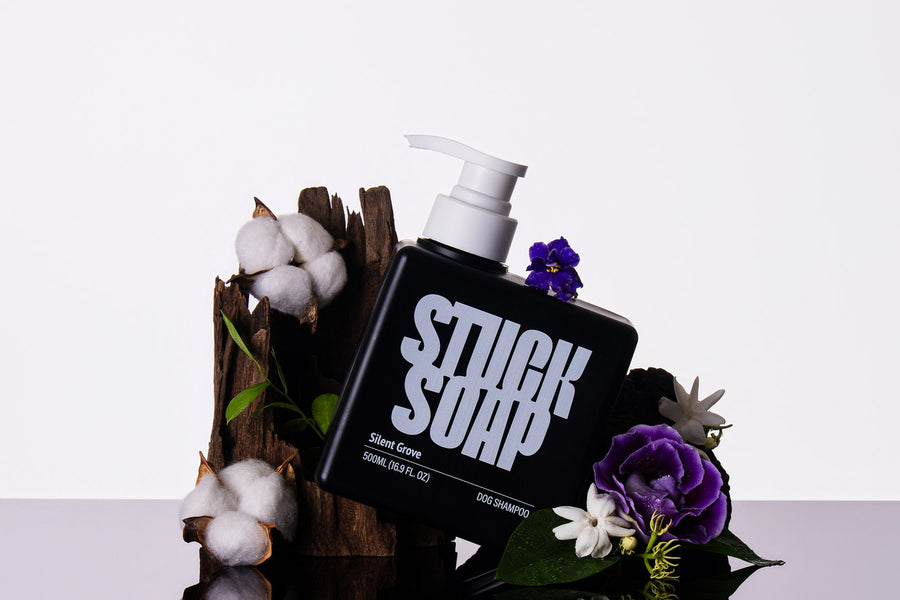
These are exactly the kinds of ingredients we built STUCK SOAP around. Our pH-balanced, vegan dog shampoos use Centella Asiatica, Green Tea, and Camellia Oil sourced from Jeju Island, Korea, formulated specifically for canine skin chemistry. The point is to clean and care for your dog without stripping their delicate skin barrier, which is the opposite of what an exfoliating acid would do.
So when you see the next trending acid in a K-Beauty routine, you can confidently skip it for your dog and reach instead for the soothing, barrier-supporting side of the K-Beauty philosophy.
Quick takeaways
AHA and BHA are excellent for human skin but a poor fit for dogs, whose skin is thinner, less protected, and more neutral in pH. Healthy dogs do not need chemical exfoliation, and home use of human acid products risks irritation, barrier damage, and infection. When your dog has a real skin issue, see your vet, and for everyday grooming, choose gentle, pH-balanced products built on soothing ingredients like Cica, green tea, and camellia oil.
Frequently Asked Questions
Can I use AHA or BHA on my dog's skin?
No, you should not use human AHA or BHA products on your dog at home. Canine skin is much thinner and has a more neutral pH than human skin, so these acids can cause irritation, burning, and barrier damage. If your dog has a skin condition, ask your veterinarian about a properly formulated canine product instead.
Is salicylic acid ever safe for dogs?
Salicylic acid does appear in some veterinary medicated shampoos for conditions like seborrhea, but these are formulated at controlled concentrations for canine skin and used under veterinary guidance. That is very different from applying a human salicylic acid toner or cleanser to your dog.
Why is dog skin more sensitive than human skin?
A dog's epidermis is only about 3 to 5 cell layers thick compared to 10 to 15 in humans, and the protective stratum corneum is roughly half as thick. Combined with a more neutral skin pH, this makes canine skin far more vulnerable to irritation from acidic or harsh products.
How do I exfoliate my dog if not with acids?
Most dogs do not need exfoliation at all, as natural skin turnover handles it. Regular brushing removes loose hair and dead skin gently, and bathing with a pH-balanced, soothing dog shampoo keeps skin healthy without stripping it. If you see persistent flaking or buildup, consult your vet to rule out an underlying issue.
What K-Beauty ingredients are safe for dogs?
Gentle, barrier-supporting K-Beauty ingredients translate well to dogs. Centella Asiatica (Cica), green tea extract, and camellia oil are all soothing and nourishing rather than exfoliating, which makes them a good fit for canine skin.
The Bottom Line
AHA and BHA earned their place in human skincare, but they are a reminder that not every trend belongs in your dog's routine. Your dog's thin, pH-neutral, barrier-sensitive skin simply is not built for chemical exfoliation, and healthy dogs do not need it.
The real lesson of K-Beauty for dogs is gentleness. Choose products that respect your dog's skin barrier, lean on soothing ingredients with real evidence behind them, and leave the acids on your own bathroom shelf. Your dog gets all the benefits of the K-Beauty philosophy, with none of the risk.
Sources & References
Give Your Dog the K-Beauty Spa Treatment
Skip the harsh acids and give your dog what their skin actually needs. STUCK SOAP is pH-balanced and built on soothing Jeju botanicals like Centella Asiatica, Green Tea, and Camellia Oil, cleaning gently without ever stripping your dog's delicate skin barrier.
Shop Stuck Soap →Vegan · pH-Balanced · Jeju Island Botanicals · Zero Waste