


You spot the flakes first: a light dusting on the dark blanket, a dull patch behind the ears, and then the scratching that seems to get louder at night. If this sounds familiar, you are not alone, and learning how to fix dog dry skin is one of the most common reasons dog owners reach for a new grooming routine. The good news is that most everyday dryness is not a mystery. It is usually a sign that your dog's skin barrier has lost more water than it can hold.
Here is where a little beauty-world wisdom helps. Korean skincare, or K-Beauty, became famous for rescuing dehydrated human skin, and it did not do it by soaking the skin once and hoping for the best. It did it by layering hydration and then sealing it in, a barrier-first philosophy known as the "moisture sandwich." That same logic translates beautifully to your dog, whose skin also relies on a healthy barrier to stay comfortable, calm, and soft.
This guide walks through what actually causes dry skin in dogs, the barrier science that explains it, and a gentle, practical K-Beauty hydration approach you can start this week. As always, this is educational information and not a substitute for veterinary care, so persistent or severe cases should go to your vet.
Table of Contents
What Causes Dry Skin in Dogs?
Dry, flaky skin is a symptom, not a diagnosis, and it can have several roots. Veterinary sources including the American Kennel Club and PetMD point to a familiar list of culprits, and knowing yours is the first step in how to fix dog dry skin for good.
Environment. Cold winter air and indoor heating pull moisture out of the skin, but summer is sneaky too. Air conditioning dries indoor air, and sun, pool chlorine, and salt water can all leave the coat parched. Dryness is a year-round possibility, not just a January problem.
Over-bathing and harsh products. This is the most common self-inflicted cause. Washing too often, using hot water, or reaching for a stripping, high-detergent shampoo removes the natural oils that keep the barrier sealed. Human shampoo is a frequent offender because it is formulated for a different skin pH than your dog's.
Nutrition. Diets low in essential fatty acids, particularly omega-3 and omega-6, often show up on the outside as a dull coat and flaky skin. Skin is a hungry organ, and it reflects what goes in.
Allergies, parasites, and infection. Environmental and food allergies, mites, fleas, and bacterial or fungal infections can all present as dryness or flaking. These need a diagnosis rather than a moisturizer.
Hormonal conditions. Hypothyroidism and Cushing's disease can change the skin and coat, causing dryness, thinning fur, and slow healing. If dryness arrives with weight changes, low energy, or symmetrical hair loss, that is a vet conversation.
The two causes you can most safely address at home are environmental dryness and an over-stripped, compromised barrier. The rest of this guide focuses there, while the final section covers the red flags that mean it is time to call your veterinarian.
The Skin Barrier: Why Your Dog Loses Moisture
To fix dry skin, it helps to picture the outer layer of skin, the stratum corneum, as a brick wall. The "bricks" are skin cells and the "mortar" is a blend of lipids like ceramides, cholesterol, and fatty acids. When that mortar is intact, water stays in and irritants stay out. When it breaks down, water escapes into the air in a process scientists call transepidermal water loss, or TEWL.
TEWL is not just a human concept. Veterinary research has validated TEWL measurement as a reliable, indirect way to assess skin barrier function in dogs, and studies show that TEWL rises as the barrier becomes more impaired. In plain terms, a leaky barrier means a thirstier, itchier, more reactive coat, and higher water loss has been linked to greater susceptibility to dermatitis and allergen penetration.
Two quirks make this especially relevant for dogs. First, canine skin has a thinner outer layer than human skin. Second, dog skin tends to sit at a more neutral to slightly alkaline pH, which is why a pH-balanced, dog-appropriate formula matters so much. A product that is fine for your face can nudge your dog's barrier in the wrong direction and accelerate that moisture loss.
The takeaway is simple but powerful: fixing dry skin is really about repairing and protecting the barrier, not just splashing on more water. This is exactly the problem K-Beauty spent years solving for human skin, which is why its playbook is so useful here.
The K-Beauty "Moisture Sandwich," Adapted for Dogs
The K-Beauty moisture sandwich is a layering method built on three types of ingredients, each doing a specific job. Understanding the trio is the key to translating it for your dog.
Humectants are the water magnets. Ingredients like hyaluronic acid, glycerin, and mushroom polysaccharides draw moisture into the upper skin layers, raising water content where it counts. On their own, though, humectants can lose that water back to dry air.
Emollients are the smoothers. Ceramides, colloidal oatmeal, and lightweight plant oils slot into the gaps between skin cells, softening rough texture and reinforcing the mortar of the barrier wall.
Occlusives are the sealers. Richer oils and butters form a breathable film on the surface that dramatically slows evaporation. By physics alone, following the principle behind Fick's law of diffusion, a humectant raises surface water while an occlusive caps the rate at which it can escape, which is precisely how you drive down TEWL.
The other half of the technique is timing. K-Beauty applies these layers onto damp, not bone-dry, skin so there is water present to trap. For a dog, that translates into a clear sequence: cleanse gently without stripping, add hydration while the coat is still damp, and finish with a light nourishing oil to lock it in. Cleanse, hydrate, seal. It is a spa ritual and a barrier-repair strategy at the same time.
K-Beauty Hydration Ingredients That Work for Dogs
Once you know the three roles, you can build a dog-safe version of the moisture sandwich from ingredients the K-Beauty world already loves. Here is how the most useful ones map onto canine skin.
For drawing water in (humectants): hyaluronic acid and snow mushroom are gentle, well-tolerated hydrators that pull moisture toward the surface without heaviness.
For smoothing and rebuilding (emollients): ceramides help restore the barrier's mortar, while colloidal oatmeal is a standout because it acts as both an emollient and a humectant, forms a protective film, and has been shown to encourage the skin's own ceramide production. Squalane is a feather-light emollient that mimics the skin's own oils.
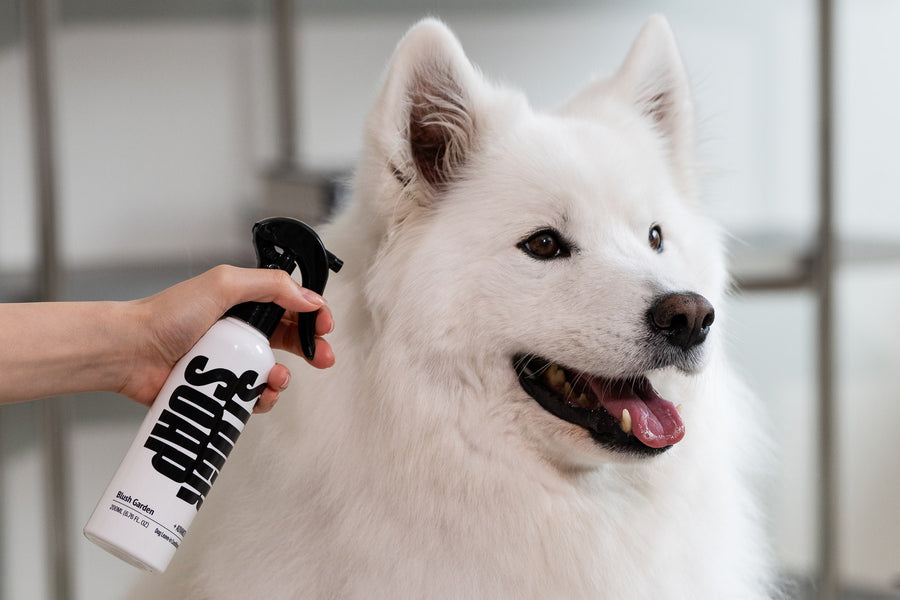
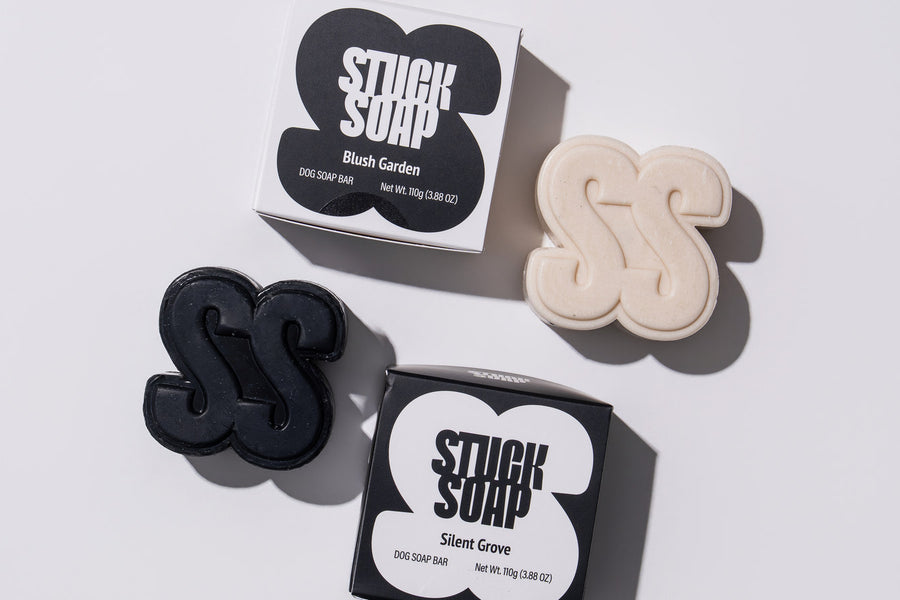
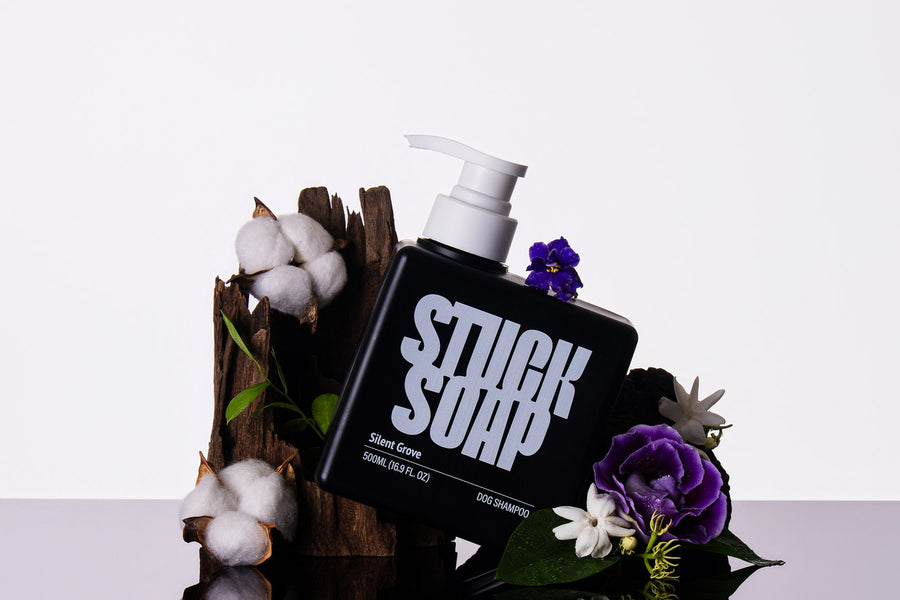
For soothing and sealing: this is where Stuck Soap's actual formulas come in. Our shampoos are built around Jeju Island botanicals that were chosen for calm, resilient skin. Camellia oil, known in Korea as a treasured beauty oil, is a nourishing emollient that helps soften and seal a dry coat. Centella asiatica, the famous "cica" ingredient, is prized for calming stressed, reactive skin, and antioxidant-rich green tea helps protect the surface. These three are working ingredients in our products, not just talking points.
A quick word on honesty: humectants like hyaluronic acid and emollients like ceramides represent the broader K-Beauty toolkit for dry skin, and they are worth looking for on any label. Green tea, camellia oil, and centella asiatica are the botanicals Stuck Soap uses directly, sourced from Jeju Island.
A Gentle Bathing Routine to Fix Dry Skin
Here is the moisture sandwich turned into an at-home routine. Follow these steps and you are treating the cause, not just chasing the flakes.
1. Bathe less often, but bathe better. Over-washing is a top cause of dryness. Unless your vet advises otherwise, most dogs with dry skin do well on roughly a three to four week cadence, using a genuinely gentle product each time rather than frequent harsh washes.
2. Use lukewarm water, never hot. Hot water strips oils faster and can leave the skin tight and itchy. Aim for a comfortable, tepid temperature.
3. Choose a pH-balanced, plant-based, sulfate-free shampoo. This is the foundation layer of the sandwich, the gentle cleanse that removes dirt without demolishing the barrier. A pH-balanced Stuck Soap wash with camellia oil, centella, and green tea is designed to clean while supporting, not stripping, dry skin.
4. Let it dwell, then rinse completely. Massage the lather in and give soothing ingredients three to five minutes to work. Then rinse longer than you think you need to, because leftover residue is a classic hidden cause of post-bath itch and flaking.
5. Seal while damp. This is the K-Beauty timing trick. On a towel-dried, still-damp coat, apply a light, dog-safe nourishing oil or leave-in to trap the water you just added. Damp application is what turns a wash into a moisture sandwich.
6. Support the barrier from the inside. Ask your vet about an omega-3 and omega-6 supplement, keep fresh water available, and consider a humidifier in dry, heated, or heavily air-conditioned rooms. Skin repairs from within as much as from the surface.
If you want to go further on the finishing step, our guide on nourishing oils for a shinier coat pairs naturally with this routine.
When Dry Skin Needs a Vet
A gentle routine handles ordinary dryness, but some signs point to something a shampoo cannot fix. Book a veterinary visit if you notice intense or worsening itching, hair loss or bald patches, red sores, scabs, or hot spots, a strong odor, greasy or heavily crusted scaling, sudden-onset dryness, or thickened, darkened skin. Dryness paired with weight change, increased thirst, or low energy can signal a hormonal condition and deserves prompt attention.
These situations often involve allergies, parasites, infection, or an internal cause, and they need a diagnosis. Think of good hydration habits as the everyday foundation that keeps skin resilient, and your vet as the partner for anything that does not steadily improve. For allergy-prone dogs specifically, our overview of calming shampoo ingredients for allergies is a helpful companion read.
Frequently Asked Questions
What is the fastest way to fix dog dry skin?
Stop any over-bathing, switch to a gentle pH-balanced dog shampoo, and start sealing hydration in while the coat is still damp. Pair that with a vet-recommended omega-3 and omega-6 supplement. Surface comfort can improve within a bath or two, but true barrier repair usually takes a few weeks of consistency.
Can I put human lotion or moisturizer on my dog?
It is best not to. Human products are formulated for a different skin pH, may contain fragrances or ingredients that irritate dogs, and can be unsafe if your dog licks them off. Choose products designed for canine skin instead.
How often should I bathe a dog with dry skin?
For most dogs with simple dryness, roughly every three to four weeks with a gentle, moisturizing formula is a sensible starting point. Bathing too frequently strips protective oils and makes dryness worse, so follow your veterinarian's guidance for your dog's coat and condition.
Does diet really affect my dog's dry skin?
Yes. A shortage of essential fatty acids, especially omega-3 and omega-6, commonly shows up as a dull coat and flaky skin. A complete, quality diet and vet-approved supplements support the skin barrier from the inside out.
Is coconut or olive oil good for dog dry skin?
Small amounts of a dog-safe oil can act as a temporary occlusive to seal moisture, but oils alone do not repair the barrier and can feel greasy or attract dirt. A layered approach of gentle cleansing, hydration, and a light seal works better than oil by itself.
The Bottom Line
Dry skin is your dog's way of telling you the barrier needs support. Instead of masking flakes, borrow the K-Beauty moisture sandwich: cleanse gently, add hydration on damp skin, and seal it in with nourishing botanicals, while feeding the skin from within and watching for anything that needs a vet. It is a calmer, smarter way to think about how to fix dog dry skin, and it rewards you with the soft, comfortable, glossy coat your dog was meant to have.
Sources & References
- Dry Skin on Dogs: Signs, Symptoms, Treatments — American Kennel Club
- Dog Dry Skin: Causes, Treatments, and Prevention — PetMD
- Dry Skin on Dogs: Symptoms, Causes & Treatment — Purina
- Transepidermal Water Loss (TEWL) Reflects Skin Barrier Function of Dog — PubMed
- Skin Barrier Dysfunction and Canine Atopy Explained — Royal Canin Academy
- Moisture Sandwich Skincare Explained — ipsy
Give Your Dog the K-Beauty Spa Treatment
Dry, flaky skin starts with a stripped barrier, so the fix starts with a gentler wash. Stuck Soap is pH-balanced and built on Jeju Island botanicals like camellia oil, centella asiatica, and green tea, designed to cleanse without stripping and support your dog's skin barrier bath after bath.
Shop Stuck Soap →Vegan · pH-Balanced · Jeju Island Botanicals · Zero Waste