


If you have spent any time exploring Korean skincare, you have probably met a humble little grain with a poetic name: job's tears. Also called coix seed or adlay, this teardrop-shaped grain has been a fixture of Korean beauty and herbal tradition for centuries, quietly earning a reputation for the kind of calm, clear, luminous skin that K-Beauty is famous for. So it is fair to ask the question a growing number of dog parents are now asking: could job's tears for dogs be worth exploring, too?
The logic is the same one that powers the whole "K-Beauty for dogs" movement. Gentle, food-derived ingredients that strengthen and soothe human skin often speak the same biological language as your dog's skin. And job's tears happens to be rich in exactly the compounds canine skin cares about most: antioxidants, soothing plant actives, and the skin-barrier fatty acids your dog literally cannot live without.
In this guide we will look at what job's tears actually is, why K-Beauty formulators love it, what the science genuinely suggests for dogs, and how to think about it safely. As always, we will separate what is proven from what is still being explored, so you can make a calm, informed decision for your pup.
Table of Contents
What Are Job's Tears (Coix Seed)?
Job's tears (Coix lacryma-jobi) is the seed of a tall, tropical grass. The polished grains are smooth, pale, and shaped like little teardrops, which is how the plant earned its name. In Korea it is known as yulmu (율무), most familiar as a warm, nutty, comforting cup of yulmu-cha (job's tears tea).
Long before it appeared on beauty-brand ingredient lists, job's tears was a pillar of Korean and East Asian herbal tradition. In traditional Korean medicine, or hanbang, and in the wider East Asian practice where the seed is called Yi Yi Ren, it was valued for "clearing heat" and supporting clear, healthy skin. That heritage is exactly why modern K-Beauty embraced it.
What makes the grain interesting is its chemistry. Job's tears contains a distinctive trio of active compounds: coixenolide, coixol, and coixan, alongside vitamins, minerals, amino acids, and unsaturated fatty acids. Coixol in particular has drawn scientific attention for its soothing, anti-inflammatory behavior. Together, these compounds are the reason the seed has moved from the teacup to the serum bottle in Korean brands such as Missha and Laneige, according to skincare-ingredient references.
What Job's Tears Does for Skin in K-Beauty
In human skincare, coix seed extract is prized as a gentle multitasker. Ingredient authorities like Paula's Choice describe it as an antioxidant with protective and brightening properties, which is shorthand for a few distinct benefits worth unpacking.
Antioxidant and brightening. The extract helps neutralize free radicals, the reactive molecules that accelerate visible aging and dullness. Over time, that antioxidant action is associated with a more even, radiant tone, which is why it shows up in so many "glow" and brightening formulas.
Soothing and calming. Thanks largely to coixol, job's tears has a well-documented soothing reputation. Traditionally it was used to calm irritated, breakout-prone, or eczema-prone skin, and that same anti-inflammatory character is what makes it appealing for sensitive skin today.
Hydration and barrier support. This is where the newest research gets exciting. A 2025 study published on ScienceDirect found that a fermented coix seed hydrolysate upregulated skin-barrier genes in skin cells and helped promote wound healing. In plain English: the ingredient appeared to encourage skin's own barrier machinery, not just sit on the surface.
Underpinning all of this is the seed's fatty-acid profile. Coix seed oil is rich in unsaturated fatty acids, especially linoleic acid and oleic acid. Linoleic acid is not just any oil. It is the most abundant fatty acid in the outer layer of skin and a structural building block for ceramides, the "mortar" that holds the skin barrier together. Hold onto that fact, because it is the bridge to your dog.
Job's Tears for Dogs: What the Science Suggests
Let us be clear and honest up front: there are no published clinical trials studying job's tears specifically on dogs. Anyone who tells you this grain is a proven canine skincare hero is getting ahead of the evidence. What we can do is look at why the ingredient is biologically interesting for dog skin, and that case is genuinely compelling.
It comes back to linoleic acid. For dogs, linoleic acid is an essential omega-6 fatty acid, meaning their bodies cannot manufacture it and must obtain it from their diet. According to the Merck Veterinary Manual, linoleic acid is critical to the lipid component of the skin's barrier, the layer that locks moisture in and keeps irritants out.
When dogs run short on linoleic acid, the consequences show up right on the surface: a dull, dry coat, flaking, greasy or scaly skin, and increased susceptibility to inflammation. A pilot study in the Journal of Applied Animal Nutrition (Cambridge) even found evidence that linoleic acid intake interacts with measurable skin-barrier properties in healthy dogs, including transepidermal water loss, the technical measure of how well skin holds its moisture.
So here is the honest, exploratory takeaway. A grain naturally loaded with linoleic acid, antioxidants, and a soothing compound like coixol is exactly the kind of ingredient that should catch a formulator's eye for skin and coat support. The essential fatty acids in ingredients like this may also help calm inflammation through a well-known mechanism: they compete with arachidonic acid, dialing down the production of pro-inflammatory messengers in the skin.
The important caveat is that a benefit for human skin in a lab does not automatically transfer to your dog, and eating a grain is not the same as applying a concentrated extract. Think of job's tears as a promising piece of the broader K-Beauty puzzle for dogs, not a miracle fix.
Is Job's Tears Safe for Dogs?
The reassuring news is that job's tears is a food grain, not a harsh chemical. Veterinary references turned up no toxicity warnings for Coix lacryma-jobi, and the seed (as Yi Yi Ren) has a long history of controlled use in traditional East Asian veterinary practice. That said, "not toxic" is not the same as "feed freely," so a few sensible guardrails apply.
Moderation matters. Job's tears is a starchy grain. If you ever offer it as an occasional food, it should be plain, fully cooked, unseasoned, and given in small amounts. Too much can lead to digestive upset or unwanted calories, and it is not appropriate for dogs on grain-restricted or prescription diets.
Watch for individual sensitivities. Any new food or topical can trigger an allergy in a sensitive dog. Introduce one new thing at a time so you can spot a reaction, and stop if you see itching, redness, or stomach trouble.
A note on pregnancy. Job's tears is traditionally cautioned against during human pregnancy. Out of an abundance of caution, it is wise to avoid it with pregnant dogs and to defer entirely to your veterinarian.
Topical products are different from food. In skincare, coix extract is used at small, cosmetic concentrations. If you ever try a grooming product that lists it, patch-test first, keep it away from your dog's eyes, and avoid letting your dog lick concentrated leave-on products. Whenever in doubt, your veterinarian is the right person to ask before adding any supplement or new active to your dog's routine.
Practical Ways to Support Your Dog's Skin Barrier
You do not need an exotic grain to put the lesson of job's tears to work. The real story is about feeding and protecting the skin barrier, and that is something you can do today.
Start from the inside. Make sure your dog eats a complete, balanced diet with adequate omega-6 (linoleic acid) and omega-3 fatty acids. If your dog's coat looks dull, dry, or flaky, ask your vet whether an essential-fatty-acid supplement makes sense, since these are widely used in veterinary dermatology for scaling and dry-skin issues.
Then protect the barrier from the outside. Avoid over-bathing, which strips natural oils, and reach for a gentle, pH-appropriate, barrier-friendly shampoo rather than anything harsh. Rinse thoroughly so no residue is left behind, and dry your dog gently instead of rubbing the coat rough.
Finally, think like a K-Beauty devotee: layered, gentle, and consistent beats one aggressive "miracle" ingredient every time. A dull coat is usually a whole-routine question, diet plus bathing plus brushing, not a single missing hero. For a deeper dive, see our guides on how to fix dog dry skin and how to make your dog's coat shine.
The K-Beauty, Barrier-First Approach
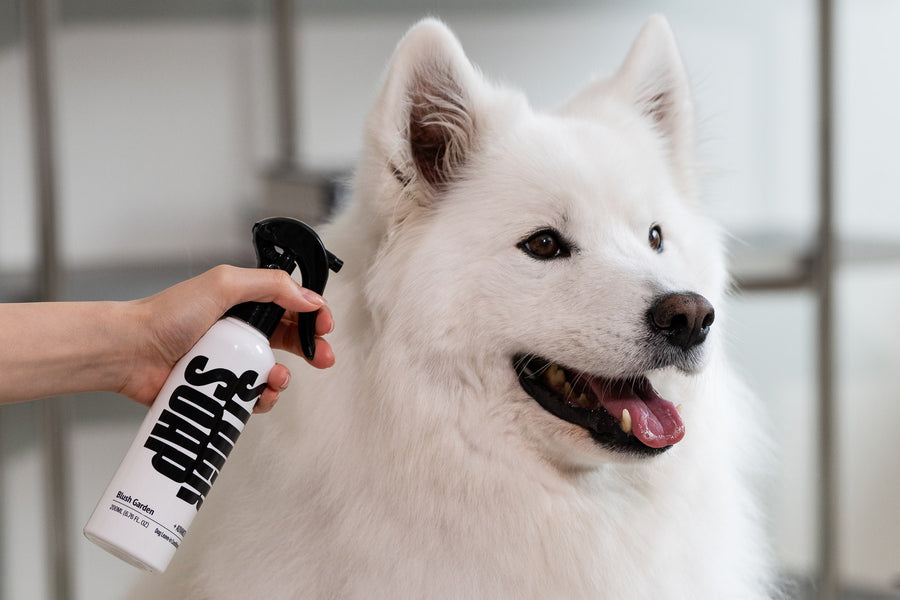
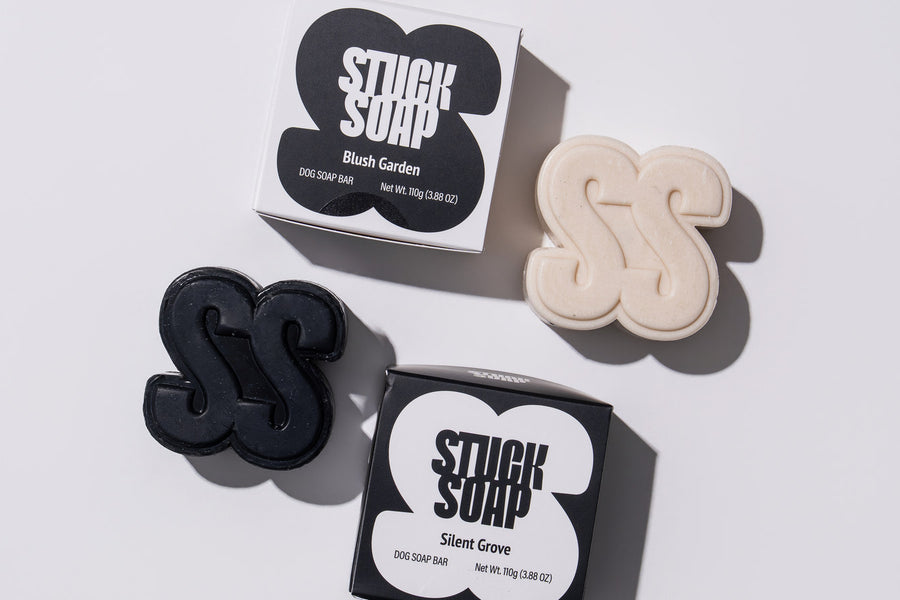
Job's tears is a perfect example of the K-Beauty philosophy that shapes everything at STUCK SOAP: choose gentle, plant-derived ingredients that work with the skin barrier instead of against it. The grain itself is not in our formulas, and we would rather be transparent about that than overpromise. But the philosophy absolutely is, and so are the ingredients that carry it.
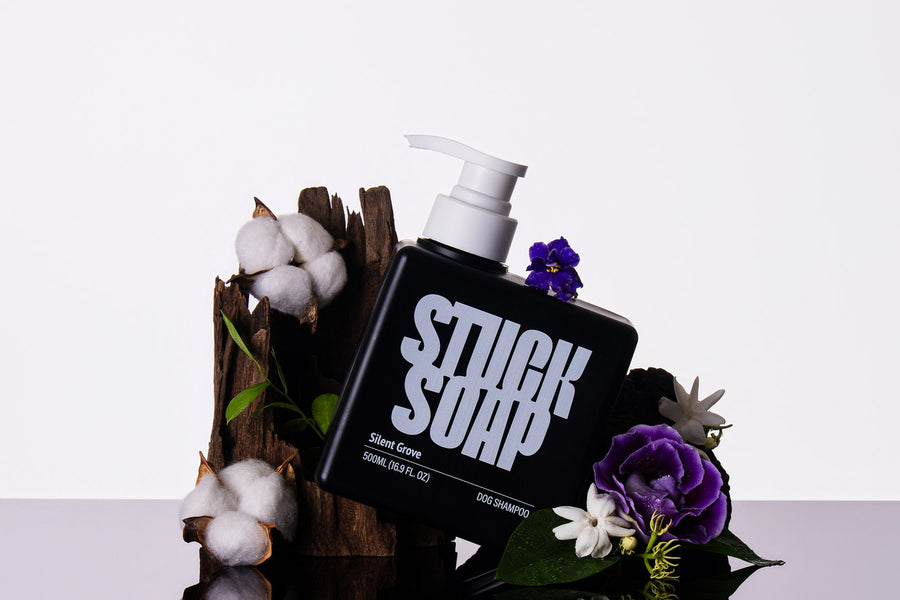
STUCK SOAP is built around Jeju Island botanicals with real, documented roles in skin and coat care. Our Jeju green tea delivers antioxidant protection, our camellia oil (동백유) is a linoleic- and oleic-rich coat conditioner in the same fatty-acid family as coix seed oil, and Centella asiatica (cica) is one of K-Beauty's most trusted soothing actives. Every wash is pH-balanced, vegan, and plant-based, which makes the cleansing step a foundation for a healthy barrier rather than a stress on it.
If job's tears intrigued you, you will enjoy the rest of the Korean-grain family we have explored, from rice water and rice bran to mung bean and adzuki bean. To go deeper on the barrier science, our pieces on ceramides, black sesame oil, and fermented galactomyces connect the same dots from a few different angles.
Frequently Asked Questions
Can dogs eat job's tears?
Job's tears is a non-toxic food grain, so a small amount of plain, fully cooked, unseasoned coix seed is generally not considered dangerous for most healthy dogs. Keep portions small, avoid it for dogs on grain-restricted diets, and always check with your veterinarian before adding any new food.
Is job's tears the same as coix seed or adlay?
Yes. Job's tears, coix seed, and adlay are all common names for the seed of the same plant, Coix lacryma-jobi. In Korean it is called yulmu (율무), and in skincare you will often see it listed as Coix Lacryma-Jobi Seed Extract.
Does job's tears help a dog's coat?
There are no canine-specific studies proving it does. However, job's tears is naturally rich in linoleic acid and antioxidants, and linoleic acid is an essential fatty acid that dogs need for a healthy skin barrier and coat. That makes it biologically interesting to explore, not a guaranteed remedy.
Is job's tears an ingredient in STUCK SOAP?
No. STUCK SOAP uses Jeju green tea, camellia oil, and Centella asiatica rather than job's tears. We include the grain here because it is part of the wider K-Beauty ingredient story, and it illustrates the same gentle, barrier-first philosophy behind our formulas.
How is job's tears different from rice water for dogs?
They come from different grains and carry different active compounds. Rice water is prized in Korean tradition for coat softness and shine, while job's tears is known for its soothing, antioxidant, and skin-barrier-supporting profile driven by compounds like coixol and its linoleic-acid content.
The Bottom Line
Job's tears is a beautiful example of why the K-Beauty approach translates so well to dogs. It is gentle, food-derived, backed by centuries of Korean tradition, and rich in the antioxidants and linoleic acid that canine skin genuinely relies on. The research on dogs specifically is still young, so treat it as a promising ingredient to explore rather than a proven cure, and always loop in your vet before making changes.
More than any single grain, the lasting lesson is the philosophy: feed the barrier, protect the barrier, and keep the whole routine gentle and consistent. That is the standard STUCK SOAP is built to meet, one calm, K-Beauty-inspired wash at a time.
Sources & References
- Coix Lacryma-Jobi Ma-Yuen Seed Extract in Skin Care — Paula's Choice Ingredient Dictionary
- Coix Lacryma-Jobi (Job's Tears) Seed Extract — EWG Skin Deep
- Fermented Coix Seed Hydrolysate Upregulates Skin Barrier Genes and Promotes Wound Healing — ScienceDirect (2025)
- Essential Fatty Acids for Integumentary Disease in Animals — Merck Veterinary Manual
- Linoleic Acid Intake and Skin Barrier Properties in Healthy Dogs: A Pilot Study — Journal of Applied Animal Nutrition (Cambridge)
- Job's Tears: Benefits, Side Effects, Uses & Precautions — RxList
Give Your Dog the K-Beauty Spa Treatment
Job's tears reminds us that the best skincare is gentle, plant-based, and built around a healthy barrier. STUCK SOAP puts that same K-Beauty philosophy into every wash with Jeju green tea, camellia oil, and Centella asiatica, all pH-balanced for your dog's skin.
Shop Stuck Soap →Vegan · pH-Balanced · Jeju Island Botanicals · Zero Waste