


You probably already keep a can of pumpkin in the pantry for the next time your dog's stomach goes sideways. That orange scoop is a household hero for digestion. But the seeds hiding inside that same pumpkin have quietly become a skincare obsession, and that overlap is exactly where pumpkin seed oil for dogs gets interesting.
Cold-pressed from roasted pumpkin seeds, this deep-green oil is one of the most linoleic-acid-rich oils on the planet, and it carries a dose of the same skin-and-coat minerals your dog needs from the inside out. In the K-Beauty world, pumpkin shows up as gentle enzyme exfoliators and fermented "glow" essences prized for calming sensitive skin. The connecting idea is simple: the nutrients that make pumpkin a darling of Korean-inspired skincare are the same ones that support a healthy skin barrier and a glossy coat on a dog.
Below, we'll unpack what pumpkin seed oil actually contains, what the veterinary science does (and doesn't) say about using it on dogs, and how to work it into your routine safely. Because pumpkin isn't an ingredient in STUCK SOAP, we'll treat it as an exploration of the wider K-Beauty-for-dogs trend rather than a product claim, and point you back to the barrier-first philosophy that ties it all together.
Table of Contents
What Is Pumpkin Seed Oil, and Why Does K-Beauty Love Pumpkin?
Pumpkin seed oil is exactly what it sounds like: an oil pressed from the seeds of the pumpkin (usually Cucurbita pepo or Cucurbita moschata). Cold-pressing keeps its nutrients intact, giving you a rich, nutty, dark-green oil that skincare formulators and chefs both prize.
What makes it stand out is its fatty-acid profile. Pumpkin seed oil is roughly 52–57% linoleic acid, an omega-6 essential fatty acid, which is one of the highest linoleic-acid concentrations of any common oil. It rounds that out with about 27% oleic acid (omega-9), plus smaller amounts of palmitic and stearic acids.
It's also loaded with supporting nutrients. Cold-pressed pumpkin seed oil delivers roughly 94–98 mg of tocopherols (vitamin E) per 100 grams, dominated by gamma-tocopherol, a potent antioxidant form. Add plant sterols like beta-sitosterol and pigments such as beta-carotene, and you get an oil built for nourishing, protecting, and soothing skin.
So where does the K-Beauty angle come in? Korean and Korean-inspired skincare is famous for two things pumpkin does beautifully: gentle exfoliation and fermentation. Pumpkin is naturally rich in fruit enzymes (proteases), AHAs, and vitamins A and C. Those enzymes work by dissolving the "glue" between dead surface skin cells, lifting dullness without the scrubbing of a physical exfoliant or the sting of a strong acid. That makes pumpkin enzyme treatments a favorite for sensitive, reactive skin.
Fermentation takes it further. Ingredients like Lactobacillus/Pumpkin Ferment Extract are a nod to the centuries-old Asian tradition of fermenting botanicals to make their nutrients more bioavailable. The result is a postbiotic-rich extract that helps support the skin barrier and calm sensitivity, which is precisely the "gentle first, barrier-first" mindset K-Beauty is built on. In other words, pumpkin is a global superfood that K-Beauty's philosophy has enthusiastically adopted, right alongside oils like marula and camellia.
What the Science Suggests for Skin & Coat
Here's the honest starting point: there are no large clinical trials testing pumpkin seed oil specifically on dogs' skin. What we do have is strong, well-established veterinary research on its headline nutrient, linoleic acid, and that's where the promise lives.
Linoleic acid isn't a "nice to have" for dogs. It's an essential fatty acid, meaning their bodies can't make it and have to get it from diet. It's also a major structural component of the ceramides that hold your dog's stratum corneum (the outermost skin layer) together. When linoleic acid runs low, the science is clear: dogs develop scaly, flaky skin and higher transepidermal water loss (TEWL), the rate at which moisture escapes through a compromised barrier.
Supplementing it helps. In a pilot study published in the Journal of Applied Animal Nutrition, healthy dogs fed a diet higher in linoleic acid and zinc showed measurably better barrier function, with TEWL dropping by about 8.11 g/m²/h at six weeks and 7.52 g/m²/h at twelve weeks. Lower TEWL means skin that holds onto its own moisture more effectively, which tends to show up as less flaking and a softer, more resilient coat.
Because pumpkin seed oil is so densely packed with linoleic acid, it's a natural topical and dietary source of the exact fatty acid that research links to a stronger barrier. Its gamma-tocopherol adds antioxidant support, helping defend skin lipids from the oxidative wear that dulls a coat over time. This is the same reason other high-linoleic oils have earned attention for canine coats, from sunflower oil to hemp seed oil and black sesame.
The takeaway: pumpkin seed oil may help support your dog's skin barrier and coat gloss because of its nutrient profile, not because of pumpkin-specific magic. Frame it as a well-credentialed member of the essential-fatty-acid family, and you'll set realistic expectations.
The Zinc Connection: A Nutrient Most Oils Miss
This is where pumpkin genuinely separates itself from the crowd of coat oils. Most nourishing oils bring linoleic acid to the table and stop there. Pumpkin, and especially its seeds, also brings zinc, and that pairing matters more than people realize.
Zinc is a workhorse mineral for skin and coat. It's directly involved in producing keratin, the structural protein that builds hair and the skin's surface, and it supports the wound-healing and cell-turnover processes that keep skin healthy. Zinc-deficient dogs are known to develop dull coats, crusting, and hair loss, which is why it's a staple in skin-and-coat formulas.
The most compelling evidence for dog owners is a study in Veterinary Dermatology that tested zinc and linoleic acid together. Dogs supplemented with zinc, or with zinc plus linoleic acid, showed a significant drop in transepidermal water loss. And the combination group specifically showed significant improvements in coat gloss and reduced coat scaling compared to controls. That's the exact one-two punch pumpkin seed oil and pumpkin seeds are naturally built around.
A realistic caveat: the oil carries far more fatty acid than mineral, so pumpkin seed oil is a helpful contributor to zinc intake, not a stand-alone zinc source. A complete, balanced diet should still be doing the heavy lifting. But as a whole-food ingredient, pumpkin lets you deliver linoleic acid and a nudge of zinc in the same spoonful, which is a tidy match for what the coat-health research actually rewards. If a shinier coat is your goal, our deeper guide on how to make your dog's coat shine pulls these threads together.
Pumpkin Flesh, Seeds, and Oil: What's Safe for Dogs
"Pumpkin" covers three different things for your dog, and each has its own rules. Getting these straight is the difference between a healthy add-on and an upset stomach.
Pumpkin flesh is the safest and most familiar. Plain, cooked pumpkin or 100% canned pumpkin puree is rich in soluble fiber that bulks up stool and acts as a prebiotic for gut bacteria, which is why vets recommend it for both mild constipation and mild diarrhea. It also supplies vitamins A, C, and E plus potassium and iron. The AKC suggests starting small: roughly 1 teaspoon for small dogs, 1–2 tablespoons for medium dogs, and up to 4 tablespoons for large dogs per day. The non-negotiable rule: never use pumpkin pie filling. Its added sugar and spices (nutmeg can be toxic, and xylitol is dangerous) make it off-limits.
Pumpkin seeds deliver the zinc, magnesium, and iron, but need prep. Feed them shelled, unsalted, and roasted or ground, never whole and raw, since whole seeds can be a choking hazard and raw seeds can spoil. You may have read that pumpkin seeds "deworm" dogs thanks to a compound called cucurbitacin. There is a kernel of truth that cucurbitacin can affect intestinal parasites, but it is not a proven, reliable substitute for a vet-prescribed dewormer, so please don't treat it as one.
Pumpkin seed oil is the concentrated skin-and-coat form. It's a food-grade oil, so it's generally well tolerated in small amounts, but because it's pure fat, too much can cause loose stools, an upset stomach, or unwanted weight gain over time. Moderation is the whole game. As with any new food or topical, a quick check with your veterinarian first is the smart move, especially for puppies, seniors, pregnant dogs, or dogs with pancreatitis history or known allergies.
How to Use Pumpkin Seed Oil for Your Dog Safely
If you and your vet decide to try it, here are practical, low-risk ways to work pumpkin seed oil into your dog's routine.
Start with a drizzle. As a dietary add-on, think in drops to a small fraction of a teaspoon for little dogs and up to about a teaspoon for large dogs, a few times a week, mixed into food. Introduce it slowly over a week and watch the stool. If everything stays firm, you can keep it as an occasional topper.
Patch test before any topical use. If you want to smooth a tiny amount onto a dry patch, elbow callus, or the coat, do a 24-hour patch test on a small area first. Use only pure, cosmetic- or food-grade oil with nothing added, and keep it away from the eyes and out of easy licking range so your dog isn't ingesting a topical dose.
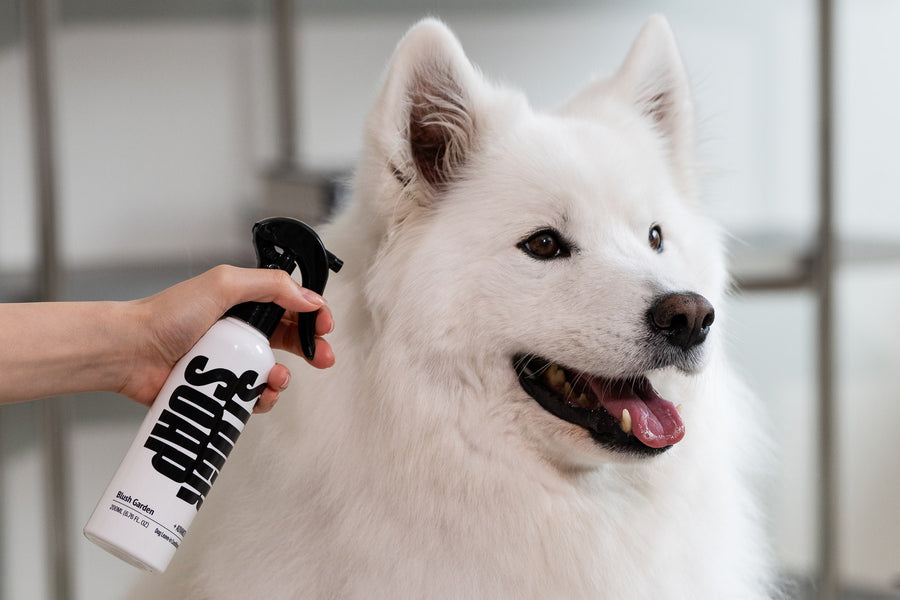
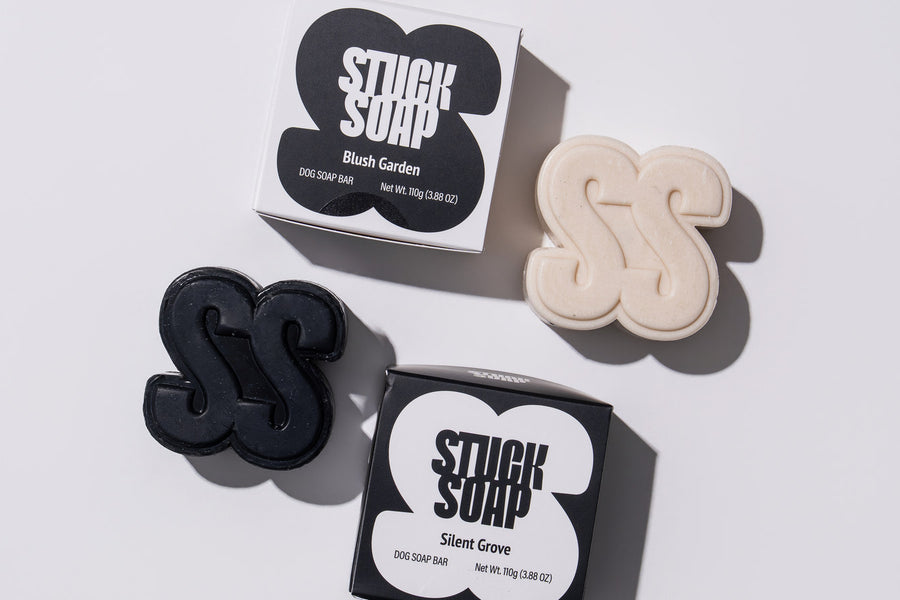
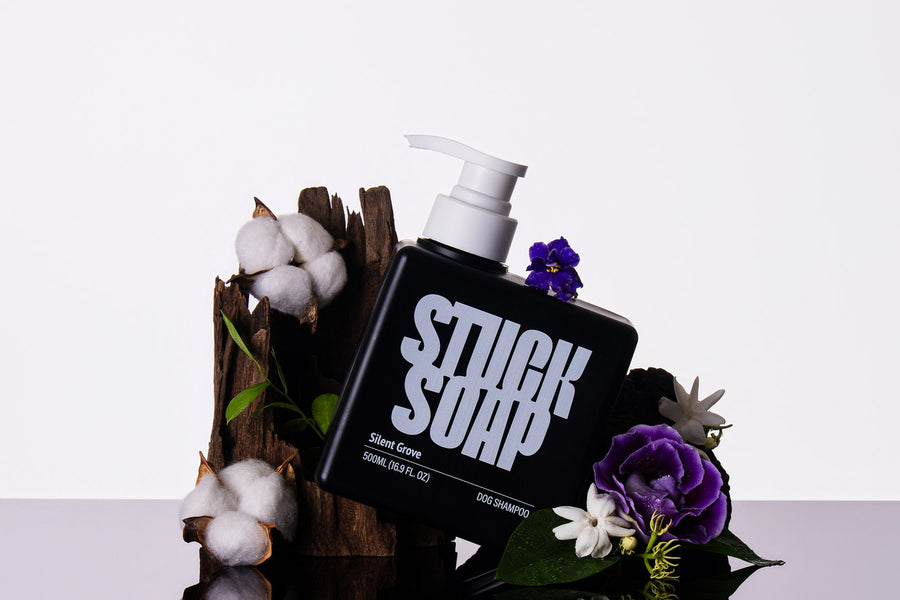
Let the bath do the foundational work. Oils are a finishing touch; a clean, intact barrier is the foundation. This is where a gentle, pH-appropriate wash matters most, and it's the heart of the K-Beauty approach to dog grooming. STUCK SOAP builds its vegan, pH-balanced formulas around Jeju Island botanicals that are backed by real ingredient science: green tea extract for antioxidant defense, camellia oil for coat conditioning, and Centella asiatica to soothe. Bathing on a healthy barrier means any oil you add afterward has a better surface to work with.
Think in systems, not single ingredients. Pumpkin seed oil pairs logically with barrier-supporting ingredients like ceramides and antioxidants such as vitamin E. If your dog is battling genuinely dry, flaky skin, our guide on how to fix dog dry skin lays out a full routine rather than relying on one oil to fix everything.
Know when to call the vet. Pumpkin seed oil is a supportive extra, not a treatment. Persistent itching, redness, hair loss, hot spots, or a suddenly greasy or smelly coat can signal allergies, infection, or a hormonal issue that food and oils won't fix. Those deserve a professional exam.
The Bottom Line
Pumpkin seed oil earns its spot in the K-Beauty-for-dogs conversation on merit. It's one of the richest natural sources of skin-barrier-building linoleic acid, it delivers antioxidant vitamin E, and, uniquely among coat oils, it pairs those fatty acids with coat-supporting zinc, the exact combination veterinary research connects to lower moisture loss and a glossier coat.
Used in moderation, with a vet's blessing and a patch test, it's a sensible, gentle way to support your dog's skin from the outside and the inside. Just remember it's a supporting player. The real foundation is a consistent, barrier-first grooming routine built on gentle, well-formulated products, which is precisely the philosophy STUCK SOAP was created to deliver.
Frequently Asked Questions
Is pumpkin seed oil safe for dogs?
Yes, in small amounts. Pure, food-grade pumpkin seed oil is generally well tolerated as an occasional dietary add-on. Because it's pure fat, too much can cause loose stools or weight gain, so keep portions small and check with your vet first, especially for puppies, seniors, or dogs with a history of pancreatitis.
How much pumpkin seed oil can I give my dog?
Start conservatively: a few drops to a fraction of a teaspoon for small dogs, up to about a teaspoon for large dogs, only a few times a week, mixed into food. Introduce it gradually over a week and watch your dog's stool. Stop if you notice any digestive upset.
Does pumpkin seed oil help a dog's coat?
It may support coat quality because it's exceptionally high in linoleic acid, an essential fatty acid tied to skin-barrier health, plus antioxidant vitamin E. Pumpkin also provides zinc, and veterinary research shows zinc combined with linoleic acid can improve coat gloss and reduce scaling. It supports a healthy coat rather than guaranteeing one.
Can I put pumpkin seed oil directly on my dog's skin?
You can apply a very small amount of pure oil topically to a dry spot after a 24-hour patch test, but keep it away from the eyes and out of licking range. For most dogs, a gentle, pH-balanced bath plus barrier-supporting ingredients does more for overall skin health than a single topical oil.
Is pumpkin seed oil a K-Beauty ingredient?
Pumpkin is a global superfood, but K-Beauty has embraced it enthusiastically through gentle pumpkin enzyme exfoliants and fermented pumpkin extracts that suit sensitive skin. That "gentle, barrier-first" mindset is the same philosophy behind Korean-inspired dog care, even though STUCK SOAP's own formulas are built on Jeju green tea, camellia oil, and Centella asiatica rather than pumpkin.
Sources & References
- Can Pumpkin Help With Dog Diarrhea? Benefits, Dosage & Tips — American Kennel Club (AKC)
- Can Dogs Eat Pumpkin? Benefits, Risks, and Feeding Tips — PetMD
- Can Dogs Eat Pumpkin? — Hill's Pet Nutrition
- Evidence for an Interaction Between Linoleic Acid Intake and Skin Barrier Properties in Healthy Dogs — Journal of Applied Animal Nutrition (Cambridge)
- Effects of Zinc and Linoleic Acid Supplementation on the Skin and Coat Quality of Dogs — Veterinary Dermatology (Marsh et al.)
- Evaluation of Fatty Acid Compositions and Activities of Pumpkin Seed Oil — PMC / NCBI
- Can Dogs Eat Pumpkin Seeds? — Chewy (Vet-Reviewed)
Give Your Dog the K-Beauty Spa Treatment
Nourishing oils are the finishing touch, but a gentle, pH-balanced wash is the foundation of healthy skin and a glossy coat. STUCK SOAP pairs Jeju Island botanicals like green tea, camellia oil, and Centella asiatica in vegan, barrier-first formulas designed to support your dog's skin the K-Beauty way.
Shop Stuck Soap →Vegan · pH-Balanced · Jeju Island Botanicals · Zero Waste