


If you have spent any time on K-Beauty TikTok or walked past a trendy Seoul-style café lately, you have probably met black sesame in one form or another: inky lattes, glossy tonics, and a new wave of "beauty-from-within" powders and serums. This tiny black seed has quietly become one of Korea's most talked-about wellness ingredients. So it is a fair question for any devoted pet parent to ask: is there a place for black sesame for dogs?
Black sesame (흑임자, heukimja) has been part of Korean beauty and food rituals for centuries, long before it went viral. It is prized for antioxidant compounds and a warm, nutty oil that traditional practice links to softer skin, a healthier scalp, and a glossy head of hair. The K-Beauty logic is refreshingly simple: gentle, food-grade ingredients that support the skin barrier tend to be kind to sensitive skin, and your dog's skin barrier is thinner and more delicate than your own.
In this guide we will separate the hype from the evidence. We will look at what black sesame actually is, what the science genuinely suggests for canine skin and coat, the one fatty-acid connection that is backed by veterinary research, and exactly how to use sesame safely, with the cautions every owner should hear first. Black sesame is not a cure for skin disease, and nothing here replaces your veterinarian's advice.
Table of Contents
- What Is Black Sesame, and Why Is K-Beauty Obsessed?
- Black Sesame for Dogs: What the Science Actually Suggests
- The Real Canine Connection: Linoleic Acid and the Skin Barrier
- How Sesame Oil Compares to Other K-Beauty Coat Oils
- How to Use Black Sesame Safely for Your Dog
- Where STUCK SOAP Fits: Barrier-First Grooming
- Frequently Asked Questions
- Sources & References
What Is Black Sesame, and Why Is K-Beauty Obsessed?
Black sesame is the unhulled, dark-coated seed of Sesamum indicum. In Korean tradition it sits firmly in the "beauty-from-within" category, eaten in porridges, teas, and tonics, and blended into oils for hair and skin. The idea is that what nourishes you on the inside shows up on the outside, in your skin and hair.
The seed's reputation is not just folklore. Black sesame is rich in vitamin E and B vitamins (including B1 and B6), and it is loaded with a family of antioxidant plant compounds called lignans, most notably sesamin, sesamolin, sesamol, sesaminol, and pinoresinol. These lignans help mitigate oxidative stress, the everyday cellular wear-and-tear driven by pollution, UV light, and metabolism.
Here is the detail that makes the black variety special. The dark hull is packed with phenolic compounds, so black sesame generally shows higher total antioxidant activity than white sesame. One analysis found the average lignan content of black cultivars was roughly three times that of white ones, though the exact numbers vary by cultivar. In human research, sesamol and sesamin have been studied for reducing oxidative stress and supporting collagen and skin elasticity, while the seed's essential fatty acids are linked to a moisturized scalp and balanced sebum.
All of that is genuinely interesting, but notice the frame: most of this evidence comes from human nutrition, traditional practice, and laboratory studies. That is exactly why black sesame belongs in the "explore the potential" column for dogs rather than the "proven treatment" column.
Black Sesame for Dogs: What the Science Actually Suggests
Let's be honest up front: there are no large canine clinical trials showing that black sesame transforms a dog's skin or coat. When you see confident claims that black sesame "detoxifies" or "regrows" a dog's fur, treat them with healthy skepticism. What we can do is reason carefully from what is known about the seed and about canine skin.
Two threads are worth pulling. The first is antioxidants. A dog's skin, like ours, faces oxidative stress, and antioxidants can help neutralize the free radicals involved in dull coats and aging skin. The catch is that antioxidant benefits from whole sesame seeds are hard for a dog to actually absorb, because those tiny seeds tend to pass through the digestive tract largely intact. Dogs also produce some of their own antioxidant defenses, so more is not automatically better.
The second thread is far more promising, and it is where the real science lives: the oil. Sesame oil is a concentrated source of skin-relevant fatty acids and vitamin E, and this is the part of the black sesame story that connects most directly to your dog's coat. That deserves its own section.
The Real Canine Connection: Linoleic Acid and the Skin Barrier
Sesame oil is roughly 40 to 45 percent linoleic acid, an omega-6 essential fatty acid, balanced with oleic acid and a useful dose of vitamin E. And linoleic acid happens to be one of the best-documented nutrients for canine skin health there is.
Why does it matter so much? Linoleic acid is essential for dogs, meaning their bodies cannot manufacture it, so it must come from the diet. It is a building block the skin uses to maintain its outermost water barrier and to produce ceramides, the lipids that hold skin cells together and lock moisture in. When dogs run short on omega-6 linoleic acid, the classic signs are a dull, dry coat, flaky dandruff, and skin that loses water too easily.
Veterinary research backs this up with hard numbers. In a pilot study in healthy dogs, feeding higher levels of linoleic acid together with zinc measurably reduced transepidermal water loss (a lab measure of how "leaky" the skin barrier is) at both six and twelve weeks. In plain terms, the right fatty acids helped the skin hold onto moisture better, which is the foundation of a soft, resilient coat.
There is a balance to respect, though. Skin and coat tend to do best when omega-6 and omega-3 fats are in proportion, with a dietary ratio in the neighborhood of 5 to 1 (omega-6 to omega-3) often cited as favorable. Most complete dog foods already supply plenty of omega-6, so the goal is quality essential fatty acids delivered in sensible amounts, not pouring on extra oil. A small, thoughtful addition of a linoleic-rich oil like sesame can complement a good diet; a heavy-handed one can backfire (more on that below).
One last bonus: the vitamin E naturally present in black sesame helps protect those fragile unsaturated oils from going rancid, and vitamin E is itself a well-known skin antioxidant. If you want a deeper dive on that nutrient, we covered it in our guide to vitamin E for dogs' skin.
How Sesame Oil Compares to Other K-Beauty Coat Oils
Sesame is one of many plant oils in the K-Beauty toolkit, and each has a slightly different personality. Understanding where sesame fits helps you set realistic expectations.
Camellia oil, Korea's famed "liquid gold," is high in oleic acid and prized for a fast-absorbing, glossy finish; it is one of the ingredients we actually use, and you can read about it in our post on camellia oil for dogs. Jojoba oil is technically a wax ester that closely mimics a dog's own sebum, which we explored in jojoba oil for dogs. Sunflower oil, like sesame, is linoleic-acid rich and barrier-friendly (sunflower oil for dogs), while hemp seed oil offers a balanced omega profile (hemp seed oil for dogs).
Sesame's niche is the combination it brings to the table: a strong dose of linoleic acid, natural vitamin E, and those distinctive lignan antioxidants, in a mid-weight oil that spreads reasonably well. Its main drawbacks are a pronounced nutty aroma that some dogs (and owners) find strong, and the fact that, like all oils, it is calorie-dense. The honest takeaway is that sesame is a respectable, well-rounded coat oil, not a miracle. For most dogs, how an oil is formulated into a gentle, rinse-clean product matters more than any single "hero" ingredient.
How to Use Black Sesame Safely for Your Dog
If you want to experiment, do it slowly, in small amounts, and with your veterinarian in the loop, especially if your dog has any history of digestive or pancreatic issues.
Choose the oil over the seeds. Whole black sesame seeds are so small that dogs often pass them undigested, so the nutritional payoff is minimal, and they add a tiny choking or GI-upset risk. A plain, food-grade, cold-pressed sesame oil is easier for the body to use.
Start with a tiny dietary amount. A common starting point is about half a teaspoon for small dogs and up to one teaspoon for large dogs, a few times a week, stirred into food. Introduce it gradually and watch for any loose stool or tummy upset.
Mind the fat and the calories. Sesame oil is a concentrated fat. Too much can contribute to weight gain and, importantly, high-fat foods can trigger pancreatitis in susceptible dogs. Skip sesame oil (or clear it with your vet first) if your dog is overweight, prone to pancreatitis, or on a prescribed low-fat diet.
Patch test before any topical use. Sesame is a recognized allergen in people, and while canine sesame allergy is uncommon, it is possible. For topical use, dab a little diluted oil on the inner thigh, wait 24 hours, and check for redness. Use it sparingly on dry patches, keep it away from areas your dog will immediately lick, and never apply oil to open wounds or active hot spots without veterinary guidance.
A quick safety checklist before you try it:
- Use plain, food-grade sesame oil with no added garlic, onion, or salt.
- Introduce slowly and in small amounts; more is not better.
- Avoid entirely for dogs with pancreatitis history or on low-fat diets.
- Do a 24-hour skin patch test before topical use.
- Loop in your veterinarian, especially for puppies, seniors, or dogs on medication.
For many owners, the simplest, lowest-risk way to deliver barrier-supporting botanicals is not DIY oiling at all, but a well-formulated, pH-balanced bath. If dryness is your main concern, our practical guide on how to fix dog dry skin and our roundup on making your dog's coat shine are good next reads.
Where STUCK SOAP Fits: Barrier-First Grooming
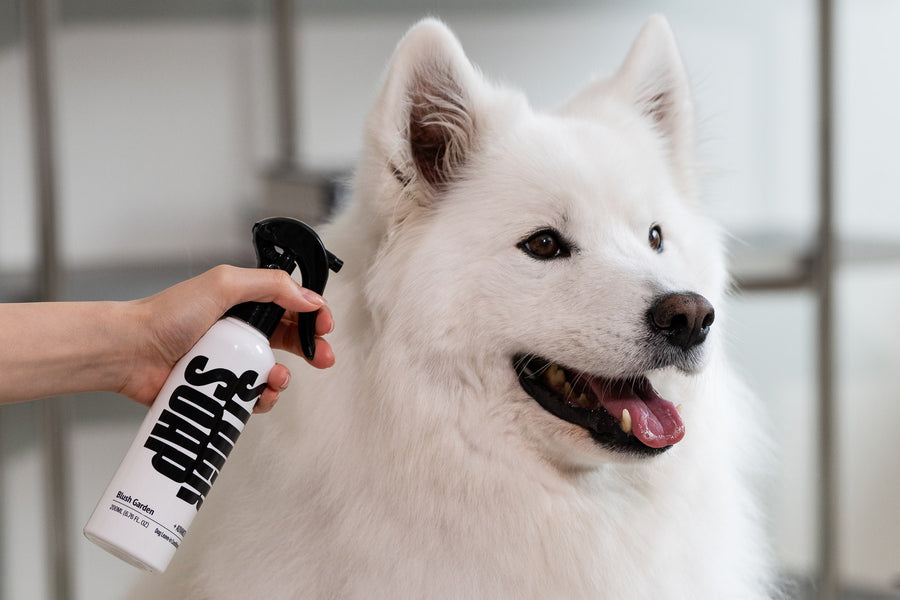
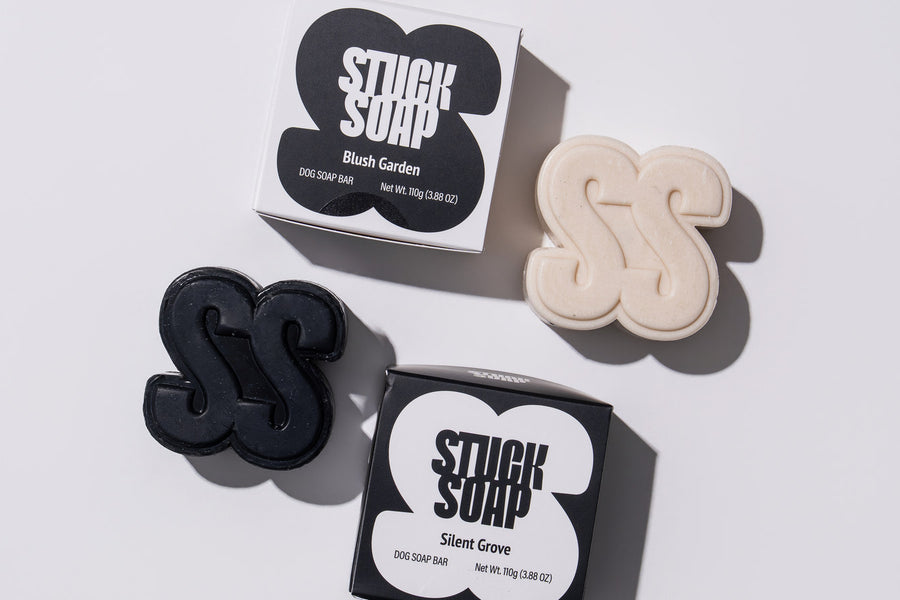
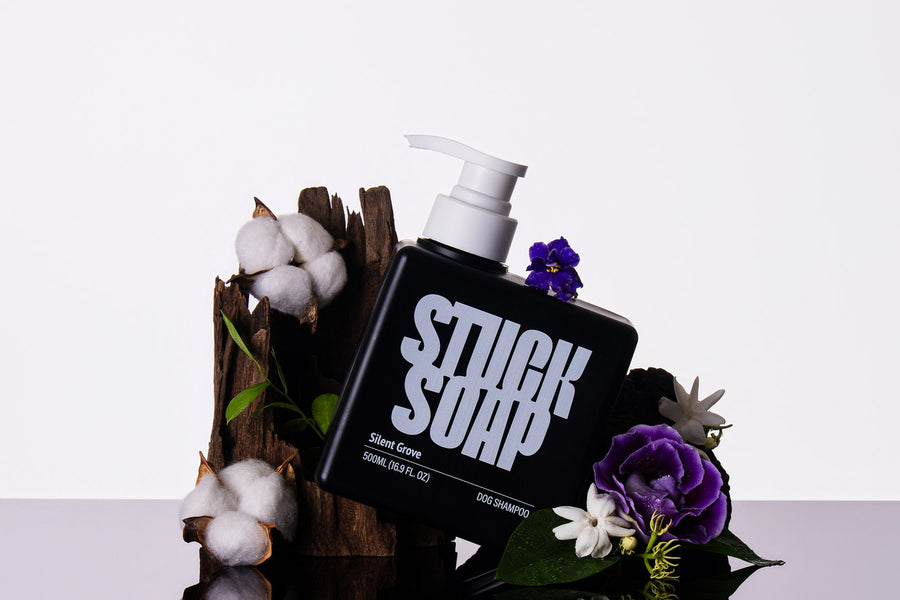
Let's be transparent: STUCK SOAP does not use black sesame in our products. We are including it here because it captures a bigger K-Beauty idea we do stand behind, that gentle, plant-based, pH-balanced formulas which respect the skin barrier are the smartest foundation for a healthy coat.
The botanicals we actually build around are Jeju Island heroes with strong track records for skin. We use antioxidant-rich Jeju green tea, glossy, conditioning camellia oil, and soothing Centella Asiatica (the famous K-Beauty "cica" ingredient). Together they are designed to cleanse gently, support the skin barrier, and leave the coat soft, all in a vegan, pH-balanced formula.
Think of black sesame as an interesting ingredient to explore in the kitchen with your vet's blessing, and STUCK SOAP as the barrier-first grooming step you can rely on at bath time.
Frequently Asked Questions
Can dogs eat black sesame seeds?
Black sesame seeds are not toxic to dogs, but they are not a necessary part of a balanced diet. They are high in fat, tend to pass through undigested (so the benefit is limited), and pose a minor choking risk. An occasional tiny amount is usually fine for a healthy dog, but seeds like chia or pumpkin are generally better options.
Is sesame oil safe for dogs?
In small amounts, plain food-grade sesame oil is generally considered safe and can supply skin-friendly linoleic acid and vitamin E. Because it is a concentrated fat, avoid it for dogs prone to pancreatitis or weight gain, introduce it slowly, and check with your veterinarian first.
Does black sesame help a dog's coat?
It may help indirectly. Sesame oil's linoleic acid supports the skin barrier and ceramide production, which is linked to a softer, less flaky coat, and its vitamin E adds antioxidant support. That said, there are no canine trials on black sesame specifically, and a complete diet with quality essential fatty acids matters far more than any single seed.
How much sesame oil can I give my dog?
A common guideline is about half a teaspoon for small dogs and up to one teaspoon for large dogs, a few times a week, mixed into food and introduced gradually. Always confirm the right amount with your veterinarian based on your dog's size, weight, and health.
Does STUCK SOAP contain black sesame?
No. STUCK SOAP is formulated around Jeju green tea, camellia oil, and Centella Asiatica. Black sesame is part of the broader K-Beauty ingredient conversation, not our formula, but it reflects the same barrier-first, gentle-ingredient philosophy we follow.
The Bottom Line
Black sesame earns its K-Beauty reputation honestly: it is genuinely rich in antioxidant lignans, vitamin E, and a linoleic-acid-heavy oil. For dogs, the most credible benefit is not mystical, it is that linoleic acid supports the skin barrier, and a healthy barrier is the real secret behind a soft, shiny coat. Use it thoughtfully, in tiny amounts, with your vet's input, and never as a replacement for a balanced diet or veterinary care.
And if you would rather skip the DIY guesswork, that is exactly what a gentle, barrier-first grooming routine is for.
Sources & References
- Rooted in Ritual, Rising in Wellness: The Story of Black Sesame — News-Medical
- Phytochemical Contents and Antioxidant Activities of Black and White Sesame Seeds — BioMed Research International (PMC)
- Role of Dietary Fatty Acids in Dogs & Cats — Today's Veterinary Practice
- Linoleic Acid Intake and Skin Barrier Properties in Healthy Dogs (Pilot Study) — Journal of Applied Animal Nutrition, Cambridge Core
- Can Dogs Eat Sesame Seeds? Vet-Verified Nutrition Facts — Dogster
- Black Sesame: Are the Viral Health Claims True? Here's the Science — ScienceAlert
Give Your Dog the K-Beauty Spa Treatment
Black sesame points to a bigger K-Beauty truth: a soft, shiny coat starts with a calm, well-supported skin barrier. STUCK SOAP brings that philosophy to bath time with Jeju green tea, camellia oil, and Centella Asiatica in a gentle, pH-balanced, vegan formula.
Shop Stuck Soap →Vegan · pH-Balanced · Jeju Island Botanicals · Zero Waste