


Fermented skincare is everywhere in the K-Beauty world right now. Galactomyces, Bifida ferment lysate, Lactobacillus — these tongue-twisting ingredients headline the most-talked-about serums, essences, and toners in Seoul and beyond. The promise is striking: brighter, more resilient skin powered by tiny molecules that fermentation has pre-digested for deeper absorption.
So a fair question lands on every dog parent's mind once they fall into the K-Beauty rabbit hole: could fermented skincare for dogs be the next chapter of this trend? If postbiotics and ferments are reshaping how humans care for their skin barrier, is there science to suggest they could do something similar for our pups?
The short answer is yes — and the research is more advanced than most pet owners realize. Veterinary dermatology has been quietly studying the canine skin microbiome and probiotic-derived ingredients for years. Below, we'll unpack what fermented skincare actually is, what current canine research says, and how the K-Beauty philosophy of microbiome-friendly grooming fits into the way you bathe your dog at home.
Table of Contents
What Is Fermented Skincare? A K-Beauty Primer
Fermentation in skincare borrows from a tradition that Korea has practiced for centuries with foods like kimchi, doenjang, and makgeolli. When microorganisms (yeasts, lactobacilli, bifidobacteria) break down a base ingredient, they release a cocktail of smaller, more bioavailable molecules: amino acids, vitamins, organic acids, peptides, and enzymes.
In a K-Beauty serum, that translates into ingredients with strange-sounding names but clear functions:
- Galactomyces ferment filtrate — derived from sake-style yeast fermentation, prized for brightening, refining texture, and supporting a healthy skin barrier.
- Bifida ferment lysate — produced from Bifidobacterium cultures, then broken down (lysed) to release barrier-supporting metabolites. Clinical research published in the Journal of Cosmetic Dermatology (Wang et al., 2023) shows BFL can upregulate genes responsible for the skin's physical barrier, including filaggrin, loricrin, and aquaporin-3.
- Lactobacillus ferment — a hydrating, soothing postbiotic that helps balance the skin's microbiome.
- Saccharomyces ferment — antioxidant-rich, often used to refine pores and support glow.
What ties them together is the K-Beauty concept of "feeding" the skin rather than stripping it. Fermentation produces smaller molecules that penetrate more deeply, and it generates antioxidants and probiotic-derived peptides that work with the skin's own microbial community instead of against it. That philosophy is why fermented skincare has become a signature of modern Korean beauty.
Your Dog Has a Skin Microbiome Too
Here's the part most dog owners haven't heard yet: your dog's skin isn't just skin. It's an entire ecosystem of bacteria, fungi, and yeasts that live in balance with the body — known as the canine skin microbiome.
A 2014 study in PLOS ONE by Hoffmann and colleagues was one of the first to map this microbiome in healthy and allergic dogs. It found that healthy dog skin hosts a rich, diverse community of microbes — and that allergic or inflamed skin shows reduced diversity and an overgrowth of opportunistic species like Staphylococcus. More recent research using next-generation sequencing has confirmed the same pattern: disrupted microbial balance, known as dysbiosis, is closely linked to canine atopic dermatitis and chronic skin issues.
This matters because the way you bathe your dog can either support that microbial balance or disrupt it. Harsh detergents, ingredients far from the dog's natural skin pH, and over-bathing can all strip the protective layer and reduce the microbial diversity your dog depends on. A bath that respects the microbiome looks more like the K-Beauty approach: gentle cleansing, pH consideration, and ingredient choices that don't pick fights with the skin's natural defenses.
What Research Says About Postbiotics for Dogs
This is where it gets exciting. Veterinary research is increasingly looking at postbiotics — the metabolites and broken-down cell components left behind after probiotic fermentation — as therapeutic tools for canine skin.
A 2024 study published in Veterinary Dermatology (Grant et al.) explored how daily oral probiotic and postbiotic supplementation affected the canine skin microbiota in dogs with atopic dermatitis. Using long-read 16S rRNA gene sequencing, researchers found measurable shifts in microbial composition and signs of improved skin health.
On the topical side, a 2023 paper in PMC studied a topical probiotic formulation containing spores of multiple Bacillus species and demonstrated rapid wound healing in canine keratinocyte cells. And new 2025 research on culture supernatants from canine-derived Bifidobacterium animalis subsp. lactis DS008 showed reductions in inflammatory cytokines linked to itching and skin irritation in dog skin cells.
None of these studies make grand consumer claims. But together, they point in one direction: postbiotic and fermented compounds have real biological activity on dog skin, particularly around inflammation, barrier function, and microbial balance. The clinical applications in pet care are still emerging, but the foundation is being laid.
For now, the most practical takeaway for dog owners isn't "buy a fermented serum for your dog" — it's understanding why microbiome-friendly grooming matters, and choosing products built around that philosophy.
How K-Beauty's Fermentation Philosophy Applies to Dog Grooming
You don't need a bottle labeled "galactomyces" to give your dog the benefit of K-Beauty thinking. The philosophy translates into four core principles you can apply at bath time:
1. Respect the skin barrier
The K-Beauty obsession with skin barrier integrity applies directly to dogs. Sulfate-heavy, alkaline shampoos can strip the lipid layer that protects against irritants and pathogens. Choose pH-balanced formulas designed for the canine skin range (around 6.5–7.5, slightly more neutral than human skin).
2. Feed, don't strip
Fermented K-Beauty thinking is about adding beneficial inputs — antioxidants, amino acids, plant peptides — rather than aggressive surfactants that scrub the skin clean of everything. For dog shampoo, that means looking for botanical ingredients with known skin-supporting profiles: green tea extract (rich in antioxidant polyphenols), Centella asiatica (calming and barrier-supportive), and camellia oil (a Korean "liquid gold" for coat sheen and moisture).
3. Choose plant-based, vegan formulas where possible
K-Beauty has been a leader in moving away from harsh chemical surfactants and toward plant-derived cleansing agents. The same logic helps preserve your dog's microbiome diversity — vegan, plant-based dog shampoos are generally gentler on the lipid layer that microbes call home.
4. Don't over-bathe
This is the most important and most overlooked principle. Even the best fermented serum on Earth can't undo daily over-cleansing. Most healthy dogs do well bathed every 3–6 weeks. Over-bathing strips the microbiome faster than any formulation can rebuild it.
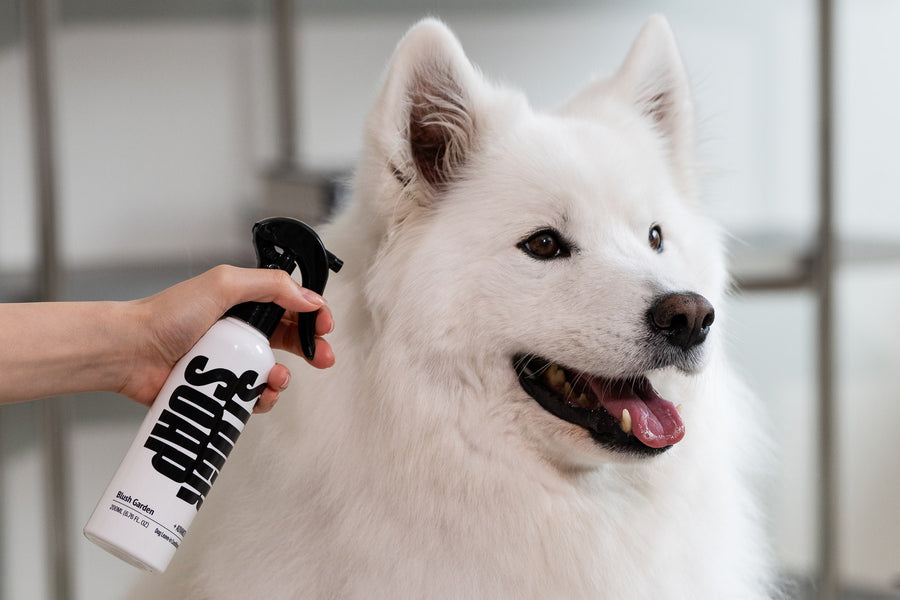
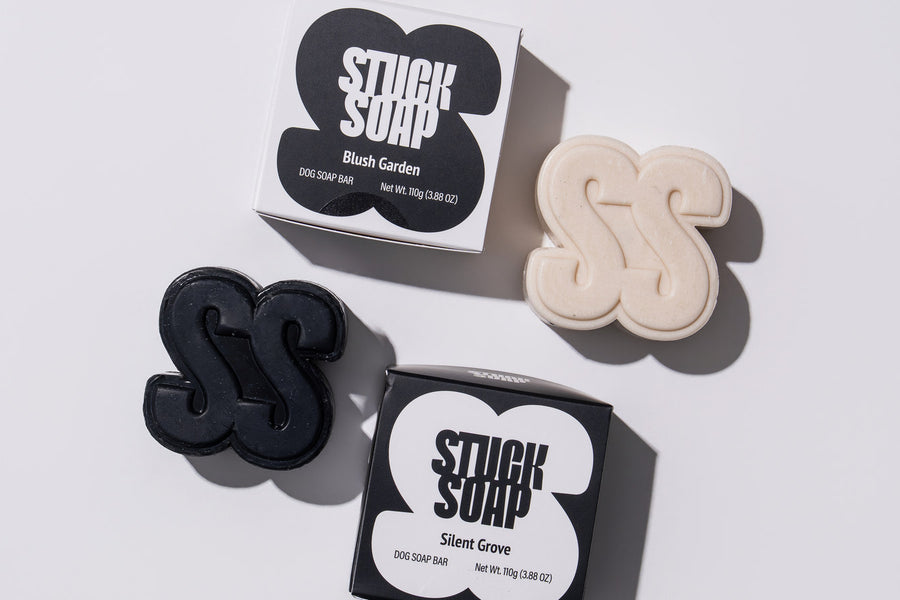
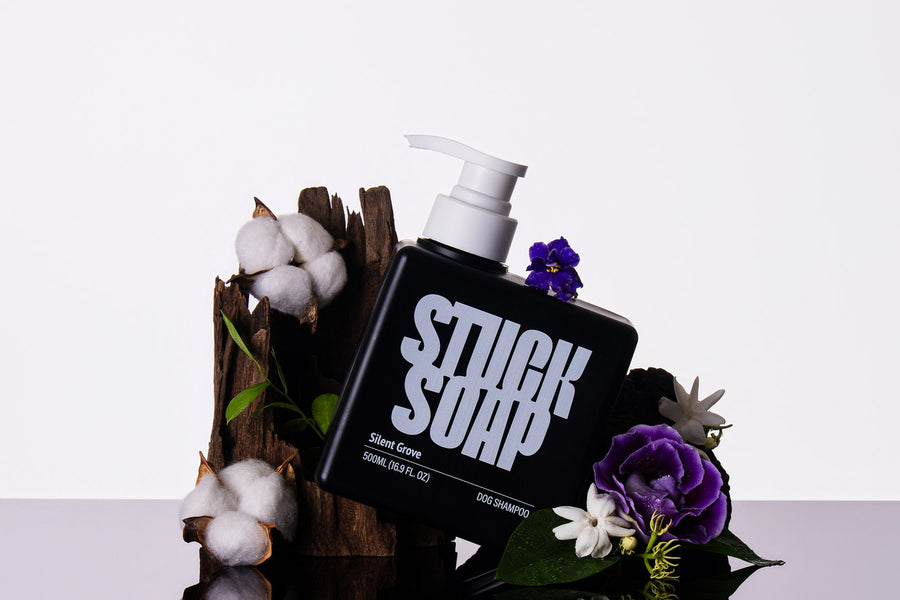
This is exactly the philosophy STUCK SOAP was built around. Our K-Beauty inspired vegan dog shampoos and shampoo bars are pH-balanced for canine skin, formulated with Jeju Island botanicals — green tea, Camellia oil, and Centella asiatica — and free from the harsh sulfates that disrupt the skin barrier. While we don't currently use fermented ingredients in our formulas, our entire approach to ingredient selection mirrors the K-Beauty fermentation philosophy: gentle, microbiome-respectful, barrier-supportive.
Practical Tips: Microbiome-Friendly Bath Routine
Want to put this into practice? Here's a simple K-Beauty inspired bath routine that respects your dog's skin microbiome:
- Brush first. Removes loose hair, dander, and dirt — making your shampoo work less aggressively.
- Pre-rinse with lukewarm water. Hot water disrupts the lipid layer faster. Think of warm-tepid temperature, not steamy.
- Use a pH-balanced, plant-based shampoo. Apply, lather gently with your fingertips (not nails), and avoid scrubbing the skin raw.
- Rinse thoroughly. Residue left on the skin can trap bacteria and trigger irritation. Rinse longer than you think you need to.
- Pat dry, don't rub. Towel-dry by patting and pressing. If your dog tolerates a low-heat dryer, use it on the lowest setting from a distance.
- Brush the coat as it dries. Helps distribute natural oils back across the skin and coat — your dog's own version of post-cleansing replenishment.
Pair that routine with a moderate bathing schedule (every 3–6 weeks for most healthy dogs) and you've essentially adopted the K-Beauty fermentation philosophy without needing a single fermented ingredient on the label.
The Future of Fermented Pet Care
Fermented and postbiotic ingredients are very likely the next frontier in premium pet care. As veterinary research deepens — particularly around microbiome modulation and topical postbiotics — we expect to see more pet care formulations incorporating fermentation-derived ingredients. K-Beauty for humans is roughly five years ahead of K-Beauty for dogs, but the gap is closing fast.
For now, the best move dog owners can make is to internalize the underlying philosophy: your dog's skin is a living ecosystem, and how you bathe matters as much as how often. Choose products built on that respect, and the rest tends to take care of itself.
Frequently Asked Questions
Is fermented skincare safe for dogs?
Fermented and postbiotic ingredients are generally considered low-irritation in human cosmetics, and emerging veterinary research suggests similar safety in dogs. However, no product designed for human skin should be used directly on dogs without veterinary guidance, because of differences in skin pH and microbiome composition.
Do any dog shampoos use galactomyces or bifida ferment lysate?
A small but growing number of premium pet care brands are beginning to explore fermented ingredients. As of 2026, the category is still early. Most K-Beauty inspired dog shampoos focus on related principles — plant-based formulas, pH balance, and barrier support — rather than fermented postbiotics specifically.
What is the canine skin microbiome?
The canine skin microbiome is the community of bacteria, fungi, and yeasts living on a dog's skin. Healthy dogs typically have diverse microbial populations, while dogs with allergies or chronic skin disease often show reduced diversity and overgrowth of certain species like Staphylococcus.
Can probiotics help my dog's skin?
Recent veterinary studies, including 2024–2025 work published in Veterinary Dermatology, suggest that oral probiotic and postbiotic supplementation can positively influence the canine skin microbiome. Topical probiotic and postbiotic applications are an active area of research. Always consult your veterinarian before starting any probiotic protocol.
How often should I bathe my dog to support the skin microbiome?
Most veterinarians recommend bathing healthy dogs every 3–6 weeks, depending on coat type, activity level, and skin condition. Over-bathing is one of the most common ways to disrupt the skin microbiome, so resist the urge to bathe more than necessary.
Final Thoughts
Fermented skincare in K-Beauty has rewritten how we think about caring for human skin. The same paradigm — feeding the skin, respecting the microbiome, supporting the barrier instead of stripping it — is starting to shape how the most thoughtful pet care brands approach dog grooming.
You don't need to wait for fermented dog serums to hit the shelves. By choosing a pH-balanced, plant-based, K-Beauty inspired shampoo and adopting a gentle bath routine, you're already practicing microbiome-friendly grooming. That's the heart of the fermentation philosophy, translated for your dog.
Sources & References
- The Pivotal Role of Bifida Ferment Lysate on Reinforcing Skin Barrier Function — Wang et al., Journal of Cosmetic Dermatology (2023)
- The Skin Microbiome in Healthy and Allergic Dogs — Hoffmann et al., PLOS ONE
- The Effect of Daily Oral Probiotic and Postbiotic Supplementation on the Canine Skin Microbiota — Grant et al., Veterinary Dermatology (2024)
- Topical Probiotic Formulation Promotes Rapid Healing in Dog Keratinocyte Cells — PMC
- Effects of Canine-Derived Bifidobacterium animalis subsp. lactis DS008 Culture Supernatants on In Vitro Canine Keratinocytes — PMC
- Microbiota Modulation as an Approach to Prevent Antimicrobials in Canine Atopic Dermatitis — MDPI Biomedicines
Give Your Dog the K-Beauty Spa Treatment
STUCK SOAP is built on the same K-Beauty principles that power fermented skincare: gentle, pH-balanced, barrier-respecting formulas with Jeju Island botanicals like green tea, Camellia oil, and Centella asiatica. It's microbiome-friendly grooming, designed for your dog's skin from the ingredient list out.
Shop Stuck Soap →Vegan · pH-Balanced · Jeju Island Botanicals · Zero Waste