


If you have spent any time on the K-Beauty side of TikTok lately, you have heard the word heartleaf. It is the calming ingredient on every Korean shelf, in nearly every new toner, and at the center of the K-Beauty sensitive-skin conversation in 2026. So a question is starting to pop up in dog-parent communities too: could heartleaf for dogs ever be a thing?
It is a fair question. Many of the most beloved K-Beauty ingredients (centella asiatica, green tea, camellia oil) have shown real benefits when reformulated for canine skin. Heartleaf, also known as Houttuynia cordata or eoseongcho (어성초) in Korean, is part of that same family of gentle, plant-forward botanicals built around skin barrier health.
This guide unpacks what heartleaf actually is, why K-Beauty cannot stop talking about it, and what the early research suggests for dogs with sensitive, reactive, or hot-spot-prone skin. We will be clear about what is proven, what is still being studied, and where heartleaf fits into the broader K-Beauty calming movement that brands like STUCK SOAP are bringing to premium pet grooming.
Table of Contents
- What Is Heartleaf (Houttuynia Cordata)?
- Why K-Beauty Is Obsessed With Heartleaf in 2026
- The Science: Heartleaf's Active Compounds
- Heartleaf for Dogs: What the Early Research Suggests
- Safety, Caveats, and What's Still Being Studied
- How STUCK SOAP Fits Into the K-Beauty Calming Movement
- Frequently Asked Questions
- Sources & References
What Is Heartleaf (Houttuynia Cordata)?
Heartleaf is a flowering plant native to East Asia, named for the distinctive shape of its leaves. In Korea it has been used in traditional herbal medicine for centuries, particularly for skin abscesses, inflammation, and seasonal irritation. The Korean name eoseongcho roughly translates to "fishy-smelling plant" because of its sharp, herbal aroma in raw form.
In modern K-Beauty, that raw smell is stripped out and the active compounds are extracted into a clear, gentle liquid that lives in toners, ampoules, masks, and (more recently) cleansers. The result is one of the most-formulated plant extracts in Korean skincare today.
For context: in human-facing K-Beauty, heartleaf is most commonly used for acne-prone, redness-prone, and sensitive skin types. Brands like Anua, Abib, and SKIN1004 have built bestselling product lines around it. According to industry coverage in 2026, heartleaf is one of the five most popular K-Beauty ingredients of the year, alongside PDRN, niacinamide, ceramides, and snail mucin.
Why K-Beauty Is Obsessed With Heartleaf in 2026
Korean skincare in 2026 is leaning hard into one philosophy: soothing comes first. After years of strong actives and aggressive exfoliation trends, the pendulum has swung toward barrier repair and ingredient gentleness. That is the world heartleaf was built for.
Editors and formulators tend to compare heartleaf to its more famous cousin, centella asiatica (cica). Both are calming powerhouses, but they work slightly differently. Centella is broader and more redness-focused, while heartleaf is sharper on the bacterial and inflammatory side of breakouts and irritation. For skin that is both reactive AND prone to bumps or hot spots, heartleaf is often considered the better match.
That distinction matters for pet parents too, because the dogs who struggle most with their skin are often the same ones dealing with both sensitivity and recurring bacterial flare-ups. Yeasty Frenchies. Allergy-prone Labs. Itchy doodles with hot spots that keep coming back. The profile of who K-Beauty is reformulating heartleaf for in 2026 has a lot of overlap with who dog dermatologists see in clinic every week.
The Science: Heartleaf's Active Compounds
Heartleaf is not magic. It is a plant with a well-studied chemical profile. The major active compounds include:
- Quercetin and hyperin (quercetin-3-galactoside): Flavonoid antioxidants that help neutralize free radicals and quiet inflammatory signaling.
- Quercitrin: Another flavonoid linked to soothing effects on irritated skin.
- Decanoyl acetaldehyde (sometimes called houttuynin): A volatile compound responsible for heartleaf's natural antibacterial activity, particularly against acne-causing and skin-infection bacteria.
Lab studies on human skin cells show that Houttuynia cordata extract can reduce pro-inflammatory cytokine production by significant margins by inhibiting the NF-κB signaling pathway, which is one of the central pathways involved in skin inflammation. A 2024 study on Houttuynia cordata fermentation broth specifically demonstrated reduced inflammatory response and barrier damage in LPS-stimulated skin models.
Other K-Beauty research has tracked moisture improvements of around 23% over four weeks in human users, attributed to heartleaf's role in supporting ceramide production and regulating transepidermal water loss. In plain English: it appears to help skin hold onto water and stay calm.
Heartleaf for Dogs: What the Early Research Suggests
Let's be upfront: there are not yet large-scale clinical trials on heartleaf shampoo or topical heartleaf for companion dogs. But there is a growing body of supporting research worth knowing about.
According to a 2025 review published in Animal Diseases, Houttuynia cordata extract has been studied as a feed additive and antimicrobial alternative in livestock, where it demonstrated dose-dependent activity against pathogens such as Salmonella and Staphylococcus aureus. The flavonoid and volatile oil compounds (quercetin, hyperoside, 2-undecanone) were credited for those effects.
That research matters for dogs because Staphylococcus pseudintermedius is the most common bacterium identified in canine bacterial skin infections (pyoderma), and antimicrobial resistance in canine skin pathogens is a growing problem documented in veterinary literature. Plant-based antimicrobials that can complement (not replace) veterinary treatment are an active area of research.
Houttuynia cordata is not listed as toxic to dogs or cats by major pet poison databases. The main practical caveat is that its strong herbal smell tends to discourage pets from voluntarily ingesting the raw plant, which is actually fine — topical use is where the K-Beauty interest lies anyway.
So where could heartleaf realistically show up in canine skincare? The most likely fit is in gentle, calming topical formulas for dogs with sensitive or reactive skin: shampoos, sprays, and barrier-supporting rinses formulated alongside known canine-safe soothing ingredients like colloidal oatmeal, aloe, and centella asiatica.
Safety, Caveats, and What's Still Being Studied
Three things to keep in mind before chasing a heartleaf product for your dog:
1. Formulation matters more than the ingredient name. A toner designed for a human face is not the same thing as a dog shampoo. Even a gentle K-Beauty extract becomes problematic in the wrong pH, the wrong surfactant base, or with added human-skincare actives (like AHA/BHA acids or strong fragrances) that dogs simply do not need.
2. Hot spots and skin infections still need a vet. Heartleaf has interesting antimicrobial properties, but it is not a treatment for active bacterial skin infections in dogs. If your dog has a raw, weeping, or spreading hot spot, please see your vet. Calming ingredients support healthy skin; they do not replace medication for active disease.
3. Patch test new products. Even with the gentlest, most well-formulated K-Beauty-inspired dog shampoo, introduce it slowly. Wash a small area first, watch for 24 hours, and only then move to a full bath. This is the same principle K-Beauty preaches for sensitive human skin — and it transfers cleanly to your dog.
How STUCK SOAP Fits Into the K-Beauty Calming Movement
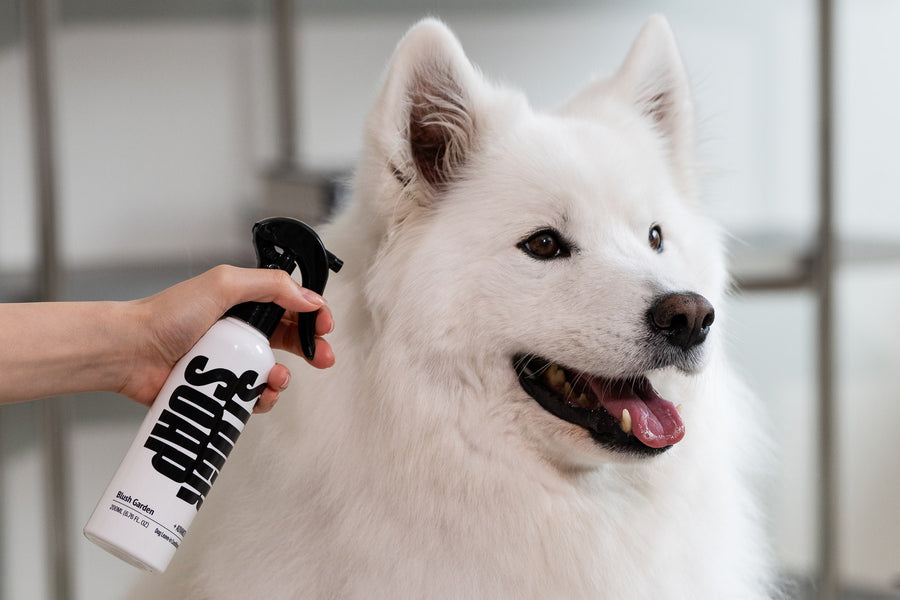
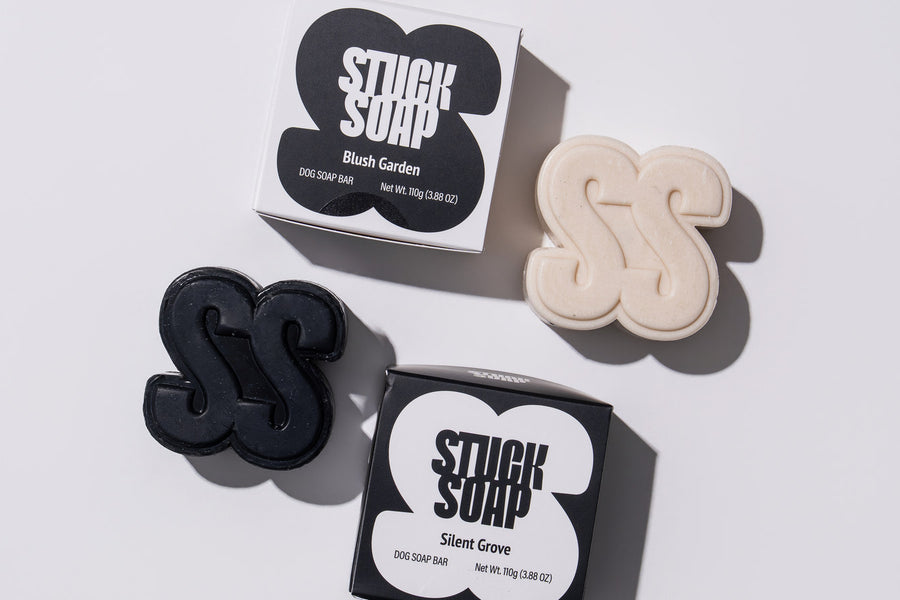
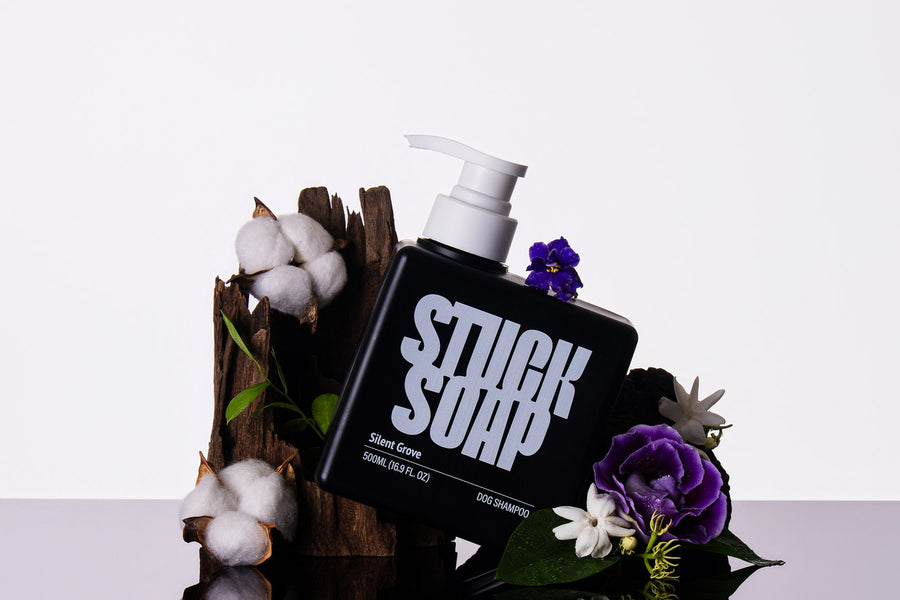
STUCK SOAP was built on the same core idea driving the heartleaf trend in human K-Beauty: gentle, plant-forward, skin-barrier-first formulation. While our current Liquid Shampoo and Shampoo Bar are not built around heartleaf specifically, they are built around the same calming-ingredient philosophy.
The hero botanicals in STUCK SOAP are sourced from Jeju Island, Korea, and chosen for the same reasons K-Beauty formulators reach for heartleaf:
- Centella asiatica: The classic cica calming ingredient, used directly in our formulas for sensitive, reactive skin.
- Green tea (Camellia sinensis): An antioxidant-rich K-Beauty staple that soothes and protects.
- Camellia oil: Korea's "liquid gold," used in our formulas for coat softness and gentle conditioning.
The result is a pH-balanced, vegan, sulfate-free wash designed around the same principle the K-Beauty world is finally embracing for humans: the best skincare is the one that respects the skin barrier first and brings in actives second. That is the K-Beauty calming philosophy translated for your dog's coat and skin.
If heartleaf-specific dog formulations ever pass the bar we set for ingredient sourcing, pH safety, and canine-skin formulation expertise, we will absolutely look at it. For now, we are watching the human K-Beauty heartleaf trend closely and applying its underlying lessons (gentleness, layering, barrier-first) to the formulas we already make.
Frequently Asked Questions
Is heartleaf (Houttuynia cordata) safe for dogs?
Houttuynia cordata is not listed as toxic to dogs by major pet poison databases. The plant has a strong herbal odor that usually discourages dogs from eating it in the wild. Topical, well-formulated use in pet-safe skincare appears low-risk based on current data, but no ingredient should be applied to broken skin or active infections without veterinary guidance.
What's the difference between heartleaf and centella asiatica for dogs?
Both are calming K-Beauty botanicals. Centella asiatica (cica) is broader and more redness-focused, while heartleaf is sharper on the bacterial and inflammatory side of irritation. Centella has a longer track record in canine skincare formulation. Heartleaf is newer to the pet-care conversation and is still mostly studied in human and livestock contexts.
Can I use a K-Beauty heartleaf toner or essence on my dog?
No. Human K-Beauty products are formulated for human facial skin pH (around 4.7-5.5) and often contain fragrances, alcohols, or actives that are unsuitable for dogs. Dog skin has a different pH and a thinner stratum corneum. Always use products specifically formulated for canine skin.
What dog skin issues might heartleaf help with in the future?
Based on current research in human skin and livestock studies, heartleaf shows the most promise in formulations targeting sensitive, reactive skin and recurring bacterial flare-ups. That overlaps with dogs prone to allergies, mild yeast issues, or repeated hot spots. Larger canine-specific studies are still needed.
Does STUCK SOAP contain heartleaf?
Our current formulas do not contain heartleaf. They are built around centella asiatica, green tea, and camellia oil — three of the K-Beauty calming pillars with well-established profiles for sensitive skin. We follow the heartleaf research closely and may explore future formulations if the canine-specific data supports it.
The Bottom Line
Heartleaf is one of the most exciting K-Beauty ingredient stories of 2026. Its anti-inflammatory and antibacterial profile makes it a natural conversation starter in pet-skincare circles, especially for dog parents whose pups struggle with sensitive, reactive, or flare-prone skin.
The honest take: heartleaf for dogs is a "potential" story right now, not a "proven" one. The chemistry is promising, the human and livestock research is encouraging, and the philosophy aligns perfectly with how serious K-Beauty pet brands already formulate. But until canine-specific clinical data is published, the smartest move for dog parents is to focus on K-Beauty ingredients with established canine profiles (centella, green tea, camellia oil) while keeping a friendly eye on heartleaf as the next chapter in K-Beauty dog skincare.
Sources & References
- Inhibition of LPS-Induced Skin Inflammatory Response and Barrier Damage via MAPK/NF-κB Signaling Pathway by Houttuynia cordata Fermentation Broth — NIH/PMC
- Houttuynia cordata extract in pig production: a multifaceted alternative to antibiotics — Animal Diseases (Springer Nature, 2025)
- Antimicrobial Resistance and Risk Factors of Canine Bacterial Skin Infections — NIH/PMC
- Antimicrobial mechanism of semi-bionic extracts of three traditional medicinal plants — Frontiers in Veterinary Science
- Heartleaf: K-Beauty Guide 2026 — Mirai Skin
- What's Heartleaf? The Newest K-Beauty Ingredient — PureWow
Give Your Dog the K-Beauty Spa Treatment
Heartleaf may be next, but the K-Beauty calming philosophy is already in your dog's bath. STUCK SOAP brings the same Jeju Island botanicals K-Beauty trusts for sensitive human skin (centella asiatica, green tea, camellia oil) into a pH-balanced, vegan formula designed for your dog's coat.
Shop Stuck Soap →Vegan · pH-Balanced · Jeju Island Botanicals · Zero Waste