


If you have ever scrolled through K-Beauty skincare, you have seen honey everywhere: honey sleeping masks, royal jelly ampoules, propolis essences. Korean formulators prize honey for one big reason. It is a natural humectant that pulls moisture into the skin and locks it there, giving that famous dewy, bouncy "chok chok" glow. But here is a question more dog owners are starting to ask: if honey for dogs' skin works on the same biological principles, could this sweet pantry staple help your pup's dry, itchy, or irritated skin too?
It turns out the science is more promising than you might expect. Honey, and especially medical-grade Manuka honey, has a long, well-documented history in veterinary wound care. Vets have used it for decades to manage stubborn wounds, calm inflammation, and fight infection without antibiotics.
In this guide, we will unpack what makes honey special in K-Beauty, what the veterinary research actually says about honey for canine skin, and how to use it safely at home. We will also look at where the broader K-Beauty-for-dogs trend, the same philosophy behind STUCK SOAP, fits into all of this.
Table of Contents
Why K-Beauty Loves Honey
Honey has been a fixture in Korean "hanbang" (traditional herbal) beauty for centuries, and modern K-Beauty brands have only made it more popular. The reason comes down to a handful of properties that map almost perfectly onto what skin needs to look and feel healthy.
First, honey is a powerful natural humectant. That means it attracts and binds water from the environment into the skin. K-Beauty obsesses over hydration because plump, well-hydrated skin looks smoother and functions better. Honey also helps prevent trans-epidermal water loss (TEWL), the process by which skin quietly leaks moisture into the air. By slowing that loss, honey helps the skin barrier hold onto what it has.
Second, honey is naturally anti-inflammatory. It can calm redness and soothe aggravated skin at a cellular level, which is why it shows up in so many "calming" and "soothing" Korean formulations. Third, honey is rich in antioxidants and has gentle antimicrobial properties that support clearer, more balanced skin.
Put those together and you get an ingredient that hydrates, soothes, and protects all at once. That is the K-Beauty dream in a single golden drop. And importantly, these benefits are not unique to human skin. The skin barrier in dogs works on the same fundamental biology, which is exactly why the conversation is shifting toward pets.
The Science: Honey and Dog Skin
Your dog's skin is its largest organ, and like yours, it relies on a healthy barrier to stay comfortable and protected. When that barrier is compromised, by allergies, dry weather, or over-bathing, dogs can develop itchiness, redness, flaking, and irritation. This is where the humectant and soothing qualities of honey become interesting.
Because honey draws and holds moisture, a thin topical application on irritated, dry patches may help create a more hydrated, comfortable environment for the skin to recover. Its anti-inflammatory action is the same property that helps calm redness on human skin. For dogs dealing with minor, localized irritation, that soothing effect is the most relevant benefit.
Honey is also intensely antimicrobial. On minor skin issues, it can help keep the area clean and discourage the bacterial growth that often turns a small irritated spot into a bigger problem. Veterinary and pet-care sources note that for red, irritated skin tied to allergies, gently cleaning the area and applying a thin layer of raw honey may help soothe and support the skin.
A quick note on honesty: honey is not an ingredient in STUCK SOAP products, so we are exploring its potential here rather than making product claims. The point is that honey illustrates a bigger truth. The same gentle, barrier-friendly ingredients K-Beauty uses on human skin tend to translate beautifully to dogs.
Manuka Honey and Wound Healing in Dogs
If regular honey is interesting, Manuka honey is the headliner. Manuka honey comes from bees that pollinate the Manuka bush in New Zealand and Australia, and it has earned a genuine place in veterinary medicine, not just wellness blogs.
The secret is a compound called methylglyoxal (MGO), which forms from dihydroxyacetone in Manuka nectar. Low concentrations of MGO inhibit bacterial growth and movement, while higher concentrations actively dehydrate bacteria. This gives Manuka honey broad-spectrum antibacterial action, including against Staphylococcus aureus, a common and stubborn skin pathogen.
When applied to a wound, Manuka honey does several things at once. It creates a moist healing environment and a protective barrier, it helps prevent bacterial infection, and it assists in clearing away damaged and dead tissue that bacteria would otherwise feed on. According to veterinary sources, it has real advantages over topical antibiotics: it works locally with no systemic side effects, and its effectiveness is not reduced by antibiotic-resistant organisms. It can even intensify the effects of antibiotics in drug-resistant cases.
This is why you will find medical-grade Manuka honey wound gels formulated specifically for dogs, horses, and cats. That said, a critical caveat applies. A thin layer on a clean, minor wound can support natural healing, but anything beyond superficial irritation, deep wounds, large areas, signs of infection, needs professional veterinary care first. Honey supports healing; it does not replace your vet.
How to Use Honey on Your Dog Safely
If you want to try honey for a minor, dry, or mildly irritated patch on your dog, a careful, conservative approach is best. Here are practical guidelines drawn from pet-care sources.
Choose the right honey. Use raw, unfiltered honey for general use, or medical-grade Manuka honey for minor wound support. Processed, heavily filtered supermarket honey loses many of its beneficial compounds.
Clean first. Gently clean the affected area with warm water before applying. This removes debris and helps the honey contact the skin directly.
Apply a thin layer. A little goes a long way. Dab a thin layer onto the clean, minor irritation or abrasion. You may need to cover or distract your dog briefly so they do not immediately lick it off, though small amounts of ingested honey are generally safe for healthy adult dogs.
Watch and reassess. Monitor the area. If irritation worsens, spreads, or does not improve within a day or two, stop and call your vet.
Mind the cautions. Honey is high in natural sugars, so it is not appropriate for diabetic dogs or for unlimited snacking. Puppies and dogs with compromised immune systems should avoid raw honey because of a small botulism risk. And as always, check with your vet before introducing anything new, especially if your dog has underlying health conditions.
For everyday skin and coat maintenance, rather than spot-treating, a gentler and more practical route is a well-formulated, pH-balanced shampoo that supports the skin barrier the way K-Beauty ingredients do.
The K-Beauty Approach to Dog Skin
Honey is a perfect example of the bigger idea driving the K-Beauty-for-dogs movement. Korean skincare philosophy is built around gentle, barrier-first ingredients that hydrate and soothe rather than strip and irritate. That philosophy is exactly what sensitive dog skin needs.
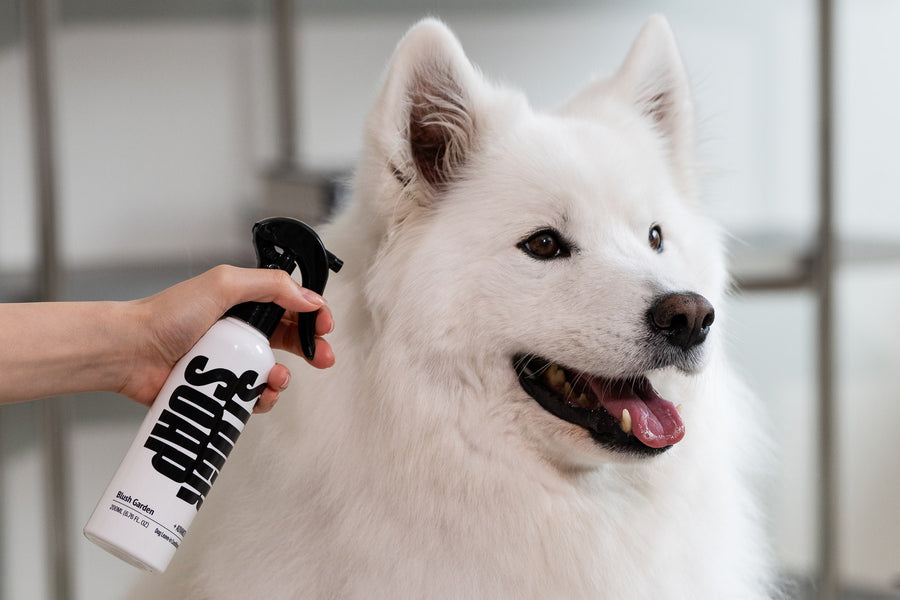
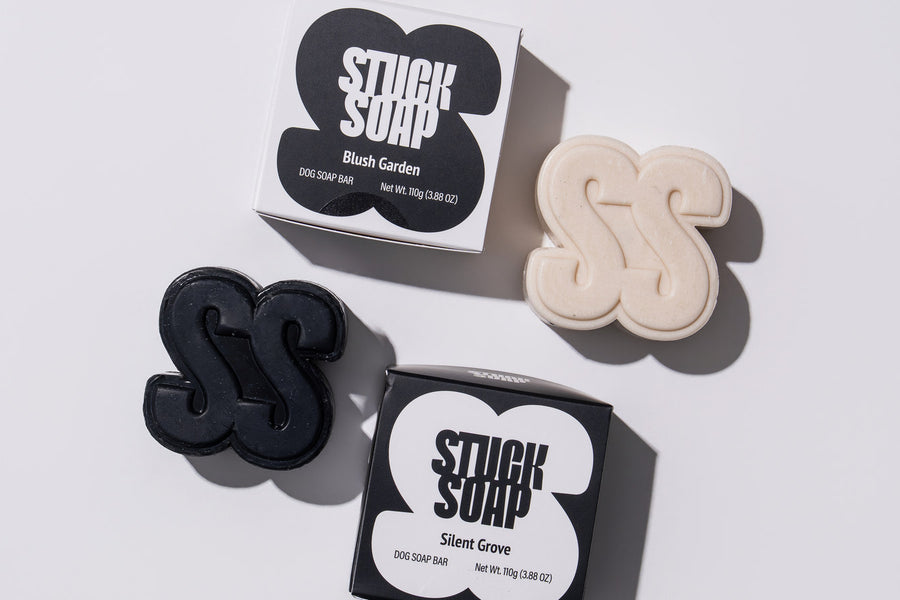
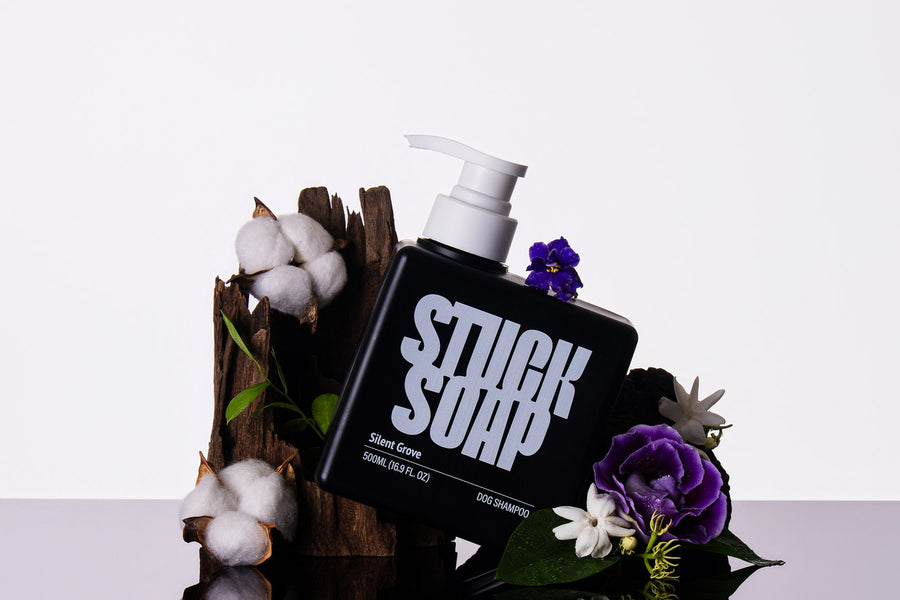
This is the thinking behind STUCK SOAP. Instead of honey, our formulas are built around K-Beauty botanicals sourced from Jeju Island, Korea: Green Tea for antioxidant protection, Camellia Oil for moisture and coat gloss, and Centella Asiatica (the famous "cica" ingredient) for calming and soothing the skin barrier. These are the same hero ingredients trending in human K-Beauty, chosen precisely because they are gentle and effective.
Every STUCK SOAP product is vegan, pH-balanced for dog skin, plant-based, and made without the harsh sulfates and synthetic fragrances that disrupt the barrier. The result is a wash that cleans and deodorizes while respecting the skin, the same "treat the barrier kindly" logic that makes honey such a beloved K-Beauty ingredient. Whether the hero ingredient is honey on a human face or cica in a dog's bath, the underlying principle is identical: gentle ingredients, healthier skin.
Frequently Asked Questions
Is honey safe to put on my dog's skin?
Yes, a thin layer of raw or medical-grade Manuka honey is generally considered safe for minor, localized skin irritation or abrasions on healthy adult dogs. Clean the area first, apply sparingly, and monitor it. For anything beyond superficial irritation, see your vet.
What is the difference between regular honey and Manuka honey for dogs?
Manuka honey contains methylglyoxal (MGO), which gives it stronger, broad-spectrum antibacterial properties. That makes medical-grade Manuka the preferred choice for minor wound support, while raw honey works well as a general soothing humectant.
Can honey help my dog's itchy or allergy-prone skin?
Honey's humectant and anti-inflammatory qualities may help soothe minor irritated or itchy patches topically. Some owners also give small amounts of local honey by mouth in hopes of easing seasonal allergies, though evidence is anecdotal. Always confirm with your vet.
Which dogs should not have honey?
Avoid honey for diabetic dogs, puppies, and dogs with weakened immune systems due to sugar content and a small botulism risk in raw honey. When in doubt, ask your veterinarian first.
Does STUCK SOAP contain honey?
No. STUCK SOAP is vegan and built around Jeju Island botanicals like Green Tea, Camellia Oil, and Centella Asiatica. Honey simply illustrates the same K-Beauty principle our formulas follow: gentle, barrier-friendly ingredients that soothe and hydrate dog skin.
The Bottom Line
Honey has earned its place as a K-Beauty icon for good reason. As a natural humectant with soothing, antioxidant, and antimicrobial properties, it hydrates and calms skin in a way that translates surprisingly well from human faces to canine coats. Manuka honey in particular has real, vet-backed value in minor wound care.
Used thoughtfully, on minor irritations, in thin layers, with your vet's guidance, honey can be a gentle helper in your dog-care toolkit. And it is a beautiful reminder of the bigger principle: the gentlest, most barrier-friendly ingredients are usually the best ones for your dog's skin. That is the heart of the K-Beauty approach, and the heart of STUCK SOAP.
Sources & References
Give Your Dog the K-Beauty Spa Treatment
Honey's gentle, barrier-loving philosophy is exactly what STUCK SOAP is built on. Our vegan, pH-balanced formulas use Jeju Island botanicals like Green Tea, Camellia Oil, and Centella Asiatica to soothe, hydrate, and protect your dog's skin, the K-Beauty way.
Shop Stuck Soap →Vegan · pH-Balanced · Jeju Island Botanicals · Zero Waste