


If your dog's coat looks dull, dry, or lifeless, you're not imagining it. A shiny coat is one of the clearest outward signs of healthy skin underneath, and most "dullness" traces back to one of three things: the skin barrier, the lipid layer that coats each hair shaft, or what you're (or aren't) putting on it. The good news? You can fix all three at home with a calm, ingredient-led routine. That's exactly where the K-Beauty approach shines.
If you've ever wondered how to make your dog's coat shiny the way it looks in glossy editorial photos, the answer isn't more product. It's smarter product. K-Beauty, the Korean skincare philosophy that revolutionized human routines worldwide, prioritizes barrier health, gentle cleansing, and plant-derived nourishing oils. Applied to dogs, these same principles produce the kind of soft, light-reflecting coat you can actually feel under your hand.
In this guide, we'll cover what's really causing your dog's dull coat, which nourishing oils make the biggest difference, the simple K-Beauty inspired routine that ties it all together, and how to know when to call a vet.
Table of Contents
- Why Your Dog's Coat Looks Dull in the First Place
- The K-Beauty Philosophy of Coat Shine
- The Nourishing Oils That Actually Work
- A K-Beauty Inspired Coat Shine Routine
- Common Mistakes That Steal Your Dog's Shine
- How Long Until You See Results
- When to Call the Vet
- Frequently Asked Questions
- Sources & References
Why Your Dog's Coat Looks Dull in the First Place
A healthy hair shaft has a smooth, intact outer cuticle that reflects light. When that cuticle lifts, splits, or dries out, light scatters instead of reflecting, and the coat looks dull, frizzy, or rough. According to VCA Animal Hospitals, a healthy dog coat should appear glossy and pliable, without excessive scaling, dandruff, or oiliness.
So what causes that cuticle to break down? Veterinary dermatologists point to a short list of usual suspects:
- Nutritional gaps, especially deficiencies in essential fatty acids (EFAs), protein, zinc, or copper.
- Over-bathing or harsh shampoos that strip the natural sebum protecting each hair shaft.
- A compromised skin barrier from allergies, irritation, or dry indoor air.
- Underlying medical conditions like hypothyroidism, Cushing's disease, or chronic skin infections.
- Parasites, both internal and external, that drain nutrients and inflame the skin.
The American Kennel Club (AKC) notes that dry, dull coats are one of the most common signs that something is off, either in the diet, the environment, or the grooming routine. The takeaway is simple: shine is built from the inside (nutrition) and the outside (gentle, oil-supportive grooming) at the same time.
The K-Beauty Philosophy of Coat Shine
K-Beauty has obsessed over "glass skin" for years, and the science behind it is just as relevant to dogs. The core idea is that radiance is a barrier-function issue, not a surface-level cosmetic one. You can't fake shine with silicones or topical shellac if the underlying skin is inflamed and the lipid layer is depleted. You have to rebuild the barrier first.
Three K-Beauty principles translate directly to your dog's coat:
1. Cleanse gently, never strip. K-Beauty cleansers are pH-balanced and surfactant-light because over-cleansing damages the skin barrier. The same logic applies to dog shampoo. Dogs have a thinner, more alkaline skin surface than humans, and harsh sulfates and detergents disrupt their lipid layer almost instantly.
2. Layer plant-based nourishment. Korean formulas rely on botanicals like green tea, camellia, ginseng, and centella that deliver antioxidants, fatty acids, and skin-soothing compounds. These same ingredients work beautifully on canine skin, which has many of the same lipid-barrier needs as human skin.
3. Support the lipid layer. Every K-Beauty routine ends with an oil, balm, or occlusive. For dogs, this happens internally through omega-rich diets and externally through shampoos and conditioners formulated with nourishing plant oils that mimic the natural sebum coating each hair shaft.
Translation: a shiny coat is a side effect of a healthy skin barrier and an intact lipid layer. Take care of those, and the shine follows naturally.
The Nourishing Oils That Actually Work
Not all oils are created equal. Some sit on top of the coat and create temporary gloss but offer no real skin benefit. Others penetrate the cuticle, support the barrier, and deliver long-term shine. Here are the standouts, with the science behind why they work.
Camellia Oil (Tsubaki Oil)
Often called Korea's "liquid gold," camellia oil is one of the most prized beauty oils in East Asian skincare. It's roughly 80% oleic acid, the same fatty acid that dominates human sebum, which means it absorbs quickly and reinforces the lipid barrier rather than just coating the hair. Camellia oil also contains natural squalene, a compound that reduces transepidermal water loss and keeps skin (and coat) hydrated longer.
For short-coated breeds like Labradors, Beagles, and French Bulldogs, camellia oil can dramatically reduce the dull, dry look that comes from a depleted sebum layer. For long-coated breeds, it adds slip and softness that makes brushing easier and prevents the friction-induced breakage that dulls the coat over time.
Green Tea Extract (EGCG)
Green tea isn't an oil, but it belongs in this conversation because it protects the oils your dog already has. The polyphenols in green tea, especially EGCG (epigallocatechin gallate), are powerful antioxidants that neutralize the free radicals that oxidize sebum and dull the coat. K-Beauty has used Jeju Island green tea for decades because of its unusually high antioxidant concentration.
For dogs, this means less oxidative damage to the hair cuticle, calmer skin underneath, and a coat that holds its luster between baths.
Omega-3 Fatty Acids (EPA and DHA)
This is the inside half of the equation. A landmark study published in The Veterinary Journal evaluated dogs with poor-quality coats and found that supplementation with an n-3 essential fatty acid supplement significantly improved clinical coat scores, increased EPA and DHA concentrations in the hair shafts themselves, and reduced inflammatory markers in the skin.
Practically, that means omega-3s don't just hydrate the surface. They become structural components of the hair shaft itself. Salmon oil, sardine oil, and algal oil are the most bioavailable sources. Your vet can recommend dosing based on your dog's weight and any existing supplements.
Centella Asiatica (Cica)
Cica isn't an oil either, but it's the K-Beauty barrier-repair hero. Madecassoside and asiaticoside, the active compounds in centella, support collagen synthesis and calm inflammation. For dogs prone to itchy, irritated skin (which dulls the coat as a side effect), centella in a topical shampoo can break the irritation-scratch-damage cycle that keeps the coat looking rough.
Coconut Oil (Use Sparingly)
Coconut oil gets a lot of buzz online, and it can soften brittle hair short-term when applied topically. But it sits on the surface rather than penetrating, and as an oral supplement it's high in saturated fat and calories with limited omega-3 content. Most veterinary dermatologists prefer fish or algal oil for systemic skin and coat support, with coconut oil reserved as an occasional topical conditioner for dry tips.
A K-Beauty Inspired Coat Shine Routine
Now let's put it all together. Here's a simple weekly routine that combines the right oils, the right cleansing cadence, and the K-Beauty principle of "less but smarter."
Step 1: Daily brush, 3 to 5 minutes. Brushing redistributes your dog's natural sebum from the roots to the tips of each hair shaft, which is exactly how nature delivers shine. It also stimulates blood flow to the skin and removes the dead hair that traps dust and dulls the coat. Use a soft slicker brush for medium and long coats and a rubber curry mitt for short coats.
Step 2: Bathe every 3 to 4 weeks (not more). Over-bathing is the single most common shine-killer. Choose a pH-balanced, sulfate-free shampoo with botanical oils like camellia, green tea, or centella. Lather, wait 60 to 90 seconds so the actives can work, then rinse thoroughly. The "thoroughly" part matters: residue dulls the coat just as much as harsh ingredients.
Step 3: Add an omega-3 supplement to the diet. With your vet's go-ahead, add a fish or algal oil supplement dosed for your dog's weight. Expect to see results in 4 to 8 weeks, not days. This is the foundation of long-term coat shine.
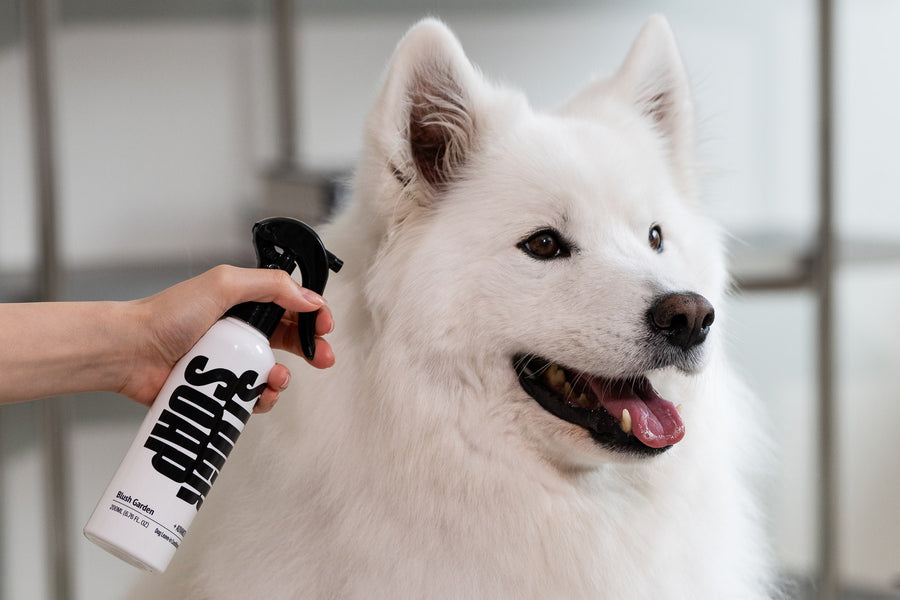
Step 4: Protect between baths. A light coat conditioning spray or a tiny amount of pure camellia oil rubbed between your palms and smoothed over the coat (avoiding the eyes) keeps the lipid layer topped up. Less is more — a heavy hand creates a greasy, dust-trapping mess.
Step 5: Mind the environment. Dry indoor heat in winter and chlorine or salt water in summer both wreck the coat. A humidifier in heating season and a thorough fresh-water rinse after pool or beach time go further than most owners realize.
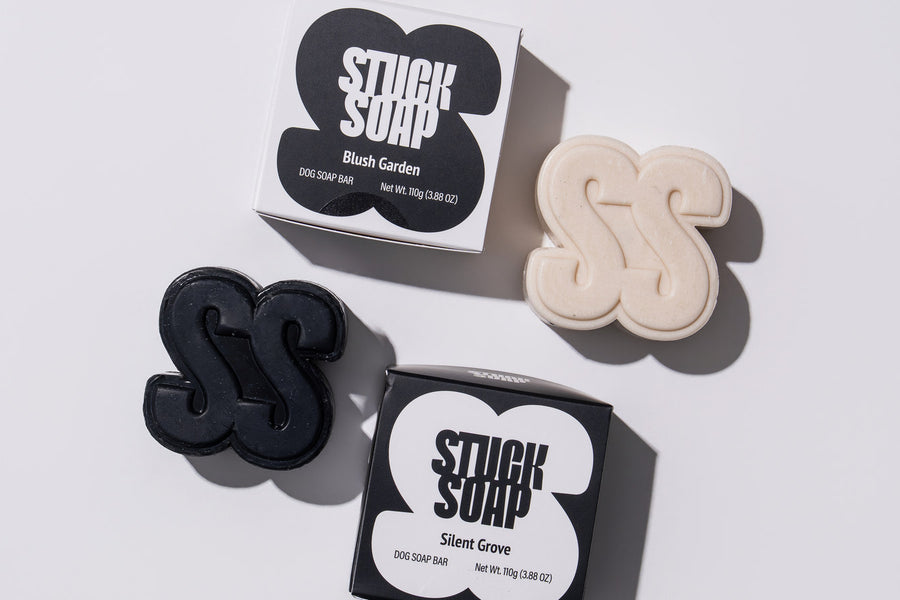
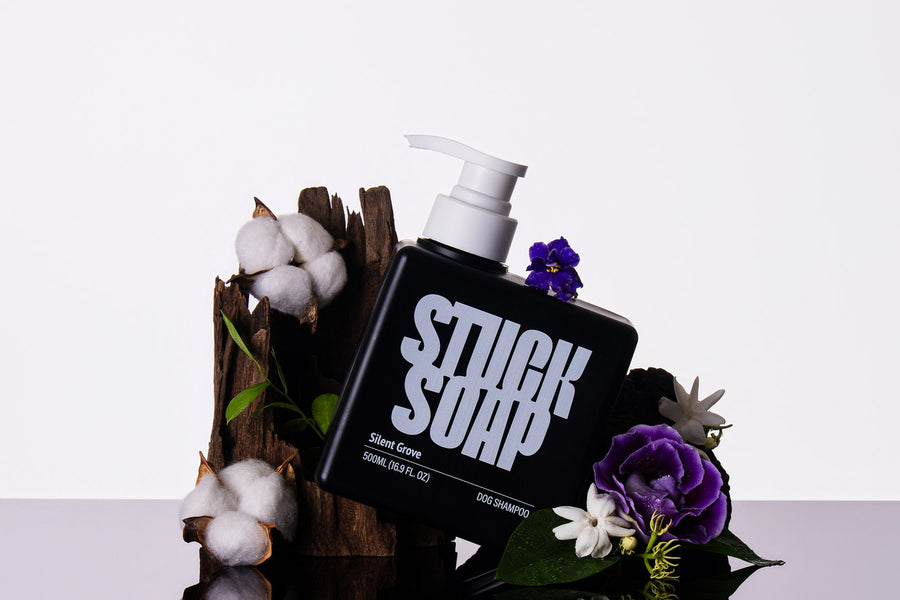
This is where STUCK SOAP fits into the picture. Our shampoo is built on the exact K-Beauty trifecta that supports coat shine: camellia oil from Jeju Island for lipid-barrier nourishment, green tea extract for antioxidant protection, and centella asiatica for barrier repair, all in a pH-balanced, vegan, sulfate-free formula. It cleans without stripping, which is the entire point.
Common Mistakes That Steal Your Dog's Shine
If your routine looks right on paper but your dog's coat still isn't shining, one of these is usually the culprit:
- Bathing too often. Weekly baths strip sebum faster than the skin can replace it. Unless your dog rolled in something foul, every 3 to 4 weeks is plenty for most coats.
- Using human shampoo. Even gentle human shampoos are formulated for a more acidic skin pH and will disrupt the canine lipid layer.
- Skipping the rinse. Shampoo residue is invisible but it absolutely dulls the coat and can cause low-grade itchiness that makes the dog scratch.
- Brushing only when matted. Daily brushing is what redistributes the natural oils that create shine. Skip it and you skip 50% of the routine.
- Buying supplements without checking the dose. Under-dosed fish oils do almost nothing. Look for actual EPA + DHA content per serving, not just total fish oil milligrams.
- Ignoring the skin and chasing the coat. Inflamed, itchy skin will never produce a shiny coat, no matter what you put on top. Treat the barrier first.
How Long Until You See Results
This is the question every owner wants answered, so here's the honest version. Topical changes (a new shampoo, more brushing, an oil mist) show visible improvement within 2 to 3 baths. The coat will feel softer, look less frizzy, and reflect more light under natural daylight.
Internal changes (omega-3 supplementation, diet upgrades) take longer because they have to be built into new hair growth. Most veterinary studies show measurable improvement at 4 to 8 weeks of consistent supplementation, with peak results around 8 to 10 weeks. Stay patient and stay consistent. Coat shine is a marathon, not a sprint.
When to Call the Vet
Sometimes a dull coat is more than a grooming issue. Talk to your vet if you notice any of these signs alongside the dullness:
- Bald patches or significant thinning
- Greasy or flaky skin that doesn't improve with gentle bathing
- Constant scratching, licking, or chewing
- Color changes in the skin (red, dark, or thickened areas)
- Lethargy, weight gain, or changes in appetite or thirst
- A coat that becomes suddenly dull without a routine change
These can be signs of allergies, hormone imbalances (especially hypothyroidism in older dogs), skin infections, or parasites. None of those are solved with shampoo alone, and catching them early matters.
Frequently Asked Questions
What is the fastest way to make my dog's coat shiny?
The fastest visible improvement comes from brushing daily and switching to a pH-balanced, sulfate-free shampoo with nourishing oils like camellia and green tea. You'll usually see softness and shine improve within 2 to 3 baths. For long-term shine, add an omega-3 supplement and expect peak results in 6 to 10 weeks.
Can I put coconut oil on my dog's coat?
You can, sparingly, as a topical conditioner for dry spots or coat tips. But coconut oil sits on the surface rather than penetrating like camellia or argan oil, and it can attract dust. For most dogs, a small amount of camellia oil in a properly formulated shampoo delivers better shine without the residue.
How often should I bathe my dog for a shiny coat?
Most dogs do best with a bath every 3 to 4 weeks. Bathing more often than that strips the natural sebum that creates shine, leading to a duller, drier coat over time. Daily brushing between baths is what redistributes those natural oils and keeps the coat looking glossy.
Does fish oil really make a dog's coat shinier?
Yes, when dosed correctly. Veterinary studies show that omega-3 fatty acids (EPA and DHA) become structural components of the hair shaft itself and reduce skin inflammation. Most owners see visible coat improvement at 4 to 8 weeks of consistent supplementation. Always check with your vet for the right dose by weight.
Why does my dog's coat look dull even with regular bathing?
It's usually one of three things: you're bathing too often (stripping natural oils), your shampoo is too harsh (sulfates and high pH), or there's an underlying issue with diet, allergies, or skin health. Switching to a pH-balanced K-Beauty style shampoo and brushing daily fixes most cases. If not, see your vet.
The Takeaway
A shiny coat isn't a cosmetic accident. It's the predictable result of a healthy skin barrier, an intact lipid layer, and a routine built around supporting both. The K-Beauty approach gets there faster than chasing quick fixes because it treats the skin underneath the coat, not just the hair on top.
Bathe less often. Choose a gentle, pH-balanced shampoo with proven botanical oils. Brush daily. Feed omega-3s from the inside. Then watch the shine show up on its own.
Sources & References
- Common Causes & Remedies for Your Dog's Dry, Itchy Skin — American Kennel Club
- Coat and Skin Appearance in the Healthy Dog — VCA Animal Hospitals
- Nutrition and Your Dog's Skin and Haircoat — VCA Animal Hospitals
- A prospective, randomized, double blind, placebo-controlled evaluation of the effects of an n-3 essential fatty acids supplement on clinical signs in dogs with poor quality coats — The Veterinary Journal (ScienceDirect)
- The Effect of Ethyl Esters of Linseed Oil on the Changes in the Fatty Acid Profile of Hair Coat Sebum, Blood Serum and Erythrocyte Membranes in Healthy Dogs — PMC / NCBI
- Safety of Dietary Camelina Oil Supplementation in Healthy, Adult Dogs — PMC / NCBI
Give Your Dog the K-Beauty Spa Treatment
Stuck Soap was built on the exact K-Beauty trifecta that delivers real coat shine: Jeju Island camellia oil for the lipid barrier, green tea extract for antioxidant protection, and centella asiatica for barrier repair. pH-balanced, vegan, and sulfate-free — it cleans without stripping, so the shine has somewhere to come back to.
Shop Stuck Soap →Vegan · pH-Balanced · Jeju Island Botanicals · Zero Waste