


You reach into the medicine cabinet, see that amber bottle of witch hazel, and glance at your dog scratching at a fresh bug bite. It works on your skin. It's in half the toners on your bathroom shelf. So the question forms almost automatically: is witch hazel for dogs a good idea, or a well-meaning mistake?
The honest answer has more nuance than most blog posts admit. Witch hazel is one of the oldest botanical astringents in Western herbalism, and it's had a second life as a quiet staple in Korean toners and soothing pads. Some holistic veterinarians use it daily. Others won't touch it. And one detail on the label decides which camp your bottle belongs in.
Here's what the evidence actually says, and what the K-Beauty approach to gentle skin care would do differently.
Table of Contents
- What Witch Hazel Actually Is (and Why K-Beauty Uses It)
- Is Witch Hazel Safe for Dogs? What Veterinarians Say
- The Alcohol Problem: The Single Biggest Risk on the Label
- When Witch Hazel May Help, and When It Backfires
- The K-Beauty Lesson: Soothe Without Stripping
- How to Use Witch Hazel on Your Dog Safely
- Frequently Asked Questions
- Sources & References
What Witch Hazel Actually Is (and Why K-Beauty Uses It)
Witch hazel comes from Hamamelis virginiana, a small yellow-flowering shrub native to North America. The extract is made from the bark and leaves, and its active reputation rests on one class of compounds: tannins.
Tannins are the same plant chemicals that make strong black tea feel drying in your mouth. On skin, they bind to surface proteins and cause tissue to contract slightly. That's the definition of an astringent, and it's why witch hazel has been the primary active ingredient in hemorrhoid pads and skin-tightening preparations for well over a century.
Korean formulators picked it up for a different reason. In K-Beauty, witch hazel usually shows up in toners and pads aimed at oily or congested skin, where the goal is to temporarily reduce surface oil and calm visible redness without heavy scrubbing. What's notable is how Korean brands use it. The mainstream Western version is often witch hazel suspended in a high percentage of alcohol. The Korean version is typically alcohol-free and buffered with humectants and calming botanicals, often glycerin and Centella Asiatica, precisely so the astringent action doesn't tip over into dryness.
Is Witch Hazel Safe for Dogs? What Veterinarians Say
The short version: topical witch hazel is generally considered safe for dogs in small amounts, on intact skin, when the product doesn't contain isopropyl alcohol. It is not safe to let your dog ingest.
PetMD's review found real disagreement inside the profession. Many conventional veterinarians don't recommend witch hazel to clients, largely because its use in dogs isn't backed by rigorous controlled studies. That's an absence of evidence rather than evidence of harm, but it's an honest reason for caution.
Meanwhile, several integrative veterinarians use it routinely. Dr. Judy Morgan, a holistic veterinarian in New Jersey, uses witch hazel in ear cleaners and to reduce swelling from insect bites and stings, describing it as soothing, itch-reducing, and non-stinging. Greg Tilford, a holistic veterinary educator and charter member of the National Animal Supplements Council's Scientific Advisory Committee, notes it can be used to ease pain and inflammation from flea bites and dermatitis.
Importantly, witch hazel is not known to interact with other medications, and topical use is unlikely to cause systemic problems unless the dog is actually drinking it. The reported risks concentrate around two things: ingestion, and drying out skin that was already dry.
If your dog does lick a meaningful amount off, watch for drooling, pawing or rubbing at the mouth, vomiting, or diarrhea, and call your veterinarian. The ASPCA Animal Poison Control Center is available at (888) 426-4435.
The Alcohol Problem: The Single Biggest Risk on the Label
Here is the detail most articles skip. Most commercially available witch hazel sold in US drugstores is preserved in isopropyl alcohol, typically around 14 percent. Isopropyl alcohol is toxic to dogs if ingested, and it is absorbed through skin more readily than most people assume.
Veterinary toxicology resources are consistent here. Ingested isopropyl alcohol can cause vomiting, disorientation, incoordination, and in severe cases respiratory depression, collapse, and seizures. Veterinary Partner explicitly advises against using rubbing alcohol on a pet's skin at home, and notes that overuse of topical products containing isopropanol has caused severe reactions.
Now stack that against a simple behavioral fact: dogs lick. Anything you apply to a paw, a flank, or a belly has a high probability of ending up in your dog's mouth within minutes. That turns "topical only" from a safety guarantee into a hopeful assumption.
Veterinarians who do use witch hazel advise picking the product deliberately: one formulated for animals when possible, or a vegetable glycerin base if you're using a human-grade bottle, since accidental ingestion is far less consequential. If the only option is alcohol-based, grain alcohol is preferable to isopropyl.
Read the ingredient panel before the marketing copy. A bottle labeled "natural witch hazel" can still be mostly isopropyl alcohol.
When Witch Hazel May Help, and When It Backfires
Witch hazel is a narrow tool, not a general skin remedy. Matching it to the right problem is most of the skill.
Situations where it may genuinely help:
- Insect bites and stings. The astringent action can reduce localized swelling and take the edge off itching without the sting of an alcohol wipe.
- Flea bite irritation. Useful as short-term comfort while you address the actual flea problem.
- Minor superficial scratches. Small, clean, surface-level scrapes only.
- Tick removal. Some veterinarians apply it to a tick to loosen its grip before removal.
- Odor and cleanup around the perianal area. It cleans effectively and neutralizes anal gland odor.
Situations where it's the wrong choice:
- Dry, flaky skin. This is the most common mistake. Witch hazel tightens and dehydrates, which makes dry-skin conditions worse, not better.
- Hot spots and deep wounds. These need veterinary attention, not an astringent.
- Bacterial or yeast infections. Witch hazel is not an antimicrobial treatment and delaying real care costs your dog comfort.
- Broad, routine, whole-body use. It was never designed to be a daily all-over product.
Notice the pattern. Witch hazel is a spot treatment for a localized inflammatory problem. The moment you treat it as everyday skin care, you're using it wrong. For chronic itch and sensitivity, colloidal oatmeal and aloe vera are the better-supported direction.
The K-Beauty Lesson: Soothe Without Stripping
Korean skin care built its reputation on a single organizing idea: a healthy barrier is the goal, and everything else is negotiable. Actives are used, but they're cushioned. Nothing is allowed to strip the skin in the name of getting it clean. That philosophy matters more for dogs than for humans, for two measurable reasons.
First, pH. Human skin sits in an acidic range, roughly 4.8 to 5.8. Canine skin is far closer to neutral, averaging around 7.5 and ranging from about 6.5 to 8.0. Products calibrated for human skin are chemically mismatched to your dog from the start.
Second, barrier thickness. Human skin has roughly 10 to 15 layers in the stratum corneum, the outermost protective layer. Dog skin typically has only 3 to 5. That thinner barrier means substances penetrate more deeply and more easily, and it means drying agents do proportionally more damage.
Put those together and the conclusion is hard to avoid: an astringent that leaves your face feeling pleasantly tightened is working against a barrier with roughly a third of the protective layers.
This is why the K-Beauty framing is useful even when the ingredient is a Western one. Korean witch hazel toners are alcohol-free and paired with humectants and calming botanicals, because the formulators understood that astringency without hydration is just controlled damage. If you're going to borrow witch hazel for your dog, borrow the Korean version of the idea, not the drugstore one.
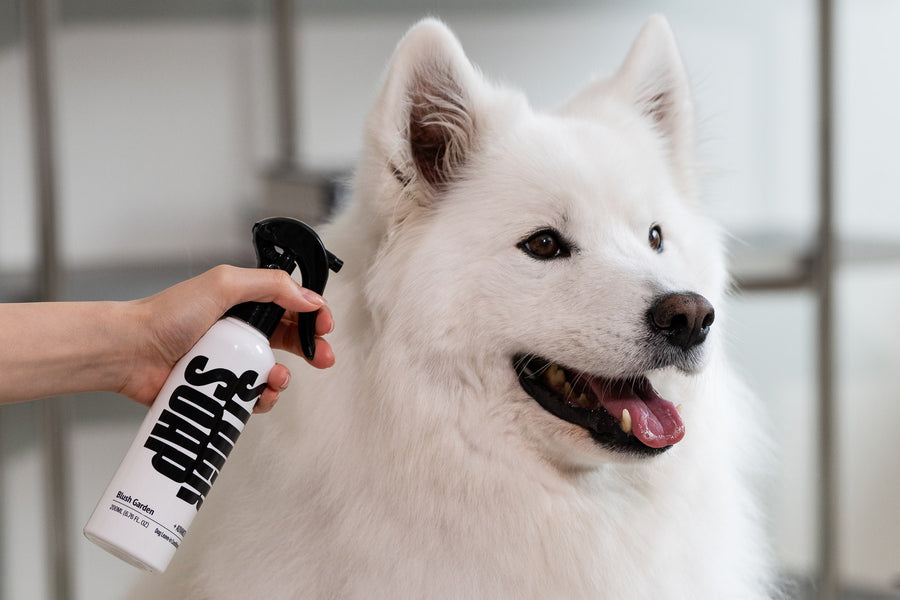
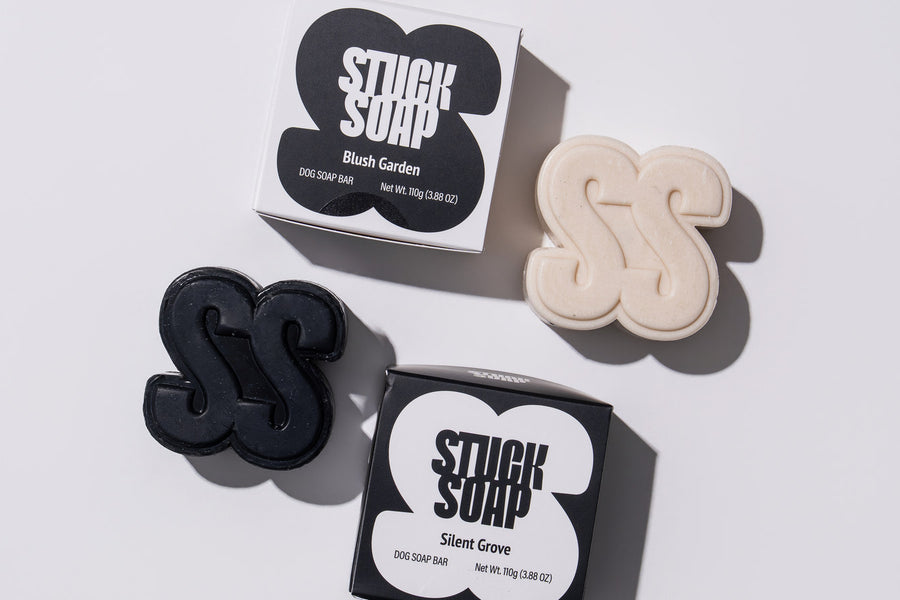
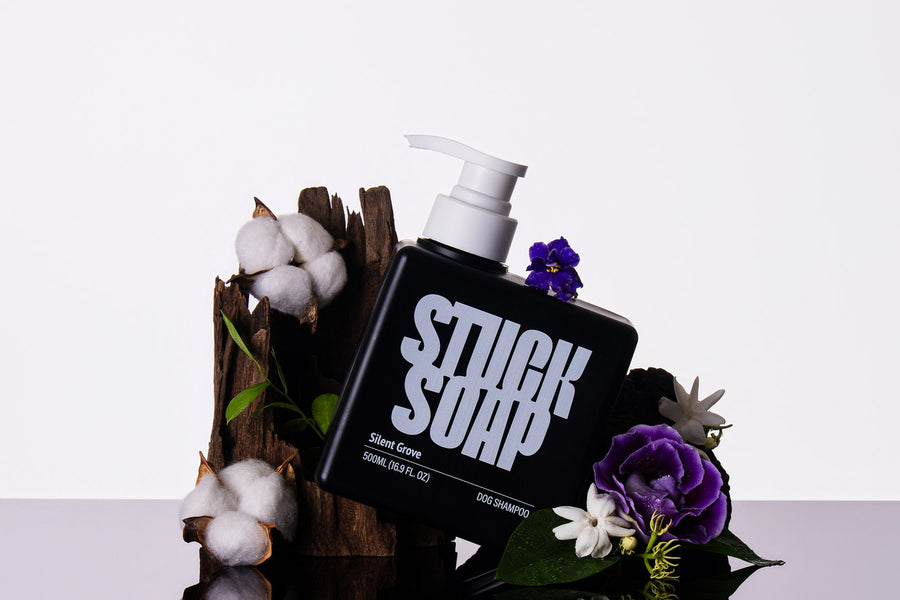
It's the same reasoning behind our approach at STUCK SOAP. Rather than reaching for aggressive actives, our formulas are built around barrier-supporting Jeju Island botanicals: Centella Asiatica for calm, Green Tea for antioxidant protection, and Camellia Oil for moisture. The bar is pH balanced and designed to support sebum control without stripping, which is the same problem witch hazel is trying to solve, approached from the gentler side.
How to Use Witch Hazel on Your Dog Safely
If you and your veterinarian decide witch hazel makes sense for a specific issue, these are the practical guardrails.
- Talk to your vet first, especially if the irritation is spreading, weeping, smelly, or lasting more than a day or two.
- Check the label for isopropyl alcohol. If it's there, put the bottle down. Look for a pet-formulated product or a vegetable glycerin base.
- Patch test. Apply a small amount to one spot and wait a few hours before treating a wider area.
- Apply with a cotton ball or gauze square. Never pour it directly on your dog.
- Use it sparingly, once or twice a day maximum. Dilution isn't required, but restraint is.
- Choose spots your dog can't easily lick, then supervise for several minutes while it dries.
- Avoid eyes, open wounds, and mucous membranes, which tannins irritate.
- Stop if it isn't clearly helping within a couple of days. Persistent skin issues need a diagnosis, not a longer trial of a home remedy.
And a broader habit worth building: the goal isn't a shelf full of spot treatments. It's skin resilient enough that flare-ups get smaller and less frequent. Consistent, gentle bathing with a formula suited to canine pH does more over a year than any astringent does in an afternoon. If flare-ups are frequent, our guide to shampoo ingredients for allergy-prone dogs is a better starting point.
Frequently Asked Questions
Is witch hazel safe for dogs?
Topical witch hazel is generally considered safe for dogs in small amounts on intact skin, provided the product does not contain isopropyl alcohol. It should not be ingested. Veterinary opinion is divided because there are no rigorous controlled studies in dogs, so check with your veterinarian before using it.
Can I use drugstore witch hazel on my dog?
Usually not the best choice. Most drugstore witch hazel is preserved in roughly 14 percent isopropyl alcohol, which is toxic to dogs if ingested and absorbs through skin. Since dogs lick treated areas, choose a pet-formulated product or a vegetable glycerin-based version instead.
Does witch hazel stop dog itching?
It may reduce itching from insect bites, flea bites, and minor localized irritation thanks to its astringent tannins. It is not effective for itching caused by dry skin, yeast or bacterial infections, hot spots, or allergies, and can make dry skin noticeably worse.
Can witch hazel be used in a dog's ears?
Some holistic veterinarians use witch hazel-based ear washes formulated for dogs to help dry discharge and soothe inflammation. Do not use human alcohol-based witch hazel in ears, and never put anything in your dog's ears if you suspect an infection or a ruptured eardrum without veterinary guidance.
What should I use instead of witch hazel for my dog's dry skin?
For dry or flaky skin, skip astringents entirely. Look for pH-balanced, barrier-supporting ingredients such as colloidal oatmeal, ceramides, Centella Asiatica, and plant oils like camellia. These add moisture and support the skin barrier rather than tightening and dehydrating it.
The Bottom Line
Witch hazel for dogs is neither the miracle nor the menace it gets framed as. It's a narrow, useful astringent for localized inflammatory problems like bug bites and flea irritation, and a genuinely bad idea for dry skin, infections, or routine use. The single most important decision you'll make is which bottle you buy, because isopropyl alcohol is the real risk, not the plant.
The deeper takeaway is the one K-Beauty has been making for years. Your dog's skin doesn't need to be tightened, stripped, or corrected. It needs to be supported, gently and consistently, so that it stops flaring in the first place. Get the everyday routine right, and you'll reach for spot treatments far less often.
Sources & References
- Witch Hazel for Dogs: Is It Safe? — PetMD
- Toxic Disinfectants: What to Use and What Not to Use Around Your Pets — Veterinary Partner (VIN)
- Alcohol Poisoning — VCA Animal Hospitals
- Can You Use Human Shampoo On Dogs? — American Kennel Club
- Personal Care Products and Your Pet — VCA Animal Hospitals
- Animal Poison Control Center — ASPCA
Give Your Dog the K-Beauty Spa Treatment
Astringents tighten. Barriers protect. STUCK SOAP is built on the second idea, with pH-balanced formulas that clean thoroughly without stripping your dog's skin. Jeju Island Centella Asiatica, Green Tea, and Camellia Oil work together to calm, protect, and moisturize, so irritation has less reason to start.
Shop Stuck Soap →Vegan · pH-Balanced · Jeju Island Botanicals · Zero Waste