


If you have spent any time exploring Korean skincare, you have almost certainly run into licorice root. It quietly sits in the ingredient list of countless K-beauty toners, essences, and brightening serums, prized for calming redness and evening out skin tone. But here is a question most dog owners never think to ask: if licorice root is gentle and effective enough for sensitive human skin, could it do something for your dog's skin too?
It turns out the answer is more interesting than you might expect. Licorice root for dogs has a real history in holistic veterinary care, where its anti-inflammatory compounds are used to soothe itchy, irritated skin. The same molecule that K-beauty formulators love, glycyrrhizin, behaves remarkably like the body's own natural cortisol. That overlap between human skincare and canine skin health is exactly the kind of bridge the K-beauty for dogs movement is built on.
In this guide, we will break down what licorice root actually is, the science behind its calming and brightening reputation, and what current research suggests about using it for your dog's skin and coat. As always, we will keep the claims honest and point you toward a gentle, ingredient-first approach to grooming.
Table of Contents
What Is Licorice Root, and Why Does K-Beauty Love It?
Licorice root comes from plants in the Glycyrrhiza family, used in traditional medicine across Asia and Europe for centuries. In Korea and across the broader K-beauty world, it has become a go-to botanical for one big reason: it is a multitasker. A single extract can help calm irritation, fade the look of dark spots, and add a layer of antioxidant protection.
That versatility is why you will spot licorice root in so many Korean serums, brightening toners, and hydrating essences. K-beauty formulation philosophy favors gentle, layered, plant-derived actives over harsh single-purpose chemicals, and licorice root fits that mold perfectly. It does several gentle things at once instead of one aggressive thing.
The K-beauty obsession with licorice is not just marketing. The plant contains a cluster of active compounds that each play a distinct role, and understanding them is the key to understanding why this ingredient keeps showing up in premium skincare and, increasingly, in conversations about pet care.
The Science: Glycyrrhizin, Glabridin, and Liquiritin
Licorice root owes its reputation to three main active compounds, and each one earns its keep.
Glycyrrhizin is the soothing powerhouse. It has well-documented anti-inflammatory and antioxidant properties, and what makes it especially notable is that it mimics cortisol, the body's natural anti-inflammatory hormone. Clinical work in human skincare has shown that topical glycyrrhizin can calm redness and irritation in sensitive, acne-prone, and reactive skin. This is the compound that does the heavy lifting when licorice is described as "calming."
Glabridin is the brightening star. It works by slowing tyrosinase, the enzyme that drives melanin production. A study published in the journal Cosmetics (MDPI) found that glabridin-rich licorice extract helped reduce excess pigmentation and even out skin tone. In K-beauty, this is why licorice is reached for to target dark spots and uneven tone without the harshness of stronger lightening agents.
Liquiritin rounds out the trio by helping to lift and disperse pigment that is already sitting near the skin's surface, enhancing overall brightness. Together, these three compounds explain the dual K-beauty promise of licorice root: calmer skin and a more even, radiant tone.
Here is the bridge to your dog. Two of those headline properties, anti-inflammatory soothing and antioxidant protection, are not exclusive to human skin biology. Inflammation is inflammation, and a compound that calms irritated tissue and neutralizes oxidative stress has obvious appeal for a dog dealing with itchy, reactive skin.
Licorice Root for Dogs: What the Research Suggests
This is where licorice root gets genuinely interesting for pet owners, because unlike some trendy K-beauty ingredients, licorice already has a foothold in holistic veterinary care.
Holistic veterinarians have long used licorice root, both topically and orally, to ease the discomfort of skin conditions like flea-allergy dermatitis, contact dermatitis, eczema, and other forms of irritation. The reasoning is the same glycyrrhizin story we covered above: because the compound acts like the body's natural cortisone, it can dial down the inflammatory response that drives so much of a dog's itching and redness.
One frequently cited advantage is how licorice works compared to conventional steroids. According to holistic veterinary sources, licorice tends to enhance the body's own anti-inflammatory processes rather than overriding the immune system the way long-term corticosteroids can. That is a meaningful distinction for owners looking for gentler, supportive options.
It is important to stay honest about the evidence, though. Research specifically in dogs is still limited. One evaluation of topical licorice extract in canine atopic dermatitis found that it helped with inflammation but did not significantly reduce the itch sensation itself. In human eczema, a 2019 review noted topical licorice performing comparably to hydrocortisone for some symptoms. The picture that emerges is promising but incomplete: licorice appears to be a legitimate anti-inflammatory aid for the skin, but it is a supportive ingredient, not a cure or a replacement for veterinary treatment of a diagnosed skin condition.
The practical takeaway is that licorice root sits comfortably in the "gentle, soothing, supportive" category, which is exactly where a thoughtful grooming product wants its calming botanicals to live.
Safety, Cautions, and What to Watch For
Licorice root is generally considered safe for topical use on dogs in appropriate, properly formulated amounts, which is why it appears in some soothing pet products. But it is not a "more is always better" ingredient, and a few cautions matter.
The same glycyrrhizin that makes licorice useful can cause problems with heavy or prolonged internal use. In dogs, excessive ingested licorice can raise blood pressure and contribute to water retention, which is especially risky for dogs with existing heart conditions or hypertension. This is far more of a concern with oral supplements and chews than with a properly diluted topical product, but it is a reason to be selective and to read labels.
A few simple rules keep things safe. Choose products formulated specifically for dogs rather than applying human serums, since concentration and supporting ingredients matter. Avoid letting your dog ingest large amounts of licorice. And if your dog has a chronic skin issue, heart disease, high blood pressure, or is pregnant, talk to your veterinarian before adding any new licorice-containing product. When you are dealing with persistent itching, hot spots, or skin infections, licorice is a supportive comfort measure, not a substitute for a proper diagnosis.
Fitting Licorice Into a K-Beauty Inspired Routine
The real lesson of licorice root is not "go buy licorice." It is the K-beauty principle behind it: skin, whether human or canine, responds best to gentle, plant-derived ingredients that calm and support rather than strip and irritate.
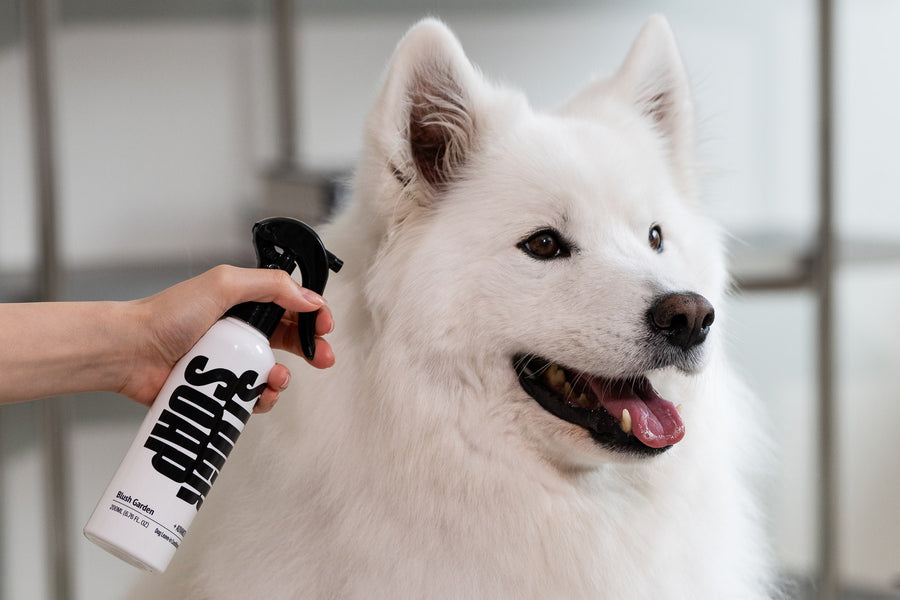
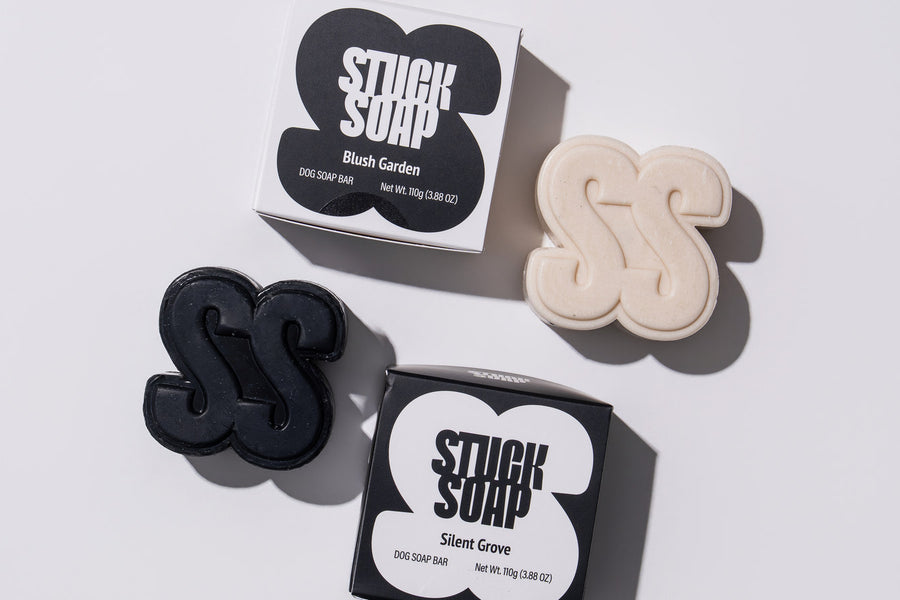
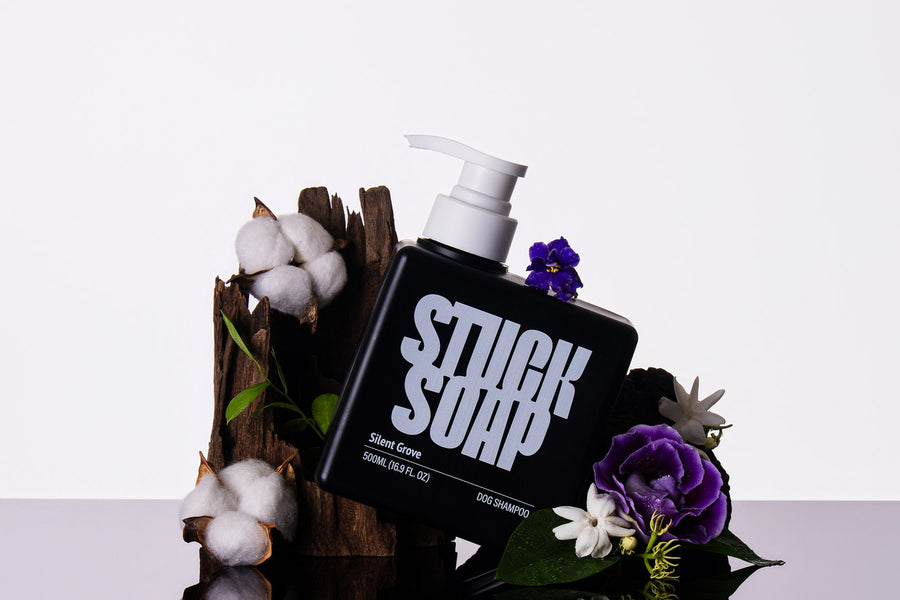
That philosophy is the foundation of how STUCK SOAP approaches dog grooming. While licorice root is not currently in our formulas, our products are built around the same K-beauty logic of soothing botanicals and a respect for the skin barrier. Our shampoos feature Centella Asiatica, the famous K-beauty "cica" ingredient celebrated for calming sensitive, reactive skin, alongside antioxidant-rich Jeju green tea and nourishing camellia oil. These are licorice's cousins in the K-beauty soothing family.
If you want to put the licorice mindset to work today, a few practical steps help: bathe with a pH-balanced, gently formulated shampoo rather than a harsh deodorizing one, look for recognizable botanical actives on the label instead of long lists of synthetic detergents, and resist the urge to over-bathe, since stripping the skin barrier undoes the very calm you are trying to create. A dog with a healthy, intact barrier is far less prone to the redness and itch that send owners searching for soothing ingredients in the first place.
Think of licorice root as a signpost. It points toward an entire approach to grooming that prioritizes calm, balanced, well-supported skin, which is what a premium K-beauty inspired routine is really about.
Frequently Asked Questions
Is licorice root safe for dogs?
Licorice root is generally considered safe for topical use on dogs in appropriate, properly formulated amounts, and it appears in some soothing pet products. The bigger caution is with internal use, since its active compound glycyrrhizin can raise blood pressure and cause water retention, which is risky for dogs with heart conditions or hypertension. Always check with your vet before adding licorice products, especially for dogs with existing health issues.
What does licorice root do for a dog's skin?
Licorice root's main compound, glycyrrhizin, has anti-inflammatory and antioxidant properties and behaves much like the body's natural cortisol. Holistic veterinarians have used it topically to help calm the irritation associated with flea-allergy dermatitis, contact dermatitis, and eczema. It is best viewed as a soothing, supportive ingredient rather than a cure for skin conditions.
Why is licorice root so popular in K-beauty?
Licorice root is a multitasker that calms redness, helps fade dark spots, and adds antioxidant protection, all in one gentle, plant-derived extract. Its brightening compound glabridin slows melanin production, while glycyrrhizin soothes irritation. That blend of soothing and brightening fits K-beauty's preference for gentle, layered, ingredient-first formulas.
Does STUCK SOAP contain licorice root?
No. STUCK SOAP does not currently use licorice root, but our shampoos are built on the same K-beauty soothing philosophy, featuring Centella Asiatica (cica), Jeju green tea, and camellia oil. These calming, plant-based botanicals share licorice's gentle, skin-supportive approach.
Can I put my own licorice skincare serum on my dog?
It is not recommended. Human serums are formulated for human skin concentrations and pH, and they may contain other ingredients that are not dog-appropriate. If you want the benefits of soothing botanicals for your dog, choose a product formulated specifically for dogs.
The Bottom Line
Licorice root is a perfect example of why K-beauty thinking translates so well to dog care. The very compound that makes it a brightening, calming star in Korean serums, glycyrrhizin, is also why holistic vets reach for it to soothe irritated canine skin. The research in dogs is still young, so it is best treated as a gentle supportive ingredient rather than a miracle fix, but the underlying principle is rock solid: calm, gentle, plant-derived actives are good for skin, whether that skin belongs to you or your dog.
You do not need licorice root specifically to follow that principle. You just need a grooming routine built on the same respect for gentle ingredients and a healthy skin barrier.
Sources & References
- Licorice Root for Dogs: Benefits and Uses — Great Pet Care
- Licorice Root for Dogs: Soothing and Healing — Whole Dog Journal
- Licorice Root: A Multi-Beneficial and Safe Herb for Dogs — Wag!
- Glabridin and Skin Pigmentation Research — Cosmetics (MDPI)
- Licorice Root Extract in Skincare Benefits — Clinikally
Give Your Dog the K-Beauty Spa Treatment
Licorice root points to a bigger idea: gentle, plant-derived botanicals are what calm, healthy skin loves. STUCK SOAP brings that same K-beauty philosophy to your dog with Centella Asiatica, Jeju green tea, and camellia oil, in a pH-balanced, vegan formula designed to soothe and support the skin barrier.
Shop Stuck Soap →Vegan · pH-Balanced · Jeju Island Botanicals · Zero Waste