


Every June and July, mulberry trees drop their fruit all over sidewalks, backyards, and park paths. If you walk your dog under one, you already know what happens next: purple-stained paws, a suspiciously purple tongue, and a small moment of panic while you try to remember whether mulberry for dogs is a problem or a non-issue.
Here is the short version: mulberries are not toxic to dogs. But that is only half the story, because at the same time your dog is snacking off the ground, mulberry is quietly one of the most respected ingredients in Korean skincare. Korean beauty houses have used mulberry root bark, known as sangbaekpi (상백피), for centuries. Sulwhasoo built an entire brightening line around it.
So which is it: a sidewalk hazard, or a heritage K-Beauty hero? Both, actually. Let's separate the safety question from the skincare science, and figure out what mulberry genuinely offers your dog's skin and coat.
Table of Contents
- What Is Mulberry, and Why Does K-Beauty Love It?
- Can Dogs Eat Mulberries? The Straight Answer
- The Science: What Mulberry Actually Does to Skin
- Does Your Dog Need a "Brightening" Ingredient?
- What Mulberry Could Offer Your Dog's Skin
- Practical Tips for Mulberry Season
- Frequently Asked Questions
- Sources & References
What Is Mulberry, and Why Does K-Beauty Love It?
The white mulberry tree (Morus alba) has been cultivated across Korea, China, and Japan for thousands of years, originally to feed silkworms. Along the way, traditional Korean medicine discovered that nearly every part of the tree was useful: the fruit, the leaves, and especially the root bark.
That root bark is sangbaekpi. In hanbang (traditional Korean herbal) formulations, it was prized for calming heat and irritation in the skin. Modern K-Beauty picked it up for a more specific reason: it is genuinely good at what marketers call brightening.
The reason mulberry keeps showing up in Korean serums and essences is chemistry. Mulberry root is rich in arbutin, mulberroside F, and oxyresveratrol, and these compounds all interfere with tyrosinase, the enzyme that drives melanin production. Root extracts are the richest source of these brightening compounds, while the leaves are the antioxidant powerhouse.
One detail that surprised even researchers: oxyresveratrol from mulberry suppressed melanin production far more potently than kojic acid or arbutin in laboratory testing. That is a serious result for a plant that grows wild in most American suburbs.
Can Dogs Eat Mulberries? The Straight Answer
The ASPCA lists the mulberry tree as non-toxic to dogs, cats, and horses. That is the single most important fact here, and it should take the edge off your next walk.
Ripe mulberries are safe for dogs in small amounts. They are low in calories, high in anthocyanins and vitamin C, and most dogs tolerate a few berries without any trouble at all.
The caveats are about quantity and ripeness, not toxicity:
- Too many berries cause stomach upset. A dog who gorges on fallen fruit may get vomiting or diarrhea for a day. Unpleasant, rarely dangerous.
- Unripe mulberries are a different matter. Green, underripe berries contain compounds that can cause hallucinogenic and gastrointestinal effects in both dogs and humans. Only fully ripe fruit should ever be a snack.
- Fallen fruit picks up whatever is on the ground. Pesticide residue, mold, and lawn treatments are the real risk on a city sidewalk, not the berry itself.
A reasonable rule: a few ripe berries as an occasional treat is fine. A dog vacuuming up two weeks of fermenting sidewalk fruit is a stomach ache waiting to happen. If your dog eats a large volume of unripe fruit, or shows persistent vomiting, disorientation, or lethargy, call your veterinarian.
The Science: What Mulberry Actually Does to Skin
Set the snacking aside. The more interesting question is what mulberry does topically, and here the research is stronger than you might expect.
It is a legitimate antioxidant. White mulberry leaf extracts show high total phenolic content and measurable antioxidant activity across standard DPPH, ABTS, and FRAP assays. Total polyphenol content in leaf extracts ranges from roughly 23 to 55 mg gallic acid equivalent per gram, which puts it in genuinely useful territory rather than label-decoration territory.
It calms inflammation. In lab studies on stimulated macrophage cells, mulberry leaf extract inhibited nitric oxide production more effectively than isolated resveratrol or oxyresveratrol on their own. The whole-extract synergy of flavonoids and phenolic acids appears to outperform the individual star compounds.
It supports the skin barrier. This is the finding most relevant to dogs. Oxyresveratrol reduced inflammatory factor secretion and up-regulated the expression of barrier proteins in UVB-stressed keratinocytes. Barrier proteins are the structural scaffolding that keeps moisture in and irritants out.
And there is an atopic dermatitis study. Research on Morus alba fruit extract found it attenuated atopic dermatitis symptoms in vivo and in vitro through regulation of barrier function, immune response, and pruritus (itch). That study was not conducted on dogs, and it would be irresponsible to pretend otherwise. But barrier dysfunction and itch are the exact mechanisms at the center of canine atopic dermatitis, which makes this a research direction worth watching.
Does Your Dog Need a "Brightening" Ingredient?
Here is where we have to be honest with you, because the marketing answer and the correct answer are not the same.
Mulberry's headline benefit in K-Beauty is melanin suppression. Your dog does not need melanin suppression. Coat color is genetic, pigmented skin is normal and healthy, and there is no version of dog skincare where lightening your dog's pigment is a legitimate goal.
We have made this argument before about AHA and BHA exfoliating acids, and the logic holds here too. A K-Beauty ingredient earning its reputation on human faces does not automatically translate to a dog's body. Dog skin has a different pH, a thinner epidermis, and a completely different set of priorities.
If you ever see a pet product marketed on "brightening" your dog's skin or lightening pigment, treat that as a red flag about the brand's judgment, not a feature.
Which raises the obvious question: if the brightening part is irrelevant, is mulberry useless for dogs?
No. It just means the interesting part of mulberry is the part K-Beauty markets least.
What Mulberry Could Offer Your Dog's Skin
Strip out the brightening angle and you are left with a polyphenol-rich botanical with antioxidant, anti-inflammatory, and barrier-supporting activity. That is a much better fit for dogs.
Why antioxidants matter for dogs specifically: research found significantly higher plasma malondialdehyde (a marker of oxidative damage to cell membranes) in dogs with atopic dermatitis compared to healthy dogs, with a positive correlation between disease severity and oxidative damage. Oxidative stress is not a wellness buzzword in canine dermatology. It is a measurable part of the picture.
The plausible role for mulberry in dog care, then, looks like this:
- Antioxidant support against the oxidative stress that accompanies irritated, inflamed skin
- Anti-inflammatory activity from its flavonoid and phenolic acid content
- Barrier reinforcement, which is the foundation of nearly everything that goes right or wrong with dog skin
Note the framing. These are reasonable extrapolations from strong human and in vitro data, not established canine claims. Mulberry is not currently an ingredient in Stuck Soap products, and we are not going to tell you it is.
What we will say is that the mechanism mulberry points at, barrier-first care rather than symptom-masking, is exactly the philosophy our formulations are built on. The ingredients we do use with confidence are the ones with a real place in dog care: Jeju green tea for antioxidant protection, Centella asiatica for calming irritation, and camellia oil for coat conditioning. Same K-Beauty logic, applied where the evidence for dogs actually supports it.
Practical Tips for Mulberry Season
Mulberry season runs roughly June through August in most of the US, which means this is live right now. A few things you can act on today:
Know your walk. If there is a mulberry tree on your route, the sidewalk under it will be covered in fruit for weeks. Not a crisis, but worth a shorter leash if your dog is an indiscriminate ground-eater.
Rinse the paws, not just the stains. Purple paw pads are cosmetic. The reason to rinse is what else is on that sidewalk. Warm water and a gentle, pH-balanced wash on the paws after a fruit-heavy walk handles it.
Don't panic-scrub the stains. Mulberry stains on a light-colored coat fade on their own. Aggressive scrubbing or harsh degreasing shampoo will damage the skin barrier far more than a temporary purple patch ever will.
Treat berries as treats. If you want to share a few ripe mulberries, wash them, keep it to a small handful for a medium dog, and make sure they are fully ripe and dark. Skip it entirely for dogs with a sensitive stomach.
Watch for the real signal. Persistent itching, redness, or flaky skin during summer usually is not about berries at all. It is far more likely to be seasonal allergens, and that is a conversation for your vet.
Frequently Asked Questions
Are mulberries toxic to dogs?
No. The ASPCA lists the mulberry tree as non-toxic to dogs, cats, and horses. Ripe mulberries are safe in small amounts. Large quantities can cause temporary stomach upset, and unripe green berries should be avoided entirely.
What should I do if my dog ate a lot of mulberries off the ground?
Most dogs will be fine, possibly with mild vomiting or diarrhea for a day. Monitor them, keep fresh water available, and contact your veterinarian if you see persistent vomiting, disorientation, or lethargy, or if you know the berries were unripe or the area was treated with pesticides.
Is mulberry extract good for dog skin?
Mulberry extract has documented antioxidant, anti-inflammatory, and barrier-supporting properties in human and laboratory research. Those mechanisms are relevant to dog skin, but canine-specific studies are limited. Its famous brightening effect has no legitimate application for dogs.
Why is mulberry so popular in Korean skincare?
Mulberry root bark, or sangbaekpi, has centuries of use in traditional Korean medicine for calming irritated skin. Modern K-Beauty adopted it because compounds like arbutin, mulberroside F, and oxyresveratrol inhibit tyrosinase, the enzyme behind melanin production.
Do Stuck Soap products contain mulberry?
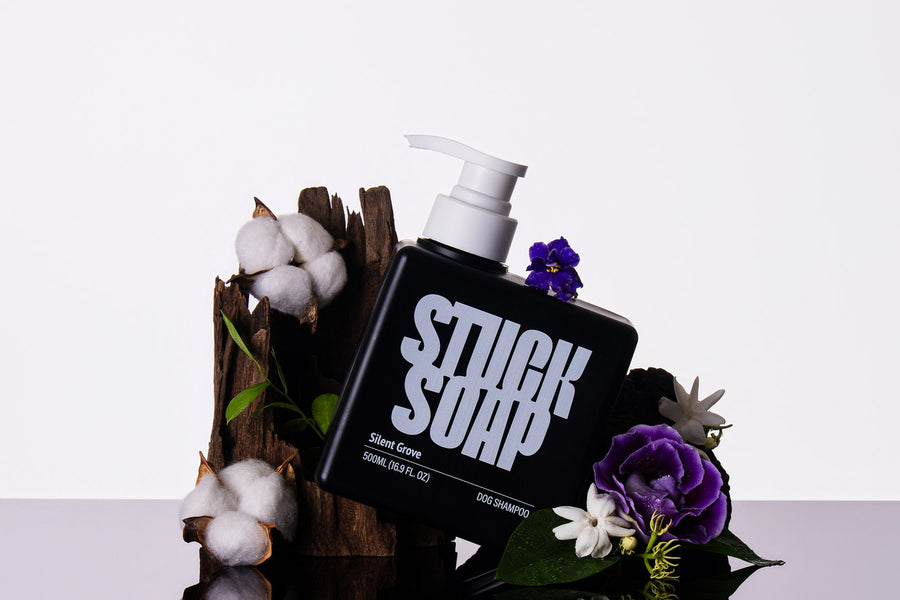
No. Our formulations use Jeju Island botanicals including green tea, camellia oil, and Centella asiatica, chosen because their benefits are well supported for dog skin specifically. We explore other K-Beauty ingredients here for context, not to imply they are in the bottle.
The Bottom Line on Mulberry for Dogs
Mulberry is a rare case where the sidewalk answer and the skincare answer both come out reassuring, just for different reasons.
As a snack: non-toxic, fine in moderation when ripe, mildly messy. As a skincare ingredient: a legitimate antioxidant and anti-inflammatory with real barrier-supporting data behind it, whose most-marketed benefit happens to be the one your dog has no use for.
That gap is worth sitting with, because it is the whole lesson of K-Beauty for dogs. The philosophy transfers beautifully. Gentle ingredients, barrier-first thinking, respect for the skin's own chemistry. The specific ingredient claims need translating every single time, and the honest translation is sometimes "this part doesn't apply."
Your dog's skin does not need to be brightened. It needs to be protected, calmed, and left with its barrier intact. That is the standard worth holding every ingredient to.
Sources & References
- Toxic and Non-toxic Plants: Mulberry Tree — ASPCA
- Morus alba fruits attenuates atopic dermatitis symptoms and pathology via regulation of barrier function, immune response and pruritus — Phytomedicine
- Antioxidant and Anti-Inflammatory Activity of White Mulberry (Morus alba L.) Leaf Extracts — PMC / National Library of Medicine
- Mulberroside F from In Vitro Culture of Mulberry and the Potential Use of the Root Extracts in Cosmeceutical Applications — Plants (MDPI)
- Oxyresveratrol from mulberry ameliorates post-inflammatory hyperpigmentation in vitro — Journal of Functional Foods
- Oxidative stress markers in canine atopic dermatitis — Research in Veterinary Science / PubMed
Give Your Dog the K-Beauty Spa Treatment
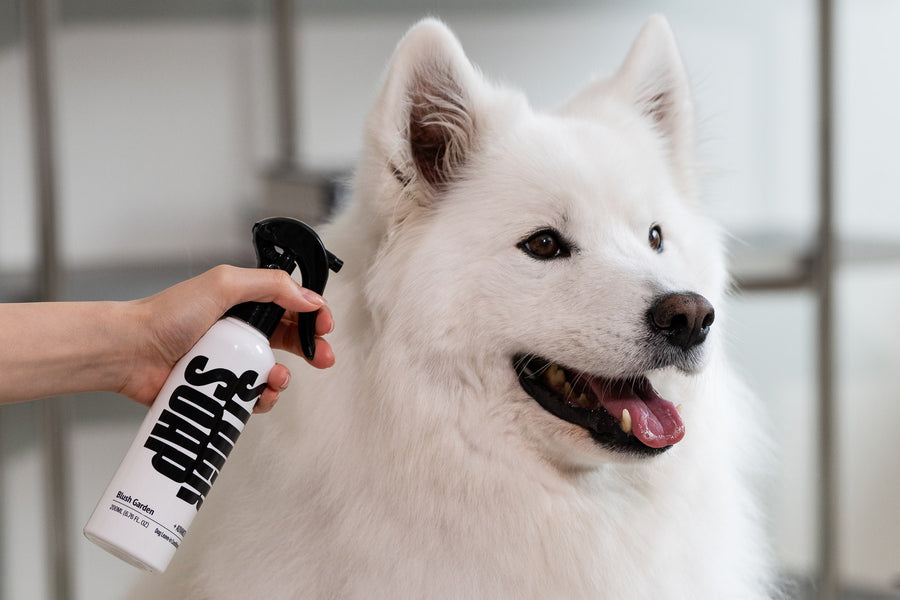
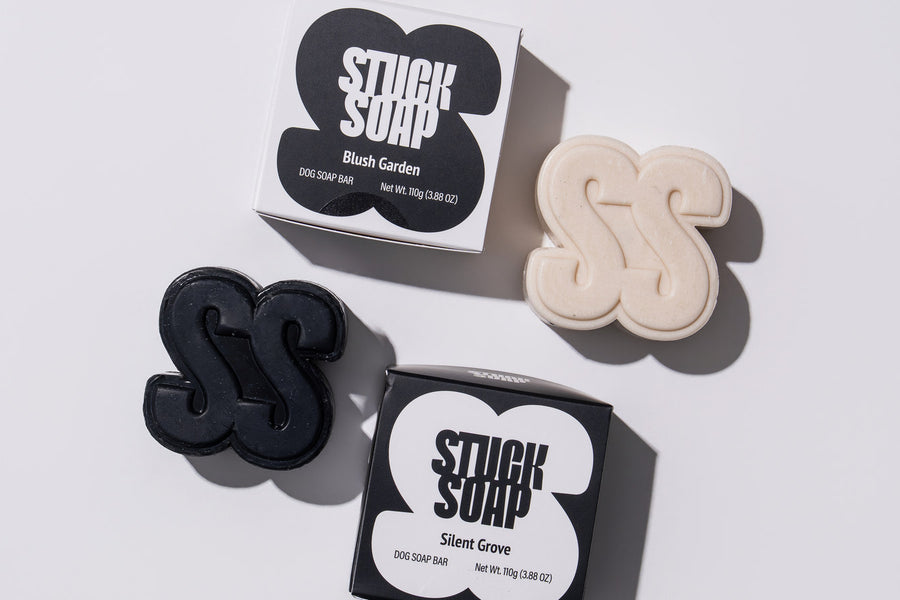
Mulberry season means muddy paws, sticky fur, and a coat that has been through it. Stuck Soap is built on the K-Beauty ingredients whose benefits actually hold up for dogs: Jeju green tea for antioxidant protection, Centella asiatica to calm irritation, and camellia oil for a soft, glossy coat. pH-balanced and gentle enough for the washes that summer demands.
Shop Stuck Soap →Vegan · pH-Balanced · Jeju Island Botanicals · Zero Waste