


Your dog scratches at a dry, flaky patch behind the ear. You run a hand down the coat and feel that telltale rough, dull texture instead of the soft shine you remember. Dry skin is one of the most common reasons dog owners reach for a new shampoo, and the K-Beauty world has a fresh answer worth understanding: polyglutamic acid for dogs.
If you follow human skincare, you have probably seen polyglutamic acid (often shortened to PGA) trending as "the ingredient that holds more water than hyaluronic acid." It is one of the buzziest hydration heroes in Korean beauty right now. But does this fermented moisture magnet have any place in your dog's grooming routine?
In this guide, we explore what polyglutamic acid actually is, the science behind its remarkable water-holding power, and how its moisture-locking, skin-barrier-supporting qualities connect to the gentle K-Beauty philosophy that is reshaping premium dog care. PGA is not yet a mainstream pet ingredient, so we will be clear about what is proven, what is promising, and how to think about hydration for your dog the smart way.
Table of Contents
What Is Polyglutamic Acid?
Polyglutamic acid is a water-soluble peptide, essentially a chain of glutamic acid (an amino acid) molecules linked together. Unlike lab-built synthetics, it is produced through natural fermentation, which is part of why the K-Beauty community loves it.
Its roots run deep in East Asian food culture. Gamma-PGA is the sticky, stringy substance found in natto, the fermented Japanese soybean dish, and in chungkookjang, a traditional Korean fermented soybean food. Both are made using Bacillus subtilis bacteria, the same family of microbes used to brew PGA for skincare today.
There is even a direct Korean connection that pet parents following the STUCK SOAP story will appreciate: researchers isolated a novel Bacillus subtilis strain from the Gotjawal Wetland on Jeju Island and used it to produce high-molecular-weight polyglutamic acid. Jeju, the volcanic island prized for its clean botanicals, keeps proving to be a wellspring of K-Beauty ingredients.
In cosmetics, PGA functions as a humectant and film-former. A humectant is an ingredient that attracts and binds water; a film-former lays down a light, breathable layer on the skin's surface that helps lock that moisture in. Together, those two jobs make PGA a hydration powerhouse.
Polyglutamic Acid vs. Hyaluronic Acid
Hyaluronic acid has been the reigning hydration champion in skincare for years, so the obvious question is how polyglutamic acid compares. The headline difference is water-holding capacity.
Hyaluronic acid can hold roughly 1,000 times its weight in water. Polyglutamic acid, by some measures, can bind up to 4,000 times its weight, making it one of the most efficient humectants studied in skincare. That is a dramatic difference on paper.
They also work in different places. Hyaluronic acid tends to draw moisture deeper into the skin, while polyglutamic acid is a larger molecule that mostly stays near the surface, forming that moisture-sealing film and helping reduce water loss. Some research suggests PGA can also support the skin's own natural moisturizing factors, the built-in compounds that keep the outer layer supple.
The most interesting takeaway from human skincare is not that one beats the other, but that they are complementary. Hyaluronic acid pulls water in; polyglutamic acid helps hold it there. In the context of dog skincare, this layered, moisture-locking logic mirrors exactly what dry, barrier-compromised skin needs.
Why Hydration Matters for Your Dog's Skin
Here is the key thing to understand: your dog's skin barrier works on the same fundamental principles as yours. The outermost layer is built to hold moisture in and keep irritants out. When that barrier is healthy, skin stays supple and the coat looks glossy. When it is compromised, water escapes, flakes appear, and itching often follows.
Dog dry skin has many triggers. Winter heating can drop indoor humidity below 30 percent, pulling moisture straight out of the skin barrier. Frequent bathing with harsh, high-pH shampoos strips away protective oils. Allergies, parasites, and diet all play a role too. Whatever the cause, the visible result is often the same: dull coat, dandruff-like flakes, and a dog who will not stop scratching.
Veterinary guidance consistently points to barrier support as central to managing dry skin. That means avoiding products that strip natural oils, supporting the skin with the right fatty acids, and using gentle, moisture-respecting cleansers. Hydration is not a luxury for a dog's skin; it is the foundation of comfort and coat health.
This is precisely where humectant-rich, barrier-friendly ingredients earn their reputation, and why the moisture science behind polyglutamic acid is so relevant to the conversation about canine skincare.
Polyglutamic Acid for Dogs: What We Know
Let's be straight about the evidence. Most polyglutamic acid research has been conducted on human skin models, keratinocyte cultures, and reconstructed skin, not in clinical canine studies. A 2024 study on a novel Bacillus subtilis-derived PGA, for example, demonstrated strengthened skin barrier function and improved moisture retention in keratinocytes and a reconstructed skin model. Those results are genuinely promising, but they describe human skin systems.
So we are exploring potential here, not making medical claims. The biological case is reasonable: because dog skin shares the same basic barrier architecture and moisture dynamics as human skin, an ingredient that excels at surface hydration and water retention could offer similar benefits. PGA is also non-irritating, fragrance-free in its raw form, and biodegradable, which fits the gentle, eco-conscious priorities of K-Beauty pet care.
What we would not do is suggest applying a human polyglutamic acid serum directly to your dog. Human formulations often contain additional actives, fragrances, or preservatives that are not formulated for canine skin or for the inevitable licking that follows. If you are curious about PGA for your dog, the responsible path is to look for purpose-built pet products as the ingredient enters the market, and to talk to your veterinarian about persistent dry skin.
The bigger picture is the trend itself. Polyglutamic acid is part of a wave of fermented, K-Beauty-born hydration ingredients moving from human shelves into premium pet care. Centella asiatica, green tea, camellia oil, and rice extract have already made that jump. PGA is a natural next candidate to watch.
The K-Beauty Approach to a Hydrated, Healthy Coat
You do not need to wait for a polyglutamic acid dog shampoo to give your dog the benefits of the K-Beauty hydration philosophy. The philosophy is the point: gentle cleansing, pH balance, and ingredients that respect and support the skin barrier rather than strip it.
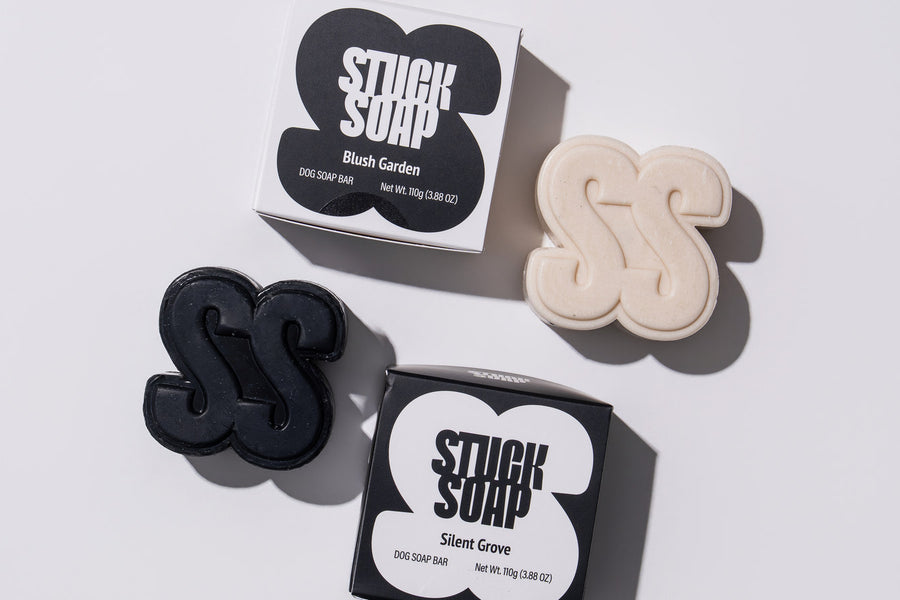
This is the thinking behind STUCK SOAP. Rather than chasing a single trendy molecule, the formulas are built around proven Jeju Island botanicals: green tea for antioxidant protection, camellia oil for moisture and coat gloss, and centella asiatica for soothing, barrier-supporting comfort. Each is a K-Beauty staple, chosen for the same reasons skincare formulators reach for them: they are gentle, effective, and kind to sensitive skin.
Polyglutamic acid is exciting because it validates the framework. The skincare world is converging on the idea that hydration and barrier health are everything, and that fermented, plant-derived, gentle ingredients are the best way to get there. That is the K-Beauty for dogs thesis in a single ingredient.
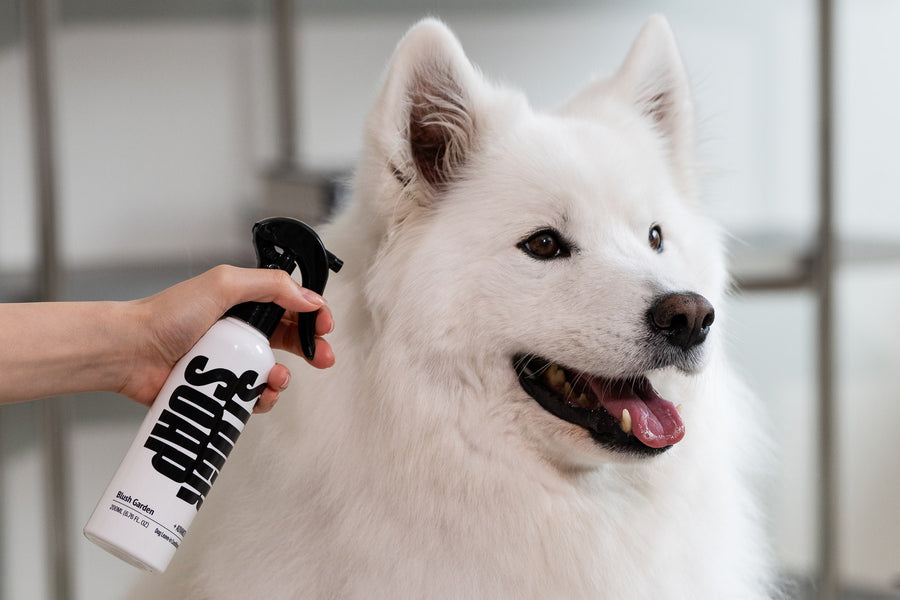
STUCK SOAP's pH-balanced, vegan, plant-based formulas are designed to clean thoroughly without stripping the natural oils that keep your dog's skin hydrated. Whether the future of canine hydration includes PGA or not, the principle stays the same: support the barrier, lock in moisture, and let a healthy coat follow.
Practical Tips for Tackling Dog Dry Skin
While the science on polyglutamic acid for dogs continues to develop, here are vet-aligned, K-Beauty-inspired steps you can take today to keep your dog's skin hydrated and comfortable:
1. Do not over-bathe. Bathing too frequently strips protective oils and worsens dryness. For most dogs, every three to four weeks is plenty unless your vet advises otherwise.
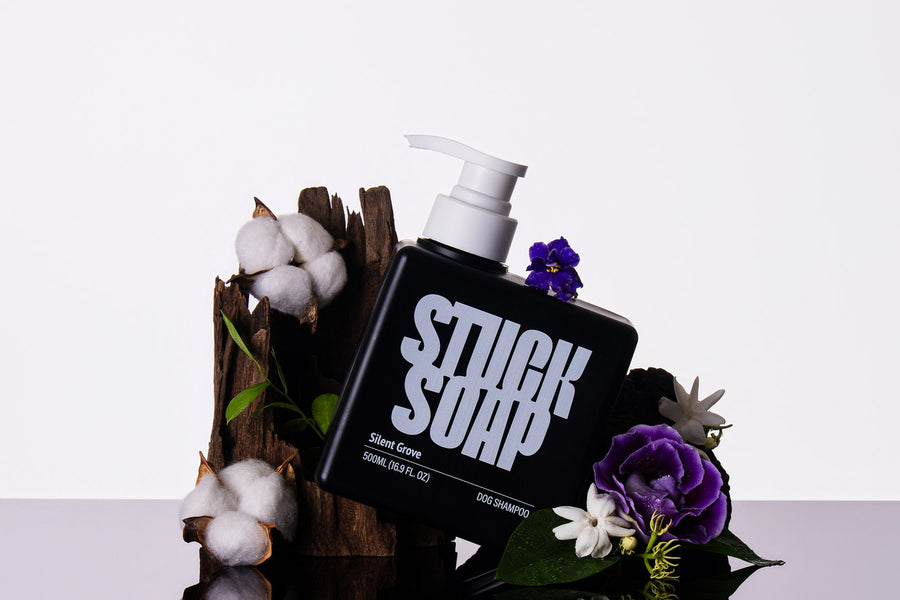
2. Choose a pH-balanced, gentle shampoo. Harsh, high-pH or sulfate-heavy products damage the skin barrier. Look for plant-based, moisture-respecting formulas with soothing botanicals like centella, green tea, or oatmeal.
3. Support the barrier from the inside. Omega-3 and omega-6 fatty acids help maintain the skin's protective barrier. Ask your vet about a quality supplement if your dog's coat is chronically dull.
4. Manage your home environment. Running a humidifier in dry months adds moisture back to the air and can ease flaky, itchy winter skin.
5. Rinse thoroughly. Leftover shampoo residue is a sneaky cause of irritation and dryness. Rinse until the water runs completely clear.
6. Know when to see a vet. Persistent dryness, redness, sores, or relentless scratching can signal allergies, parasites, or infection. Dry skin is sometimes a symptom of something that needs professional treatment.
Frequently Asked Questions
What is polyglutamic acid?
Polyglutamic acid (PGA) is a water-soluble peptide made through natural fermentation using Bacillus subtilis bacteria, the same microbes found in fermented foods like Korean chungkookjang and Japanese natto. In skincare, it acts as a powerful humectant that can hold up to 4,000 times its weight in water.
Is polyglutamic acid safe for dogs?
Pure polyglutamic acid is non-irritating, biodegradable, and gentle, but most research has been done on human skin rather than dogs. We do not recommend applying human PGA serums to dogs, since those products often contain other actives and fragrances. Look for purpose-built pet products and consult your vet about persistent dry skin.
Is polyglutamic acid better than hyaluronic acid?
Polyglutamic acid holds more water (up to 4,000x its weight versus about 1,000x for hyaluronic acid) and forms a moisture-sealing film on the surface. Hyaluronic acid draws moisture deeper. They are complementary rather than competitors, working best together.
Does STUCK SOAP contain polyglutamic acid?
No. STUCK SOAP is formulated around proven Jeju Island botanicals: green tea, camellia oil, and centella asiatica. These K-Beauty ingredients support hydration and the skin barrier through the same gentle, fermented-and-plant-based philosophy that makes PGA so popular in human skincare.
How can I tell if my dog has dry skin?
Common signs include white flakes (dandruff), a dull or rough coat, increased scratching, and patches of redness or irritation. If symptoms are severe or persistent, see your veterinarian, since dry skin can be a symptom of allergies, parasites, or other conditions.
The Bottom Line
Polyglutamic acid is one of the most impressive hydration ingredients in modern K-Beauty, a fermented peptide that out-holds hyaluronic acid and supports the skin barrier where it counts. While direct canine research is still early, the science is promising, and PGA fits squarely within the gentle, moisture-first philosophy reshaping premium dog care.
You do not have to chase the newest molecule to give your dog hydrated, healthy skin. Focus on the fundamentals: gentle, pH-balanced cleansing, barrier-supporting botanicals, and a routine that respects rather than strips your dog's natural oils. That is the heart of K-Beauty for dogs, and it is available to your pup today.
Sources & References
- Poly-γ-Glutamic Acid from a Novel Bacillus subtilis Strain: Strengthening the Skin Barrier and Improving Moisture Retention — National Library of Medicine (PMC)
- Polyglutamic Acid: Production, Natto and Chungkookjang Origins — Wikipedia
- Polyglutamic Acid: A Novel Peptide for Skin Care — Cosmetics & Toiletries
- Dog Dry Skin: Causes, Treatments, and Prevention — PetMD
- How to Moisturize Dog Skin: Vet Tips for Dry Skin — Sploot Veterinary Care
Give Your Dog the K-Beauty Spa Treatment
Hydration starts with gentle, barrier-friendly cleansing. STUCK SOAP's pH-balanced formulas are built around Jeju Island botanicals like green tea, camellia oil, and centella asiatica, so they clean deeply without stripping the natural oils that keep your dog's skin soft and their coat glossy.
Shop Stuck Soap →Vegan · pH-Balanced · Jeju Island Botanicals · Zero Waste