


If you have spent any time exploring Korean skincare, you have almost certainly seen pomegranate on an ingredient list. It is one of K-Beauty's most beloved antioxidant superfruits, prized for its ability to defend skin against everyday damage and keep it looking healthy and radiant. So it is natural to wonder: could pomegranate for dogs deliver some of those same skin and coat benefits?
It is a fair question, and a smart one. The same gentle, ingredient-first philosophy that makes K-Beauty so effective for human skin translates surprisingly well to canine care. Dogs have skin barriers, sebum, and antioxidant needs just like we do, and the biology of oxidative stress is remarkably similar across species.
In this guide, we will break down what makes pomegranate a K-Beauty hero, what current research suggests about antioxidants for your dog's skin and coat, and the safety rules every owner should know before reaching for that ruby-red fruit. As always, we will be honest about where the science is solid and where it is still emerging.
Table of Contents
- What Makes Pomegranate a K-Beauty Superstar?
- Why Antioxidants Matter for Your Dog's Skin and Coat
- Pomegranate for Dogs: What the Research Suggests
- Is Pomegranate Safe for Dogs? Feeding vs. Topical
- How to Bring K-Beauty Antioxidants Into Your Dog's Routine
- Frequently Asked Questions
- Sources & References
What Makes Pomegranate a K-Beauty Superstar?
Pomegranate (botanical name Punica granatum) has been treasured across Korea, the Middle East, and the Mediterranean for centuries, both as a food and a beauty ritual. In modern K-Beauty it has earned the nickname "superfruit" for one simple reason: it is packed with antioxidants.
The two compounds that get the most attention are ellagic acid and punicalagins. Ellagic acid has been shown to help protect skin from UV damage and support collagen, while punicalagins are powerful free-radical scavengers with anti-inflammatory and antimicrobial properties. Pomegranate seed oil also delivers punicic acid, a rare omega-5 fatty acid studied for repairing photo-damaged skin, plus a dose of naturally occurring vitamin C.
In human skincare, these compounds are credited with neutralizing free radicals, calming inflammation, brightening dull skin, and supporting a firmer, more resilient complexion. A 2025 randomized, placebo-controlled clinical study even found that a standardized pomegranate extract improved several skin-health measures in healthy volunteers, adding clinical weight to what tradition has long suggested.
Korea's connection to pomegranate runs especially deep. The beloved K-Beauty brand innisfree built an entire line around Jeju-grown pomegranate, squeezing the whole fruit to capture its antioxidants at peak potency. That Jeju Island origin story will sound familiar to STUCK SOAP fans, because our own botanicals come from the same pristine volcanic island.
Why Antioxidants Matter for Your Dog's Skin and Coat
To understand why a K-Beauty antioxidant ingredient might matter for your dog, you first need to understand oxidative stress. In simple terms, oxidative stress is an imbalance between damaging molecules called free radicals and the antioxidant defenses that keep them in check. When free radicals win, the result is cellular damage and inflammation.
This is not just a human concern. Veterinary research has linked elevated oxidative stress to atopic dermatitis, one of the most common skin conditions in dogs, in much the same way it has in people. Environmental stressors like UV exposure, pollution, and seasonal allergens all add to a dog's free-radical load, and over time that can show up as a dull coat, dry patches, and itchy, irritated skin.
Antioxidants are the counterweight. Vitamin E, vitamin C, and plant polyphenols such as those found in green tea all help neutralize free radicals and dial down the inflammation that contributes to chronic skin trouble. The effect can be measurable: in one clinical study, dogs fed a diet enriched with antioxidants, polyphenols, and omega-3 fatty acids showed a 25 percent reduction in dermatologic severity scores at 30 days and a 49 percent reduction at 60 days.
The takeaway is encouraging. A well-supported antioxidant defense, whether from diet, supplements, or gentle topical care, can help your dog maintain calmer skin and a shinier, healthier-looking coat. That is exactly the gap a fruit like pomegranate is theoretically built to fill.
Pomegranate for Dogs: What the Research Suggests
Here is where honesty matters. Pomegranate is not a core ingredient in most canine skincare, and dog-specific studies on it are still limited. So rather than make bold claims, it is best to think of pomegranate for dogs as a promising area of exploration rather than a proven therapy.
What we can say is that pomegranate's active compounds behave consistently across species in the lab. Ellagic acid and punicalagins are antioxidants by their very chemistry, and the oxidative-stress pathways they act on exist in dogs too. That is why pomegranate extract increasingly appears in pet supplements and functional treats marketed for immune and antioxidant support, where the fruit has been processed to remove its riskier parts.
On the topical side, pomegranate fits neatly into the broader "skinification" of pet care, the trend of borrowing proven human skincare ingredients and reformulating them gently for animals. Its punicic acid content and soothing, anti-inflammatory profile make it a plausible candidate for coat-conditioning and barrier-supporting products down the road.
The responsible bottom line: pomegranate looks supportive, not curative. It is the kind of antioxidant booster that may complement a healthy routine, not a fix for an actual skin condition. If your dog has persistent itching, redness, or hair loss, that calls for a veterinarian, not a fruit.
Is Pomegranate Safe for Dogs? Feeding vs. Topical
This is the most important section, because "antioxidant superfruit" does not automatically mean "safe to hand your dog a pomegranate." The answer depends entirely on form.
Eating raw pomegranate. Pomegranate is not on the ASPCA's list of fruits toxic to dogs, but the raw fruit is still a poor choice. The hard seeds (arils) are difficult for dogs to digest and can trigger stomach upset, and in small dogs they pose a choking or intestinal blockage risk. The bitter peel and inner membranes contain concentrated tannins that can cause vomiting and diarrhea if eaten in quantity. A lick of plain flesh is unlikely to harm a healthy dog, but pomegranate is simply not worth the digestive gamble as a snack.
Pomegranate extract in formulated products. This is a different story. Pomegranate dog treats, supplements, and skincare products use a refined extract that strips out the indigestible seeds and irritating peel while keeping the beneficial antioxidants. These purpose-made products are generally considered safe when used as directed.
Topical use. Pomegranate applied to the skin in a properly formulated shampoo or balm avoids the digestive issues entirely. Still, follow common-sense rules: do a small patch test first, keep products away from your dog's eyes, and rinse thoroughly. Never apply concentrated pomegranate essential oils or DIY mixtures without veterinary guidance.
And the golden rule that applies to every new ingredient: talk to your veterinarian before adding pomegranate, in any form, to your dog's routine, especially if your dog is pregnant, on medication, or has a known health condition.
How to Bring K-Beauty Antioxidants Into Your Dog's Routine
You do not need a pomegranate tree to give your dog the benefits of antioxidant care. The K-Beauty approach is less about any single hero ingredient and more about a consistent, gentle, barrier-first routine. Here is how to put it into practice:
Choose gentle, antioxidant-rich grooming. Look for pH-balanced, plant-based shampoos that feature proven antioxidant botanicals like green tea and vitamin E. These deliver free-radical protection during the bath without harsh sulfates that strip the coat.
Do not over-bathe. Washing too often removes the protective oils your dog's skin needs. For most dogs, every three to four weeks is plenty, adjusted for breed and lifestyle.
Feed the skin from the inside. A balanced diet rich in omega-3 fatty acids supports the skin barrier, and your vet can advise whether an antioxidant supplement makes sense for your dog.
Brush regularly. Brushing distributes natural sebum along the hair shaft, which is the original, no-cost way to make a coat glossy.
Mind the sun. Limit intense midday sun exposure, especially for dogs with thin or light-colored coats, to reduce UV-driven oxidative stress.
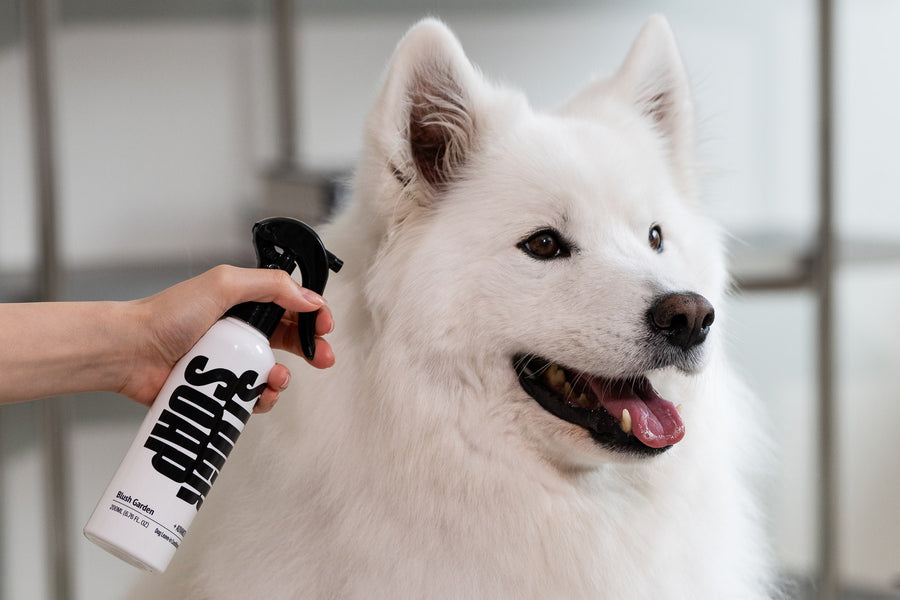
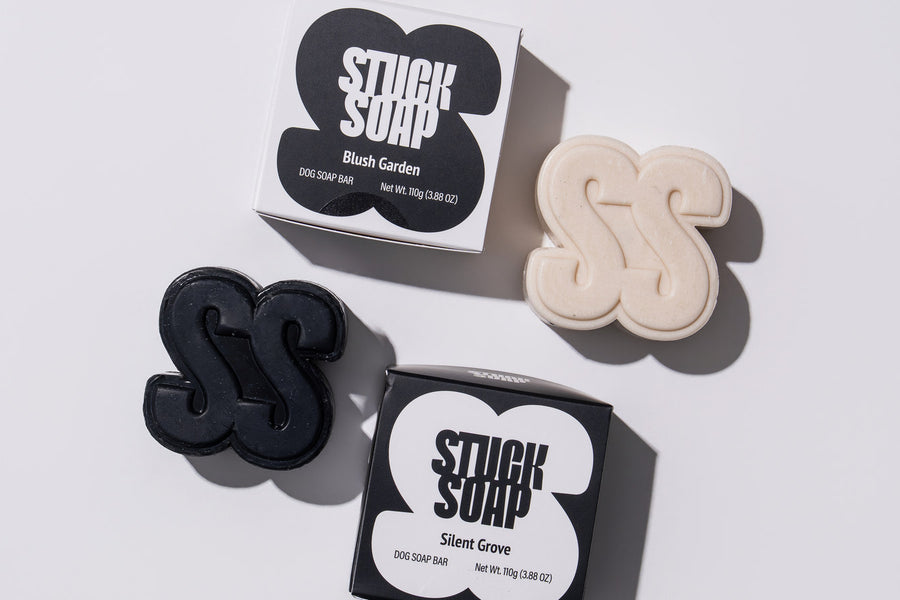
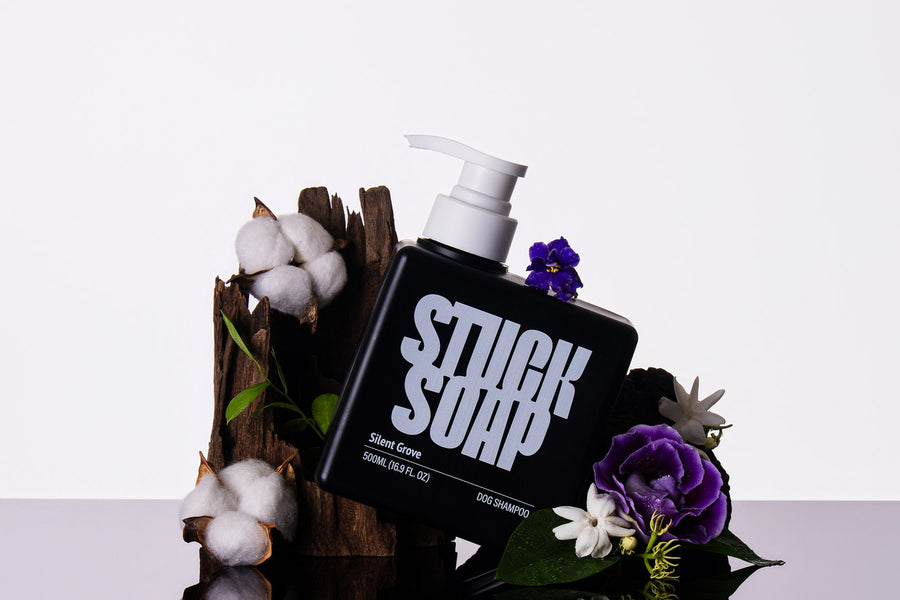
This is the philosophy STUCK SOAP is built on. While our formulas do not use pomegranate, they channel the same K-Beauty antioxidant thinking through Jeju Island green tea, camellia oil, and centella asiatica. Each is a gentle, plant-based ingredient chosen to support your dog's skin barrier and leave the coat soft, fresh, and naturally shiny, no harsh chemicals required.
Frequently Asked Questions
Can dogs eat pomegranate?
Pomegranate is not toxic to dogs, but raw pomegranate is not recommended. The seeds are hard to digest and can cause stomach upset or, in small dogs, a blockage risk, while the peel and membranes contain tannins that can trigger vomiting. A formulated pomegranate dog treat is a much safer way to deliver the antioxidants. Always check with your vet first.
Is pomegranate extract safe for dogs?
Pomegranate extract used in pet treats, supplements, and skincare is generally considered safe because it removes the indigestible seeds and irritating peel while keeping the beneficial antioxidants. Use products as directed and introduce anything new gradually under veterinary guidance.
Does pomegranate help a dog's coat?
Pomegranate is rich in antioxidants like ellagic acid and punicalagins that may help combat the oxidative stress linked to dull, irritated skin. Direct canine research is still limited, so think of it as a supportive antioxidant booster rather than a proven coat treatment. Consistent gentle grooming and good nutrition remain the foundation of a shiny coat.
What K-Beauty ingredients are safe for dogs?
Several gentle K-Beauty antioxidants and soothers translate well to dog care, including green tea extract, camellia oil, centella asiatica (cica), and vitamin E. The key is using them in pH-balanced, dog-specific formulations rather than human products, which are often too acidic for canine skin.
The Bottom Line on Pomegranate for Your Dog
Pomegranate earns its K-Beauty superfruit reputation honestly. Its antioxidant compounds are well-studied in human skin, and the oxidative-stress science behind them applies to dogs too, which is what makes it such an intriguing ingredient for the future of pet care. At the same time, the raw fruit carries real digestive risks, and direct canine research is still catching up.
The smartest move is to embrace the principle rather than the produce: build your dog's routine around gentle, antioxidant-rich, pH-balanced care, and let proven botanicals do the work. Your dog cannot tell you their skin feels calmer, but a soft, glossy, fresh-smelling coat speaks for itself.
Sources & References
- Can Dogs Eat Pomegranates? — American Kennel Club (AKC)
- Can Dogs Eat Pomegranate? — PetMD
- Phytochemicals and Pharmacology of Pomegranate (Punica granatum L.) — Frontiers in Nutrition
- Efficacy and Safety of a Punica granatum Extract in Skin Health: A Randomized Clinical Study — PMC / NIH
- Clinical Trial on a Dietetic Food for Pruritus and Dermatologic Scoring in Atopic Dogs — PMC / NIH
- Pomegranate Extract: A Skincare Antioxidant — PROVEN
Give Your Dog the K-Beauty Spa Treatment
Pomegranate may be the antioxidant superfruit of the moment, but the K-Beauty magic is really about gentle, barrier-first care. STUCK SOAP brings that philosophy home with Jeju Island green tea, camellia oil, and centella asiatica, vegan and pH-balanced for your dog's skin. Healthy skin, glossy coat, lasting freshness.
Shop Stuck Soap →Vegan · pH-Balanced · Jeju Island Botanicals · Zero Waste