


If your dog's paws crack in winter, their nose goes rough and flaky, or their coat just won't hold that soft, healthy feel, you've probably gone looking for a gentle fix. More and more dog parents are landing on the same answer the K-Beauty world has trusted for years: shea butter. Rich, buttery, and plant-based, shea butter has been a staple in Korean moisturizers, balms, and barrier creams precisely because it nourishes skin without harsh chemicals.
So the natural question follows. If shea butter for dogs is as gentle and effective as it is for human skin, can it actually help your pup's dry skin, rough paws, and dull coat? The short answer is yes, when used correctly, and the science behind why is genuinely interesting.
In this guide we'll break down what shea butter is, why K-Beauty loves it, what it can do for your dog's skin and coat, how to use it safely, and where it fits into a gentle, ingredient-first grooming routine.
Table of Contents
What Is Shea Butter? The K-Beauty Connection
Shea butter is a creamy, off-white fat extracted from the nuts of the African shea tree (Vitellaria paradoxa). For centuries it's been used across West Africa as a skin and hair conditioner, and over the last decade it has become a quiet workhorse ingredient in clean beauty formulations worldwide.
In K-Beauty specifically, shea butter shows up in barrier creams, sleeping masks, and balms because it aligns perfectly with the Korean skincare philosophy: nourish the skin barrier with gentle, plant-derived ingredients rather than stripping it. Korean formulators prize ingredients that are multitasking, well-tolerated, and rooted in nature, and shea butter checks every box.
That same philosophy is now reshaping how we think about dog grooming. The idea is simple but powerful: the gentle, barrier-supporting ingredients that work for sensitive human skin often translate beautifully to a dog's skin, which is actually thinner and more sensitive than ours.
The Science: Why Shea Butter Works on Skin
Shea butter isn't just a greasy moisturizer. Its effectiveness comes from a specific, well-studied composition.
The bulk of shea butter is made up of fatty acids, primarily oleic acid (roughly 40 to 60 percent) and stearic acid (around 20 to 50 percent), along with linoleic and linolenic acids. These fatty acids closely mirror the lipids found in skin, so they slot into the skin's natural lipid matrix and help reinforce the barrier rather than sitting uselessly on top.
Then there's the non-saponifiable fraction, which makes up an unusually high 5 to 17 percent of shea butter. This is where the bioactive magic lives: triterpenes, tocopherols (vitamin E), and phytosterols that deliver anti-inflammatory and antioxidant benefits. For comparison, most plant oils have a non-saponifiable fraction of just 1 percent or less, so shea butter is exceptionally rich in these protective compounds.
Shea butter also contains vitamins A, E, and F, which support cell regeneration, antioxidant defense, and barrier elasticity. The result is an ingredient that both moisturizes and protects.
The numbers back it up. Recent laboratory research investigating shea butter's effect on skin barrier function found that transepidermal water loss (TEWL), the rate at which skin loses moisture, dropped by 37.8 percent within 24 hours, while skin hydration rose by 58 percent over the same period. In plain terms: shea butter helps skin hold onto its own moisture while sealing out irritants.
Shea Butter Benefits for Your Dog's Skin and Coat
So how does all that translate to your dog? While most of the formal research on shea butter has been conducted on human skin, the mechanism, sealing in moisture and reinforcing the lipid barrier, applies to canine skin too. Veterinary and grooming sources widely recognize shea butter as a safe, effective natural moisturizer for dogs. Here's where it shines.
Dry, flaky skin. If your dog has dull, dandruff-like flakes or rough patches, shea butter's occlusive fatty acids form a protective layer that slows moisture loss while the skin underneath rehydrates.
Cracked paw pads. Paw pads take a beating from hot pavement, rough trails, road salt, and cold winter air. Shea butter is one of the most commonly recommended ingredients in canine paw balms because it softens and protects this thick, vulnerable skin.
Rough, crusty noses. A dog's nose can dry out and crack, especially in older dogs or in dry climates. A dab of shea butter helps soothe and soften this delicate area, and because it's edible, the occasional lick is no problem.
Itchy, irritated skin. Shea butter's triterpenes and vitamin E give it natural anti-inflammatory and antioxidant properties, which may help calm minor irritation and environmental stress on the skin.
Dull coat. By nourishing the skin and supplying skin-friendly fatty acids, shea butter can support a softer, glossier-looking coat from the foundation up.
It's worth being clear-eyed here: shea butter is a supportive moisturizing ingredient, not a cure for medical skin conditions. Persistent itching, hot spots, hair loss, or infections need a veterinarian, not a balm.
Is Shea Butter Safe for Dogs?
This is the most important question, and the good news is reassuring. Shea butter is generally recognized as safe and non-toxic for dogs, including if they lick a small amount off their paws or nose during normal grooming. Unlike some essential oils and many human lotion ingredients, raw shea butter is edible and gentle.
That said, a few sensible guidelines matter:
Choose unrefined, raw, organic shea butter with no added fragrances, dyes, or other actives. Many human shea products contain ingredients that aren't dog-safe, so the simpler the better, or choose a product formulated specifically for pets.
Use small amounts. While shea butter itself is safe, eating a large quantity of any fat can cause mild digestive upset like a loose stomach. A thin layer is all your dog needs.
Watch for allergies. Allergic reactions are rare, but possible. The first time you use it, apply a small amount to one spot and check for any redness or irritation over the next day before using it more broadly.
Skip it on open wounds. For broken skin, deep cracks, or anything infected, see your vet rather than self-treating with a balm.
How to Use Shea Butter on Your Dog
Using shea butter on your dog is refreshingly simple. Here's a practical, K-Beauty-inspired approach.
Warm it up. Scoop a small amount (think pea-sized for paws, less for the nose) and rub it between your fingers. Your body heat will melt it into a smooth, spreadable oil.
Apply to target areas. Gently massage it into paw pads, the nose, elbows, or any dry patches. The massage itself boosts circulation and helps the butter absorb.
Time it well. Apply after a walk (once paws are clean) or, even better, after bath time when the skin is clean and primed to absorb moisture. This mirrors the K-Beauty principle of layering hydration onto freshly cleansed skin.
Distract for a few minutes. Give your dog a chew or a short play session so the butter has a moment to soak in before they lick it off. A light sock on the paws can help for the first few minutes if needed.
Keep it occasional and observe. A few times a week is plenty for most dogs. Watch how their skin responds and adjust.
The K-Beauty Approach to Canine Moisture
Here's the bigger picture. Shea butter is one example of a broader shift: dog grooming is being reimagined through the lens of K-Beauty, where the focus is on gentle, plant-based ingredients that support the skin barrier instead of stripping it.
The K-Beauty mindset starts with cleansing that respects the skin's natural balance, then layers in nourishing botanicals. A harsh, high-stripping shampoo undoes the benefit of any moisturizer you apply afterward, so the foundation matters as much as the finishing balm.
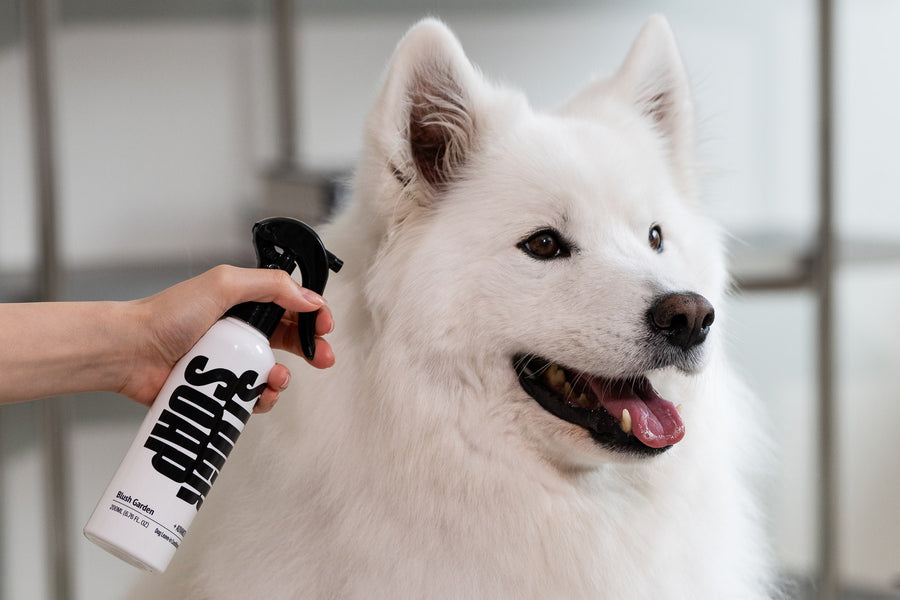
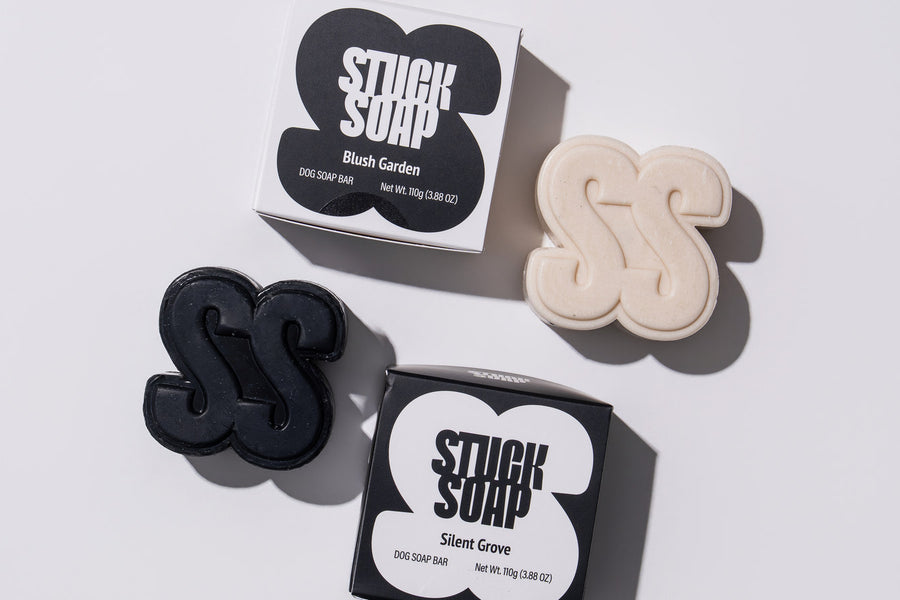
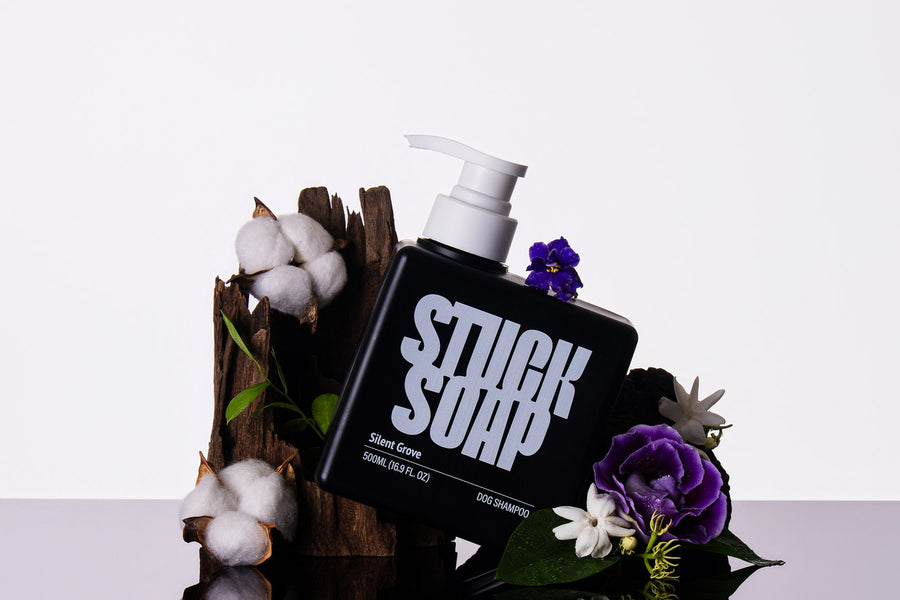
That's exactly the thinking behind Stuck Soap. Our vegan, pH-balanced dog shampoos are built on Korean skincare philosophy and use plant-based Jeju Island botanicals like green tea, centella asiatica, and camellia oil, Korea's treasured nourishing oil, to cleanse gently while supporting the skin barrier. While shea butter is a wonderful spot-treatment for paws and noses, a barrier-friendly wash is what sets the stage for a soft, healthy coat all over. The two work hand in hand: gentle cleansing first, targeted moisture where your dog needs it.
If you've been impressed by what plant-based ingredients do for your own skin, your dog deserves the same standard of care.
Frequently Asked Questions
Is shea butter safe if my dog licks it?
Yes. Raw, unrefined shea butter is non-toxic and edible, so a small lick during normal grooming is harmless. Just use unscented, additive-free shea butter and apply only a thin layer, since eating large amounts of any fat can cause mild stomach upset.
Can I use human shea butter products on my dog?
Only if the product is pure, unrefined shea butter with no added fragrances, essential oils, or other actives, many of which aren't dog-safe. The safest choice is raw organic shea butter or a balm formulated specifically for pets.
What does shea butter actually do for a dog's skin?
It forms a protective barrier that slows moisture loss while its fatty acids and vitamins (A, E, and F) nourish the skin underneath. This helps soften dry skin, cracked paws, and rough noses, and supports a healthier-looking coat.
How often can I apply shea butter to my dog?
For most dogs, a few times a week is plenty, ideally after a walk or a bath when the skin is clean. Always start with a small patch test the first time to rule out any rare sensitivity.
Is shea butter part of K-Beauty dog care?
Shea butter is a popular plant-based moisturizer in K-Beauty for its gentle, barrier-supporting properties. While Stuck Soap's shampoos use Jeju botanicals like green tea, centella, and camellia oil rather than shea butter, both reflect the same K-Beauty philosophy of nourishing skin with gentle, plant-derived ingredients.
The Bottom Line
Shea butter has earned its place as a gentle, plant-based moisture hero, first in K-Beauty and now in thoughtful dog care. Rich in skin-friendly fatty acids, vitamins, and anti-inflammatory compounds, it's a safe and effective way to soothe dry skin, cracked paws, and rough noses when used in small amounts and with simple, additive-free products.
Think of it as one tool in a barrier-first grooming approach. Pair targeted shea butter treatments with a gentle, pH-balanced wash, and you're giving your dog the same ingredient-first care that's transformed human skincare.
Sources & References
- Investigation of the In Vitro Effects of Shea Butter on Skin Barrier Function and Hydration — Open Journal of Chemistry
- Our Favorite Treatments for Dry Dog Skin: Butters, Salves, and Oils — Rover
- Is Shea Butter Good for Dogs? Benefits for Paws, Noses, Skin — Lolahemp
- The Benefits of Shea Butter for Your Skin — Curology
- How To Moisturize Dog Skin: 5 Ways To Keep Their Coat Soft — PetLab Co.
Give Your Dog the K-Beauty Spa Treatment
A great moisturizer only works on a healthy foundation. Stuck Soap's vegan, pH-balanced shampoos cleanse gently with Jeju Island botanicals like green tea, centella, and camellia oil, supporting your dog's skin barrier so moisture stays where it belongs. Gentle cleansing first, glowing coat next.
Shop Stuck Soap →Vegan · pH-Balanced · Jeju Island Botanicals · Zero Waste