


If you've stepped into a K-Beauty shop in Seoul or scrolled through Korean skincare TikTok recently, you've almost certainly seen snow mushroom popping up everywhere. Marketed as a plant-based alternative to hyaluronic acid, this delicate white fungus, scientifically called Tremella fuciformis, is being added to serums, sheet masks, and creams for one reason: it holds water like almost nothing else in nature.
But here's the question more pet parents are asking in 2026: if snow mushroom can plump and hydrate human skin so effectively, could snow mushroom for dogs work the same magic on dry, flaky canine skin? It's a fair question, especially as the “skinification” of pet care continues to bring human-grade K-Beauty ingredients into the grooming aisle.
In this guide, we'll break down what snow mushroom actually is, what the research says about its skin benefits, whether it's safe and effective for dogs, and how the broader K-Beauty hydration philosophy can shape a smarter, gentler bathing routine for your pup.
Table of Contents
- What Is Snow Mushroom (Tremella Fuciformis)?
- Snow Mushroom vs. Hyaluronic Acid: The K-Beauty Showdown
- Snow Mushroom for Dogs: What the Research Says
- How Snow Mushroom Could Help Canine Skin
- Safety Considerations Before You Try Anything New
- Building a K-Beauty Hydration Routine for Your Dog
- Frequently Asked Questions
- Sources & References
What Is Snow Mushroom (Tremella Fuciformis)?
Snow mushroom, also known as snow fungus, silver ear, or by its scientific name Tremella fuciformis, is a translucent, white, jelly-like mushroom that has been cultivated and consumed for centuries across East Asia. In traditional Korean and Chinese medicine, it earned the nickname “the mushroom of beauty” thanks to a long folk reputation for keeping skin soft, supple, and youthful.
The story most often told: Yang Guifei, one of the legendary beauties of the Tang Dynasty, was said to have eaten snow mushroom regularly to maintain her famously radiant skin. Whether the legend is exact or not, modern science has caught up with the folk wisdom, and the ingredient has become a centerpiece of contemporary K-Beauty hydration formulas.
What makes it special isn't the mushroom itself, but the polysaccharides it contains. These long-chain sugar molecules, including a high concentration of beta-glucans, are the active components responsible for its dramatic moisture-holding properties on skin.
Snow Mushroom vs. Hyaluronic Acid: The K-Beauty Showdown
You've probably heard that hyaluronic acid can hold up to 1,000 times its weight in water. That's the standard humectant benchmark in skincare. So how does snow mushroom compare?
Research suggests tremella polysaccharides can hold approximately 500 times their weight in water. On paper, that's lower than hyaluronic acid. But the comparison isn't quite that simple, and this is where K-Beauty formulators got excited.
Tremella polysaccharide molecules are significantly smaller than typical hyaluronic acid molecules, which means they can penetrate more deeply into the upper layers of the skin instead of sitting only on the surface. Some skincare studies have even reported that tremella outperforms hyaluronic acid on certain measures of moisture retention over short timeframes, particularly in the first few hours after application.
Beyond pure hydration, snow mushroom offers a few extras that hyaluronic acid alone doesn't deliver:
- Antioxidant activity from its polysaccharides and natural compounds.
- Film-forming properties that create a flexible, breathable layer to lock in moisture without feeling occlusive.
- Soothing effects that may help calm reactive, irritated, or sensitive skin.
For the K-Beauty crowd, this combination of hydration plus soothing plus barrier support is the trifecta. And it's exactly the kind of profile that translates well from human skincare conversations into dog skincare conversations.
Snow Mushroom for Dogs: What the Research Says
Here's the honest truth: peer-reviewed research specifically on topical tremella for dogs is limited. Most of what we know comes from three buckets of evidence.
1. Human topical skincare studies. Studies on tremella polysaccharide creams, serums, and essences show meaningful improvements in skin hydration, transepidermal water loss (TEWL), and barrier function. Because dog skin shares some of the same fundamental structural elements (a stratum corneum, lipid layers, and a hydration-dependent barrier), the underlying mechanism is plausible across species.
2. Animal model research on atopic dermatitis. A peer-reviewed 2022 study published in Frontiers in Pharmacology demonstrated that tremella fuciformis polysaccharides helped alleviate induced atopic dermatitis in mice by regulating immune response and gut microbiota. While mice aren't dogs, this is exactly the kind of mechanistic evidence formulators look for when considering ingredients for sensitive skin support.
3. Existing pet supplement use. Several functional mushroom companies already include tremella in oral supplement blends designed for dogs and cats, often paired with reishi for skin and coat support. These products are marketed for hairless breeds, dry skin, mild rashes, and hot spots. Anecdotal reports from holistic veterinarians are encouraging, though clinical trials in companion animals remain scarce.
So is snow mushroom a miracle cure for dog skin issues? No, and any brand that claims so is overstating the evidence. But the biological rationale is genuinely promising, and the ingredient slots cleanly into the K-Beauty “gentle, layered, ingredient-first” philosophy that's reshaping premium dog grooming.
How Snow Mushroom Could Help Canine Skin
Dogs deal with a lot of the same skin problems humans do: dryness, flakiness, environmental irritation, seasonal allergies, and a compromised skin barrier from frequent bathing or harsh shampoos. The K-Beauty toolbox is designed around exactly these issues.
Here's where snow mushroom's properties may translate to canine skin and coat care.
1. Deep hydration without heaviness
Dog skin is actually thinner than human skin in many areas, with a pH closer to neutral. That makes dogs surprisingly vulnerable to dryness when stripped by harsh detergents. A lightweight, deeply penetrating humectant like tremella polysaccharide could, in theory, hydrate without leaving a heavy, greasy residue that traps dirt or weighs down a coat.
2. Skin barrier support
The film-forming effect of tremella polysaccharides may help dogs with compromised barriers, the kind seen in atopic dogs, frequent bathers, or breeds prone to dryness like French Bulldogs, Shih Tzus, and many doodles. A reinforced barrier means less moisture loss, less itch, and less environmental irritation getting in.
3. Calming for sensitive skin
The same anti-inflammatory properties that make snow mushroom popular for human rosacea and eczema concerns could be relevant for dogs with reactive skin. Pair this with other proven K-Beauty calming heroes like Centella Asiatica, and you have the makings of a genuinely soothing bath ritual.
4. Coat softness and gloss
Well-hydrated skin produces a healthier coat. When the skin barrier is intact and moisturized, oil production normalizes, less flaking occurs, and the hair shaft itself is better supported. The downstream effect: a softer, shinier, less brittle coat.
Safety Considerations Before You Try Anything New
K-Beauty ingredients are appealing precisely because they're gentle, but no skincare ingredient is automatically safe in every context. Before introducing snow mushroom, or any new ingredient, into your dog's routine, keep these guardrails in mind.
Topical vs. oral matters. A polysaccharide in a leave-on serum is a different story than dried mushroom powder in food. The dose, format, and exposure are all different. Don't assume what's safe for one route is safe for another.
Watch for allergies. Mushroom allergies in dogs are uncommon but possible. Always do a small patch test on a leg or belly area first and watch for redness, itching, or swelling over 24 hours.
Avoid wild mushrooms. Never give your dog wild-foraged mushrooms or unidentified fungi. Toxic mushrooms can cause serious harm. Stick to ingredients that appear in formulated pet-safe products from reputable brands.
Talk to your vet. Especially if your dog has chronic skin conditions, takes medication, or has known allergies, get veterinary input before adding new ingredients, oral or topical.
Read labels carefully. When evaluating any K-Beauty inspired dog grooming product, check that the rest of the formula is appropriate for canine skin pH (around 6.2 to 7.4), free of essential oils that can irritate dogs, and free of fragrances or dyes that don't belong on sensitive skin.
Building a K-Beauty Hydration Routine for Your Dog
Even if you don't have a snow mushroom dog shampoo on your shelf yet, you can apply K-Beauty hydration principles to your dog's bath night right now. Here's what a gentle, barrier-friendly routine looks like.
Step 1: Pre-bath brush. Brushing distributes natural oils and removes loose debris, so cleanser does less work and strips less.
Step 2: Lukewarm water. Hot water disrupts the skin barrier. Lukewarm protects it. This is non-negotiable in K-Beauty thinking.
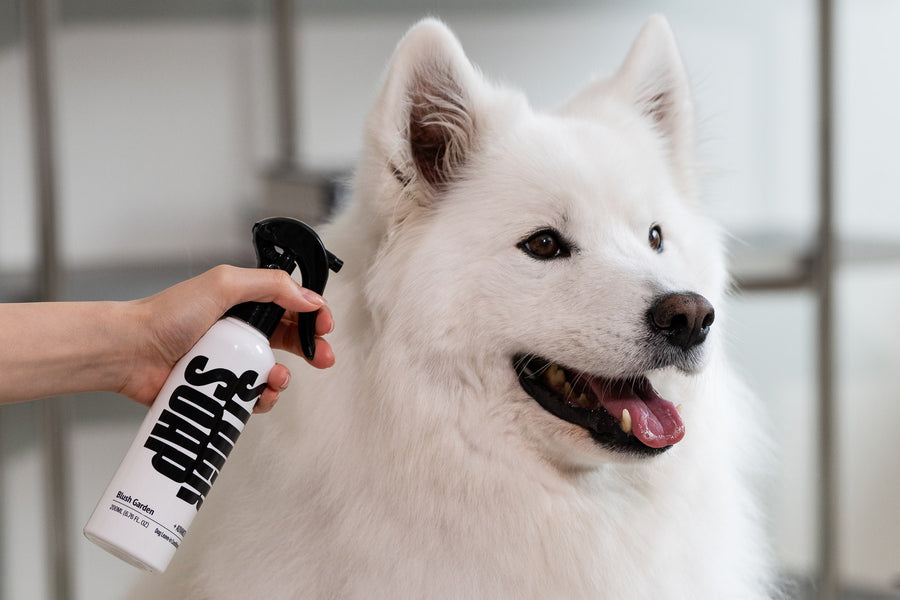
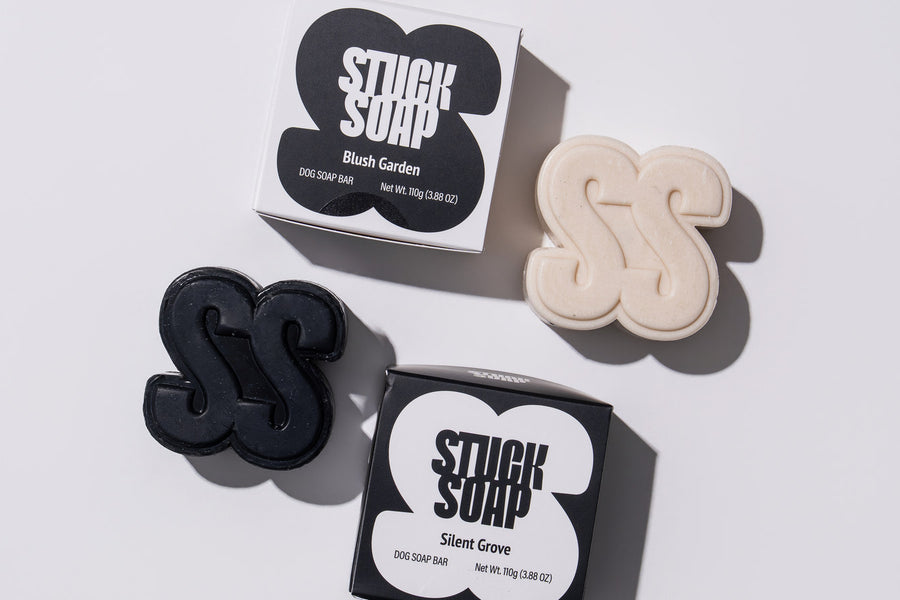
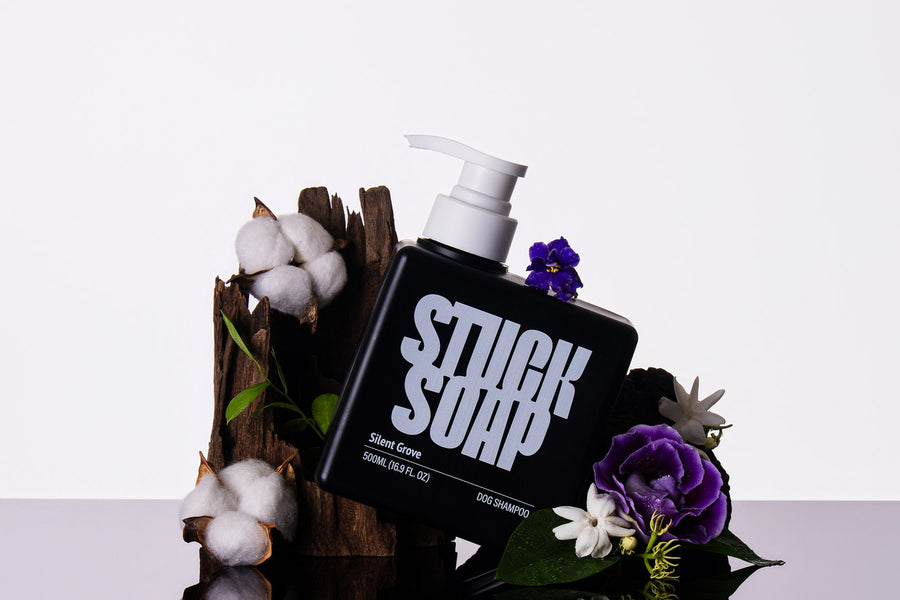
Step 3: Gentle cleanse with a pH-balanced formula. Avoid sulfate-heavy, harshly fragranced shampoos that strip the coat. Look for botanical actives that support the skin while they clean. Stuck Soap formulates with Jeju green tea, camellia oil, and centella asiatica precisely for this reason — these are proven K-Beauty heroes that have a real place in canine grooming, not buzzword ingredients.
Step 4: Rinse thoroughly. Residue is one of the top causes of post-bath itch and skin reactions. Rinse longer than you think you need to.
Step 5: Soft towel dry plus low-heat blow. Aggressive towel drying can chafe sensitive skin. Pat, then finish on a low, cool setting.
Step 6: Post-bath hydration. If your dog struggles with dry skin, consider a leave-on canine-safe spray or conditioner with humectants. This is the “essence” step a K-Beauty fan would recognize instantly.
The point isn't perfection. It's a shift in mindset from “wash the dog” to “care for the dog's skin barrier.” That's the real K-Beauty unlock.
Frequently Asked Questions
Is snow mushroom safe for dogs?
Snow mushroom (Tremella fuciformis) is generally considered non-toxic and is used in some pet supplement blends and skincare formulations. That said, peer-reviewed clinical research specifically on topical use in dogs is limited. Always introduce new ingredients cautiously, patch test first, and consult your vet if your dog has known allergies or chronic skin conditions.
Is snow mushroom better than hyaluronic acid for skin?
Hyaluronic acid holds more water by weight, but snow mushroom polysaccharides are smaller and may penetrate deeper into the upper skin layers. Snow mushroom also offers antioxidant and anti-inflammatory benefits that hyaluronic acid doesn't, which is why many K-Beauty formulas pair them or use snow mushroom as a plant-based alternative.
Can I put a human snow mushroom serum on my dog?
It's not recommended. Human skincare often contains fragrances, essential oils, alcohols, or active acids that aren't appropriate for canine skin pH or safe if licked. Stick to dog-specific products formulated with safe ingredient profiles.
What dog breeds benefit most from K-Beauty hydration ingredients?
Breeds prone to dry skin or sensitive coats see the biggest difference. Think French Bulldogs, English Bulldogs, Shih Tzus, Maltese, Poodles, Doodles, and many senior dogs. Hairless breeds like Chinese Cresteds also benefit dramatically from barrier-supportive routines.
Does Stuck Soap contain snow mushroom?
Stuck Soap doesn't currently include snow mushroom in its formulations. The brand's hero K-Beauty actives are Jeju green tea, camellia oil, and centella asiatica, all chosen because they have direct, well-supported benefits for canine skin and coat health.
The Takeaway: A New Generation of Dog Grooming
Snow mushroom is one of the most exciting ingredients in the modern K-Beauty playbook, and the conversation around its potential in pet care is only just beginning. The biological rationale for using a small, deeply hydrating, antioxidant-rich polysaccharide on dry or compromised canine skin is sound, even if the dedicated clinical research is still catching up.
The bigger lesson is the K-Beauty framework itself: gentle, layered, ingredient-first, barrier-respectful. Whether or not snow mushroom ends up on your dog's bath shelf, that approach is already changing dog grooming for the better, and it's the philosophy guiding the next wave of premium pet care products.
Sources & References
- Tremella fuciformis polysaccharides alleviate induced atopic dermatitis in mice by regulating immune response and gut microbiota — National Library of Medicine (PMC)
- Structural Elucidation and Moisturizing Potential of a Polysaccharide Derived from Tremella mesenterica — PMC
- Study on the structure characterization and moisturizing effect of Tremella polysaccharide — ScienceDirect
- Reishi and Tremella: The Ultimate Skin Support for Pets — Head To Tail Canine Nutrition
- Tremella Fuciformis (Mushroom) Extract — EWG Skin Deep
Give Your Dog the K-Beauty Spa Treatment
K-Beauty hydration heroes like snow mushroom show where dog grooming is headed: gentler, smarter, and built around the skin barrier. Stuck Soap brings the same philosophy to bath night today with Jeju green tea, camellia oil, and centella asiatica formulated specifically for canine skin pH.
Shop Stuck Soap →Vegan · pH-Balanced · Jeju Island Botanicals · Zero Waste