


If you have scrolled through K-Beauty TikTok or wandered the skincare aisle at a Korean beauty store lately, you have seen vitamin C everywhere. Toners, serums, ampoules, sheet masks. The promise is always the same: brighter skin, an even tone, and a serious boost of antioxidant protection. As more dog owners start applying K-Beauty thinking to grooming, an obvious question follows: does vitamin C for dogs skin work the same way?
The short answer is "sort of, but the story is more interesting than a simple yes or no." Dogs have a very different relationship with vitamin C than humans do, and that changes how you should think about it for your pup. The K-Beauty mindset still applies, just not in the way you might expect.
This guide walks through the science, the K-Beauty context, what topical products can and cannot do for your dog, and how to apply the underlying philosophy to your dog's grooming routine without overdoing it.
Table of Contents
Why Vitamin C Took Over K-Beauty Shelves
In Korean skincare, vitamin C is treated as a non-negotiable. It is the morning antioxidant, the brightening step, the all-purpose protector against everyday environmental stress. Walk into any Olive Young in Seoul and you will see dozens of vitamin C ampoules and serums lined up like soldiers.
The K-Beauty approach to vitamin C is distinctive in two ways. First, Korean formulators prefer gentler derivatives such as 3-O-ethyl ascorbic acid or sodium ascorbyl phosphate over pure L-ascorbic acid, because they are more stable and less irritating to sensitive skin. Second, they almost never use vitamin C alone. It is layered with soothing ingredients like centella asiatica, panthenol, and green tea to balance its potency.
That philosophy of "gentle, layered, ingredient-first" is exactly what makes K-Beauty so interesting for pet care. It is not about cramming the most aggressive active into a bottle. It is about respecting the skin's natural balance and supporting it.
Do Dogs Even Need Vitamin C?
Here is where the conversation gets interesting. Humans cannot make vitamin C on our own. We lost the enzyme that produces it millions of years ago, which is why we have to eat it through fruits and vegetables. A deficiency leads to scurvy.
Dogs are different. According to veterinary nutrition research, dogs synthesize their own vitamin C in the liver from glucose through the glucuronic acid pathway. This is why most veterinarians consider vitamin C non-essential in a dog's diet under normal conditions. The Canadian Veterinary Medical Association notes that vitamin C deficiency is so rare in dogs that there are no widely documented clinical signs of it.
That said, the picture is not quite that simple. Dogs produce vitamin C at lower rates than many other mammals, and research published in Topics in Companion Animal Medicine suggests that during periods of stress, illness, aging, or heavy exercise, a dog's natural production may not be enough to fully meet demand. One 2009 study in the Journal of Animal Physiology and Animal Nutrition found that supplemental vitamin C in healthy dogs increased antioxidant capacity and modulated immune parameters.
So the takeaway is balanced. Healthy adult dogs almost certainly do not need a vitamin C supplement. But the molecule itself is biologically active in dogs, and in the right context, it can support immune function, antioxidant defense, collagen production, and skin healing.
What Vitamin C Could Do for Your Dog's Skin and Coat
Most of the K-Beauty buzz around vitamin C is about topical application. So the more relevant question for grooming is: can vitamin C applied to skin do anything for a dog?
The science here is more limited than for humans, but the underlying biology is shared. Three benefits are biologically plausible:
1. Antioxidant defense at the skin level. Vitamin C is a powerful free-radical scavenger. When applied topically to human skin, it neutralizes oxidative stress from UV, pollution, and metabolic byproducts. Dogs face the same environmental stressors, especially urban dogs walking on hot pavement, breathing exhaust fumes, and rolling on grass treated with chemicals.
2. Support for collagen and tissue repair. Vitamin C is a cofactor in collagen synthesis. Collagen is the structural protein that gives skin its strength and elasticity. Dogs with higher circulating vitamin C levels have been associated with improved wound healing and stronger resistance to skin infections.
3. Brightening, but with caveats. In humans, vitamin C inhibits tyrosinase, the enzyme that produces melanin. This is why it is marketed as a "brightening" ingredient for dark spots and uneven tone. Dogs do not really have the same hyperpigmentation concerns, and you would not want to depigment your dog's natural coat color. So this is the one K-Beauty benefit that does not directly translate.
What this adds up to: vitamin C has real potential as a supporting antioxidant for canine skin, but the marketing language we use for humans (brightening, anti-aging, glow) does not map cleanly onto dogs. The honest framing is "antioxidant and barrier support," not "brighter coat in two weeks."
The K-Beauty Lesson: It Is Not the Ingredient, It Is the Formula
This is where the K-Beauty mindset becomes genuinely useful for dog owners. Korean skincare does not chase single ingredients. It chases balanced formulas, where actives are supported by soothing botanicals, pH is carefully controlled, and the skin barrier is treated as sacred.
That philosophy lines up almost perfectly with what veterinary dermatologists recommend for dog skin. Canine skin has a pH that sits in a narrower, more alkaline range than human skin (roughly 6.2 to 7.4), and its protective barrier is thinner than ours. Using harsh, low-pH human-style vitamin C serums on a dog is a fast way to cause irritation.
The smarter K-Beauty-informed approach is to think about the whole bath, not a single hero ingredient. A well-formulated dog shampoo that respects pH, uses antioxidant-rich plant extracts, and supports the skin barrier delivers the same kind of "antioxidant ecosystem" that a vitamin C serum aims for in human skincare.
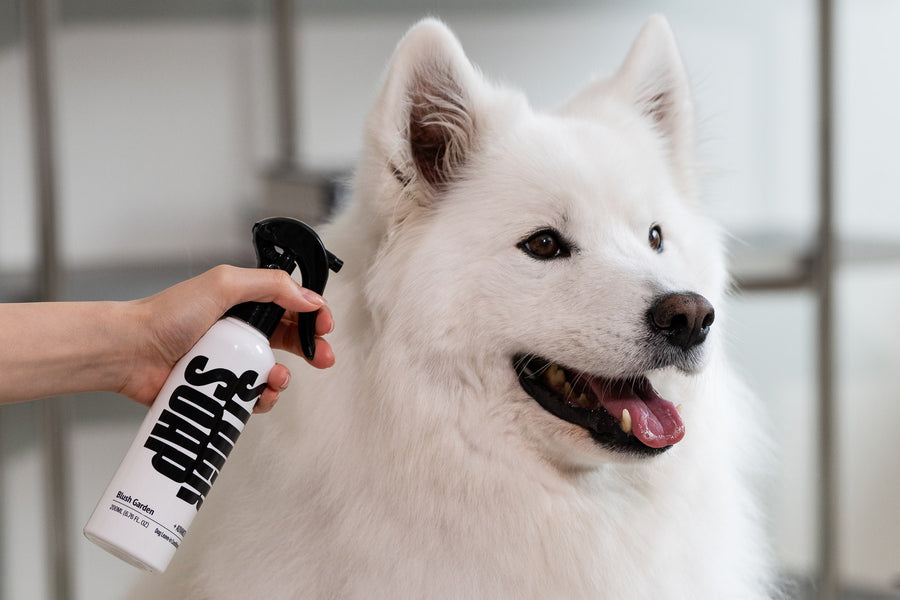
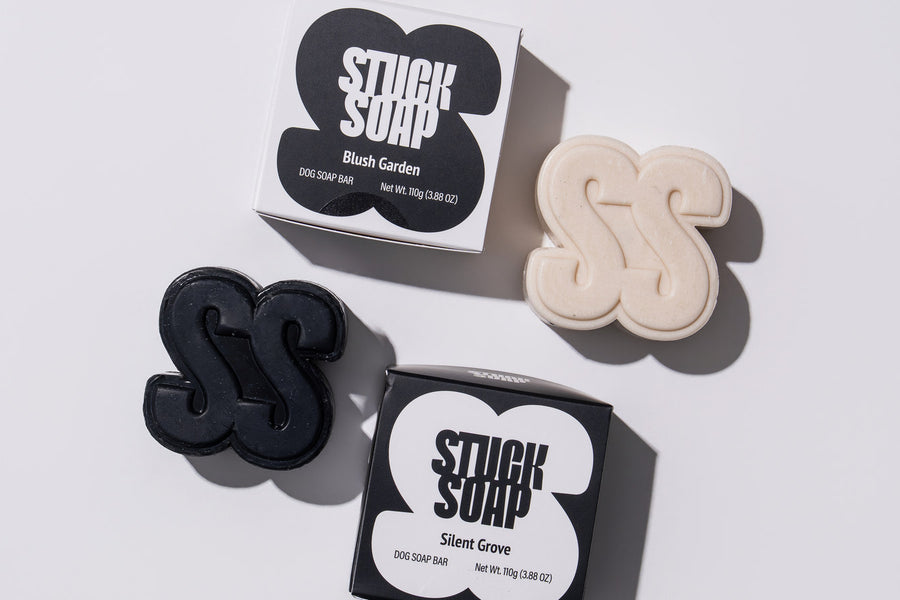
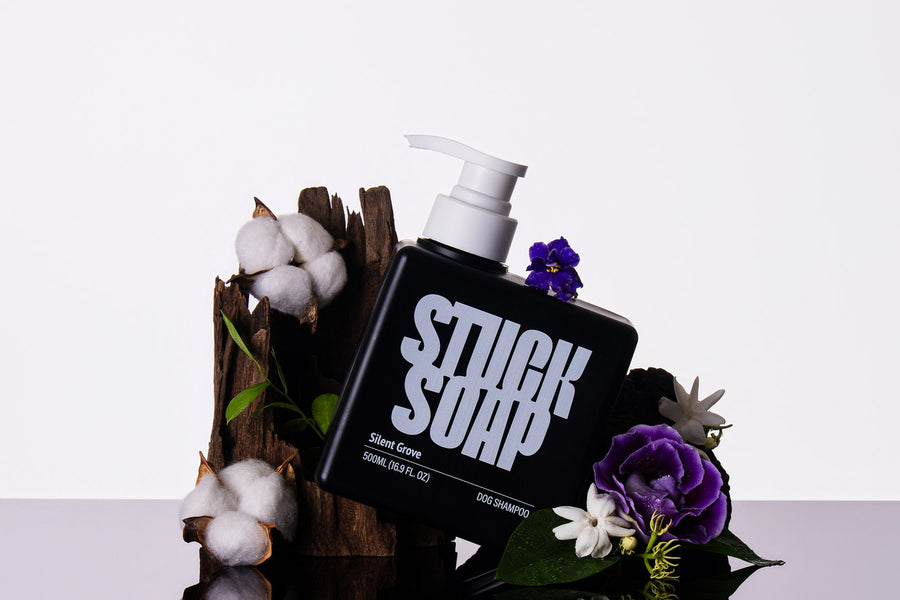
That is the principle behind STUCK SOAP. Instead of chasing one trending ingredient, STUCK SOAP layers Jeju green tea (a powerhouse source of EGCG and other polyphenol antioxidants), camellia oil (a natural moisturizer rich in oleic acid and vitamin E), and centella asiatica (the same cica ingredient K-Beauty uses to calm sensitive skin) inside a pH-balanced, vegan formula. The antioxidant work that vitamin C does in a K-Beauty serum is handled here by a thoughtfully selected botanical lineup designed for canine skin specifically.
How to Support Your Dog With Antioxidants the Right Way
If the K-Beauty framework of "antioxidant protection, gentle delivery, no barrier disruption" appeals to you, here is how to apply it to your dog without falling into the supplement-everything trap.
Start with the bath. The single biggest topical intervention you make on your dog's skin is the shampoo you use. Choose a pH-balanced formula with botanical antioxidants like green tea extract, camellia oil, vitamin E, or centella asiatica. Avoid sulfates, parabens, and synthetic dyes that can disrupt the skin barrier.
Feed antioxidants through diet. The most evidence-backed way to support a dog's antioxidant status is through nutrition. Many high-quality dog foods now include vitamin C, vitamin E, and beta-carotene specifically for this reason. Brightly colored vegetables like blueberries, carrots, and pumpkin (in small, vet-approved amounts) are natural antioxidant sources.
Be cautious with human topical products. Do not put your human vitamin C serum on your dog. The pH, concentration, and supporting ingredients are formulated for human skin and can irritate or dry out your dog's coat and skin barrier. Stick to dog-specific products.
Talk to your vet before supplementing. Oral vitamin C supplementation in healthy dogs is generally well-tolerated, but excess can cause GI upset or contribute to calcium oxalate bladder stones in predisposed dogs. Your vet can advise based on your dog's breed, age, and health status.
Pay attention to the basics. Adequate hydration, regular brushing, balanced nutrition, and gentle bathing do more for skin health than chasing a single trendy ingredient. K-Beauty's deepest insight is not about vitamin C specifically. It is about respecting the skin you have.
Frequently Asked Questions
Is vitamin C safe for dogs?
Yes, vitamin C is generally safe for dogs in moderate amounts. Dogs produce their own vitamin C in the liver, so supplementation is not usually necessary for healthy adult dogs. Excessive supplementation can cause GI upset or contribute to bladder stones in predisposed dogs, so check with your vet before adding it.
Can I put my K-Beauty vitamin C serum on my dog?
No. Human vitamin C serums are formulated for human skin pH (around 4.5 to 5.5) and use concentrations and supporting ingredients designed for human skin. Dog skin has a different pH and a thinner barrier, so applying a human serum can cause irritation. Use dog-specific products instead.
Does vitamin C help with dog skin allergies?
There is preliminary evidence that vitamin C's antioxidant and immune-supporting properties may help dogs cope with allergic stress, but it is not a standalone treatment for skin allergies. Work with your vet on a complete plan that addresses the underlying allergen, and consider supportive nutrition.
What is the best K-Beauty inspired ingredient for my dog's coat?
For dogs, the most directly applicable K-Beauty ingredients are green tea extract, camellia oil, and centella asiatica. All three are gentle, antioxidant-rich, and well-studied for skin barrier support. STUCK SOAP shampoo combines all three in a pH-balanced formula made for dog skin specifically.
Do dogs really make their own vitamin C?
Yes. Unlike humans, dogs synthesize vitamin C in the liver from glucose through the glucuronic acid pathway. This is why scurvy is not a concern in dogs the way it is for humans. However, production rates can drop during stress, aging, or illness, which is when additional dietary antioxidants may help.
The Bottom Line
Vitamin C is one of K-Beauty's most beloved ingredients, but its story in dogs is more nuanced than a simple "this works the same way for pets." Dogs make their own vitamin C, the brightening benefits do not really apply, and human serums should stay on human skin. What does translate beautifully is the K-Beauty mindset: gentle ingredients, antioxidant support, pH respect, and a barrier-first philosophy.
You do not need a vitamin C product for your dog to benefit from that philosophy. You need a thoughtful shampoo, a balanced diet, and a routine that respects the skin your dog already has. That is what K-Beauty has been teaching humans for decades, and it is exactly what your dog deserves too.
Sources & References
- Vitamin C in Veterinary Medicine — Canadian Veterinary Medical Association
- Ascorbic Acid (Vitamin C) — VCA Animal Hospitals
- Vitamin C in Health and Disease: A Companion Animal Focus — Topics in Companion Animal Medicine (PubMed)
- The Effect of Vitamin C Supplementation in Healthy Dogs on Antioxidative Capacity and Immune Parameters — Journal of Animal Physiology and Animal Nutrition
- The Roles of Vitamin C in Skin Health — PMC / National Library of Medicine
- Vitamin C for Your Skin: K-Beauty Picks — Korean Skincare Coach
Give Your Dog the K-Beauty Spa Treatment
The K-Beauty approach to skin is not about chasing one trending ingredient. It is about a thoughtful, layered formula that supports the skin barrier. STUCK SOAP brings Jeju green tea, camellia oil, and centella asiatica together in a pH-balanced, vegan shampoo built specifically for your dog's skin.
Shop Stuck Soap →Vegan · pH-Balanced · Jeju Island Botanicals · Zero Waste