


Why Does My Dog Smell Musty? The Dog Odor Map by Body Location
Why does my dog smell musty? In almost every case the smell is not coming from the whole dog, it is coming from one specific place: the ears, a skin fold, the paws, the area under the tail, or a coat that never fully dried after the last bath or swim. Find the location and you have most of the answer, because each spot goes stale for a different reason and each one calls for a different response.
This is a map, not a diagnosis. Some of what follows is ordinary grooming maintenance that a proper bath and a proper dry will genuinely solve. Some of it is your dog telling you something that belongs in an exam room. Knowing which is which is the whole point.
Why Does My Dog Smell Musty? Start With Where the Smell Lives
Musty dog odor is the damp, closed-closet, old-towel smell that comes from microbes breaking down sebum, dead skin cells, and moisture that has been sitting somewhere warm without airflow. It is not the same as a dirty dog. A dog can be visibly clean and still smell musty, because the smell is produced in the places you cannot see: inside an ear canal, between two layers of skin, under a dense undercoat.
Two things create the conditions. The first is moisture with nowhere to go. The second is sebum, the natural oil dogs produce to protect the skin barrier, which holds odor molecules the way a sponge holds water. Warmth and enclosure do the rest. That is why the muzzle of a wrinkled breed and the base of a thick double coat behave like completely different environments even on the same animal.
How to run the sniff test properly
Wait until your dog is relaxed, then work top to bottom in a quiet room. Lift each ear flap and smell the opening. Open any facial or body folds and smell inside. Check the paws, then the area under the tail, then push your fingers into the coat at the shoulders and the base of the spine and smell at skin level, not at the tips of the hair. Whichever spot makes you pull back is your answer.
The Dog Odor Map: Five Locations, One Table
Use this as a quick reference. Read across the row for the location that matches your dog, and pay close attention to the last column, which separates grooming from veterinary care.
| Location | What it smells like | Likely cause | What to do at home | Call the vet if |
|---|---|---|---|---|
| Ears | Sharp, sour, sweet, or yeasty; strongest right at the canal opening | Trapped moisture and wax in a warm, enclosed canal; common in drop-eared and swimming dogs | Keep ears dry after baths and swims; routine outer-ear cleaning with a product your vet approves | Redness, discharge, head shaking, head tilt, scratching, pain, or odor from only one ear |
| Skin folds and wrinkles | Damp, cheesy, sour, or bread-like | Moisture, sebum, food, and saliva collecting between skin layers with no airflow | Wipe and dry folds regularly; rinse and dry thoroughly after every bath; keep the fold genuinely dry, not just clean | Redness inside the fold, raw or weeping skin, sores, or the smell returns within a day of cleaning |
| Paws | Corn chips, popcorn, or warm bread | Normal skin flora plus moisture between the pads and toes | Dry between the toes after walks and baths; see our dedicated paw odor guide | Constant licking or chewing, redness between the toes, limping, swelling, or a sudden change in the smell |
| Under the tail and rear | Sharp, fishy, metallic, or strongly foul | Anal gland material, soft stool caught in the coat, or urine scald in long-coated dogs | Keep the coat around the rear trimmed and clean; rinse and dry the area well | Scooting, licking at the rear, swelling, visible discharge, straining, or a fishy odor that keeps coming back |
| Whole body and coat | Damp towel, wet basement, stale and general rather than localized | Oily coat holding odor, incomplete rinsing, or an undercoat that never dried to the skin | Bathe on a consistent schedule with a pH-appropriate shampoo, rinse until the water runs clear, dry to the skin | Odor arrives with flaking, greasiness, hair loss, itching, or a change in appetite, thirst, or energy |
Ears: The Most Common Source of a Musty Smell
An ear canal in a dog is long, angled, and covered by a flap. That design is excellent for protecting the ear and terrible for drying it out. Add a bath, a lake, a rainy walk, or a humid August week and you have a warm enclosed space holding water against wax.
Ear odor is usually easy to localize. It is concentrated, it does not travel, and it gets noticeably stronger the closer your nose gets to the opening. If one ear smells and the other does not, treat that as meaningful information for your veterinarian rather than a grooming problem.
What routine care actually covers
Drying the outer ear after every bath and every swim is the single highest-return habit for most dogs. Regular gentle cleaning of the visible outer ear, using a product your veterinarian has approved for your dog, keeps wax from accumulating. Nothing goes deep into the canal, and nothing gets poured in based on an internet recommendation. Our guide to at-home dog ear cleaning walks through the routine version.
Skin Folds and Wrinkles: A Sealed Environment
Facial wrinkles, lip folds, the tail pocket on a screw-tailed breed, and the crease behind the elbow all do the same thing. They hold two surfaces of skin against each other with a film of moisture in between, and they exclude air. Sebum collects, dead skin collects, saliva and food particles collect in the facial folds, and microbes get a warm dark room to work in.
The mistake owners make is cleaning the fold and stopping there. A damp fold rebuilds the same odor within hours. Open the fold, clean it, then dry it completely before letting the skin close back on itself. On bath day this matters even more, because a fold is exactly where rinse water hides. If the smell returns almost immediately after a careful clean, the skin inside that fold needs a veterinarian to look at it.
Paws: The Corn Chip Smell
Paw odor deserves its own conversation, so it gets one. The classic corn chip or popcorn smell comes from normal skin organisms living between the pads and toes, and in a healthy dog it is a curiosity rather than a warning. It becomes a concern when it changes character, intensifies, or arrives with licking, redness, or limping. Read the full breakdown in why your dog's paws smell like corn chips.
Under the Tail: The Odor Owners Misread Most
A sharp, fishy, or metallic smell from the rear end is the one people most often try to bathe away, and it is the one least likely to respond to a bath. It frequently traces back to the anal glands, which are internal structures, not a grooming surface. If your dog is scooting on the carpet, licking at the rear, or leaving that smell on furniture, that is a veterinary conversation.
There is a grooming half to this location too. Long-coated dogs catch soft stool in the feathering around the rear, and older or less mobile dogs can develop urine-dampened fur along the belly and hind legs. Both smell strongly and both are genuinely fixed by trimming the coat short in that zone, rinsing well, and drying completely.
The Whole-Body Musty Coat
When the smell is everywhere rather than somewhere, look at oil and water. An oily coat carries odor, and a coat that dried on the surface while staying damp underneath produces the classic wet basement note within a day or two of the bath.
Sebum and the odor it carries
Sebum is not the enemy. It waterproofs the coat and supports the skin barrier. The problem is accumulation, and the problem is also over-correction: aggressive stripping can prompt the skin to produce more oil, which produces more odor, which prompts another aggressive bath. Our guide to an oily dog coat and a workable bathing plan covers the balance point, and the science of pH-balanced dog shampoo explains why formula choice changes the outcome.
Rinse and dry, the two steps everyone shortens
Leftover product traps debris and dulls the coat, and shampoo residue is a common reason a freshly washed dog does not smell fresh. Drying is the other half. A double coat can feel dry at the top while the layer against the skin is still wet, which is the exact condition musty odor needs. Work through how to dry your dog properly, and if the smell shows up right after bath day, see why dogs smell bad after a bath.
When "Why Does My Dog Smell Musty" Becomes a Question for Your Vet
Grooming manages odor. It does not identify causes, and it does not treat anything. Book an appointment when the smell arrives suddenly or gets dramatically stronger, when it comes from only one side of the body, when it returns within a day of a thorough and correctly dried bath, or when it appears alongside redness, swelling, discharge, sores, hair loss, scooting, constant licking, head shaking, or obvious discomfort.
Also call if the odor comes with changes in appetite, thirst, energy, or the mouth. Persistent bad breath in particular is a dental and medical question, not a bathing one. Your veterinarian can examine, sample, and identify. A shampoo cannot, and any product promising to do so is overpromising.
Practical Takeaways
- Locate the smell before you treat it. Ears, folds, paws, rear, and coat are five different problems.
- Dry as seriously as you wash. Down to the skin, into the folds, between the toes, around the ears.
- Rinse until the water runs clear. Residue is a common and completely avoidable odor source.
- Bathe on a consistent schedule with a formula suited to dog skin rather than reacting with extra baths.
- Trim the coat around the rear on long-haired dogs and keep it clean.
- Treat sudden, one-sided, fishy, or fast-returning odors as veterinary questions, not grooming questions.
Where STUCK SOAP Fits
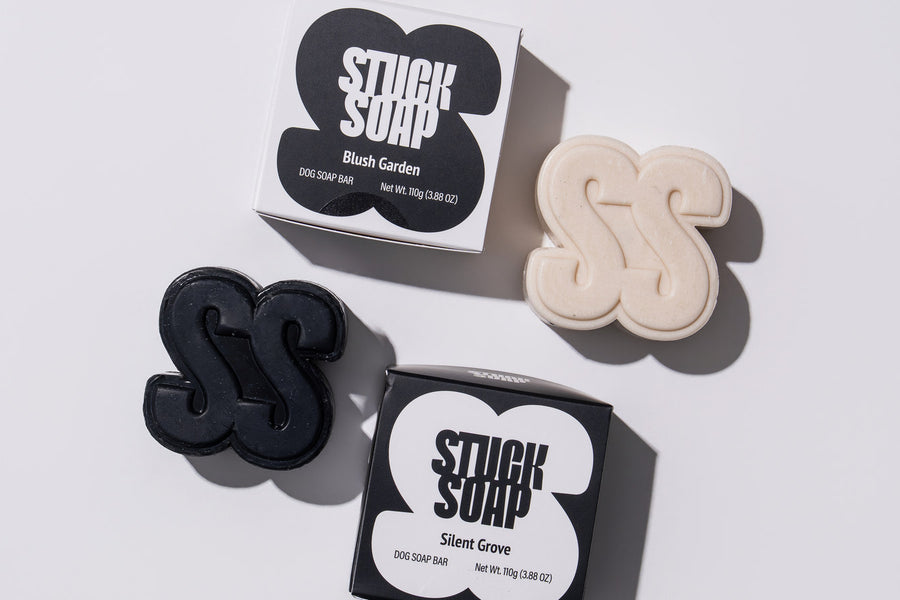
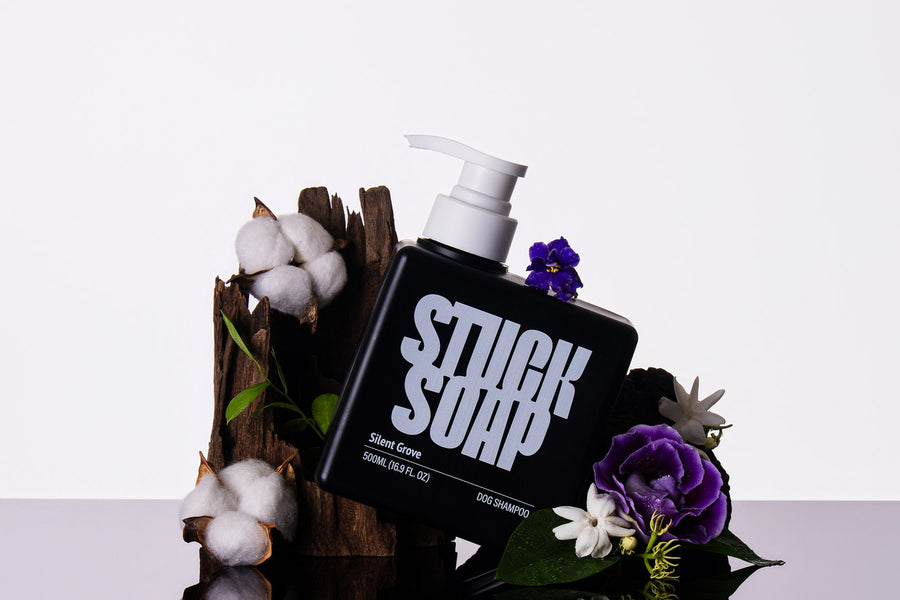
STUCK SOAP is K-Beauty grooming, not medicine. Our Liquid Shampoo and Shampoo Bar are non-medicated cosmetic products, formulated with Green Tea, Camellia Oil, and Centella Asiatica, pH-balanced for dog skin, vegan, and built around sebum control and skin-barrier support. The fine-bubble lather is designed to move through a dense coat and lift the odor-carrying sebum and debris a bath is supposed to remove, and the high-concentrate formula means one pump usually covers a wash. Two scents, Silent Grove for something earthy and Blush Garden for something floral. It will not treat an infection, a yeast overgrowth, or an allergy, and it is not meant to. It handles the routine cleansing half of the odor map so the veterinary half stays clearly separate.
Frequently Asked Questions
Why does my dog smell musty even after a bath?
A musty smell that returns within a day usually means the bath did not reach the source. Trapped moisture in ears, folds, or a thick undercoat keeps odor-causing bacteria and yeast comfortable. Rinse until the water runs clear, then dry the dog fully down to the skin.
What does a yeasty dog smell mean?
Owners often describe it as bread dough, corn chips, or a damp basement. That kind of odor is commonly associated with an overgrowth of organisms that normally live on canine skin. It is a reason to book a veterinary exam rather than a reason to buy a stronger shampoo.
How do I know if the smell is coming from my dog's ears?
Lift the ear flap and smell the opening directly, then compare it with the other ear. Ear odor is usually sharp, sour, or sweet and it stays strongest right at the canal. Redness, head shaking, scratching, or discharge alongside the smell means you call your veterinarian.
Can bathing my dog too often make the odor worse?
It can. Stripping the coat with harsh or poorly matched cleansers can push the skin to produce more oil, and oil carries odor. A pH-appropriate shampoo used on a steady schedule, with complete rinsing and complete drying, usually beats bathing more frequently with the wrong formula.
Which dogs are most likely to smell musty?
Breeds with facial wrinkles, deep skin folds, heavy double coats, drop ears, or naturally oily skin trap the most moisture and debris. Dogs who swim, roll in wet grass, or live in humid climates run into the same problem. Anatomy and environment matter more than how dirty a dog looks.
When should a dog odor send me to the veterinarian?
Call if the smell is sudden, strong, or one-sided, or if it comes with redness, swelling, discharge, scooting, licking, hair loss, or pain. Odor that returns within a day of a thorough bath also belongs in an exam room. Grooming manages odor, it does not diagnose the cause.
Sources
- American Kennel Club, Expert Advice: Health
- Merck Veterinary Manual, Dog Owners
- Cornell University Riney Canine Health Center
- American Veterinary Medical Association, Pet Owner Resources
This article is general grooming information and is not veterinary advice. Talk to your veterinarian about any odor that concerns you.
Clean at the Source
Ready to fix the grooming half of the odor map? Shop the STUCK SOAP Liquid Shampoo and Shampoo Bar in Silent Grove and Blush Garden at stucksoap.com, and pair them with a full rinse and a full dry. Then let your veterinarian handle everything a bath was never meant to solve.