


Yes, indoor heating can contribute to dog dry skin: heated winter air usually carries less moisture, and a dog's skin and coat sit in that air around the clock. The fix starts with the house, not the shampoo shelf, because humidity, bath habits and where your dog sleeps all shape what the skin goes through between November and March.
It usually goes like this. The furnace kicks on for the first cold snap, and a week or two later there are white flecks on the couch, static in the coat and a little more scratching. People blame the shampoo or the food. Very few blame the thermostat. This piece covers the air side of the problem, and how to get ahead of it while heating season is just starting.
How Indoor Heating and Dog Dry Skin Are Connected
What relative humidity actually measures
Relative humidity is the amount of water vapor in the air compared with the most that air could hold at its current temperature, expressed as a percentage. Cold outdoor air holds very little water to begin with. When your heating system pulls that air inside and warms it, the amount of water stays about the same while the air's capacity goes up, so the relative humidity drops. That is why a heated home in January can feel parched even when it is snowing outside.
What happens at the skin surface
A dog's outermost skin layer is a thin sheet of compact, constantly renewed cells. According to the Merck Veterinary Manual, this layer "keeps in fluids, salts, and nutrients, while keeping out infectious or noxious agents." Oil glands add sebum, which the same source says is "important for keeping the skin soft, moist, and pliable."
Dermatologists use the term transepidermal water loss (TEWL) for the water that passes out through the skin and evaporates from its surface. The common-sense story is simple: drier air, faster evaporation, thirstier skin. When frequent washing also strips the oils that seal the surface, the two problems stack.
What the research does and does not say
The science is messier than the common-sense version. A 2022 systematic review in Skin Health and Disease found that "significant discrepancies exist among current literature" on how season and climate affect TEWL in people, and research in dogs is thin. So treat dry air as a likely contributor worth controlling, not a proven single cause.
Not Every Heat Source Dries the Air the Same Way
Any system that warms cold outdoor air lowers indoor relative humidity. What changes is how directly that warm, dry air reaches your dog.
| Heat source | What it does to the air your dog breathes | What to do |
|---|---|---|
| Forced-air furnace (floor or wall vents) | Moves large volumes of warm air through the house; vents create concentrated streams of dry, moving air | Keep beds and crates out of the direct path of vents; consider a whole-home or room humidifier |
| Radiators and baseboard heaters | Quieter, less air movement, but surfaces get hot and the air right beside them is very warm and dry | Leave a few feet between the bed and the unit; avoid tucking the bed into the gap beside it |
| Portable space heaters | Intense, localized heat that dogs love to lie against | Never leave a dog alone with one; place a barrier so the dog cannot press up against it |
| Wood stove or fireplace | Strong radiant heat; the area in front of the hearth can be the driest, hottest spot in the house | Discourage long naps on the hearth; offer a bed farther back in the room |
Fix the Air First: Humidity and Sleeping Spots
Pick a sensible target range
There is no published canine-specific humidity target, so the most defensible move is to follow household guidance. The U.S. Environmental Protection Agency advises keeping indoor humidity below 60 percent, "ideally between 30 and 50 percent." The EPA's humidifier guidance adds a ceiling: do not humidify above 50 percent, because excess moisture can encourage dust mites and mold, which bring their own problems for dogs with sensitive skin.
A small digital hygrometer costs less than a bag of treats. Put it near your dog's bed, away from the kitchen and bathroom, and check it at different times of day for a week.
Run a humidifier the safe way
The American Kennel Club suggests a humidifier during cold, dry weather. A dirty one, though, can spray minerals and microbes into the room. Following the EPA's care instructions keeps it working for you instead of against you:
- Choose a spot where your dog cannot tip the unit, chew the cord or drink from the tank.
- Fill it with low-mineral water. The EPA names bottled water labeled "distilled" as the first choice to reduce scale and mineral dust.
- Empty, dry and refill the tank daily rather than topping it off.
- Clean the unit every third day, following the manufacturer's directions.
- Watch for condensation on windows or walls. If you see it, lower the setting or run it less.
- Keep the area around the unit, including your dog's bedding, dry.
Move the bed, not just the thermostat
Dogs are heat seekers, and plenty will sleep pressed against a radiator or sprawled over a floor register. That spot is comfortable, and it is also the driest air in the house. Slide the bed a few feet away, ideally against a draft-free interior wall, and add a blanket if your dog runs cold. Check crates too, since a crate beside a vent becomes a small, dry box overnight.
Rethink Bath Day for Heating Season
Wash less often, rinse more thoroughly
Over-cleansing is the quiet partner of dry air. Every wash removes some of the sebum that seals the skin, and in winter the house is slower to give that moisture back. The AKC notes that excessive or improper bathing and harsh soaps can cause dry skin, and that bathing less often frequently helps when bathing is the cause. How often is right depends on coat type, lifestyle and your vet's advice; our guide on how often you should bathe your dog walks through the variables.
When you do wash, rinse until the water runs clear and the coat feels squeaky at the skin. Leftover residue is a common cause of flaking that looks like dryness. If you live in a hard-water area, mineral buildup can add to that dull, rough feel, which we cover in our piece on hard water and your dog's coat.
Keep the water lukewarm
It is tempting to run a winter bath hot. Hot water strips oils faster and can leave skin feeling tight. Aim for water that feels lukewarm on the inside of your wrist, and keep bath time efficient so the dog is not standing wet in a cool room.
Dry thoroughly without cooking the coat
A damp dog in a cold house is uncomfortable, but a dryer on high heat aimed close to the skin adds another blast of hot, dry air. Towel off firmly first, then use a low or cool setting, keep the nozzle moving and hold it at a distance. Our complete guide to drying your dog after a bath covers technique by coat type.
Between Baths: Condition the Coat Without Another Wash
Brush to spread natural oils
Brushing lifts loose undercoat, clears dead hair that traps flakes and spreads the coat's own oils down the hair shaft. A few minutes several times a week does more in winter than an extra bath. If you are not sure what schedule fits your dog's coat, see how often you should brush your dog.
Choose gentle products and fewer of them
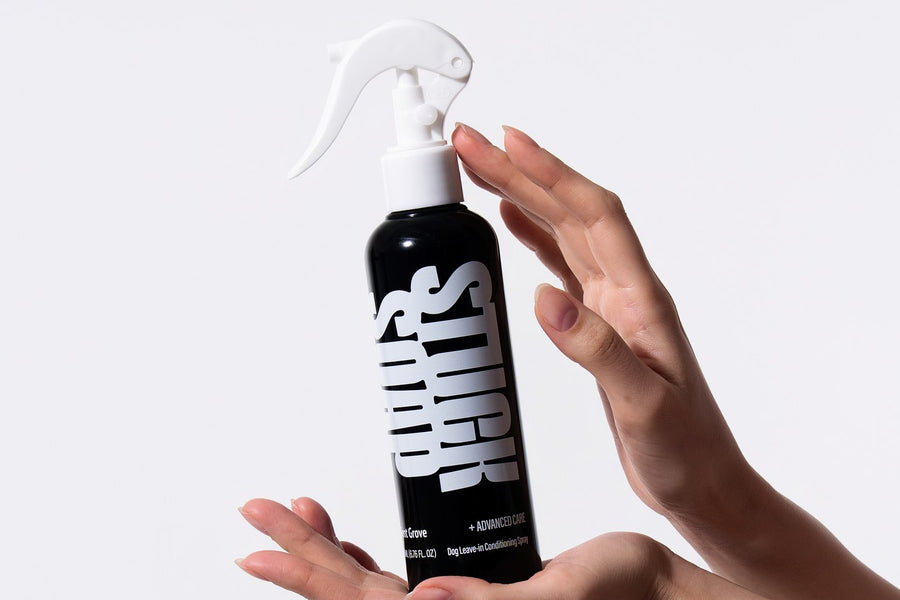
This is where products come in, and only after the environment. On bath day, a gentle, pH-balanced shampoo that does not strip the coat makes sense. Between baths, a no-rinse leave-in conditioning spray lets you condition the coat without another wash. That is the role we designed for the STUCK SOAP Leave-In Conditioning Spray, alongside our pH-balanced shampoo, both available at stucksoap.com. If you are new to the category, our explainer on leave-in conditioner for dogs explains how it differs from a rinse-out formula.
For the ingredient side of the dry-skin question (what botanicals like green tea, camellia oil and centella are chosen for, and how a hydration-first routine is built), read our companion piece, How to Fix Dog Dry Skin: The K-Beauty Hydration Approach. For a deeper look at how the skin barrier works, see our guide to the dog skin barrier.
Your Indoor Heating Dog Dry Skin Checklist for November
Start now, before the coldest weeks arrive.
- Put a hygrometer by your dog's bed and log the readings for a week.
- If readings fall below 30 percent, add a humidifier and keep the room at or under 50 percent.
- Move beds and crates away from vents, radiators, stoves and space heaters.
- Stretch the time between baths if your vet agrees, and rinse completely every time.
- Switch to lukewarm bath water and a low or cool dryer setting.
- Brush several times a week and condition between baths instead of washing again.
- Take a phone photo of the coat and any flaky areas today, so you have a baseline to compare against.
When to See the Vet
Dry air is only one of many reasons a dog's skin flakes or itches. The AKC lists allergies (food, environmental and flea), parasites such as mites and lice, bacterial and fungal infections, hormonal conditions like hypothyroidism and Cushing's disease, and poor nutrition among the causes. Several look like simple winter dryness at first. For the food side, our article on how diet affects skin and coat health is a good starting point for that conversation with your vet.
Diagnosis belongs to your veterinarian. Make an appointment if you see any of the following:
- Itching, scratching, licking or chewing that is persistent or getting worse
- Redness, rash, bumps or hot spots
- Hair loss, thinning patches or a changing coat texture
- A strong or unusual odor from the skin or ears
- Sores, scabs, crusting or open wounds
- Greasy scale, or flaking that does not improve after a few weeks of environmental changes
- Any skin change along with lethargy, weight change or increased thirst
The AKC goes further and suggests a vet visit as soon as dry skin shows up, to rule out more serious conditions. If your dog is already on a medicated shampoo or treatment plan, follow your vet's bathing schedule over anything in this article.
Frequently Asked Questions
Does indoor heating really cause dry skin in dogs?
It can contribute. Heated winter air usually holds less moisture, and many owners notice more flaking and static in the coat once the furnace runs. But dry air is only one possible cause. Allergies, parasites, infections, hormonal disease and diet can look identical, so persistent symptoms need a veterinarian's exam.
What indoor humidity is best for a dog with dry skin?
No canine-specific target exists, so most owners borrow household guidance. The EPA suggests keeping indoor relative humidity ideally between 30 and 50 percent and not humidifying above 50 percent. A cheap hygrometer placed near your dog's sleeping spot tells you where your home actually sits on a cold morning.
Should I bathe my dog less often in winter?
Often, yes. Frequent or harsh washing strips the oils that keep skin soft, and the AKC notes that cutting back on baths often helps when bathing is the culprit. Use a gentle, pH-balanced shampoo, rinse thoroughly and keep water lukewarm. Dogs on medicated bathing plans should follow their vet's schedule.
Is it safe to run a humidifier around my dog?
Generally, with a sensible setup. Place it where your dog cannot knock it over or chew the cord, keep it away from bedding so nothing gets damp, and clean it on a schedule. The EPA recommends emptying and refilling daily, cleaning every third day and using low-mineral water such as distilled.
Can sleeping near a heater dry out my dog's skin?
It can make things worse. Air blowing from a floor vent or rising off a radiator is warm and dry, and a dog parked in that stream all night gets the full effect. Move the bed a few feet away, toward a draft-free interior wall, and watch for changes in the coat.
When should flaky winter skin be checked by a vet?
Book a visit if flaking lasts more than a few weeks despite environmental changes, or sooner if you see redness, hair loss, scabs, sores, odor, greasy scale or constant scratching. The AKC recommends a vet check whenever dry skin appears, because several serious conditions can begin with symptoms that look like ordinary dryness.
Sources
- U.S. Environmental Protection Agency: A Brief Guide to Mold, Moisture and Your Home
- U.S. Environmental Protection Agency: Use and Care of Home Humidifiers
- American Kennel Club: Dry Skin on Dogs
- Merck Veterinary Manual: Structure of the Skin in Dogs
- Green M, Kashetsky N, Feschuk A, Maibach HI. Transepidermal water loss (TEWL): Environment and pollution, a systematic review. Skin Health and Disease, 2022
Getting ready for the dry months? Pair a calmer bath day with easy conditioning between washes. Explore STUCK SOAP's pH-balanced shampoos, shampoo bars and Leave-In Conditioning Spray at stucksoap.com.