

The short answer to the dog shampoo bar vs liquid question: both formats clean a dog equally well when the formula is sound, because cleansing power lives in the surfactants and how thoroughly they reach the skin, not in whether the product is solid or poured. Where they really differ is concentration, handling in the tub, storage, and how much packaging and water ride along with every bath.
Plenty of owners assume a bar is the compromise option, the thing you buy for the planet and tolerate at bath time. Korean skincare spent years proving the opposite with solid cleansers for the face, and the same thinking shaped how a good dog bar is built. Below we compare the two formats on five axes, correct the most common myth, and finish with a plain list of which one suits which dog and household. (For lathering technique and storage steps, our guide on how to use a dog shampoo bar covers the hands-on part.)
What a Shampoo Bar and a Liquid Shampoo Actually Are
What is a dog shampoo bar?
A dog shampoo bar is a solid cleanser, made with very little water, that you wet and work into a lather directly on the coat or between your hands. Because most of the water was left out at the factory, the bar is essentially the cleansing system itself, pressed into a shape you can hold. It needs no pump, no bottle and no cap.
What is liquid dog shampoo?
Liquid dog shampoo is a cleanser dispersed in water, sold in a bottle and dispensed by pouring or pumping. Water is usually the first ingredient on the label, and on cosmetic-style labels that order means it is the largest ingredient by amount. That water is not a flaw: it makes the product instantly spreadable.
The Myth: "A Bar Can't Clean as Well as Liquid"
This is the objection we hear most. A bottle looks like a lot of product and a bar looks like a small block, but volume in your hand says nothing about cleaning ability.
Where cleansing power really comes from
Shampoo works through surfactants, molecules with one end that holds onto water and another that holds onto oil. A review of skin cleansers in the journal Molecules describes cleansing as surfactant action that lowers surface tension "to facilitate the removal of dirt from its surface." On a dog, most of that dirt is grime bound up in sebum, the oily coating that, according to the Merck Veterinary Manual, keeps skin soft and gives the coat its sheen. Surfactants loosen the excess oil and the dirt riding in it, and water carries both away.
So the variables that decide how clean your dog gets are the surfactant system in the formula, how much of it actually contacts the skin under the coat, how long it stays there, and how well you rinse. Format is not on that list. A bar releases its surfactants as water dissolves the surface you rub against the coat; a liquid releases them the moment you pour. If either one is spread thinly over the top of a double coat and rinsed after thirty seconds, the result will disappoint, and the format will take the blame.
Lather is a poor scoreboard, too. A big foam feels like cleaning, but bubbles are mostly air trapped in surfactant solution, and minerals in tap water can flatten them without changing much else. We unpacked both points in whether dog shampoo needs to lather and how hard water affects your dog's coat.
Soap bars vs syndet bars: the label detail that matters
There is one real reason the myth exists. Some solid bars are true soap, made by reacting fats with a strong alkali. The same Molecules review notes that this process "always results in a highly alkaline product," while synthetic detergent bars, known as syndets, can have their pH adjusted closer to that of skin. An alkaline bar can leave fur squeaky or dull, and people reasonably conclude that bars do a worse job.
The fix is not to avoid bars. It is to read the label. Dog skin chemistry is not human skin chemistry, and a comparative review in Veterinary Dermatology documents real differences in cutaneous pH among species. Look for a bar stated as pH-balanced for dogs, which is the same standard to hold any liquid to. Our explainer on the science of pH-balanced dog shampoo goes deeper on why.
Dog Shampoo Bar vs Liquid: The Five-Axis Comparison
Here is the side-by-side, assuming both products are well formulated and pH-balanced for dogs. Each axis gets a closer look below the table.
| Axis | Shampoo bar | Liquid shampoo |
|---|---|---|
| Cleansing power | Equal when surfactants reach the skin; easy to target dirty spots directly | Equal when surfactants reach the skin; spreads fastest over large areas |
| Ingredient concentration | Most water removed, so the bar is the cleansing system in solid form | Cleansing system dispersed in water; concentrated formulas need less per wash |
| Feel in use | Firm grip, direct application, controlled lather; needs a few seconds of wetting | Instant and pourable, easy to dilute; can run off a wriggling dog |
| Storage | Needs to dry between uses; cannot leak or spill in a bag | Stable in its bottle; caps can leak in transit |
| Environmental impact | No plastic bottle, lighter to ship, far less water transported | Bottle to recycle or refill; more water and weight shipped per bath |
Cleansing power
A tie, for the reasons above. The practical difference is application. A bar puts cleanser exactly where the grime is (paws, rump, the chin of a dog who eats with enthusiasm), while a liquid covers a broad back faster.
Ingredient concentration
This is where the bar quietly earns its place. Taking the water out means what remains is mostly the cleansing and conditioning ingredients, with less need for the thickeners that keep a watery formula from running out of the bottle. A liquid can still be highly concentrated, and a good one should need very little per wash; our dog shampoo dosage chart shows how much is actually enough by dog size.
Feel in use: lather, handling and rinse
Liquid wins on speed: pour, spread, done. A bar asks for a short wetting step and some direct contact, which doubles as a quick check of the skin under the coat. Rinse quality depends on how much product you used rather than on the format. Over-applying either one is the usual cause of a lingering film.
Storage
A bottle sits anywhere and forgives neglect. A bar needs to drain and dry between baths or it softens, but it will never leak into a gym bag or burst in a checked suitcase. The full storage routine lives in the how-to guide linked above.
Environmental impact
The bar's advantage here is simple and physical: no plastic bottle, and far less water packed, trucked and shipped. Packaging is not a trivial category. The U.S. Environmental Protection Agency estimated that 14.5 million tons of plastic containers and packaging were generated in 2018, and that the recycling rate for PET bottles and jars that year was 29.1 percent. One bar does not move those numbers, but it is one container that never has to be made.
What K-Beauty Learned About Solid Cleansers
Korean skincare treats cleansing as the step that decides whether everything after it works. Strip the skin and you spend the rest of the routine repairing it. That focus on getting the first step right is why so much creativity in Korean cleansing has gone into texture and format: oil cleansers, melting balms, cleansing sticks and pressed cleansing bars meant to feel gentle rather than squeaky.
Taking the water out
The insight behind solid cleansers is that water is the bulkiest ingredient in most liquid products and the least interesting one. Remove it and three things happen at once. The formula becomes denser, so a little goes a long way. The package can shrink to a wrap or a small box instead of a bottle. And the product gets lighter to carry, which matters for travel and for shipping. The other lesson: a solid only wins if it is as balanced for skin as the liquid it replaces.
Bringing that thinking to dogs
Dogs make the case for a solid cleanser even stronger. Baths happen in awkward places (a tub, a yard, a grooming table, a hotel shower), usually with one hand on the dog. The skin-first part carries over too, and the attention Korean skincare gives the moisture barrier is the core of our skin-first approach to grooming.
Dog Shampoo Bar vs Liquid: Which One Fits Your Situation?
Neither format wins everywhere, and liquid genuinely comes out ahead in some homes. Here is how we would choose.
When the bar is the better fit
- Small and medium dogs with short or single coats, where direct application covers the body quickly.
- Spot washing paws, bellies and rumps between full baths.
- Travel, road trips and camping, where there is nothing to leak in the bag.
- Households cutting plastic from the bathroom or simplifying a crowded shelf.
- Owners who like hands-on contact to feel for burrs, mats or bumps.
When liquid is the better fit
- Large and giant breeds, or heavy double coats, where pouring diluted shampoo across the back saves real time (our guide to washing a big dog without a bathtub covers the setup).
- Cold-weather hose baths, when speed matters most.
- Shared households where several people bathe the dog and need a dose that is easy to repeat.
- Owners who prefer to dilute shampoo in a bottle or foaming dispenser before applying.
- Anyone who knows, honestly, that a bar will not get a chance to dry between uses.
A quick decision list
- Start with the coat: short or single coats lean toward the bar; dense double coats lean toward liquid, or both.
- Look at the bath setup: a tub or sink with a ledge for drying favors the bar; a hose in the yard favors liquid.
- Factor in travel: if your dog travels often, keep a bar in the travel kit either way.
- Consider household habits: one consistent bather suits the bar; a rotating cast of family members suits a pump.
- Check the skin: whichever you choose, pick pH-balanced for dogs, and if itching, redness, sores, hair loss or odor that returns quickly persists, see your veterinarian rather than switching products.
Many owners land on both: liquid for the full bath on a big dog, a bar for paws and trips. Our earlier overview of shampoo bar vs liquid dog shampoo walks through more of those everyday scenarios.
The STUCK SOAP Approach: One Philosophy, Two Formats
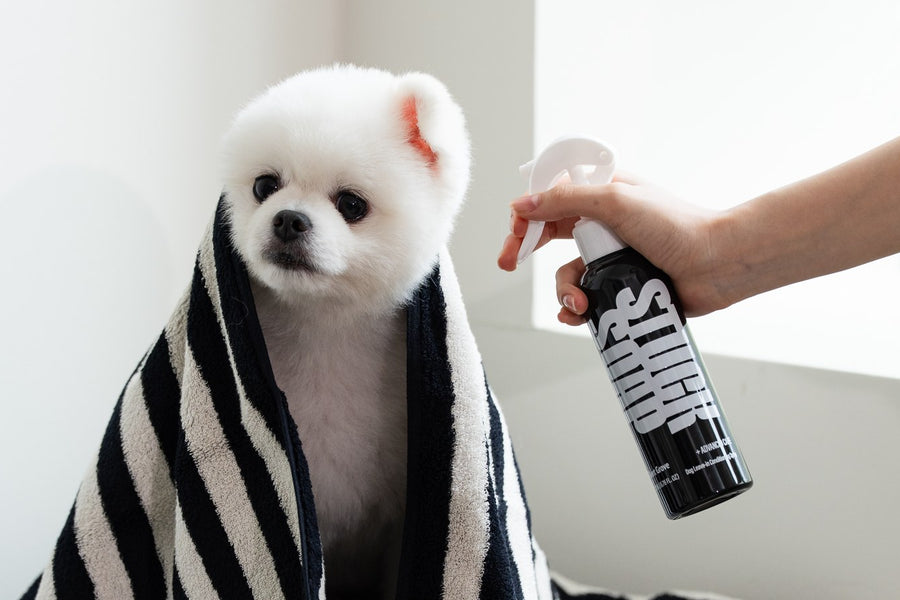
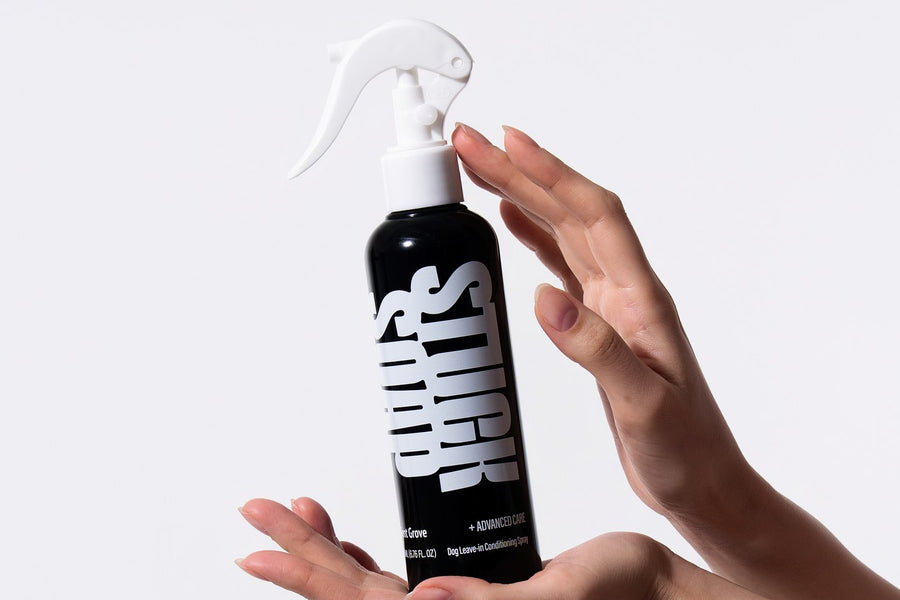
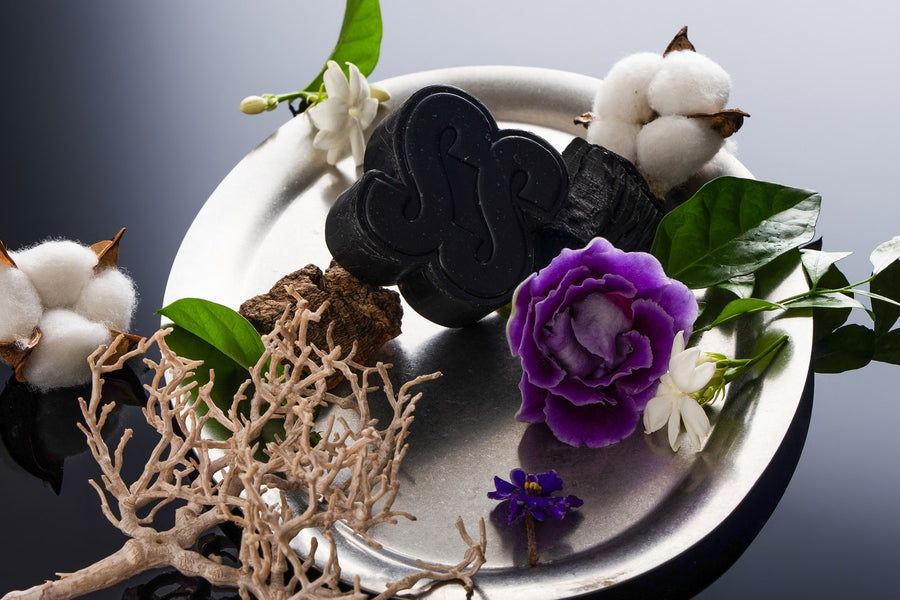
We make both because both earn their place. The STUCK SOAP Shampoo Bar is a 110g solid bar with a distinctive double-S shape and no plastic bottle at all. The Liquid Shampoo comes in 500ml and 120ml sizes, with a high-concentrate formula where one pump is enough. Each comes in two scents: Silent Grove, which is earthy, and Blush Garden, which is floral.
The formula thinking is shared. Both are built around Green Tea, Camellia Oil and Centella Asiatica, both are vegan, and both are pH-balanced for dog skin, with a fine-bubble lather and support for sebum control and the skin barrier. Bundle sets such as the Signature Duo make it easy to keep more than one on hand, and you can see the full line at STUCK SOAP.
Frequently Asked Questions
Does a dog shampoo bar clean as well as liquid shampoo?
Yes, when the formula is sound. Cleansing comes from surfactants lifting oil and dirt off the skin and coat, and that chemistry works the same whether it starts as a solid or a liquid. Results depend on reaching the skin under the coat, giving the lather a moment to work, and rinsing thoroughly.
Is a shampoo bar more concentrated than liquid shampoo?
Generally, yes. Liquid shampoos are water-based, and water usually tops the ingredient list. A bar leaves most of that water out, so what remains is largely the cleansing and conditioning system in solid form. A well-made liquid can still be concentrated, which is why good ones need only a small amount per wash.
Why does my dog's coat feel squeaky after some bars?
Usually because the bar is a true soap, which is alkaline by nature, or because hard water left a mineral film behind. Choose a bar labeled pH-balanced for dogs and rinse longer than feels necessary. If the skin underneath looks red, flaky or itchy, stop and ask your veterinarian.
Is a shampoo bar a good choice for large dogs?
It can work, but liquid is often faster on large or heavily double-coated dogs because you can pour diluted shampoo across a broad back in seconds. Many owners of big dogs use liquid for full baths and keep a bar for paws, bellies and quick touch-up washes between baths.
Are dog shampoo bars actually better for the environment?
They take the plastic bottle out of the equation and ship far less water, which makes them lighter to transport. That is a real but modest benefit, not a fix for packaging waste on its own. Using any shampoo sparingly and rinsing efficiently also matters, whichever format you choose for your dog.
Can I switch between a bar and liquid shampoo?
Yes. Switching formats is fine as long as both products are pH-balanced for dog skin and you keep your bathing routine consistent. Many households use both: liquid for full baths and a bar for travel or spot cleaning. Persistent itching, redness or odor is a reason to see a veterinarian, not to switch.
Sources
- Mijaljica D, Spada F, Harrison IP. Skin Cleansing without or with Compromise: Soaps and Syndets. Molecules, 2022
- Matousek JL, Campbell KL. A comparative review of cutaneous pH. Veterinary Dermatology, 2002
- Merck Veterinary Manual: Structure of the Skin in Dogs
- U.S. EPA: Containers and Packaging, Product-Specific Data
Pick Your Format
Bar, bottle or both, the same skin-first formula is waiting at stucksoap.com, in Silent Grove and Blush Garden.