


Dog hives after bath usually point to one of two things: a product your dog met in the tub, or something in the environment that happened to land on the same weekend. The fastest way to tell them apart is timing, because a product trigger tends to repeat within about 24 hours of every wash with that product, while a seasonal trigger keeps showing up on days you never bathed anyone.
The welts themselves are dramatic. You towel off a clean, good-smelling dog on Saturday night, and by Sunday morning the coat over his flanks looks quilted, little raised coins pushing the hair up in tufts. Then it fades, and you convince yourself it was nothing. Three weeks later it happens again. This piece is about running that down properly instead of guessing, and it includes an uncomfortable first step: putting our own shampoo on the suspect list along with everything else.
Before you read another line: this is an emergency if you see any of the following.
- Swelling of the face, muzzle, lips, or eyelids
- Swelling of the throat, or any change in the sound of breathing
- Labored breathing, open-mouth breathing, wheezing, or coughing
- Vomiting, diarrhea, drooling, or sudden weakness
- Pale gums, collapse, disorientation, or a dog who cannot stand
Stop investigating and call your veterinarian or the nearest emergency clinic right now. Hives can be the visible edge of a systemic allergic reaction, and a swollen face can move to a swollen airway. Detective work is for stable dogs. Anaphylaxis is for professionals, immediately.
Dog hives after bath: what you are actually looking at
Hives, or urticaria, are raised patches of swelling in the skin. In dogs they often look less like the classic human welt and more like texture: bumps you feel before you see them, hair standing up in small clumps, a rippled surface along the trunk, sometimes puffiness at the eyelids. Short-coated dogs show them plainly. On a fluffy Bichon or a double-coated Shepherd you may only find them by running your palm against the lay of the coat.
Why they can appear hours after the bath, not during it
Owners often dismiss the shampoo because nothing happened in the tub. That reasoning is shakier than it sounds. Reactions can start within minutes, but they can also build over hours, which means a Saturday evening bath produces a Sunday morning dog. The delay is exactly what makes this pattern so hard to spot without notes. Your memory ties the hives to Sunday. The log ties them to Saturday.
What hives are not
Hives are diffuse and transient. They are not the same as a hot spot, which is a focal, wet, angry, self-inflicted lesion that a dog has been chewing. If you are looking at one nasty patch rather than many small ones, read our guide to hot spots on dogs instead. And any welt that is still there in 48 hours, or that ulcerates, is a vet conversation, not a home project.
Dog hives after bath vs. seasonal flares: reading the signals
Before you throw out a bottle, spend two minutes with this comparison. Most owners can place their dog in one column within a week of paying attention.
| Signal | Points toward a product trigger | Points toward a seasonal or environmental trigger |
|---|---|---|
| Timing | Within 2 to 24 hours of a bath, nearly every time | Scattered across the week, including no-bath days |
| Calendar pattern | Follows your grooming schedule | Follows pollen counts, mowing, a specific park, or a season |
| Body map | Everywhere the product went, including the back and flanks | Belly, groin, armpits, paws, muzzle: the contact surfaces |
| Response to skipping | Skip that product for two washes and the pattern stops | Skipping the product changes nothing |
| Paw involvement | Usually not the focus | Frequent licking and chewing of feet after walks |
| Other household dogs | Often only the dog bathed with that product | Multiple pets itchy in the same window |
| Time of year | Year-round, tied to your routine | Predictable months, easing in deep winter |
Mixed signals are normal, and honestly they are the common case. A dog with a low-grade seasonal allergy has less margin, so a marginal product that a healthy-skinned dog shrugs off becomes the last straw in May. Two things can be true. That is a reason to log carefully, not a reason to give up.
Yes, our shampoo goes on the suspect list
Here is the part most brands skip. If your dog broke out the morning after a bath, and that bath used STUCK SOAP, then STUCK SOAP is a suspect. Not a footnote, not a special case. A suspect, sitting on the list next to the new detangling spray, the flea preventive you applied Friday, and the pollen your dog rolled in on the way back inside.
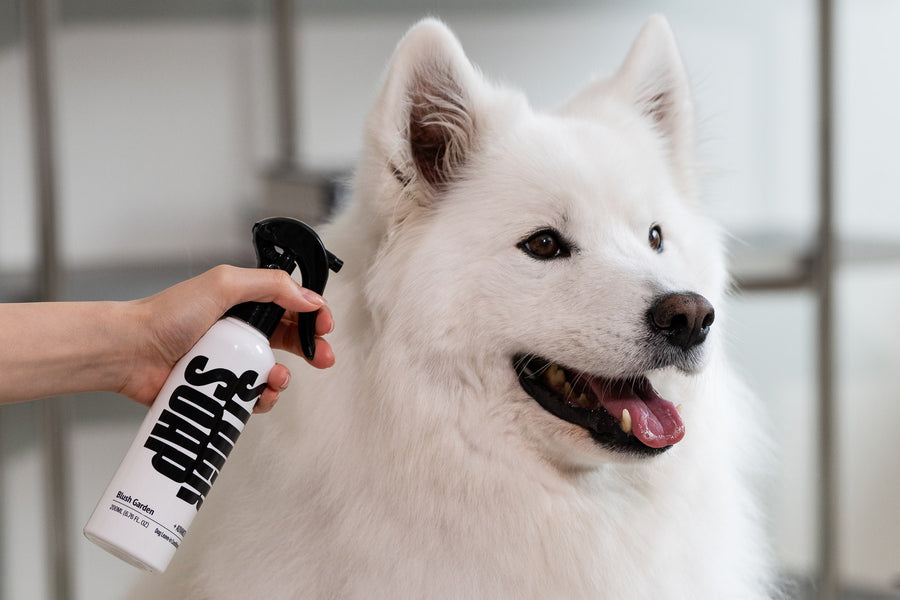
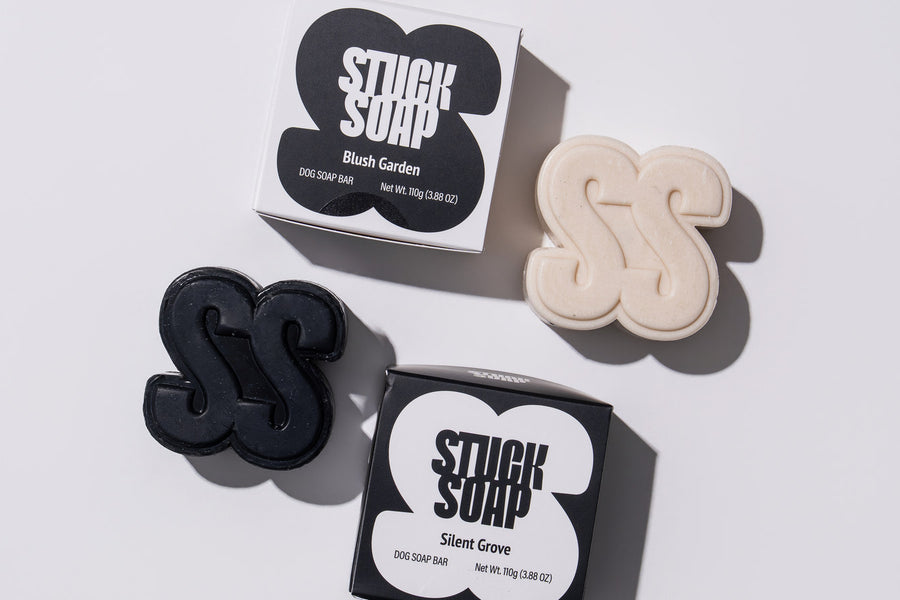
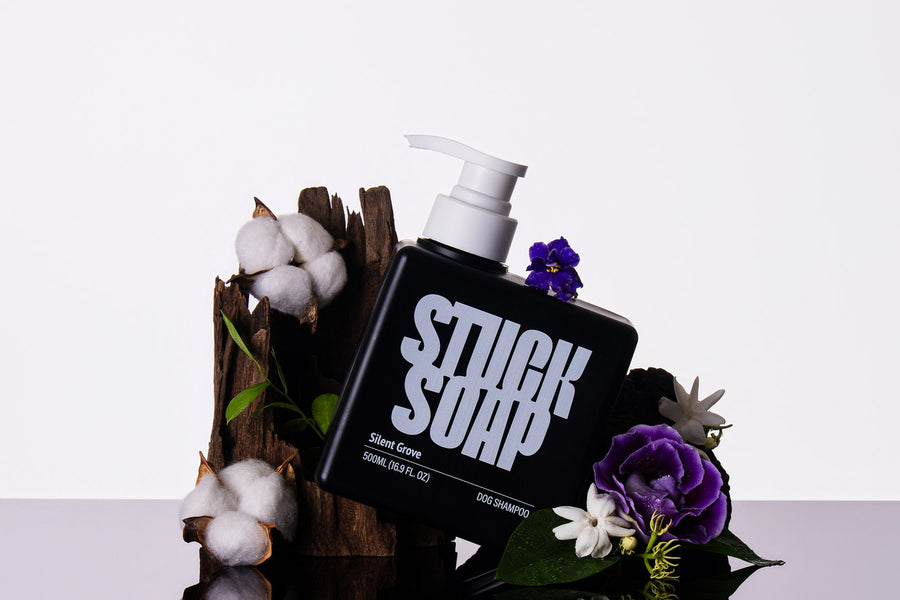
We make a scented product. Silent Grove is earthy, Blush Garden is floral, and fragrance is one of the legitimate categories any owner should consider when narrowing down a topical reaction. We are not going to pretend otherwise because it is commercially inconvenient. Our formulas are vegan, pH-balanced for dog skin, and built around Green Tea, Camellia Oil, and Centella Asiatica, designed to support the skin barrier rather than strip it. None of that makes an individual dog immune to reacting to an individual ingredient. Individual dogs react to oatmeal, to aloe, to coconut-derived surfactants, to things with spotless reputations.
How you would rule us out
The same way you would rule out anything else. Stop using it for two consecutive wash cycles. If the hives keep appearing on the same schedule with plain lukewarm water, we are cleared, and the answer is somewhere else. If the pattern stops while we are out of the rotation and returns cleanly when we come back in, that is meaningful information, and we would rather you have it than not. Email us, take the refund, and tell your vet what you found. A brand built for sensitive skin that exempts itself from scrutiny is not actually built for sensitive skin.
The elimination sequence, in order
Change one variable at a time. This is the whole discipline. Owners who swap the shampoo, the wipes, the treats, and the bedding in the same weekend learn nothing, because if the dog improves they have four possible reasons and no way to choose.
- Confirm the dog is stable. Re-read the emergency box above. Facial swelling, breathing changes, or vomiting means you stop here and call.
- Photograph the hives. Good light, against the lay of the coat, with the timestamp intact. Welts fade before appointments. Your phone is the most useful diagnostic tool you own.
- Write down everything topical from the past 72 hours. Shampoo, conditioner, leave-in spray, wipes, flea and tick preventive, ear cleaner, paw balm, a new towel, a new detergent used on that towel, the lawn treatment at the park.
- Pause every optional topical product. Keep only what your vet has prescribed. Do not stop prescribed parasite prevention without asking first.
- Wash once with plain lukewarm water only. No product at all. Rinse for longer than feels necessary. This tests the bath itself: water temperature, friction, dryer heat, and rinse technique.
- Reintroduce one product, and wait two weeks. One item, one wash cycle, then observe. Two weeks is the working window because a single clean bath proves very little.
- Repeat with the next product. Slow, boring, and the only method that produces a real answer.
- Bring the log to your veterinarian. Diagnosis is their job. Your job is handing them a timeline they can actually use, which puts you ahead of most of their appointments that day.
A patch-test habit worth keeping
Before any new topical goes on the whole dog, put a small amount on one spot of skin, inner thigh or the underside of a forelimb, rinse it after a minute, and leave the dog alone for a day. It is not a controlled clinical test and it will not catch everything. It will catch some things cheaply, and one irritated patch is a far better outcome than a whole irritated dog. Ask your vet whether this makes sense for your particular dog before you rely on it.
Bath-day variables that look like an allergy
Rinse, heat, and friction
Product residue left in a dense coat keeps working long after the towel comes out, and it is one of the most common causes of the day-after itch that gets blamed on ingredients. Rinse until the water runs clear, then rinse again, especially in the armpits, groin, and under the tail. Hot water and a dryer held too close both inflame skin on their own. Vigorous towel scrubbing on an already reactive dog does the rest.
Dilution and concentration
High-concentrate formulas are meant to be used sparingly. Our liquid is built so that one pump is enough for most dogs, and using five pumps because the lather looked thin is a good way to leave residue behind. If you are new to reading grooming labels, our guide on how to read labels like a pro covers what the ingredient order is actually telling you, and our roundup of ingredients to avoid covers the categories worth flagging regardless of who makes the bottle.
The seasonal case for bathing more, not less
If your log points to the calendar rather than the bottle, the instinct to stop bathing is backwards. Rinsing physically removes pollen sitting on the coat, which is why bathing frequency often goes up in allergy season under veterinary guidance. We covered the mechanics in how to wash pollen off your dog and the broader seasonal picture in spring dog allergies. The move is a gentler wash more often, not a dirty dog carrying allergens into the bed.
What to hand your veterinarian
The American Kennel Club's owner health library and the Merck Veterinary Manual's dog owner section both describe urticaria as a reaction pattern with many possible causes rather than a single disease, which is precisely why the history matters so much. For dogs with recurring skin trouble, the American College of Veterinary Dermatology maintains a directory of board-certified specialists.
Bring four things: dated photos, a list of every topical product with the date it was last used, the bath dates, and the hive dates. That is a five-line note on your phone. It converts a shrug into a working hypothesis, and it is the difference between an appointment that ends in guesswork and one that ends in a plan.
Practical takeaways
- Facial or throat swelling, breathing trouble, vomiting, or collapse: emergency clinic, now.
- Hives clustered within 24 hours of every bath with the same product point at the product.
- Hives on days you never bathed anyone point at the environment.
- Change one variable at a time, and give each change two weeks.
- Photograph everything, because welts fade before the appointment does.
- Ask your vet before giving any medication, including over-the-counter antihistamines.
- Put every product on the list, including the one you love. Especially the one you love.
When your vet clears you to restart a gentle routine, our STUCK SOAP liquid shampoo and shampoo bar are non-medicated K-Beauty grooming products formulated to support the skin barrier with Green Tea, Camellia Oil, and Centella Asiatica, pH-balanced for dog skin and available in both scents. They are cosmetics, not treatments. They will not fix an allergy, and any brand telling you otherwise is selling you something. For more on soothing ingredient categories, see our notes on colloidal oatmeal and on the best shampoo ingredients for allergy-prone dogs.
Frequently asked questions
Can dog shampoo cause hives the day after a bath?
Yes. A reaction to a topical product can show up as raised welts within minutes or hours, and some dogs look worst the following morning. Fragrance, preservatives, and surfactants are common suspects. If the pattern repeats after every bath with the same product, tell your vet.
How do I know if it's the shampoo or pollen?
Track timing. Product reactions cluster within 24 hours of bath day and fade when you skip that product. Environmental flares follow the calendar and the yard instead, appearing on days you never bathed. Two weeks of dated notes usually separates the two patterns clearly.
How long do hives last on a dog?
Many mild cases settle within a day or two once exposure ends, but there is wide variation and no safe way to predict it at home. Welts that spread, return in waves, or come with any swelling of the face or muzzle need a same-day veterinary call.
Can I give my dog an antihistamine for hives?
Ask your veterinarian before giving anything, including over-the-counter antihistamines. Dosing depends on your dog's weight, health history, and other medications, and some human products contain ingredients that are unsafe for dogs. A quick phone call gets you an answer specific to your dog.
Could it be the water, not the shampoo?
It can be. Water that is too hot, a dryer held too close, and rough towel friction all irritate skin and can mimic a product reaction. Rinse residue left in the coat is another frequent culprit. Change one variable at a time so you can read the result.
Should I stop bathing my dog if he gets hives?
Not necessarily, and stopping entirely can backfire during pollen season, when rinsing removes allergens sitting on the coat. The usual move is to pause the suspect product, switch to plain lukewarm water for one wash, and bring the whole timeline to your veterinarian.
Is a fragranced dog shampoo automatically a problem?
No, but fragrance belongs on the suspect list for any dog with reactive skin, ours included. Scent is one of the categories worth ruling out methodically rather than assuming. If a dog reacts to a scented wash, an unscented routine is a reasonable next test with your vet.
Sources
- American Kennel Club, Expert Advice: Health. akc.org/expert-advice/health
- Merck Veterinary Manual, Dog Owners section. merckvetmanual.com/dog-owners
- American College of Veterinary Dermatology. acvd.org
This article is general grooming information, not veterinary advice. STUCK SOAP products are non-medicated cosmetic grooming products and are not intended to diagnose, treat, or prevent any condition. Always consult your veterinarian about your dog's skin.
Gentle washing, once your vet gives the go-ahead
STUCK SOAP makes K-Beauty grooming for dogs with opinionated skin: vegan, pH-balanced, high-concentrate, and honest enough to put itself on your suspect list. Explore the liquid shampoo and the zero-waste bar in Silent Grove or Blush Garden at stucksoap.com.