


If you spend any time on beauty TikTok or in K-beauty circles, you have probably seen "slugging" — the nightly ritual of sealing your face under a glossy layer of petroleum jelly so your skin wakes up plump, dewy, and impossibly soft. It went viral for a reason: it works. So it was only a matter of time before dog parents started asking the natural follow-up question. Is slugging for dogs actually a thing, and could it give your pup that same soft, hydrated, healthy-looking coat?
It is a smart question, and the answer is genuinely interesting. The principle behind slugging — sealing moisture into the skin so it can repair itself — is rooted in real dermatology, and it matters just as much for your dog's skin as it does for yours. But the method humans use (a thick occlusive like Vaseline, left on overnight) runs into some very dog-specific problems, starting with the fact that your dog will almost certainly lick it right off.
In this guide, we will unpack what slugging actually is, the skin-barrier science that makes it work, whether it is safe to try on dogs, and the dog-safe way to get slugging-style benefits — locked-in moisture, a resilient barrier, and a soft, glossy coat — without the risks. This is classic K-beauty thinking applied to pets: understand the skin barrier first, then work with it gently.
Table of Contents
- What Is Slugging, and Why Is K-Beauty Obsessed With It?
- The Skin-Barrier Science: Why Sealing In Moisture Works
- Is Slugging Safe for Dogs? The Honest Answer
- The Dog-Safe Way to "Slug": Seal Moisture Without the Risks
- Build the Barrier From the Inside Out
- Frequently Asked Questions
- Sources & References
What Is Slugging, and Why Is K-Beauty Obsessed With It?
Slugging is a Korean-beauty-popularized technique in which you apply a layer of an occlusive product — most famously petroleum jelly — as the final step of your nighttime routine. The name comes from the slick, slug-like sheen it leaves behind. The idea is simple: after you have layered on your hydrating serums and moisturizer, you "lock" everything in with a sealant so none of it evaporates while you sleep.
Occlusives are the heavy-duty sealers of the skincare world. Petrolatum is the gold standard — dermatologists note it can reduce water loss from the skin's surface by up to 99%. Plant-based occlusives like shea butter and cocoa butter are gentler and more breathable, slowing water loss by an estimated 60 to 80% while feeling far less suffocating.
Why has K-beauty embraced this so enthusiastically? Because Korean skincare philosophy is built around the skin barrier. Rather than chasing aggressive quick fixes, the K-beauty approach layers lightweight hydration and then protects it, treating a healthy, well-sealed barrier as the foundation of that coveted "glass skin" glow. Slugging is essentially the most dramatic expression of that seal-it-in mindset — and, as it happens, the same barrier-first logic behind the glass skin approach to a glowing dog coat.
The Skin-Barrier Science: Why Sealing In Moisture Works
To understand why slugging helps — and why it is relevant to dogs at all — you need to know one term: transepidermal water loss, or TEWL. TEWL is the water that constantly evaporates out through the skin. A little is completely normal. Too much means the barrier is leaking, and the skin underneath turns dry, tight, flaky, and easily irritated.
Your dog's skin runs on the same blueprint as yours. The outermost layer, the stratum corneum, is often described as a brick wall: flattened skin cells are the "bricks," and a mortar of lipids — ceramides, cholesterol, and fatty acids — holds everything together and keeps water in. When that mortar is healthy, moisture stays put. When it is depleted, water escapes and irritants get in. (This is exactly why ceramides get so much attention in dog skin care.)
This is not just theory for dogs. Veterinary dermatology research has found that dogs with atopic dermatitis have significantly higher TEWL and lower ceramide levels than healthy dogs, and that the two are directly linked: less ceramide "mortar" means faster water loss. In other words, your dog's coat and comfort depend on the very same barrier science that makes slugging work for people.
Occlusion — sealing the surface — reduces TEWL directly. That is the entire mechanism. So the underlying goal of slugging (keep water in, give the barrier a chance to recover) is absolutely valid for dogs. The real question is how to achieve it safely.
Is Slugging Safe for Dogs? The Honest Answer
Here is where we have to separate the principle from the practice. Slugging your dog the way humans slug — smearing Vaseline over their skin and leaving it on — is not something we would recommend, for a few very practical reasons.
First, the licking. Dogs lick, and they will lick off almost anything you apply. Petroleum jelly is not considered toxic, but according to the ASPCA Animal Poison Control Center it acts as a laxative and can irritate the stomach. A couple of licks will likely just cause mild tummy upset; a larger amount can bring on vomiting and diarrhea. Because it is oil-based, there is also an aspiration risk if a dog inhales it while being sick. Vets who do recommend petroleum jelly for one specific spot (say, a cracked nose) usually pair it with an e-collar or recovery suit so the dog cannot reach it — not exactly a relaxing spa night.
Second, dog skin is different from ours. Canine skin is thinner, and its surface pH sits closer to neutral (roughly 6.2 to 7.5) compared with the more acidic pH of human skin. Products formulated for human faces are not calibrated for a dog's skin chemistry, which is one big reason vets consistently advise against slathering human lotions and ointments on pets.
Third, dogs are covered in fur. Heavy occlusion behaves very differently under a coat than on a bare human cheek. A thick, greasy layer trapped against the skin in a warm, furry environment can hold heat and moisture in the wrong way, potentially creating a cozy home for yeast or bacteria and making hot spots worse rather than better. When it comes to occlusives on a dog, more is definitely not more.
None of this means the goal is wrong. It just means the human method does not translate. The good news is that you can absolutely give your dog the benefits of slugging with a smarter, dog-safe approach.
The Dog-Safe Way to "Slug": Seal Moisture Without the Risks
Think of dog-safe slugging as capturing the spirit of the trend — hydrate, then seal — using products and amounts made specifically for dogs. Here is how to do it well.
Start with gentle, barrier-friendly cleansing. Sealing over stripped, over-washed skin just locks in the damage. Use a pH-balanced, sulfate-free dog shampoo and avoid over-bathing. Clean, intact skin is what you actually want to seal, which is why the K-beauty habit of cleansing without stripping is such a good foundation.
Layer hydration first, then a light seal. The K-beauty sequence is hydrate-then-lock, never lock-alone. For dogs, that can mean a leave-in conditioning spray or a humectant-rich grooming product to draw in moisture, followed by a very light, dog-safe emollient to help hold it. Humectants like hyaluronic acid and snow mushroom pull water into the skin; a breathable oil helps keep it there.
Choose dog-safe sealers, not petroleum jelly. Look for balms formulated specifically for dogs — typically built on beeswax, shea butter, and coconut oil — which are designed to be safe if your dog licks a little. Lightweight natural oils like squalane and camellia oil are lovely, breathable emollients that leave a glossy finish without the heavy, suffocating feel of petrolatum. Vitamin E oil is another that vets consider safe even if a bit is licked off.
Spot-treat, do not coat. The most sensible place to "slug" a dog is a targeted dry area — the nose, the paw pads, the elbows — not the whole body. Apply a thin layer, and if you are worried about licking, do it right before a walk or a meal so your dog is happily distracted while it sinks in.
Always patch-test first. Before using any new balm or oil, dab a small amount on one spot and wait 24 hours to check for redness or irritation. Keep sealers out of the ears and away from the eyes, and skip the whole idea on any broken, oozing, or infected skin. That situation needs a veterinarian, not a balm.
Build the Barrier From the Inside Out
Here is the part the trend videos leave out: the most effective long-term "slugging" for a dog happens from the inside. A topical seal is a patch over a leaky barrier. Building the barrier itself is the real, lasting win — and it is where the K-beauty barrier-first philosophy truly earns its keep.
The single most studied lever is essential fatty acids. Linoleic acid, an omega-6, is a building block for the very ceramides that make up your dog's skin "mortar." In a controlled pilot study in healthy dogs, raising dietary linoleic acid (paired with zinc) reduced TEWL by roughly 8 g/m²/h within six weeks — a measurable improvement in the skin's ability to hold water, along with glossier coats. Omega-3s from fish oil complement this nicely. Ask your vet about the right supplement and dose for your individual dog.
On the topical side, the K-beauty ingredients worth reaching for are the ones that actively support the barrier rather than fight it. Ceramides replenish the mortar directly. Centella asiatica (cica) is K-beauty's go-to calming ingredient for stressed, reactive skin. Green tea, rich in antioxidants, helps defend the skin from everyday oxidative stress.
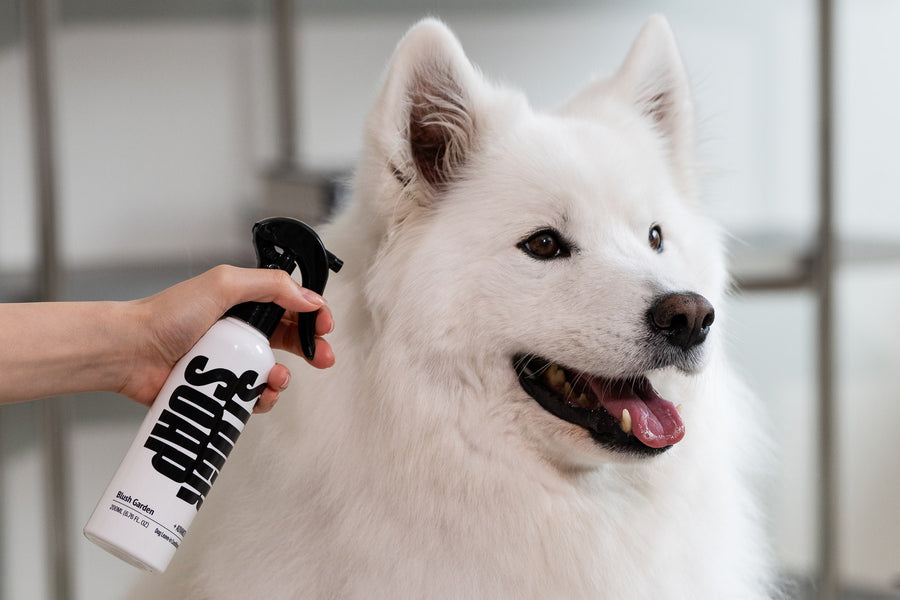
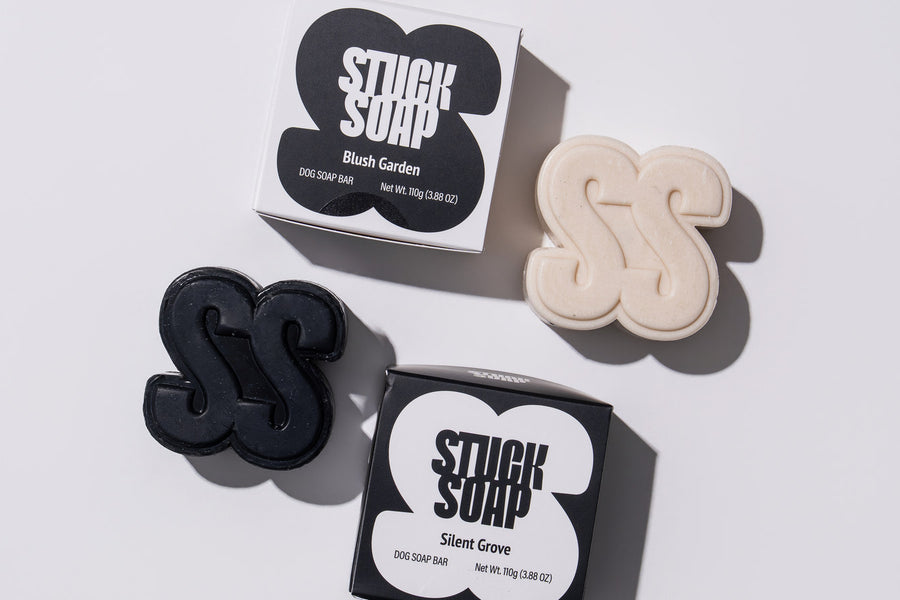
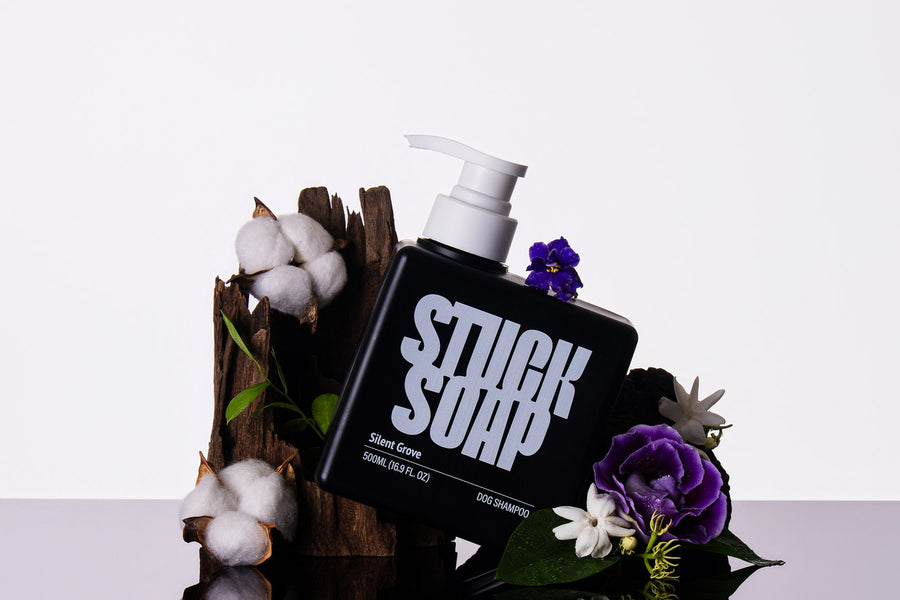
This is exactly the philosophy behind Stuck Soap. Our vegan, pH-balanced formulas are built around Jeju Island botanicals — green tea, camellia oil, and Centella asiatica — chosen to cleanse gently and help support your dog's skin barrier instead of stripping it. Get the barrier right at bath time, feed it well from the inside, and you will not need to chase a viral sealant. Your dog's coat learns to hold its own moisture, the way healthy skin is meant to. If dryness is your main concern, our K-beauty hydration approach to dry dog skin is a great next read.
Frequently Asked Questions
Can I put Vaseline on my dog's dry skin?
Petroleum jelly is not toxic, but it is not the best choice. Dogs lick it off, and the ASPCA notes it acts as a laxative that can cause stomach upset, vomiting, or diarrhea if enough is ingested. For occasional dry noses or paws, a balm formulated for dogs (beeswax, shea butter, coconut oil) is safer. For anything beyond a minor dry patch, check with your vet.
What can I use to moisturize my dog's skin instead of slugging?
Start with a gentle, pH-balanced dog shampoo and avoid over-bathing. Then use dog-specific leave-in conditioners or balms, and lightweight, breathable oils such as camellia oil, squalane, or vitamin E. Feeding essential fatty acids (omega-6 and omega-3) supports the barrier from the inside. Avoid human lotions and ointments.
Is slugging safe for dogs with allergies or hot spots?
No. Heavy occlusion can trap heat and moisture against the skin and make yeast, bacteria, or hot spots worse. Dogs with allergies, active irritation, or infected skin should be seen by a veterinarian rather than sealed with any occlusive product.
Does my dog's coat actually need slugging?
Most healthy dogs do not need any occlusive at all. A well-functioning skin barrier retains its own moisture. Slugging-style sealing is really only useful for targeted dry spots, and even then a dog-safe balm applied thinly is plenty. Focus on gentle cleansing and good nutrition first.
Can I use my own K-beauty products on my dog?
It is best not to. Human skincare is formulated for acidic human skin (pH around 4.7 to 5.5), while dog skin is closer to neutral (roughly 6.2 to 7.5). Ingredients, fragrances, and actives that suit your face can irritate your dog. Use products made for dogs, and borrow the K-beauty philosophy rather than the products themselves.
The Takeaway
Slugging went viral because it nails a real dermatological truth: seal moisture into a healthy barrier and skin gets softer, calmer, and more resilient. That truth applies to your dog too. What does not carry over is the method — petroleum jelly, full-body coverage, and leaving it on overnight are a poor fit for a licking, fur-covered, neutral-pH animal.
So borrow the idea, not the jar. Cleanse gently, hydrate, spot-seal dry areas with dog-safe balms and light oils, and build the barrier from within with the right nutrition and skin-loving botanicals. That is slugging, translated into something your dog will actually thank you for.
Sources & References
- What Is Skin Slugging? The Skincare Trend Explained — Westlake Dermatology
- Slugging: The Benefits and Risks of the Viral Beauty Hack — Healthline
- Can I Put Vaseline on My Dog? — Whole Dog Journal
- Is Vaseline Safe for Dogs? Vet-Verified Facts & FAQ — Dogster
- Increased Transepidermal Water Loss and Decreased Ceramide Content in Dogs With Atopic Dermatitis — Veterinary Dermatology (PubMed)
- Linoleic Acid Intake and Skin Barrier Properties in Healthy Dogs: A Pilot Study — Journal of Applied Animal Nutrition (Cambridge)
- Home Remedies for Dry Dog Skin — AKC Pet Insurance
Give Your Dog the K-Beauty Spa Treatment
The real secret to a soft, dewy coat is not a viral sealant, it is a healthy skin barrier. Stuck Soap's vegan, pH-balanced formulas are built around Jeju Island botanicals like green tea, camellia oil, and Centella asiatica to cleanse gently and help your dog's skin hold its own moisture, bath after bath.
Shop Stuck Soap →Vegan · pH-Balanced · Jeju Island Botanicals · Zero Waste