


No, more lather does not mean a cleaner dog, and no, dog shampoo does not need to lather in order to clean. Foam is a visible byproduct of surfactants meeting water and air. The actual cleaning happens at a molecular scale you cannot see, whether or not the tub fills with bubbles.
Still, foam is not meaningless. It is a rough instrument, and like any rough instrument it tells you something useful once you know what it is measuring. A wash that suddenly refuses to foam is worth investigating. A wash that foams beautifully can still leave a dog dirty. Both of those are true at once, and sorting out which situation you are in takes about thirty seconds of attention during the bath.
Does Dog Shampoo Need to Lather? The Short Answer
Lather is a foam: gas bubbles trapped inside thin films of liquid, held open by surfactant molecules lining the air and water boundary. That is all it is. Foam requires three things to exist: surfactant, water, and mechanical agitation that whips air in. Remove any one of them and the foam disappears, even though the cleaning chemistry stays exactly the same.
So the honest answer to "does dog shampoo need to lather" is that lather is optional to the outcome and useful to the process. It gives you a visual map of where product has been spread. It provides a bit of slip so your fingers move through coat without dragging. It buys you contact time, because foam stays put on a vertical flank while liquid runs straight off. Those are real benefits. None of them is the cleaning itself.
What Actually Cleans a Dog: Micelles, Not Bubbles
A surfactant is a molecule with a water-loving head and an oil-loving tail. That split personality is the whole trick. Dropped into water, surfactants first crowd the surface, which lowers water's surface tension and lets it wet a coat instead of beading off it. This is why the first thing a shampoo does is make your dog look suddenly, dramatically wetter.
Once the surface is saturated, the extra molecules organize into spheres called micelles. A micelle is a ball of surfactant molecules with oily tails turned inward and water-friendly heads facing out. Sebum, dust, pollen, and whatever your dog rolled in on Tuesday get pulled into those oily centers and held there, suspended in the water rather than clinging to hair. Rinse the water away and the soil leaves with it.
Foam happens at the air boundary. Cleaning happens at the oil boundary. They use the same molecules, but they are not the same event.
Notice what is missing from that description: bubbles. Micelle formation does not require air. It happens in a sealed bottle, in a washing machine, in a low-foam industrial cleaner that produces almost no visible suds at all. Foam and detergency both come from surfactants, which is why they usually appear together and why people reasonably assume one causes the other. They are siblings, not parent and child.
When Low Lather Still Means a Perfectly Clean Dog
There is a long list of ordinary situations where you will see very little foam and your dog will come out of the tub completely clean.
The formula simply foams low by design
Different surfactant systems behave differently at the air boundary. Some blends generate tall, stable, slow-collapsing foam. Others produce dense, fine, short-lived foam. Others clean efficiently while barely foaming at all. These are engineering choices about texture, rinse speed, and feel, not rankings of cleaning power. A dense fine-bubble lather and a big airy lather can carry identical amounts of surfactant to the skin.
Dilution and water temperature shifted the balance
Warmer water and a wetter coat both thin the product film, which produces less dramatic foam and often better distribution. Diluting a concentrated shampoo in a bottle of water before applying it is a standard groomer technique. It foams less and spreads far more evenly, especially on double coats.
The coat is short, smooth, or already fairly clean
Foam needs surface area and agitation. A short-coated dog gives your hands less to work against, so less air gets incorporated. A dog bathed on a regular schedule has less sebum to bind the surfactant, which usually means more foam, not less, so if a clean, short-coated dog foams modestly, you are simply looking at a system doing its job without theatrics.
When Weak Lather Is a Real Signal Worth Reading
Now the other half. Four conditions genuinely suppress foam and genuinely compromise the wash, and all four are fixable.
1. Not enough product for the dog's size and coat
Surfactant is consumed by the soil it captures. Under-dose a 70-pound double coat and the molecules run out before they reach the skin. Dosing by eye is the single most common error here. Matching the amount to weight and coat type solves it immediately, and our dosage chart by weight and coat exists precisely for this.
2. The coat was never wetted to the skin
This is the quiet one. A dense or water-repellent coat can look soaked while the skin underneath is bone dry. Shampoo applied to that surface has no water to form micelles in, so it smears instead of foaming, and the layer that actually needs cleaning never gets touched. Two to three minutes of patient soaking changes everything about the rest of the bath.
3. The coat is heavily soiled and the first pass is fully bound
When sebum load is high, every surfactant molecule gets occupied by oil almost on contact. Nothing is left over to stabilize an air film, so foam collapses as fast as you create it. This is not failure. This is the shampoo working hard. Rinse, apply a smaller second amount, and watch foam appear normally. That two-step logic is the whole idea behind double cleansing for dogs.
4. Hard water is binding the surfactant
Calcium and magnesium ions in hard water interact with certain surfactants and pull them out of service, reducing both foam and soil suspension. According to the U.S. Geological Survey water hardness overview, a large share of American households sit in the moderately hard to very hard range. If your shampoo behaved one way in your old apartment and differently in your new one, water chemistry is the first suspect. We covered the full picture in why hard water is probably the reason your shampoo stopped working.
Foam Volume vs. Actual Cleaning: A Field Guide
| What you observe | Most likely cause | Is the dog actually getting clean? | What to do |
|---|---|---|---|
| Little foam, pass one, visibly dirty dog | Surfactant fully bound by sebum and grime | Yes, the first pass is doing real work | Rinse, apply a smaller second dose, expect normal foam |
| Little foam, pass one and pass two | Coat not wetted to skin, or hard water | No, not reliably | Soak 2 to 3 minutes to the skin, consider a filtered final rinse |
| Foam appears only on the topcoat | Product sitting on guard hairs, undercoat untouched | Partially | Part the coat and work product in section by section |
| Dense, fine, quiet foam | Concentrated or fine-bubble surfactant system | Yes | Nothing, this is normal behavior |
| Enormous foam, coat still feels greasy after drying | Under-rinsed, or foam built in air rather than on coat | Incomplete | Extend rinse time, check armpits, groin, and collar line |
| Foam fine, coat feels dull and gritty when dry | Mineral deposits from hard water | Cleaned, but residue remains | Final rinse with softened or filtered water |
How to Read Lather Correctly During a Bath
- Soak to the skin first. Two to three minutes, working water in against the direction of growth on dense coats. Check by parting the hair and touching skin.
- Dose by weight and coat type, not by eye. Concentrated formulas need far less than people expect, and over-dosing lengthens rinse time without improving the wash.
- Emulsify in your hands or in a dilution bottle before it touches the dog. This is where you decide how evenly the product distributes.
- Work in sections, skin outward. Neck, back, flanks, then legs, belly, tail base. Foam should follow your hands as a map of coverage.
- Read pass one honestly. Collapsing foam on a dirty dog is expected. Rinse it out rather than adding more product on top.
- Run pass two if the dog was genuinely dirty. Smaller amount, normal foam, and now you have contact time that means something. Our guide on how long to leave shampoo on a dog covers that window.
- Rinse past the point where foam stops. No visible suds is the beginning of rinsing, not the end of it. Use the squeeze test described in how to tell when your dog is actually rinsed.
Bars, Liquids, and Why They Foam on Different Schedules
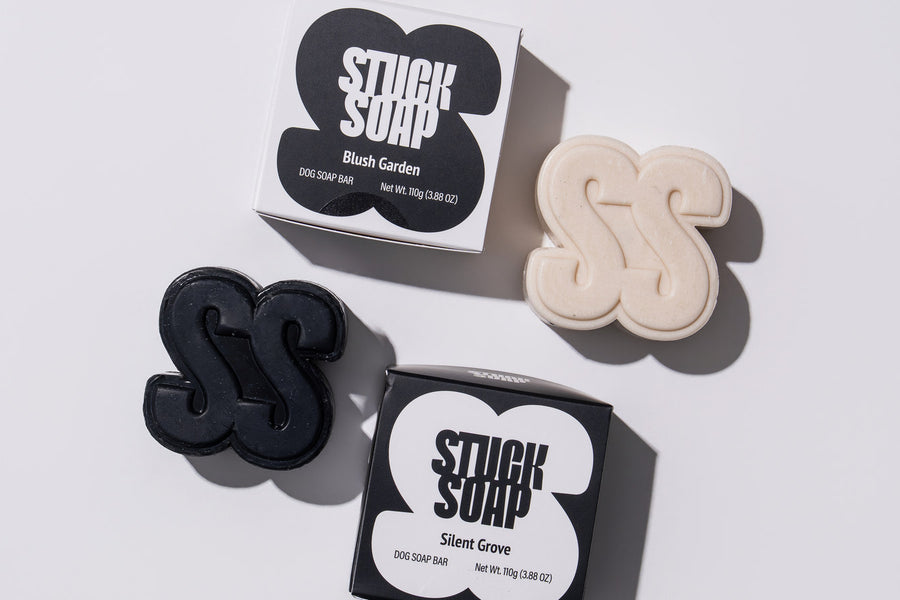
A liquid shampoo delivers its full surfactant load the moment it hits water, so foam arrives quickly and broadly. A bar releases surfactant progressively as it glides against a wet coat, so foam builds locally and slowly, section by section. Neither pattern indicates more or less cleaning capacity. It is a difference in delivery rate, and it changes technique rather than outcome. If you are moving between formats, how to use a dog shampoo bar and shampoo bar vs liquid both walk through the adjustment.
One thing that is not a matter of preference: formulation intended for canine skin. Dog skin and human skin differ in thickness, structure, and surface pH, which is why grooming products are formulated separately from human ones. The Merck Veterinary Manual's overview of canine skin is a good starting point, and the American Kennel Club's expert advice library covers routine grooming cadence. If your dog has persistent redness, itching, odor, hair loss, or open skin, that is a veterinary conversation rather than a shampoo decision, and no grooming product should be treated as treatment.
Practical Takeaways
- Foam volume is a property of the formula and your technique, not a measurement of cleanliness.
- Low foam on pass one over a dirty coat is a good sign, not a bad one.
- Low foam on pass two means investigate: dose, wetting, or water hardness.
- Big foam plus a greasy coat after drying means under-rinsing.
- Rinse for longer than feels necessary. Residue is the most common finishing error, along with the rest of the list in 9 common dog bathing mistakes.
Where STUCK SOAP Sits in This
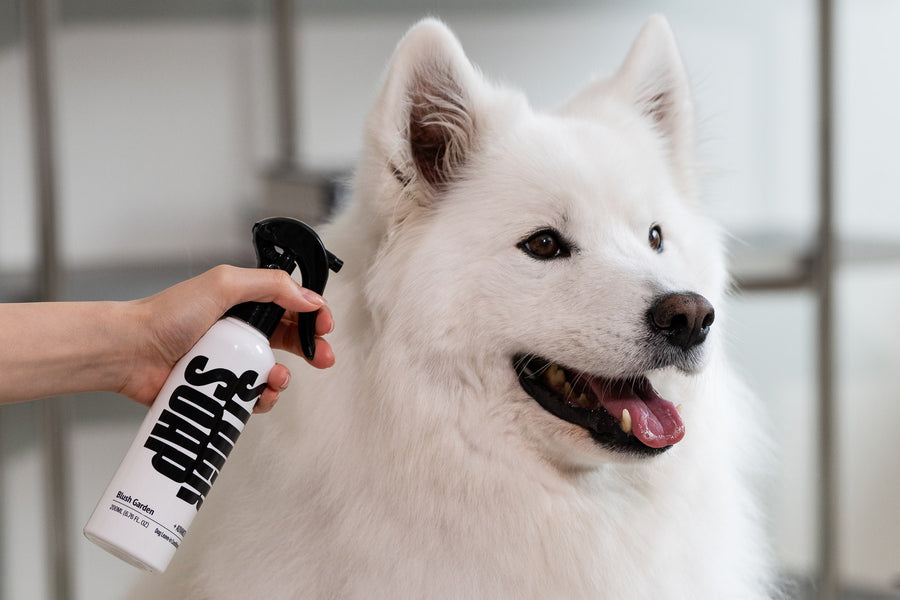
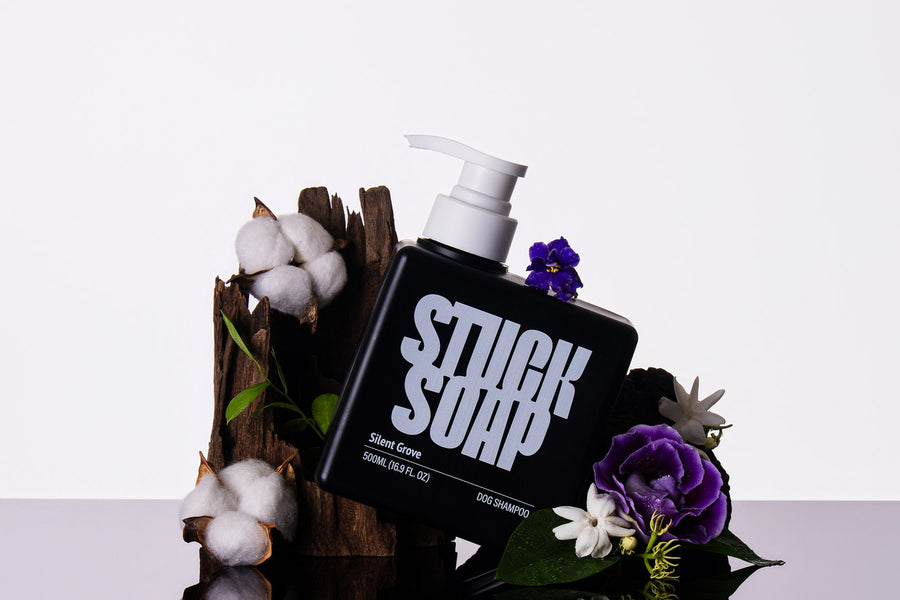
STUCK SOAP is built as a high-concentrate, pH-balanced grooming formula with a fine-bubble lather, which means the foam reads as dense and quiet rather than tall and airy. One pump is genuinely the intended dose for most dogs, so if you are used to squeezing out a palmful, the smaller foam volume is the formula behaving as designed. Green tea, camellia oil, and centella asiatica support sebum balance and the skin barrier, and the range is vegan across both the 500ml liquid and the zero-waste bar, in Silent Grove or Blush Garden. You can see the full range at stucksoap.com.
Frequently Asked Questions
Does dog shampoo need to lather to clean my dog?
No. Lather is a visible side effect of surfactants meeting water and air, not the cleaning mechanism itself. Cleaning happens when surfactant molecules surround oil and dirt and lift them into the rinse water. A low-foaming wash that is spread to the skin and rinsed thoroughly cleans just as well.
Why does my dog's shampoo barely foam on the first pass?
Usually because the surfactant is fully occupied. Heavy sebum, dust, and outdoor grime bind the molecules before any air gets trapped, so foam collapses. This is normal on a dirty coat. Rinse, then apply a second, smaller amount. Foam that appears on pass two confirms the first pass worked.
Does more lather mean a cleaner dog?
No. Foam volume depends on the surfactant blend, water hardness, coat length, and how much air your hands whip in. Two shampoos can clean identically while producing very different foam. Judge the result by how the coat feels and rinses, not by how tall the bubbles pile up.
Can hard water stop dog shampoo from lathering?
Yes. Calcium and magnesium ions in hard water bind to certain surfactants and reduce their ability to foam and to suspend soil. You may need more product, longer rinsing, or a final rinse with filtered water. Mineral film left on the coat can also dull shine and texture.
Should I use more shampoo if I do not see foam?
Sometimes, but check the basics first. Most low-foam complaints trace back to a coat that was never soaked to the skin. Wet thoroughly for two to three minutes, then apply the amount matched to your dog's weight and coat type. Add product only if foam still refuses to build.
Is a shampoo bar supposed to foam less than liquid shampoo?
Not necessarily less, but differently. A bar releases surfactant gradually as you glide it along a wet coat, so foam builds slowly and locally rather than all at once. Work the bar into a lather in your hands or on the coat, then spread it before rinsing.
How do I know the dog is actually rinsed, not just foam-free?
Foam disappearing is not the finish line. Squeeze a section of coat: if water runs clear and the hair squeaks slightly between your fingers with no slick or waxy feel, the rinse is complete. Check the armpits, groin, and under the collar line last.
Sources
- Merck Veterinary Manual, Skin Disorders of Dogs
- American Kennel Club, Expert Advice library
- U.S. Geological Survey, Water Science School: Hardness of Water
- American Veterinary Medical Association, Pet Owner Resources
Bathe Smarter, Not Foamier
If you want a wash that concentrates its work at the skin instead of in the air, STUCK SOAP's pH-balanced liquid shampoo and zero-waste bar are made for exactly that. Explore Silent Grove and Blush Garden at stucksoap.com.