


For a routine dirt and odor wash, leave dog shampoo on for one to three minutes. For a thicker or coarser coat where you want a conditioning-style wash, three to five minutes is the useful window, and ten minutes is the ceiling for any general grooming shampoo. That is essentially the whole answer to how long to leave shampoo on a dog, and most owners are already close enough on that number.
The part that goes wrong is what happens after the timer. Rinsing gets about forty seconds and a hopeful glance, when it deserves roughly twice the time the lather got. A bath that ends early does not leave your dog cleaner. It leaves product behind.
The Short Answer: How Long to Leave Shampoo on a Dog, by Purpose
There is no single correct dwell time because "washing a dog" covers several different jobs. A five-pound terrier who walked through a puddle and a sixty-pound double-coated dog who found a compost pile are not the same task. Match the clock to the purpose.
| Type of wash | What it is for | Contact time | Rinse time |
|---|---|---|---|
| Routine dirt and odor | Regular maintenance, light soil, normal dog smell | 1 to 3 minutes | 3 to 5 minutes |
| Heavy soil, two-pass wash | Mud, pond water, something rolled in | Two passes of 1 to 2 minutes | 4 to 6 minutes |
| Conditioning-style dwell | Coarse, dense, or dry-feeling coats | 3 to 5 minutes | 5 to 7 minutes |
| Puppy or first-bath introduction | Keeping the session short and low-stress | 60 to 90 seconds | 3 to 4 minutes |
| Vet-prescribed medicated product | A condition your veterinarian is managing | Per label and vet instruction | Thorough, per label |
Notice the rinse column. In every row it is longer than the contact time, usually by a factor of two. That ratio is the actual technique. The dwell number is the easy half.
What Contact Time Is Actually Doing (and When It Stops)
A shampoo has a short, specific job. The surfactants have to reach the skin, wrap around oil and loosened debris, and hold them in suspension so water can carry the whole mess off the coat. Once lather is genuinely at skin level and worked through, that chemistry happens fast. It does not keep improving with time the way a marinade does.
This is why the clock is so often misread. The timer should start when product is at the skin, not when you squeeze the bottle. On a dense double coat, two full minutes can disappear just getting lather down past the guard hairs, and owners count that as dwell time when it was really wetting time. Wet the coat longer than feels necessary before any product goes on. Warm water alone, worked in for a minute, does half the job of loosening dirt and makes everything after it easier.
The Upper Limit: Ten Minutes, and Never Let It Dry
Ten minutes is a sensible hard stop for any non-prescription grooming shampoo. Past that point you are not gaining cleaning power, you are just giving product more opportunity to settle into the coat and more surface area to cling to as water evaporates. A shampoo that starts to dry on the coat becomes noticeably harder to rinse out, and the coat can end up feeling tacky or dull rather than clean.
Two rules make the ceiling easy to respect. Keep the coat damp the entire time product is on it, misting or splashing with warm water if the bathroom is dry. And if you are ever unsure whether you have hit the limit, rinse. Rinsing early costs you nothing.
Routine Dirt and Odor Washes: One to Three Minutes
This is the bath most dogs get most of the time, and it is genuinely short. Wet thoroughly, apply product, work it in with your fingertips against the direction of the coat on the body and with the coat on long-haired dogs, then rinse. The American Kennel Club describes the lathering step plainly: "Wet your dog and then lather them with shampoo, working the soap through to the skin."
Two things make one to three minutes enough. The first is using the right amount for the dog in front of you rather than a generic palmful, which is worth working out once and then repeating. Our dosage guide by weight and coat type takes the guesswork out. The second is lather quality. Fine, dense foam distributes across the coat in a fraction of the time that thick unemulsified product does, which is also why the technique for working a shampoo bar is worth learning properly rather than rubbing the bar directly along the back.
For Heavy Soil, Use Two Short Passes Instead of One Long One
When a dog is genuinely filthy, the instinct is to leave the shampoo on twice as long. Do the opposite. Run two short washes: a quick first pass of about a minute that you rinse away immediately to remove the bulk of the mud and grit, then a second pass of one to two minutes on a coat that is now actually washable. The first pass gets almost no cleaning benefit from sitting, because it is busy carrying off surface dirt. The second one does the real work.
Conditioning-Style Dwell: Three to Five Minutes
A slightly longer dwell has one legitimate use, and it is not "cleaner." It is for coats that need product distributed thoroughly before it comes off: dense undercoats, coarse wiry textures, and coats that feel dry to the hand between baths. Those three to five minutes buy you even coverage and time to comb product through with your fingers, not extra cleaning.
Whether your dog benefits from this at all depends less on breed than on skin, which is a distinction worth reading up on in why skin type matters more than coat type. And treat five minutes as a considered choice for a specific coat, not a default upgrade. Longer is not a better version of the same bath.
Medicated Shampoos: The Label and Your Vet Set the Clock
Everything above describes ordinary grooming products. Prescription and veterinary medicated shampoos are a different category with different rules, and their contact time is a dosing instruction rather than a preference. The Merck Veterinary Manual states it directly: "If possible, keep the medicated shampoo on the skin for 10 minutes, then rinse thoroughly." The same source is equally clear about scheduling: "Ask for and follow your veterinarian's instructions on shampoo frequency."
If your veterinarian has prescribed a product, the label and their instructions win over any general guidance in this article, including ours. Do not shorten a prescribed contact time to save a wrestling match, and do not extend one because it seems like it might help. If your dog has itching, hot spots, persistent odor, flaking, or any skin change you are trying to treat, that is a conversation with your veterinarian, not a shampoo timing decision.
A Workable Sequence for Dogs Who Will Not Stand Still
A three-minute dwell is trivial with a calm retriever and impossible with a dog who treats the tub as a hostage situation. The fix is to stop running one long timer and start running staggered zones, so product is always sitting somewhere while your hands are busy somewhere else.
- Pre-wet for a full minute. Warm water, from the neck back, working down to the skin. This is the step everyone shortens and the one that saves the most time later.
- Zone one, back and sides. Apply and work product in. The clock for this zone starts now.
- Zone two, legs, belly, and tail. Roughly a minute of work. Zone one is dwelling while you do it.
- Zone three, chest, neck, and head last. Keep product away from eyes and ears, and use a damp cloth for the face rather than pouring anything over it. Most dogs tolerate the head worst, so it gets the shortest wait.
- Rinse in reverse. Head and neck first, then back, then legs and undercarriage. By the time you reach the tail, zone one has had its full three minutes without anyone standing still for three minutes.
- Final sweep. Go back over armpits, groin, and the base of the tail, which are the three places suds reliably hide.
Traction matters as much as sequence here. A mat in the tub, a hand on the chest, and a bath setup you are not fighting will do more for your dwell time than any product will. Our guide to bathing a dog without making a mess covers the logistics side of that.
The Rinse Is Half the Routine, and It Takes Longer Than You Think
Here is the rule that changes results: rinse for at least twice as long as you lathered. Three minutes of contact time earns six minutes of rinsing. It feels excessive, and it is exactly right. The AKC's bathing guidance frames the mindset well: "This may take patience since you want to remove all traces of the shampoo." Their shampoo guide is blunter still, advising that even when you think you have rinsed out all of the suds, rinse again.
Rinse from the top down so gravity works with you, and give deliberate attention to the places water skips: under the collar line, the chest, armpits, the groin, between the toes, and the thick fur at the base of the tail. On a double coat, push water into the undercoat with your fingers rather than trusting the spray to penetrate on its own. If your water is hard, expect the whole thing to take longer, for reasons we get into in how hard water affects rinsing and coat feel.
How to Tell You Are Actually Done
Three checks, all of them fast. Squeeze a section of coat close to the skin: if it feels slick or faintly soapy between your fingers, keep going. Watch the runoff: it should be clear, with no cloudiness and no fresh bubbles appearing when you press the coat. And do a dry-check the next day, because a coat that looks dull, feels sticky, or flakes when brushed is usually telling you about the rinse rather than the shampoo. We go deeper on that diagnosis in how to tell whether your dog is fully rinsed.
Practical Takeaways
- Routine wash: one to three minutes of contact, then three to five minutes of rinsing.
- Conditioning-style wash on a dense or coarse coat: three to five minutes, by choice, not by default.
- Absolute ceiling for any general grooming shampoo: ten minutes, and never let product dry on the coat.
- Prescription medicated products follow the label and your veterinarian, full stop.
- Rinse for roughly twice as long as you lathered, and check the coat by feel before you stop.
- Filthy dog: two short washes beat one long soak.
- Wiggly dog: stagger the zones so the dwell happens while your hands are moving.
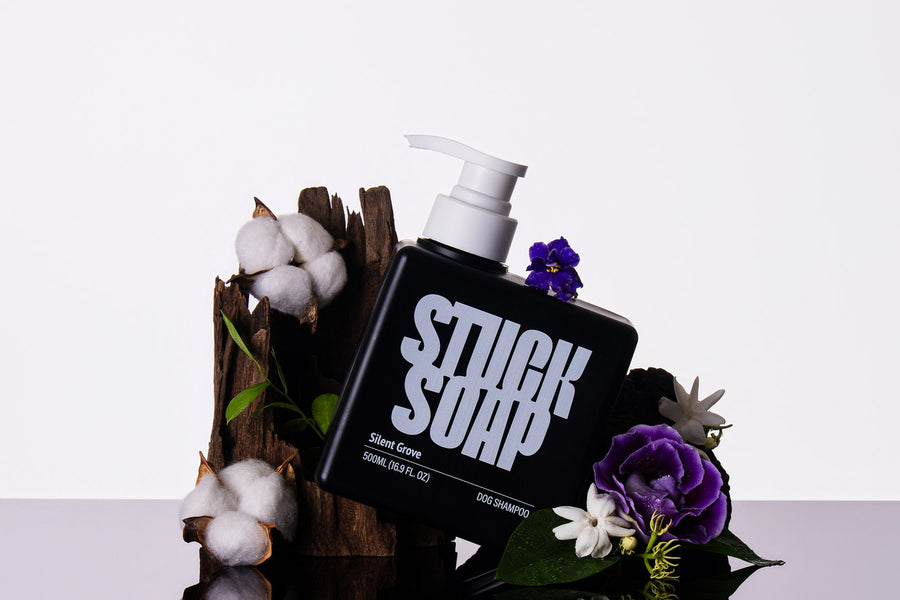
Product concentration changes this math more than people expect. A high-concentrate formula like the STUCK SOAP Liquid Shampoo needs only one pump for most dogs and builds a fine-bubble lather that reaches the skin quickly, which is what actually shortens the working time. It is a vegan, pH-balanced grooming shampoo with Green Tea, Camellia Oil, and Centella Asiatica, designed to support a healthy skin barrier and sensible sebum balance, and it is a cosmetic grooming product rather than a treatment for any condition. The usage instruction is the same one this article has been building toward: lather, let it work briefly, then rinse until no residue remains. Once you have that down, the follow-up question becomes how long a dog actually stays clean after a bath.
Frequently Asked Questions
How long should I leave shampoo on a dog before rinsing?
For a routine dirt and odor wash, one to three minutes of contact time is enough once the lather has reached the skin. A conditioning-style wash on a thick or coarse coat can sit three to five minutes. Stop at ten minutes, then rinse thoroughly.
Is leaving dog shampoo on longer more effective?
No. A shampoo does most of its work in the first few minutes, and extra sitting time adds nothing except a higher chance of residue and a dull-feeling coat. Aim for enough contact to lift dirt and oil, then spend the extra minutes on rinsing instead.
What is the maximum time shampoo should stay on a dog?
Ten minutes is a sensible ceiling for any general grooming shampoo, and the coat should never be allowed to dry with product still in it. Prescription medicated shampoos are the exception, and their contact time is set by the label and your veterinarian.
How long should I rinse my dog?
Plan on rinsing for at least twice as long as you lathered, so roughly three to six minutes for an average dog. Work from the neck down, then finish the chest, armpits, groin and tail base, where suds hide. Rinse again after you think you are done.
How do I know all the shampoo is out?
Squeeze a section of coat near the skin. If it feels slick, slippery or faintly soapy, keep rinsing. Rinse water should run clear with no cloudiness or new bubbles, and the coat should feel clean rather than coated between your fingers when wet.
How long do I leave medicated shampoo on my dog?
Follow the product label and your veterinarian's instructions, which override any general advice. The Merck Veterinary Manual notes a ten minute contact period for medicated shampoos where possible, followed by thorough rinsing. Never set the schedule for a prescription product yourself.
My dog will not stand still. What should I do?
Split the bath into zones instead of chasing one long timer. Lather the back and sides first, then legs and belly, then chest and head, so the first zone is already dwelling while you work. By the time the head is soaped, the back is ready to rinse.
Sources
- Merck Veterinary Manual, Treatment of Skin Disorders in Dogs
- American Kennel Club, It's Bath Time! Towels, Brushes, Dog Shampoo, and More
- American Kennel Club, Finding the Right Shampoo for Your Dog
This article is general grooming guidance and is not veterinary advice. For any skin or coat concern, or for any prescribed product, follow your veterinarian's instructions.
Wash Less, Rinse Longer
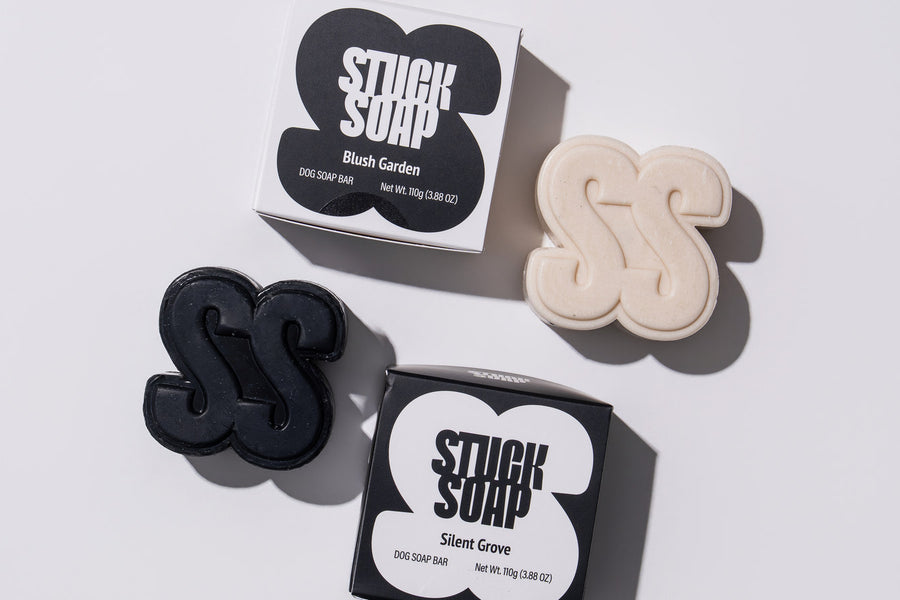
If you want a shampoo that lathers fast, works in the first two minutes, and rinses clean without a fight, that is the whole design brief behind our Liquid Shampoo and Shampoo Bar, in Silent Grove and Blush Garden. Browse the full range at stucksoap.com.