


How to Use a Dog Shampoo Bar: Lather, Storage, and How Long One Lasts
Here is the short version of how to use a dog shampoo bar: soak the coat until water actually reaches the skin, wet the bar for a few seconds, then glide the bar directly along the back, flanks, and legs and work the lather down with your fingertips. Nearly every complaint about solid bars traces back to one of two things, a coat that was only surface-wet or tap water carrying a heavy mineral load.
You already made the format decision. That argument lives in our post on bar versus liquid dog shampoo, and we are not going to relitigate it here. What follows is the part nobody explains at the point of purchase: the hand technique, the storage habits that decide whether your bar lasts a season or a month, and an honest way to estimate how many washes you are actually going to get.
Definition: A dog shampoo bar is a solid, water-free cleansing bar formulated for canine skin pH. Because the water has been removed, the active cleansing agents are concentrated, which is why the bar behaves differently in your hand than a bottle of liquid does.
Why Your Bar "Won't Lather" (It Almost Always Does)
The first bath with a solid bar tends to go badly. Owners wet the dog for about fifteen seconds, rub the bar across a still-dry-underneath coat, see nothing happen, and conclude the product is defective. It usually is not. Lather is a chemical reaction that needs three inputs: cleansing agents, mechanical friction, and enough clean warm water in the right place. Take away any one of them and you get a slick, sudless mess.
Water chemistry is the input people forget. Calcium and magnesium in hard water bind with cleansing agents and pull them out of circulation before they can foam. The USGS puts the everyday symptom plainly: in hard water, more soap is needed to get things clean. If your shower head scales up, your kettle furs, or your own hair feels coated after washing, your dog's bath is fighting the same problem. We went deep on this in what hard water does to a dog's coat, including the rinse adjustments that fix it, so consider that required reading before you blame the bar.
Troubleshooting table: symptom, cause, fix
| What you see | Most likely cause | What to do |
|---|---|---|
| Bar glides across the coat, almost no suds | Coat is wet on the surface only | Rewet for a full 60 to 90 seconds, pushing water down to skin with your hand |
| Thin suds that collapse instantly | Hard water minerals binding the cleansers | Use warmer water, hold the bar in contact longer, plan on a short second pass |
| Foam sits on top of the coat only | Dense undercoat blocking penetration | Part the coat into sections and apply the bar on the parted lines |
| Greasy, slippery feel with no foam on pass one | Heavy sebum load | Quick first pass, rinse, then a proper second lathering pass |
| Bar stays hard, transfers nothing | Bar was never wetted, or water is too cold | Hold the bar under warm water for five seconds before contact |
| Good lather, dull coat after drying | Incomplete rinse | Rinse longer, especially armpits, groin, and tail base |
How to Use a Dog Shampoo Bar: The Mechanics That Actually Work
Set your kit out before the dog is in the tub. Towels within reach, brush already used, non-slip mat down, bar within arm's length and not on the far ledge where you have to lunge for it. Our bath prep checklist covers the staging in detail, and staging is most of the battle with a squirmy dog.
- Brush the dry coat first. Mats and loose undercoat trap water and block lather, and a wet mat tightens.
- Wet the dog thoroughly with lukewarm water, working from the shoulders back. Keep going past the point where the coat looks wet, until you can press a hand in and feel water at skin level.
- Wet the bar itself for about five seconds. A dry bar transfers almost nothing.
- Rub the bar directly along the spine, then down each flank, the chest, the front and back legs, and finally the tail. Direct contact is the fastest way to load a coat.
- Set the bar down on a draining surface and use both hands to massage the lather into the coat with fingertips, not fingernails. Aim for scalp-level contact.
- Save the head for last. Lather your hands, then apply by hand around the muzzle and ears, keeping suds out of eyes and away from the ear canal.
- Rinse from the head backward until the water runs clear and the coat squeaks slightly.
Bar on coat, lather in hands, or a lathering pouch?
All three work, and they are good at different jobs. Direct bar-to-coat is the fastest and most efficient way to cover a big body, because friction against the fur generates foam better than your palms do. Hands-only lathering gives you the most control and is the right call for faces, paws, and toy breeds. A cotton lathering pouch or a plain washcloth sits between the two: it builds foam fast and keeps a slippery bar from launching across the bathroom. The tradeoff is that a pouch holds water against the bar, so wring it out and hang it separately after every bath.
How to use a dog shampoo bar on a double coat
Double coats defeat casual technique. The guard hairs shed water on purpose, and the undercoat underneath can stay bone dry through a whole bath if you let it. Section the dog the way a groomer would. Part the fur along the spine with your free hand, run the wet bar down the exposed line of skin, then move about two inches down the flank and part again. Repeat down both sides, then across the chest, the rear, and the backs of the thighs. You are drawing lines of product on skin, not painting the outside of the dog.
Then massage in overlapping circles with the pads of your fingers for a minute or two. If the lather is disappearing as fast as you make it, that is the dirt and oil consuming it, and a second short pass will foam up noticeably faster than the first. That difference is the most reliable signal that the first pass did its job.
Rinsing solid-bar lather
Concentrated bars can leave residue if you stop rinsing when the visible suds are gone, because suds disappear well before the coat is clear. Rinse in the same section pattern you lathered in, lifting the coat and directing water at skin level. Push water out of the coat with flat hands as you go. The reliable check is tactile: run a hand against the lay of the coat and press down. Slick or squeaky-clean is done, soft and slippery is not. We wrote a whole piece on telling when a dog is truly rinsed, because under-rinsing is the quiet cause of a lot of post-bath itching.
Storage: The Habit That Decides Everything
Here is the thing that separates owners who love bars from owners who quietly go back to bottles. A shampoo bar left sitting in standing water does not get used up, it gets dissolved. Water wicks into the bar, softens the outer layer to paste, and the next shower rinses that paste down the drain. A bar can lose a shocking amount of mass this way in a couple of weeks without a single bath happening.
Solid bars need air. Every side of them.
- After the bath, rinse the film of hair and residue off the bar under running water.
- Shake off the surface water and set the bar on a draining dish, a slotted soap saver, or a small wire rack.
- Place that rack outside the direct shower stream and away from the tub ledge where splash collects. A hook-mounted rack on the wall opposite the shower head is close to ideal.
- Leave it undisturbed until it is completely dry and hard to the touch. A fully cured bar resists water on the next use, which is exactly what you want.
- Empty and wipe the dish weekly. A dish holding a puddle is the same problem in a nicer container.
Travel deserves its own rule: never seal a wet bar. A damp bar shut inside a tin or a silicone case stays damp for days, softens, and can grow surface film. Let it dry fully first, or carry it in a ventilated case and open the lid as soon as you arrive. If you are packing right after a bath, wrap it in a paper towel rather than sealing it. The zero-waste appeal of a bar depends entirely on this kind of small handling discipline, which is a theme we keep returning to in our writing on zero-waste dog grooming.
How Long One Bar Lasts, Honestly
Nobody can give you a real number for your household, and any brand that quotes an exact bath count is guessing. Solid bars are widely reported to outlast a comparable bottle of liquid because you are not paying for water, but the spread between households is enormous. A 12-pound terrier bathed once a month and a 95-pound Bernese bathed every two weeks will finish identical bars months apart.
Four variables drive it: the mass of the bar, the surface area and density of the dog's coat, how often you bathe, and how much you lose to storage. That last one is the only variable fully under your control, which is why the storage section above is longer than this one.
Estimate your own number in two baths
- Weigh the new bar on a kitchen scale before its first use and write the number down.
- Bathe as usual. Let the bar dry completely, then weigh it again.
- Repeat for a second bath, then average the two losses to get your grams-per-bath figure.
- Divide the original bar weight by that average. That is your realistic bath count at your dog's size, your water, and your technique.
- Track it for a month. If consumption climbs without the dog getting bigger, your storage is leaking product, not your technique.
Two baths of data beat any label claim. The exercise also surfaces overuse, since bar users tend to over-apply for the same reason they under-rinse: they are calibrated to liquid volume. Our dosage chart by weight and coat type is a useful sanity check on how much product a dog your dog's size actually needs.
| Dog profile | Coat type | Product consumed per bath | What drives it |
|---|---|---|---|
| Under 20 lb | Smooth or short single coat | Low | Small surface area, lather spreads far |
| 20 to 50 lb | Single or light double coat | Moderate | Standard coverage, one pass usually enough |
| 50 to 90 lb | Dense double coat | High | Undercoat absorbs lather, sectioning required |
| Over 90 lb | Heavy double or long coat | Very high | Large area plus frequent two-pass washing |
| Multi-dog home | Mixed | Highest | Back-to-back baths leave no drying window between uses |
One more consumption thief: the tools. A brush loaded with old undercoat and sebum drags that material straight back into a freshly washed dog, and a slimy lathering pouch reintroduces gunk on contact. Rinse the brush and the pouch on bath day, let both dry fully, and the bar has less work to do next time.
Safety, Limits, and When to Stop and Call the Vet
A shampoo bar is a cosmetic grooming product. It cleans, and that is the whole job description. It does not treat, cure, prevent, or diagnose anything.
Practical limits worth respecting. Keep suds out of the eyes and out of the ear canal, and lather the head by hand rather than running a bar near the face. Patch test a small area on the flank the first time you use any new product, wait a day, and look for redness. Puppies and senior dogs tolerate short sessions and lukewarm water much better than long ones, and the AKC's guidance on bathing frequency is a reminder that more washing is not automatically better care for skin. If your dog's coat is dry and flaky between baths, that is usually a barrier and routine question rather than a product question, which we unpack in our piece on supporting the skin barrier.
Stop grooming and call your veterinarian if you see persistent itching, hot spots, open sores, hair loss in patches, a smell that returns within days of a bath, or any reaction after bathing. The Merck Veterinary Manual notes that skin inflammation has many possible causes, including allergens, parasites, and infection, and none of those are solved by a different bottle or bar. Shampoo choice is downstream of a diagnosis, not a substitute for one.
Practical Takeaways
- Wet the coat far longer than feels necessary. Skin-level water is the single biggest lather variable.
- Wet the bar, not just the dog.
- Rub the bar directly on the coat for the body, use your hands for the head.
- Section thick coats and apply on the parted line, not on top of the fur.
- A second pass that foams instantly means the first pass worked.
- Rinse by feel, not by the disappearance of suds.
- Never let the bar sit in standing water, and never seal it wet in a tin.
- Weigh your bar across two baths to get a real longevity number instead of a marketing one.
- Any skin condition goes to the vet before it goes to a new product.
What We Made, and Why It Behaves This Way
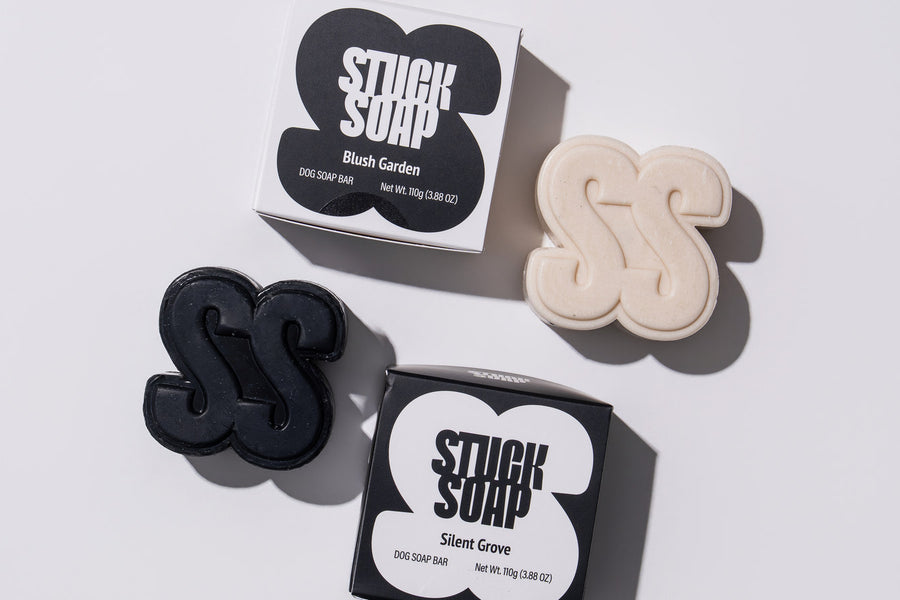
The STUCK SOAP shampoo bar comes in both of our scents, Silent Grove for the earthy profile and Blush Garden for the floral one, so the format choice does not cost you the scent you like. It is vegan, pH-balanced for dog skin rather than human skin, and built around green tea, camellia oil, and centella asiatica, with sebum control and skin-barrier support as the design brief. It produces a fine-bubble lather, which is the texture that travels through a dense coat instead of piling up on the surface.
The bar is also our zero-waste format. No pump, no plastic bottle, nothing to recycle at the end. That is a genuine benefit and a genuine responsibility, since the bar's lifespan sits in your hands and on your soap dish. Give it a draining rack and air on every side and it will hold up. Leave it in a puddle and no formula on earth will save it. If you want the wider argument for the format, plenty of owners have written about why they switched to solid bars, and their reasons tend to be practical rather than ideological.
Frequently Asked Questions
Why won't my dog shampoo bar lather?
Weak lather usually traces to one of four things: the coat was not wet enough, the water was cold, the coat was heavy with oil and needed a second pass, or the household has hard water. Rewet thoroughly with warm water, wet the bar itself, and rub it directly against the coat.
How do you use a dog shampoo bar on a double coat?
Soak the coat until water reaches skin, which takes longer than most owners expect. Then part the fur into sections along the spine, hips, and chest, glide the wet bar directly on each parted line, and massage the lather down with fingertips rather than nails.
How long does one dog shampoo bar last?
Solid shampoo bars are generally reported to outlast a comparable bottle of liquid, but the real count depends on bar mass, dog size, coat density, bathing frequency, and storage. A small dog bathed monthly may get many months from one bar. A large double-coated dog can finish the same bar far faster.
How should I store a dog shampoo bar between baths?
Keep it out of standing water. A slotted dish, a wire rack, or a draining soap saver placed outside the direct shower stream lets air reach every side so the bar hardens between uses. A bar left sitting in a puddle can soften and disappear within weeks.
Does a shampoo bar work in hard water?
It can, though hard water minerals bind with cleansing agents and cut lather noticeably. Wet the coat longer, use warmer water, work the bar directly along the back, and expect to rinse longer. A shower filter or a final rinse with softened water makes a visible difference.
Can I use a dog shampoo bar on a puppy or a senior dog?
A gentle, pH-balanced, non-medicated bar is generally suitable for healthy puppies past their first vaccinations and for seniors, using warm water and short sessions. Patch test a small area first, keep suds away from eyes and ears, and ask your veterinarian before bathing any dog with a skin condition.
How do I know the lather is fully rinsed out?
Run a hand against the direction of the coat and press down to the skin. If the fur squeaks lightly and feels free of film, rinsing is done. Any soft, slippery coating means keep going. Pay extra attention to the armpits, groin, chest, and the base of the tail.
Sources
- American Kennel Club, How Often Should You Bathe Your Dog?
- American Kennel Club, How to Bathe Your Dog: Tips for Safely Giving Your Pet a Bath
- U.S. Geological Survey Water Science School, Hardness of Water
- Merck Veterinary Manual, Dermatitis and Dermatologic Problems in Dogs
Ready to Get More Out of Your Bar?
Give your bar a draining rack, a full wetting, and a proper second pass, and it will outlast your expectations. If you are choosing a scent or picking up a replacement, the shampoo bar in Silent Grove and Blush Garden is at stucksoap.com, alongside the rest of our vegan, pH-balanced grooming lineup.