

K-beauty for dogs means taking the four ideas that reshaped human skincare in Korea (gentle, ingredient-led formulas, a skin-first view of health, a short sequence of steps, and small daily habits) and adapting them to a dog's very different skin and coat. It is not a ten-step routine for your dog, and it is not a promise to treat anything.
The phrase gets used loosely, often for little more than a botanical on the label. We think it should mean something an owner can actually do. So this piece asks a plain question: if you buy into this way of grooming, what changes in your house on an ordinary Tuesday?
K-Beauty Changed Skincare. We're Bringing That Thinking to Dogs.
Korean skincare convinced a lot of people that the goal was healthy skin, not a quick visible result. That shift came in four parts, and they map neatly onto grooming: what goes in the bottle, what you protect, how you sequence the steps, and what you do in between.
What K-beauty for dogs means, in one sentence
K-beauty for dogs is a grooming approach that borrows Korean skincare's focus on gentle ingredients, skin-barrier health, a short ordered routine, and consistent small care, then scales each idea down to suit canine skin, coat, and behavior.
Where this article fits
If you want the formula side, our piece on what makes Korean dog shampoo formulas different covers it. If you want the backstory, why we built a skin-first brand instead of another shampoo explains where we started. This one is about routine.
The four pillars at a glance
| Pillar | What K-beauty changed for people | What carries over to dogs | What does not carry over |
|---|---|---|---|
| Ingredients | Shoppers started reading labels and choosing gentle, plant-forward formulas | Reading the label, choosing mild, dog-specific cleansers | Human actives such as exfoliating acids, and anything unpleasant to lick |
| Skin Health | The skin barrier became the goal, not a side effect | Protecting the skin under the coat by not over-cleansing | Human pH targets; dog skin has a different thickness and pH |
| Layering | Thin products applied in a set order | A short sequence: cleanse, light no-rinse conditioning, brush | Stacked serums, essences, and masks |
| Daily Care | Small habits every day instead of occasional fixes | Brushing, wipe-downs, and a light mist before brushing | Daily washing; frequent bathing is a vet conversation |
Pillar One: Ingredients, or Reading the Label First
What changed for people
Korean skincare trained shoppers to turn the bottle over. Green tea, centella, and plant oils became names people asked for, and the ingredient list became something you read before buying.
How it translates to a dog
For an owner, this pillar is mostly about habit. Before a new product goes on your dog, read the list and ask what each major ingredient is there to do. Our guide on how to read dog shampoo ingredients walks through that process. Our own shampoo and bar are built around Green Tea, Camellia Oil, and Centella Asiatica, three ingredients with a long history in Korean skincare, formulated in a vegan base that is pH-balanced for dog skin.
The same logic shaped our Leave-In Conditioning Spray. We chose three actives covered by Korean patents: Mung Bean Sprout Extract (KR 10-1841429), Tannin Complex HR (KR 10-0955389), and ODOR-BYE (KR 10-2746186). Mung bean sprout is a familiar Korean botanical, tannins are plant polyphenols with a long cosmetic history, and ODOR-BYE was chosen with between-bath coat odor in mind. A patent tells you an ingredient was judged new and inventive, not that it beats anything else; we explain that distinction in what patented ingredients in pet products really mean.
Where the analogy stops
People do not lick their faces after a skincare routine. Dogs groom themselves, and whatever sits on the coat can end up in the mouth. That is one reason human products, including trendy actives like exfoliating acids, belong on people. It is also why our spray directions say to mist the hair, not the skin, and keep it away from the eyes, nose, and mouth.
Pillar Two: Skin Health Comes Before the Shine
What changed for people
The biggest idea K-beauty exported was the skin barrier: keep the outer layer calm and intact instead of scrubbing it, and the skin looks better on its own.
How it translates to a dog
Dogs have a barrier too. The Merck Veterinary Manual describes the skin as the largest organ of a dog's body and a protective barrier against the environment, with a compact outer layer that keeps fluids in and irritants out. Skin-first grooming treats that layer as the thing you are protecting.
In practice, that means a mild cleanser made for dogs, a thorough rinse, and fewer baths rather than more. Our explainer on the science of pH-balanced dog shampoo covers why the formula has to match the animal.
Where the analogy stops
Dog skin is not a furry version of yours. VCA Animal Hospitals notes that dogs' skin "has a different thickness and pH (acidity) than human skin," and canine skin is generally described as closer to neutral than our more acidic skin. It also sits under a coat. VCA is blunt that human shampoo, even baby shampoo, is too harsh.
Pillar Three: Layering, Kept Short on Purpose
What changed for people
Layering taught people to apply light products in a set order, each doing one job. The long routines got the headlines, but the real lesson was sequence.
How it translates to a dog
For a dog, layering is three steps, and the third one is not a product at all. Cleanse with a mild shampoo and rinse well. Towel dry, then add a light no-rinse conditioning step to the coat. Then brush it through. Between baths, refresh with a light mist and the brush. That is the backbone of our 3-step dog grooming routine, and VCA's own grooming guidance recommends a conditioning product after shampooing to help restore lost moisture.
Where the analogy stops
A ten-step routine on a dog is neither needed nor wise. Every extra layer is one more thing on the coat for your dog to lick, and one more variable if the skin reacts. Short is not a compromise here. It is the point.
Pillar Four: Daily Care Means Small Habits, Not Daily Baths
What changed for people
K-beauty made skincare a daily ritual: a few minutes every day that add up.
How it translates to a dog
The daily part of K-beauty for dogs happens almost entirely between baths. According to VCA, regular brushing removes loose hair and dead skin cells, keeps dirt and debris out of the coat, and distributes natural skin oils along the hair shafts. It also lets you check for tangles, lumps, or sore spots. Add a quick wipe of paws after muddy walks and a light mist before you brush, and you have a daily routine that takes a few minutes. A groomer quoted by the American Kennel Club puts it plainly: "Thorough coat-brushing and combing and conditioning are more integral to the pet's health than bathtime." Our guides to how often to brush your dog and dog care between baths fill in the details by coat type.
Where the analogy stops
Daily care does not mean daily washing. Another groomer in the same AKC article warns that overbathing "could strip too much oil from the skin," and the article ties frequency to coat type and lifestyle. VCA adds that if your dog seems to need frequent baths, that is something to discuss with your veterinarian. For a starting point, see how often you should bathe your dog.
K-Beauty for Dogs on an Ordinary Tuesday
Here is the philosophy off the page. Adjust the timing to your dog's coat; keep the order.
Bath day, in order
- Brush first. Work out tangles and loose hair before the coat gets wet, since tangles tighten in water.
- Cleanse gently. Use lukewarm water and a mild dog shampoo. With a concentrated formula, a small amount is enough; work the lather down to the skin.
- Rinse thoroughly. Keep rinsing until the water runs clear and the coat no longer feels slick.
- Towel dry. Press and blot rather than rub, so the coat is damp but not dripping.
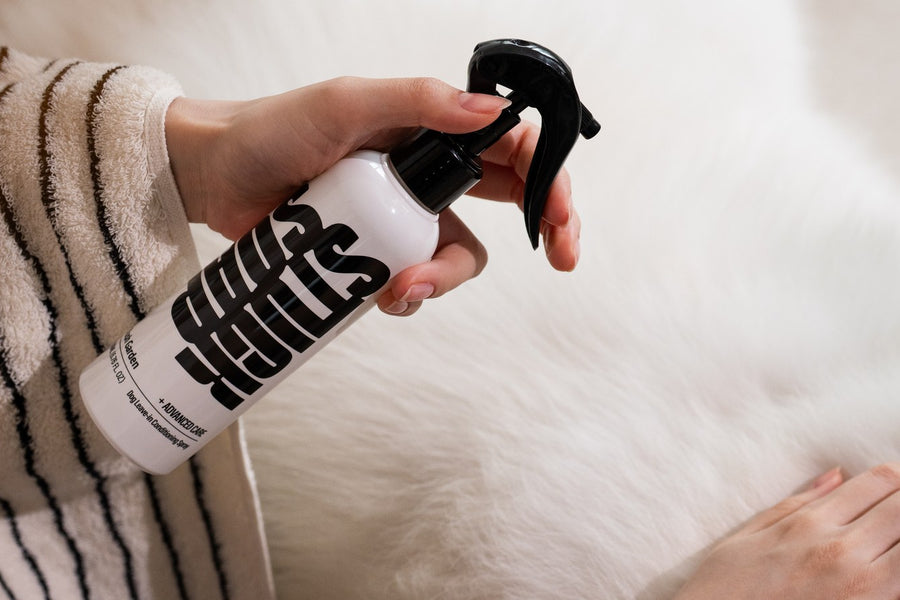
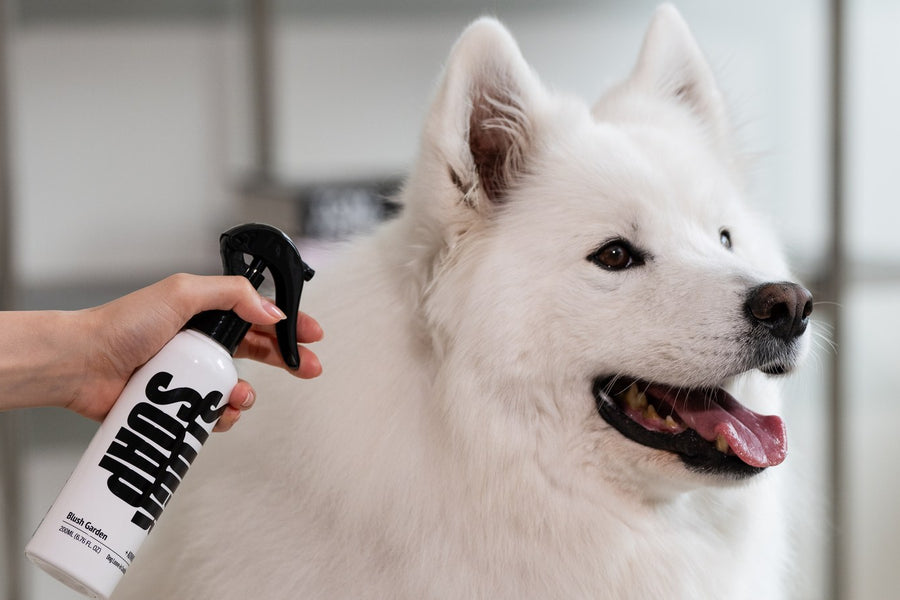
- Add a light no-rinse step. Shake the bottle, mist lightly onto the hair, not the skin, and avoid the eyes, nose, and mouth.
- Brush it through. This spreads the conditioning step evenly and finishes the routine.
The days in between
- A few minutes of brushing, more often for long or curly coats.
- A damp-cloth wipe of paws, belly, and face after messy walks.
- A light mist on a dry coat before brushing, when the coat needs a refresh.
- A quick look at skin, ears, and paws while you are already there.
When it is a vet matter, not a grooming matter
STUCK SOAP products are non-medicated cosmetic grooming products. They are not meant to diagnose, treat, or prevent any condition. Persistent itching, redness, flaking, hair loss, odor that returns quickly after a bath, and any ear problem belong with your veterinarian. As the Merck Veterinary Manual puts it, "Itching is a sign, not a diagnosis or specific disease." Finding the cause takes an exam, not a new bottle.
Practical Takeaways
- Read the label before anything new touches your dog, and skip human skincare products entirely.
- Protect the skin first: mild dog shampoo, a full rinse, and no more baths than the coat needs.
- Keep layering short: cleanse, light no-rinse conditioning, brush. Refresh between baths.
- Send recurring skin, coat, odor, or ear problems to your veterinarian.
If you want a kit built around this routine, the Liquid Shampoo (500ml or 120ml) and the zero-waste Shampoo Bar cover the cleanse, and the Leave-In Conditioning Spray handles the no-rinse step and between-bath refresh. All come in earthy Silent Grove or floral Blush Garden, and the Signature Duo and Trio sets pair them. You can find the full lineup at STUCK SOAP.
Korean skincare showed people that consistent, gentle care beats the occasional dramatic fix. Dogs deserve the same idea, sized for their skin and their lives. That is the work we signed up for: Pioneering K-Beauty for Dogs.
Frequently Asked Questions
What does K-beauty for dogs mean?
K-beauty for dogs is a grooming approach that adapts four ideas from Korean skincare: gentle, ingredient-led formulas, a focus on skin-barrier health, a short ordered routine, and small daily care. Each idea is scaled down for canine skin, coat, and the fact that dogs lick themselves. It is cosmetic grooming, not medical care.
Is a K-beauty routine for dogs the same as a 10-step skincare routine?
No. A dog does not need, and should not get, a long stack of products. For dogs, layering means a short sequence: cleanse with a mild dog shampoo, add a light no-rinse conditioning step to a towel-dried coat, then brush. Between baths, a light mist and brushing are enough.
Can I use my own K-beauty skincare products on my dog?
No. Human skincare is formulated for human skin, and dog skin has a different thickness and pH. Actives such as exfoliating acids can irritate canine skin, and dogs may lick whatever sits on their coat. Use products made specifically for dogs, and ask your veterinarian if your dog has sensitive skin.
Does daily care mean bathing my dog every day?
No. Daily care in a K-beauty routine for dogs means small habits between baths, like brushing, wiping paws after walks, and a light mist before brushing. Bathing too often can strip oils from the skin. If your dog seems to need frequent baths, talk with your veterinarian about the reason.
How often should I do the full bath routine?
It depends on coat type, age, and lifestyle, so there is no single schedule. Most healthy dogs need a bath only occasionally, when the coat gets dirty or starts to smell, with brushing and light refreshes in between. Ask your veterinarian or groomer what suits your dog's breed and coat.
When should I see a vet instead of changing grooming products?
See your veterinarian for persistent itching, redness, flaking, hair loss, odor that returns quickly after a bath, or any ear problem. These are signs that need an exam and a diagnosis. STUCK SOAP products are non-medicated cosmetic grooming products and are not intended to treat any skin or coat condition.
Sources
- Merck Veterinary Manual, "Structure of the Skin in Dogs." merckvetmanual.com
- Merck Veterinary Manual, "Itching (Pruritus) in Dogs." merckvetmanual.com
- VCA Animal Hospitals, "Grooming and Coat Care for Your Dog." vcahospitals.com
- American Kennel Club, "How Often Should You Wash Your Dog?" akc.org
A short routine, built skin first
Pair our pH-balanced Liquid Shampoo or zero-waste Shampoo Bar with the lightweight Leave-In Conditioning Spray, in Silent Grove or Blush Garden.