

A 3 step dog grooming routine comes down to cleanse, condition, and refresh: wash the skin and coat with a gentle shampoo, follow with a leave-in conditioner, and keep your dog fresh between baths with brushing, paw wipes, and a light spritz. The first two steps happen on bath day, and the third fills the weeks in between.
That's the whole idea. You don't need towel turbans, a twelve-bottle lineup, or a whole Sunday afternoon. In Korean skincare, the routines that last are the ones you can repeat on a tired Tuesday, and dogs work the same way. Below we walk through what each step does, why it earns its place, and how often it needs to happen. The answer for a short-coated Beagle is very different from the answer for a fluffy Samoyed.
What Is a 3 Step Dog Grooming Routine?
It's a system for everyday life, not a special event. Here is the short version, worth a screenshot:
- Cleanse: A full bath with a pH-balanced dog shampoo (liquid or bar) to lift dirt, excess oil, and odor from the skin and coat.
- Condition: A no-rinse leave-in conditioning spray on the damp coat after the bath, and a lighter mist before brushing between baths.
- Refresh: The habits between baths: brushing, paw wiping, spot-cleaning, and a quick mist when the coat needs a lift.
Steps one and two go together. Step three is the one you'll do most often, and it's also the one that stops you from reaching for the shampoo more often than your dog's skin wants.
Why Three Steps, Not One (and Not Five)
Shampoo on its own handles the cleaning, but nothing helps the coat stay soft and tangle-resistant until the next wash. At the other extreme, elaborate routines are lovely but hard to keep up. If you've read our five-step at-home spa day, you know we love a long, slow grooming night. That ritual is the special-occasion version. The three-step routine is what you do the rest of the year.
This structure works because of the skin. Dog skin is thinner than ours and has a different pH, so washing too often or too harshly can leave it dry and tight. The Merck Veterinary Manual's section on canine skin is a helpful read on how the outer layer works as a protective barrier. Our skin-first grooming philosophy starts from the same place: clean gently, support the coat, and then leave the skin alone as much as you can.
Step 1: Cleanse
Why the cleanse step matters
A real bath resets the coat. Over the weeks, dirt, pollen, and natural oils build up until the coat goes from shiny to greasy and smelly, and brushing alone can't fully lift that. A good cleanse leaves the skin clean without leaving it squeaky.
Our shampoos are built around that balance. Green Tea, Camellia Oil, and Centella Asiatica are classic K-Beauty ingredients, chosen for a clean that respects the skin barrier. The formula is vegan, pH-balanced for dog skin, and designed for sebum control without stripping. It's also high-concentrate with a fine-bubble lather, so one pump goes further than you'd expect. Our dog shampoo dosage chart breaks down how much to use by size.
Liquid shampoo or shampoo bar?
Both do the job, so choose by how you bathe. The 500ml Liquid Shampoo is quick on busy bath nights and easy to measure for big dogs. The 110g Shampoo Bar is zero-waste, fits in a travel bag, and lathers right on a wet coat. We compare them side by side in shampoo bar vs. liquid. When your dog gets truly filthy (beach days, mud season), a double cleanse cleans thoroughly without overdoing it: one light first wash, then a focused second wash.
How often to cleanse
We won't give you one number here. The American Kennel Club explains that how often to bathe depends on coat type, activity level, and skin health, and that bathing too often can dry out the skin. Use the coat-type table below as a starting point and adjust for real life. If your dog has a diagnosed skin condition, your veterinarian's bathing plan comes first. A cosmetic grooming shampoo isn't a substitute for a medicated or prescription routine.
Step 2: Condition
Why a leave-in after the bath
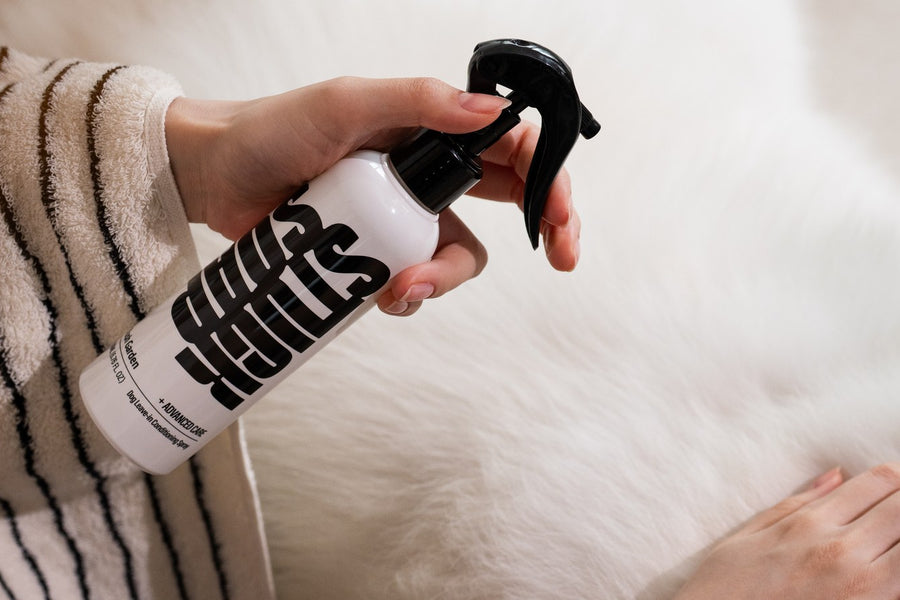
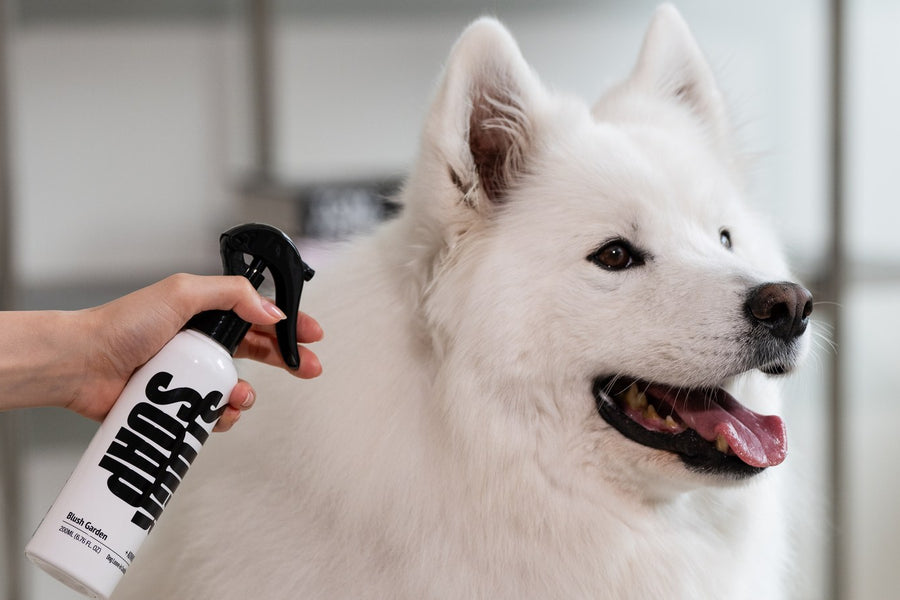
Shampoo opens up the coat and lifts away oil. Conditioning gives some of that softness back. A leave-in spray goes on the damp coat after towel drying and stays there, so it keeps working through brushing and drying instead of rinsing down the drain. The result is a softer feel, easier detangling, and less static. Our explainer on what a leave-in conditioner does (and doesn't do) also covers its limits: it's a grooming product, not a fix for skin problems.
What's inside, and why we chose it
The STUCK SOAP Leave-In Conditioning Spray is no-rinse and lightweight. It comes in the same Silent Grove and Blush Garden scents as our shampoos, so bath day smells like one routine instead of three competing products. It's built on three patented Korean actives:
- Mung Bean Sprout Extract (KR patent 10-1841429): mung bean is a longtime Korean beauty botanical. We chose this extract for a gentle, conditioning feel that suits everyday use.
- Tannin Complex HR (KR patent 10-0955389): tannins are plant polyphenols. We included this complex to help the coat feel clean and tidy once the spray dries.
- ODOR-BYE (KR patent 10-2746186): lingering odor is one of the most common reasons owners give an extra bath, and a refresher between baths makes the whole routine easier to keep up.
How often to condition
Use it after every bath, on the damp coat. Between baths, most medium and long coats do well with a light mist before brushing two to four times a week. Short coats may only need it after walks or before guests come over. Our guide to using leave-in conditioner on dogs covers the three best times to use it: before brushing, after walks, and before bed.
Step 3: Refresh
What counts as a refresh
Refresh is anything that keeps your dog clean and comfortable without a full bath:
- Brushing to lift loose hair, dust, and debris
- Wiping paws after walks, especially on salted winter sidewalks
- Spot-cleaning a muddy belly, a drooly chin, or a sticky ear fringe with a damp cloth
- A light mist of leave-in spray, worked through with a brush
An extra bath doesn't count. If you're washing your dog every week because they smell "doggy" by Thursday, do more refreshing, not more shampooing. Our weekly between-bath routine lays out a simple seven-day plan.
How often to refresh
Wipe paws daily in wet or salty months, brush a few times a week, and spot-clean whenever you need to. How often to brush depends a lot on the coat, so check how often you should brush your dog for breed-by-breed guidance. Wondering about the order on bath day? We answer that in brushing before or after a bath. The short answer is before, so you work out tangles before water tightens them.
Building a 3 Step Dog Grooming Routine Around Your Dog's Coat
Here is how the three steps usually fit together. These are common starting ranges, not rules. Coat condition, activity level, season, and your vet's advice can all change the numbers.
| Step | What you do | When | Typical cadence |
|---|---|---|---|
| Cleanse | Full bath with liquid shampoo or shampoo bar | Bath day | Every 3 to 10 weeks, depending on coat and lifestyle |
| Condition | Leave-in spray on the damp coat, light mist before brushing | After every bath, plus between baths | Every bath, plus 1 to 4 times a week |
| Refresh | Brush, wipe paws, spot-clean, mist | Between baths | Daily to a few times a week |
Cadence by coat type
Not sure which category your dog falls into? Our dog coat types guide helps you sort it out.
| Coat type | Examples | Cleanse (bath) | Refresh (brushing) | Condition (between baths) |
|---|---|---|---|---|
| Smooth or short | Beagle, Boxer, French Bulldog | Every 6 to 8 weeks | Weekly | After walks, as needed |
| Double coat | Golden Retriever, Husky, Corgi | Every 6 to 10 weeks | Several times a week, daily while shedding | Before brushing |
| Long or silky | Shih Tzu, Yorkie, Maltese | Every 3 to 6 weeks | Daily | Before brushing |
| Curly or wavy | Poodle, Doodle, Bichon Frise | Every 3 to 6 weeks | Daily or every other day | Before brushing |
| Wire | Schnauzer, many terriers | Every 6 to 8 weeks | Weekly | Light and occasional |
Two notes. First, a dog who swims or rolls in everything may need to be bathed more often. That's fine, as long as the shampoo is gentle and you follow it with conditioner. Second, puppies, senior dogs, and dogs with sensitive or diagnosed skin conditions deserve a talk with your vet before you settle on a schedule. The AVMA's resources for pet owners are a good place to start a list of questions to bring. For general coat care by breed, the AKC grooming library is also worth bookmarking.
Practical Takeaways
- Pair cleanse and condition: finish every bath with a leave-in on the damp coat.
- Let the refresh step carry you between baths, so you bathe on your dog's schedule, not your nose's.
- Choose a bath interval by coat type and lifestyle, then adjust for the season.
- Stick to one scent so it all feels like a single routine.
- Save the five-step spa night for birthdays, holidays, or a reset after a muddy month.
- If the skin looks red, flaky, or irritated, check with your vet before changing products.
An easy way to own all three steps
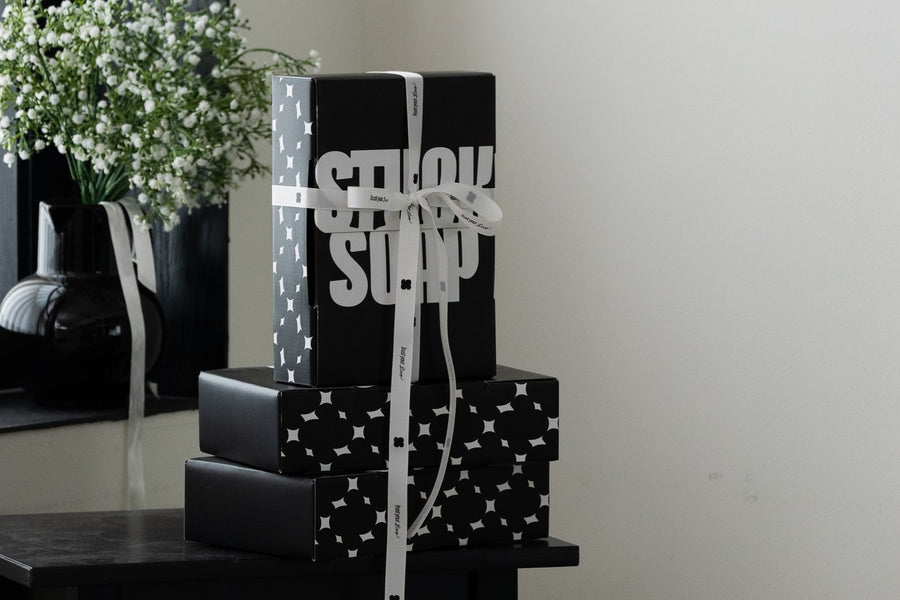
If you'd rather not build the routine one product at a time, bundle sets like the Signature Duo and the Trio let you pick up the pieces together in matching scents. Go with Silent Grove if your dog runs earthy and outdoorsy, or Blush Garden if you like a softer floral. You can also keep the shampoo you already have and add the $24 Leave-In Conditioning Spray. Everything is at stucksoap.com. There's no rush: the routine works whenever you start it.
FAQ
What is a 3 step dog grooming routine?
A 3 step dog grooming routine is a simple everyday system built on cleanse, condition, and refresh. You wash the skin and coat with a gentle shampoo, follow with a leave-in conditioner, and keep the coat fresh between baths with brushing, paw wiping, and light spritzing instead of extra full baths.
How often should I bathe my dog?
There is no single right number. Many smooth-coated dogs do well with a bath every 6 to 8 weeks, curly or drop-coated dogs often need one every 3 to 6 weeks, and active outdoor dogs may need more. If your dog has a skin condition, follow your veterinarian's bathing schedule.
Do dogs really need a conditioner?
Not every dog needs one, but most coats benefit. Shampoo lifts away dirt and excess oil, and a leave-in conditioner helps the coat feel soft, detangle more easily, and stay manageable between baths. Medium, long, curly, and double coats tend to notice the difference most, especially during dry winter months.
What does the refresh step include?
Refresh is everything you do between baths to keep your dog clean without washing the whole body. It includes regular brushing, wiping paws after walks, spot-cleaning muddy legs or a messy chin, and a light mist of leave-in spray before brushing. It replaces the urge to bathe more often than needed.
Is this the same as an at-home dog spa day?
No. A spa day is an occasional, longer ritual with extra steps, saved for a birthday or a reset after a muddy season. The three-step routine is the everyday baseline: short, repeatable, and built to fit a normal schedule. Most weeks you will only do the refresh step.
Should I use a shampoo bar or liquid shampoo for the cleanse step?
Both formats do the same job, so choose by habit. Liquid shampoo is quick to dispense and easy to measure, which suits larger dogs and fast bath nights. A shampoo bar is compact, travels well, and cuts plastic packaging. Many households keep the liquid at home and the bar for trips.
Sources
- American Kennel Club, "How to Bathe Your Dog: Tools, Tips, and How Often" akc.org
- American Kennel Club, Grooming expert advice library. akc.org
- Merck Veterinary Manual, Skin Disorders of Dogs (owner edition). merckvetmanual.com
- American Veterinary Medical Association, Resources for pet owners. avma.org
Cleanse, condition, refresh. That's the whole routine.
Shop our shampoos, the Leave-In Conditioning Spray, and the bundle sets in Silent Grove or Blush Garden at stucksoap.com.