

How often should you brush your dog? Most dogs do well with a brushing session two or three times a week, while long, curly, and double-coated dogs need daily attention during shedding season. The exact number comes down to two things: the coat your dog was born with and the time of year.
That second part catches a lot of owners off guard. A schedule that worked fine in July can fall apart by late October, when soft drifts of undercoat start collecting under the kitchen table. Below is a schedule that covers both, organized by the same five coat types we use across the STUCK SOAP Journal, plus one small habit (a light mist before the brush goes in) that makes every session easier on your dog.
Start Here: Find Your Dog's Coat Type
Before you pick a number, figure out which coat you are actually working with. Breed labels help, but mixed breeds and doodles often land somewhere unexpected. If you're not sure, read our guide What Is My Dog's Coat Type? first. It walks through the five categories this article uses:
- Short and smooth: close-lying hair with little or no undercoat.
- Medium to long (silky or drop): hair that keeps growing and falls straight down the body.
- Double coat: a dense, soft undercoat beneath longer guard hairs.
- Wire: a harsh, coarse outer coat, often with a beard and leg furnishings.
- Curly: tight or loose curls that trap shed hair instead of dropping it.
Each one holds on to loose hair, dirt, and tangles differently, which is why a single brushing schedule for every dog never quite works. A smooth coat lets loose hair fall. A curly coat traps it. A double coat stores a whole second layer underneath and releases it in waves.
Brushing Schedule by Coat Type and Season
Use this table as a starting point. "Shedding season" means the heavy coat change most dogs go through in spring and again in fall. "Off-season" is everything in between. Brush more often if you see mats forming or hair piling up, and ease off if the brush comes away nearly clean.
| Coat type | Example breeds | Shedding season | Off-season | Go-to tools |
|---|---|---|---|---|
| Short and smooth | Beagle, Boxer, smooth Dachshund | 2 to 3 times a week | Once a week | Rubber curry mitt, soft bristle brush |
| Medium to long (silky or drop) | Cavalier King Charles Spaniel, Yorkshire Terrier, Shih Tzu | Daily | Every 1 to 2 days | Pin brush, slicker brush, wide and fine metal comb |
| Double coat | Siberian Husky, Golden Retriever, German Shepherd, Corgi | Daily | 1 to 2 times a week | Undercoat rake, slicker brush, metal comb |
| Wire | Miniature Schnauzer, Wire Fox Terrier, Border Terrier | 2 to 3 times a week, plus hand-stripping by a groomer | Once a week | Slicker brush, metal comb |
| Curly | Poodle, Bichon Frise, doodle mixes | Daily | 3 to 4 times a week (daily if kept long) | Slicker brush, long-tooth metal comb, line brushing |
This lines up with what the American Kennel Club tells owners. Its guide to managing dog shedding says longer and denser coats need brushing at least once a week, and its Golden Retriever grooming guide moves to daily brushing during heavy shedding and back to weekly the rest of the year.
How Often Should You Brush Your Dog by Coat Type?
The table gives you the numbers. Here's what each session should actually accomplish.
Short and smooth coats
Boxers, Beagles, and smooth Dachshunds don't tangle, so brushing is mostly about pulling out dead hair before it ends up on your couch and spreading natural skin oils along the coat. A rubber curry mitt worked in small circles, followed by a soft bristle brush, takes about five minutes. Our short-haired dog grooming routine covers the rest of the week.
Medium to long coats (silky or drop)
Cavaliers, Yorkies, Shih Tzus, and Cocker Spaniels have hair that keeps growing and knots easily, especially behind the ears, under the collar, and in the armpits. Those friction spots need a comb through every day or two, even outside shedding season. A pin brush handles the body. A metal comb tells you whether you've actually reached the skin: if it snags, you haven't.
Double coats
Huskies, Golden Retrievers, German Shepherds, and Corgis carry a dense undercoat beneath longer guard hairs. Most of the year, once or twice a week is enough. When the undercoat releases in spring and fall, switch to daily sessions with an undercoat rake, or the loose fluff packs down into felt near the skin. If you're in the middle of that right now, Fall Shedding in Dogs explains what's going on. A well-brushed double coat also lets water and lather reach the skin on bath day, which we cover in How to Get Shampoo Through a Double Coat.
Wire coats
Schnauzers, Wire Fox Terriers, and Border Terriers shed lightly, and their harsh outer coat is supposed to feel coarse. Weekly brushing with a slicker and comb keeps beards and leg furnishings from tangling. The seasonal coat change in many wire breeds is handled by hand-stripping, a technique best left to a groomer who does it regularly.
Curly coats
Poodles, Bichons, and many doodles barely shed onto the floor, and that is exactly the problem. Loose hair stays trapped in the curl and forms mats from the inside out, often invisible from the surface. Plan on brushing three or four times a week, and daily if the coat is kept long. Line brushing (parting the coat in sections and brushing from the skin outward) is the only reliable way to reach the base.
Why You Should Mist the Coat Before You Brush
Brushing a bone-dry coat is a bit like combing your own hair right after pulling off a wool hat. Bristles dragging across dry hair build static, the hair lifts away from the brush instead of into it, and dry, brittle ends are more likely to snap when the brush meets a tangle. It gets worse in fall and winter, when indoor heating pulls moisture out of the air.
A light mist, or a quick pass with damp hands, changes the feel. The coat gains a little slip, so the brush glides instead of catching, and your dog feels less tugging at the roots. Two rules keep this helpful:
- Damp, not wet. A few spritzes from about a foot away is plenty. A soaked coat clumps together and is harder to work through.
- Never wet a mat to loosen it. Water can tighten a mat against the skin. Tease small tangles apart with your fingers first, and leave tight mats to a professional.
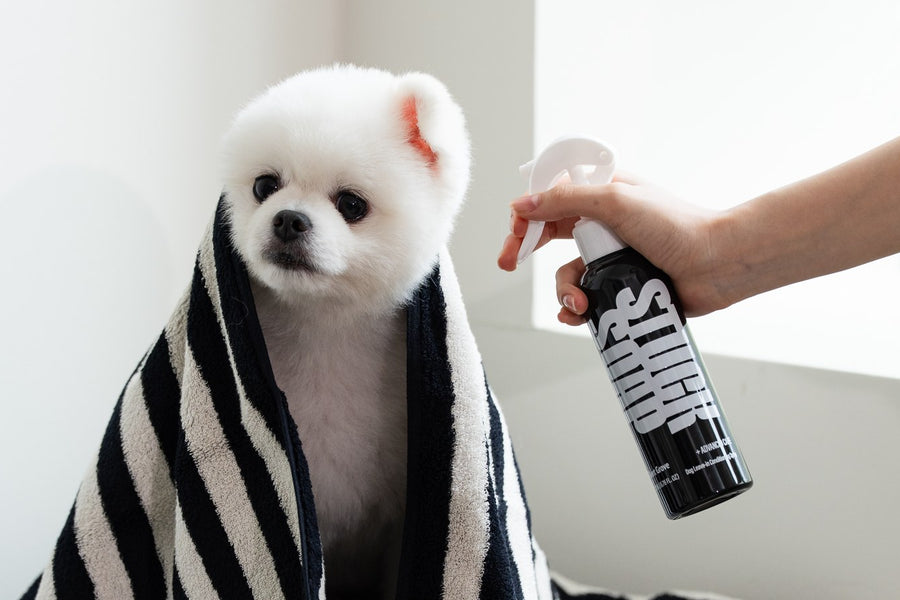
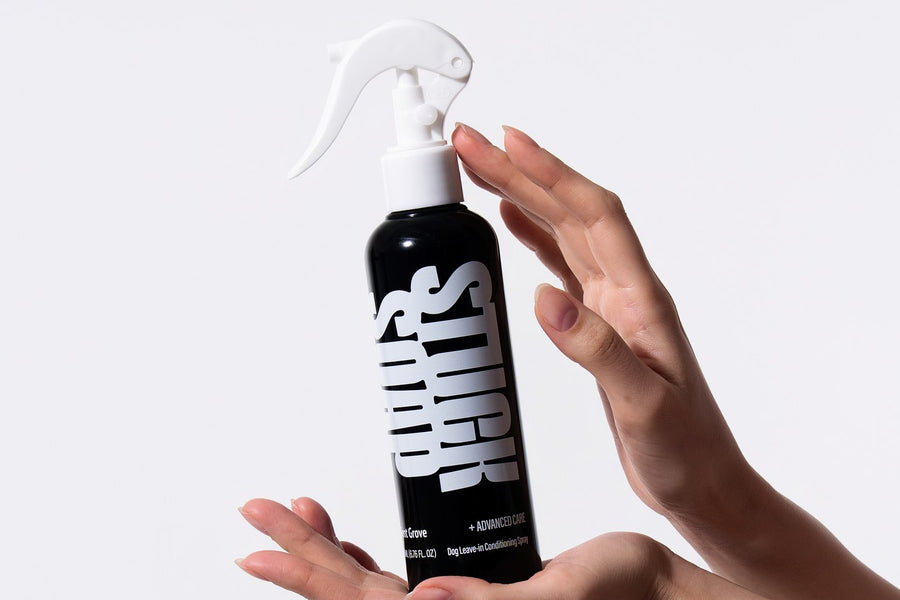
This is the moment our Leave-In Conditioning Spray was made for: a no-rinse, lightweight mist you can use right before brushing to cut down on drag and static. It comes in the same two scents as our shampoos, earthy Silent Grove and floral Blush Garden. The formula is built around three patented ingredients. Mung Bean Sprout Extract (KR patent 10-1841429) was chosen as a gentle, plant-based conditioning base. Tannin Complex HR (10-0955389) is a plant-derived complex picked for a clean, non-greasy finish. ODOR-BYE (10-2746186) was included with between-bath freshness in mind. For a closer look at what any leave-in can and can't do, read What a Leave-In Conditioner for Dogs Actually Does.
How to Brush Your Dog, Step by Step
This routine works for every coat type. Only the tools change.
- Pick a calm moment. A dog who just came back from a walk sits far better than one who just woke up.
- Check for mats with your fingers. Feel behind the ears, under the collar, in the armpits, and around the back legs.
- Mist lightly. Hold the spray about a foot away and cover the section you're about to brush.
- Brush in the direction the hair grows, working in small sections from the back end toward the head.
- Go deeper on double and curly coats. Rake or line brush down to the skin, then follow with a metal comb. If the comb glides through, that section is done.
- Keep it short. Five to ten minutes beats one long battle, especially with puppies.
- Finish with a reward. A treat at the end makes the next session easier for both of you.
Brushing fits neatly alongside ear checks, paw care, and a quick sniff test. Our weekly between-bath routine puts all of it on one calendar.
What to Watch for While You Brush
Regular brushing is also the most hands-on check your dog gets all week. The Merck Veterinary Manual notes that brushing removes loose hair and helps prevent mats, and it advises against cutting mats out with scissors. While your hands are in the coat, look and feel for:
- Hot spots: red, moist, or raw patches
- New lumps or bumps under the skin
- Sores, scabs, or areas your dog guards when touched
- Fleas, flea dirt, or ticks
- Itching that keeps going after brushing and bathing
- Mats tight to the skin, which can pull and hide irritation underneath
If you find any of these, stop brushing that spot. Book a visit with your veterinarian, or, for tight matting, a professional groomer. Brushes and grooming products help a coat look and feel its best, but they are not a substitute for a professional exam.
Quick takeaways
- Smooth and wire coats: about once a week off-season, two or three times a week while shedding.
- Double coats: once or twice a week most of the year, daily in spring and fall.
- Silky and curly coats: every day or two, year-round, with a comb that reaches the skin.
- Mist lightly before brushing to reduce static and snapping, but never soak a mat.
- Anything unusual on the skin goes to your vet, not your brush.
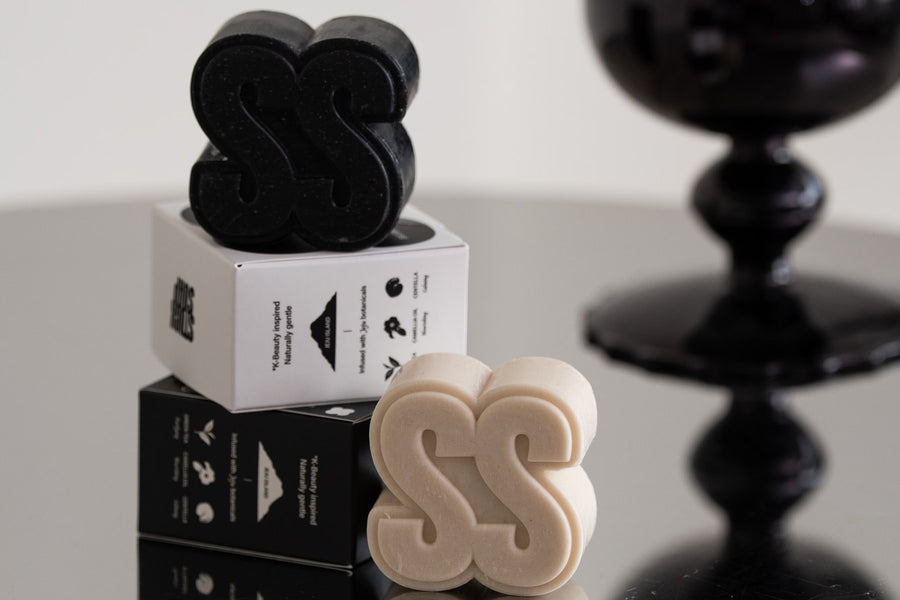
If your between-bath kit doesn't have a pre-brush mist yet, the STUCK SOAP Leave-In Conditioning Spray is $24 on our site and also available on Amazon. Pair it with our Liquid Shampoo or Shampoo Bar on bath day, and brush day gets a lot less staticky.
FAQ: How Often Should You Brush Your Dog?
How often should you brush your dog?
Most dogs do well with brushing two or three times a week. Short, smooth coats can get by with weekly sessions outside shedding season, while double, curly, and long silky coats often need daily brushing in spring and fall. Find your dog's coat type first, then adjust based on how much hair the brush collects.
Can you brush a dog too much?
Yes, if the brushing is rough or always hits the same spot. Pressing a slicker or rake hard against the skin can leave it red and irritated, a condition groomers call brush burn. Use light pressure, stop when the brush comes away mostly clean, and keep sessions to about five or ten minutes.
Should I brush my dog before or after a bath?
Brush before the bath, every time. Loose undercoat and small tangles tighten when they get wet, so removing them first makes shampoo easier to work through the coat and rinse out. A quick brush after the coat is fully dry helps catch any hair the bath loosened.
Why does my dog's hair get staticky when I brush it?
Static builds when bristles drag across dry hair, and it gets worse in fall and winter when indoor heating dries the air. A light mist of water or a leave-in conditioning spray before brushing gives the coat a little slip, so the brush glides more smoothly and hair is less likely to fly away.
What brush should I use on a double-coated dog?
Most double coats need two tools: an undercoat rake to pull loose fluff from underneath, and a slicker brush or metal comb to smooth the outer guard hairs. Brush in sections down to the skin. Avoid shaving a double coat unless a veterinarian or experienced groomer recommends it.
What should I do if I find a mat or lump while brushing?
Stop brushing that area. Small, loose tangles can often be worked out gently with your fingers, but mats tight to the skin should go to a professional groomer rather than scissors. Lumps, sores, hot spots, parasites, or itching that will not settle are worth a call to your veterinarian.
Sources
- American Kennel Club. How to Groom Your Dog at Home: Easy Tips for Everyday Care.
- American Kennel Club. Dog Shedding: When Dogs Shed Most and How to Manage It.
- American Kennel Club. How to Groom a Golden Retriever.
- American Kennel Club. What Is a Double-Coated Dog? Coat Types, Grooming, and Care.
- Merck Veterinary Manual (Pet Owner Version). Routine Health Care of Dogs.
Make brush day easier. Our Leave-In Conditioning Spray, Liquid Shampoo, and Shampoo Bar are vegan, pH-balanced for dog skin, and come in Silent Grove and Blush Garden. Shop the collection at stucksoap.com.