

Dog care between baths comes down to four small habits: brushing, quick paw and belly wipe-downs, a light coat refresh, and washing bedding on a schedule. If you spread them across the week in five to ten minute blocks, most dogs stay comfortable and pleasant to be around without another bath on the calendar.
Most owners do it the other way around. The dog starts to smell a little "doggy," so it goes back in the tub. That works for a day or two, and then the smell comes back. Bath day isn't really the problem. The problem is the six days in between, when nothing much happens except walks, naps on the couch, and a bed that hasn't been washed since summer. This guide is our foundation piece for the week between baths. It covers what to do, how long each task takes, and when a smell is a sign to stop grooming and call your vet.
What Dog Care Between Baths Actually Means
Dog care between baths is the routine upkeep that keeps a dog's coat, skin, paws, and sleeping area clean in the days after a full shampoo and before the next one. You remove dirt, loose hair, and moisture before they build up, instead of washing everything off at once.
Think of it the way you think about your own hair. You don't shampoo every time it feels a little flat. You brush it, maybe use a leave-in product, and change your pillowcase. Your dog's coat works on similar logic, with one big difference: a dog's skin is built differently from ours and handles frequent washing differently. The Merck Veterinary Manual's owner resources describe skin and coat as one connected system, and you can see that during a normal week. Most odor sits where dirt, oil, and moisture collect: paws, belly, the base of the tail, and the fabric your dog sleeps on.
The short version
- Brush to lift loose hair, dirt, and dander out of the coat.
- Wipe paws and belly, where outdoor grime and moisture collect.
- Refresh the coat with a light, no-rinse product when it feels flat.
- Launder bedding and blankets so the smell doesn't transfer back onto a clean dog.
Why Another Bath Isn't Usually the Answer
Adding baths is the obvious fix, but it isn't always the kind one. The American Kennel Club points out that how often a dog needs a bath depends on coat type, activity level, and skin. It also notes that bathing too often can strip the natural oils that keep the coat healthy. Some dogs genuinely need frequent baths, and your vet or groomer can tell you if yours is one of them. For most household dogs, though, a steady between-bath routine does more than an extra round of shampoo.
There's also a practical side. A full bath, done properly, means wetting, lathering, rinsing, drying, and cleaning the bathroom afterward. If you skip any of that, especially drying, you can end up with a dog who smells worse a day later. (Our complete guide to drying your dog after a bath explains why damp undercoat is a common source of that musty smell.) Five minutes of brushing on a Tuesday night is a much easier ask.
If you've wondered how long "clean" actually lasts and what shortens it, read how long a dog stays clean after a bath. It covers the factors that make the between-bath window feel short.
The Four Pillars of Between-Bath Care
Each pillar targets a different place where odor and grime build up. You don't need all four every day. You need each of them often enough that nothing piles up.
1. Brushing: the highest-value habit
Brushing does more than detangle. It pulls loose hair, dust, and dander out of the coat before they settle against the skin or spread over your furniture. It also spreads the skin's natural oils along the hair shaft, which is part of why a well-brushed coat looks glossy rather than dull. Match the tool to the coat: a slicker brush and metal comb for long or curly coats, an undercoat rake for double coats, and a rubber curry mitt or bristle brush for short, smooth coats.
Brushing matters most during seasonal coat changes. If your dog is dropping hair everywhere right now, our piece on dog shedding in fall explains what's going on and how to keep up with it.
2. Paw and belly wipe-downs: where most odor starts
Paws touch everything. Sidewalk grime, lawn treatments, mud, and moisture all collect between the toes and pads, and the belly picks up what the paws kick up. A damp cloth with lukewarm water, followed by a dry towel, handles most days. Drying matters as much as wiping, because moisture trapped between the toes is a common reason paws start to smell.
That familiar snack-chip smell has a name and a reason. We explain it in why your dog's paws smell like corn chips.
3. Coat refresh: the in-between step
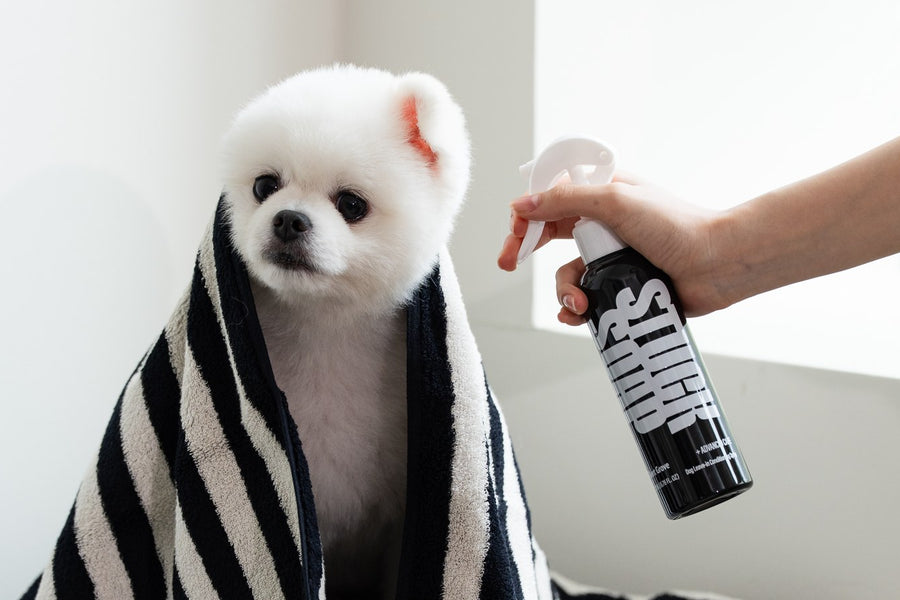
Sometimes the coat feels a little flat or static-y, or it just doesn't smell like bath day anymore, but your dog isn't dirty. A coat refresh fills that gap. It means a light, no-rinse leave-in product misted over the coat and brushed through, usually after a quick brush. It doesn't clean the way shampoo does. It conditions and freshens the coat so you aren't tempted to bathe early.
4. Bedding laundry: the pillar everyone forgets
This one surprises people. A dog can be freshly groomed and still smell "off" within hours, because they sleep on a bed full of shed hair and skin oils. The smell transfers right back. Shake out beds and blankets every few days, and wash covers weekly on the warmest cycle the fabric allows. Then dry them completely, since a damp bed causes the same trouble as a damp dog. If the smell in your house is more stale-basement than dog, why your dog smells musty goes through the usual causes.
| Pillar | What it removes or prevents | How often | Time per session |
|---|---|---|---|
| Brushing | Loose hair, dust, dander, small tangles | 2 to 4 times a week (more for long or double coats) | 5 to 10 minutes |
| Paw and belly wipe-down | Outdoor grime, mud, trapped moisture | After messy walks, plus 2 dedicated sessions a week | 3 to 5 minutes |
| Coat refresh | Flat, dull, or "lived-in" coat feel | 1 to 2 times a week, as needed | 3 to 5 minutes |
| Bedding laundry | Hair and oils that transfer back onto the dog | Shake out every few days, wash weekly | 5 minutes hands-on |
A Realistic Weekly Routine for Dog Care Between Baths
Here's how the four pillars fit into a week, assuming a bath roughly every few weeks. Day 1 is the first day after a bath. The total adds up to about an hour across seven days. Nothing in it calls for a grooming table or a free Saturday.
| Day | Main task | Time needed | Tools |
|---|---|---|---|
| Day 1 | Full brush-through while the coat is clean and tangle-free | 10 minutes | Brush suited to coat type, comb |
| Day 2 | Paw and belly wipe-down, dry between toes | 5 minutes | Damp cloth, dry towel |
| Day 3 | Quick brush, then coat refresh with a leave-in spray | 5 to 7 minutes | Brush, leave-in conditioning spray |
| Day 4 | Bedding laundry: wash covers and blankets | 5 minutes hands-on | Washer, lint roller for the frame |
| Day 5 | Full brush-through, focusing on friction spots (behind ears, armpits, collar line) | 10 minutes | Brush, comb |
| Day 6 | Paw and belly wipe-down plus a quick look at ears and eyes (look only, no cleaning inside the ear) | 5 minutes | Damp cloth, dry towel |
| Day 7 | Coat refresh and bed shake-out, or bath day if it's due | 5 minutes (or bath time) | Leave-in spray, or shampoo and towels |
Daily, as needed: wipe paws after muddy or wet walks. It takes a minute and keeps grime off your floors and your dog's bed.
How to make it stick
- Attach tasks to things you already do. Brush while the coffee brews. Wipe paws as part of coming in from the evening walk.
- Keep tools where you use them. Put a towel and cloth by the door and the brush near the couch. If you have to go find the brush, it probably won't happen.
- Skip a day without guilt. The schedule is a guide. Missing Day 5 isn't a problem, but missing every brushing day for two weeks will show.
- End on something good. Finish each session with a treat or a play break so your dog starts looking forward to it.
If you like a pared-back approach, our minimalist K-Beauty "skip-care" grooming routine shows how to trim this down even further without losing the basics.
Adjusting the Routine for Your Dog
The structure stays the same for every dog. The amount of each task is what changes.
Short, smooth coats
Brushing goes faster, often two or three minutes with a rubber mitt. These coats still collect oils, so a weekly coat refresh and regular bedding laundry make a noticeable difference.
Long, curly, or double coats
Add brushing sessions, especially during seasonal shedding. Comb all the way down to the skin, not just over the top layer, because tangles close to the skin hold moisture and debris.
Puppies
Keep sessions very short and focus on getting your puppy comfortable being handled: touching paws, lifting ears, feeling a brush or towel. You're teaching cooperation for life, and spotless results can wait.
Senior dogs
Older dogs often need gentler handling and zone-by-zone care, especially if standing for long is uncomfortable. We wrote a dedicated guide on how to clean a senior dog without a bath, which covers the areas that need the most attention as dogs age.
Very active or outdoorsy dogs
Hiking, swimming, and dog-park regulars will need more paw and belly care. Some will simply need more frequent baths too. The routine still helps, because each bath has less buildup to deal with.
When a Smell or Itch Isn't a Routine Problem
A between-bath routine is meant for normal, everyday dog smell. It isn't a fix for a health issue, and grooming products, ours included, aren't designed to treat one. Contact your veterinarian if you notice any of the following:
- Odor that returns within a day or two even after cleaning
- Persistent scratching, licking, or chewing, especially at paws
- Redness, flaking, bumps, scabs, or hot spots
- Ear odor, discharge, or frequent head shaking
- Greasy patches, hair loss, or changes in skin color
The American Veterinary Medical Association's pet care resources are a good place to start reading, but a hands-on exam is the only way to know what's actually going on. If you suspect the bath itself may be part of the problem, look through common dog bathing mistakes and how to fix them before your next wash.
Practical Takeaways
- Between-bath care rests on four pillars: brushing, paw and belly wipe-downs, a coat refresh, and bedding laundry.
- About an hour a week, split into five to ten minute blocks, covers most dogs.
- Drying matters as much as cleaning. Moisture is behind a lot of everyday odor.
- Wash the bed weekly, or a clean dog will pick up old smells again.
- Smell or itch that keeps coming back is a reason to see the vet, not to bathe more.
Where STUCK SOAP Fits Into the Week
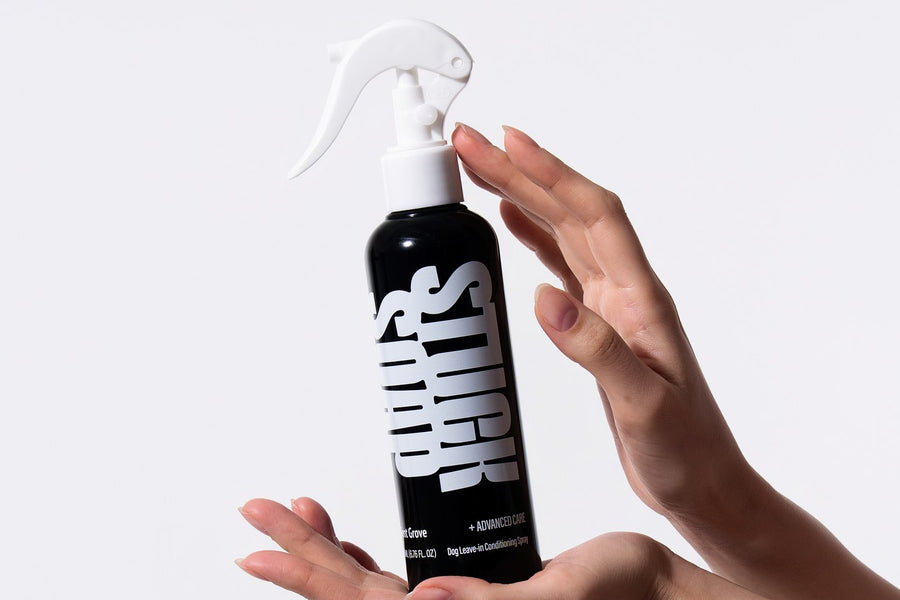
We built our Leave-In Conditioning Spray for the coat-refresh step. It's a lightweight, no-rinse mist in our two signature scents, earthy Silent Grove and floral Blush Garden, and it's meant to be brushed through on the days you're not bathing. The formula uses three patented actives. Mung Bean Sprout Extract (KR patent 10-1841429) was chosen as a gentle botanical base for conditioning. Tannin Complex HR (KR patent 10-0955389) is a plant-derived ingredient selected for the formula's freshness profile. ODOR-BYE (KR patent 10-2746186) was developed specifically with odor in mind. It's a cosmetic grooming product, not a medicated one.
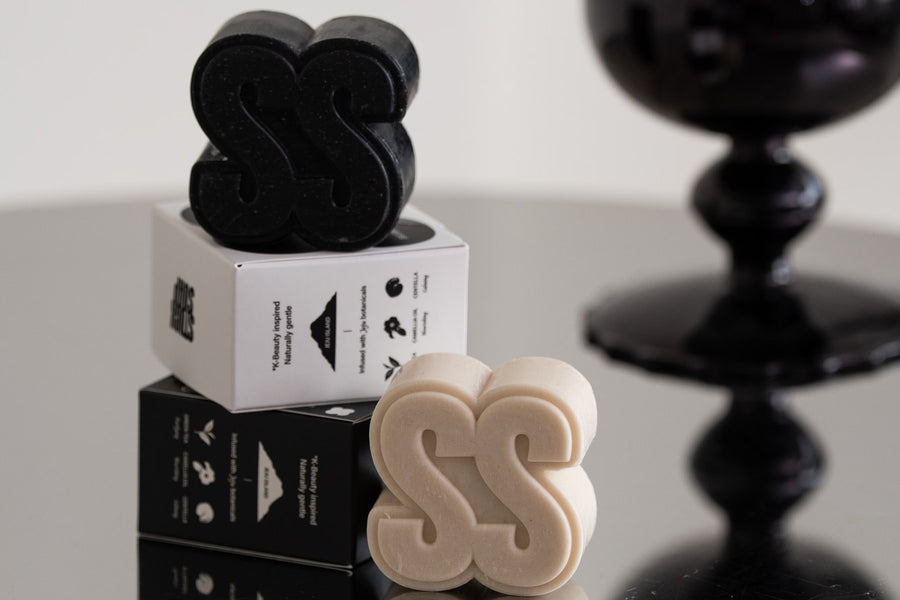
When bath day does come around, our vegan, pH-balanced Liquid Shampoo and zero-waste Shampoo Bar, made with Green Tea, Camellia Oil, and Centella Asiatica, take care of the full wash.
Frequently Asked Questions
How can I keep my dog clean between baths?
Focus on four habits instead of extra baths. Brush several times a week to lift dirt and loose hair, wipe paws and belly after walks, use a light leave-in spray when the coat feels flat, and wash bedding weekly. Each task takes five to ten minutes and fits into a normal routine.
How often should I brush my dog between baths?
Most dogs benefit from brushing two to four times a week, and long or double coats often need it more, especially during seasonal shedding. Short sessions count. Five minutes with the right brush removes loose hair, dirt, and dander that would otherwise hold odor close to the skin and spread onto furniture.
What should I use to wipe my dog's paws after a walk?
A soft cloth dampened with lukewarm water works for most days. Wipe between the toes and around the pads, then dry thoroughly, since trapped moisture is a common reason paws start to smell. If you use pre-made wipes, choose unscented ones made for dogs, and stop if you notice redness.
Can a leave-in spray replace a bath?
No. A leave-in spray is a refresh step, not a cleaning step. It can help a coat feel softer and smell fresher between washes, but it does not remove built-up oil, dirt, or debris the way shampoo and water do. Think of it as maintenance that helps you stretch the time between baths comfortably.
How often should I wash my dog's bed?
Once a week is a practical baseline for most households, and more often if your dog sleeps on it after muddy walks or has a strong natural scent. Shake out hair daily or every few days, wash the cover on the warmest cycle the fabric allows, and dry it completely before putting it back.
Does this routine work for puppies and senior dogs?
Yes, with adjustments. Puppies do well with very short sessions that build comfort with handling, brushes, and towels. Senior dogs often need gentler, zone-focused care and extra attention to comfort when standing. The overall structure of brushing, wipe-downs, coat refresh, and bedding care stays the same at every age.
When should I see a vet about my dog's smell?
Book a vet visit if odor comes back within a day or two of cleaning, or if you notice itching, redness, flaking, hot spots, ear discharge, head shaking, or constant paw licking. These can point to skin or ear conditions that grooming products are not designed to treat, and a vet can find the actual cause.
Sources
- American Kennel Club. "How Often Should You Wash Your Dog?" akc.org
- Merck Veterinary Manual, Dog Owners edition. merckvetmanual.com/dog-owners
- American Veterinary Medical Association. Pet care resources for owners. avma.org
Make the days between baths easier. Explore the Leave-In Conditioning Spray, Liquid Shampoo, and Shampoo Bar in Silent Grove and Blush Garden at stucksoap.com.